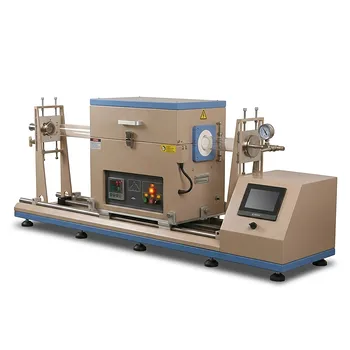
What role does a tube furnace play during the heat treatment of Bi2MoO6? Precise Phase Control & Oxidation Prevention
Updated 3 months ago
The tube furnace serves as a precision-controlled reactor for the high-temperature calcination of $Bi_2MoO_6$ precursors, ensuring the material achieves its correct crystalline phase. By integrating a reliable gas path with a programmable heating system, the furnace provides the exact thermodynamic conditions—specifically heating rates and isothermal stages—required for phase transition. This process occurs within a nitrogen environment to prevent oxidation and maintain the intended chemical stoichiometry of the final product.
The core function of the tube furnace in this context is to provide a stable, anaerobic environment that enables $Bi_2MoO_6$ to undergo a controlled phase transition without chemical degradation. It acts as both a thermal regulator and a chemical shield, ensuring high phase purity and crystalline quality.
Precise Thermodynamic Control for Phase Transition
Orchestrating Crystalline Maturation
The tube furnace allows for the high-temperature calcination of $Bi_2MoO_6$ precursors, which is essential for transforming raw mixtures into a functional crystalline structure. By setting constant heating rates, the furnace ensures that the internal energy of the precursor rises uniformly, preventing structural defects caused by rapid thermal expansion.
Isothermal Stability and Phase Completion
The furnace maintains specific isothermal stages, or "soaking" periods, where the temperature remains constant for a set duration. These stages are critical for allowing the $Bi_2MoO_6$ to complete its phase transition, ensuring that the entire volume of the material reaches the necessary thermodynamic equilibrium for crystal growth.
Thermal Uniformity
Modern tube furnaces create a precise temperature field that surrounds the precursor material. This uniformity is vital for ensuring that the resulting $Bi_2MoO_6$ exhibits consistent crystalline quality across the entire sample, rather than a mix of varying phases.
Atmospheric Integrity and Stoichiometry
Preventing Unintended Oxidation
The nitrogen atmosphere acts as an inert protective shield, displacing oxygen that would otherwise cause unintended oxidation of the molybdenum or bismuth components. This protection is vital at high temperatures, where materials are most susceptible to reacting with ambient air.
Maintaining Chemical Stoichiometry
By using a reliable gas path design, the furnace ensures a continuous flow of high-purity nitrogen. This controlled environment allows researchers to maintain the accurate chemical stoichiometry of $Bi_2MoO_6$, preventing the loss of volatile components or the formation of unwanted oxide impurities.
Airtight Processing for Purity
The airtight design of the atmosphere tube furnace prevents the ingress of contaminants during the heating process. This high level of environmental control is what allows for the synthesis of materials with high phase purity, as even trace amounts of oxygen could alter the final catalyst's performance.
Understanding the Trade-offs
Temperature Gradients vs. Sample Size
While tube furnaces provide excellent control, the "hot zone" is often limited to the center of the tube. If the precursor boat is too long, the material at the edges may experience a different temperature than the center, leading to inhomogeneous phase formation.
Gas Flow Dynamics
The rate of nitrogen flow must be carefully balanced; too low a flow may fail to purge evolved gases from the precursor decomposition, while too high a flow can cause thermal fluctuations on the surface of the sample. This can result in localized cooling and inconsistent calcination.
Precursor Sensitivity
The success of the heat treatment is heavily dependent on the initial drying of the precursors. If residual moisture or volatile organics are not removed prior to high-temperature calcination, they can react within the nitrogen atmosphere, potentially leading to carbon residues or altered crystal lattices.
How to Apply This to Your Project
When utilizing a tube furnace for $Bi_2MoO_6$ or similar metal-oxide catalysts, your procedural focus should align with your specific material requirements.
- If your primary focus is Phase Purity: Prioritize the precision of your isothermal stages and ensure your nitrogen flow is initiated well before heating begins to fully purge the system.
- If your primary focus is Crystalline Quality: Focus on slow, constant heating rates (e.g., 2–5°C per minute) to allow the crystal lattice to form without internal stresses or defects.
- If your primary focus is Stoichiometric Accuracy: Ensure the furnace seals are checked for vacuum-tight integrity to prevent even trace amounts of oxygen from entering the chamber at peak temperatures.
The tube furnace is the defining tool for bridging the gap between a chemical precursor and a high-performance crystalline material through rigorous environmental and thermal control.
Summary Table:
| Furnace Role | Key Impact on Bi2MoO6 | Technical Requirement |
|---|---|---|
| Thermodynamic Control | Orchestrates crystalline maturation | Constant heating rates & stability |
| Isothermal Stages | Ensures phase transition completion | Precise "soaking" periods |
| Atmospheric Integrity | Prevents unintended oxidation | Reliable gas path & high-purity N2 |
| Environmental Seal | Maintains chemical stoichiometry | Airtight design & vacuum-tight seals |
Elevate Your Material Research with THERMUNITS
At THERMUNITS, we understand that the precision of your heat treatment defines the success of your catalyst synthesis. As a leading manufacturer of high-temperature laboratory equipment, we provide advanced solutions for material science and industrial R&D.
Whether you are synthesizing $Bi_2MoO_6$ or advanced ceramics, our Atmosphere Tube Furnaces and Vacuum Systems offer the stability and atmospheric integrity you need. Our comprehensive range includes:
- Precision Furnaces: Muffle, Tube, Rotary, and Hot Press models.
- Advanced Systems: CVD/PECVD setups and Vacuum Induction Melting (VIM) furnaces.
- Specialized Equipment: Dental Furnaces, Electric Rotary Kilns, and Thermal Elements.
Why choose THERMUNITS?
- Exceptional thermal uniformity for consistent crystal growth.
- Reliable gas path designs for perfect stoichiometric control.
- Durable heating elements for demanding laboratory environments.
Ready to optimize your calcination process? Contact us today to discuss your specific furnace requirements with our thermal processing experts!
References
- Liang Hao, Jingfei Luan. The Fabrication and Property Characterization of a Ho2YSbO7/Bi2MoO6 Heterojunction Photocatalyst and the Application of the Photodegradation of Diuron under Visible Light Irradiation. DOI: 10.3390/ijms25084418
Mentioned Products
- Vertical 1700C Vacuum and Atmosphere Tube Furnace with 80mm Alumina Tube
- Compact High Temperature 1600C Tube Furnace with 50mm Alumina Tube and Vacuum Flanges for Material Sintering
- 900°C Max Rotary Tube Furnace with 8 Inch 310S Alloy Tube and Optional Multi Zone Heating for Industrial Material Calcination
- Split Vertical Tube Furnace with 1200C Quartz Tube and Stainless Steel Vacuum Flanges for Rapid Thermal Processing
- High Temperature 1700C Tube Furnace with High Vacuum Turbomolecular Pump System and Multi Channel Mass Flow Controller Gas Mixer
People Also Ask
- How is an industrial-grade vertical tube furnace utilized in smelting leaching residues? Enhance Metal Recovery Efficiency
- What is the function of a laboratory-grade vertical tube furnace in fast pyrolysis? Optimize Composite Research.
- How does a vertical tube furnace facilitate thermoelectric alloy melting? Precision synthesis for material homogeneity.
- Why is a thermocouple sensor indispensable for monitoring the vertical tube furnace during gallium oxide nanowire production? Optimize VLS Growth
- What are the advantages of using a vertical tube furnace for crucible experiments simulating steel-slag interactions?

Tech Team · ThermUnits
Last updated on Jun 03, 2026
Related Products

Vertical 1700C Vacuum and Atmosphere Tube Furnace with 80mm Alumina Tube

Compact High Temperature 1600C Tube Furnace with 50mm Alumina Tube and Vacuum Flanges for Material Sintering
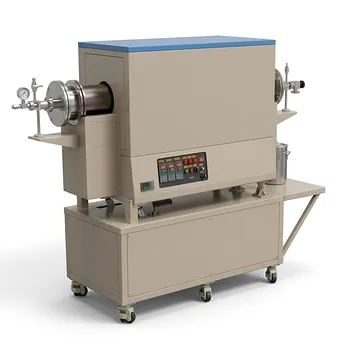
900°C Max Rotary Tube Furnace with 8 Inch 310S Alloy Tube and Optional Multi Zone Heating for Industrial Material Calcination
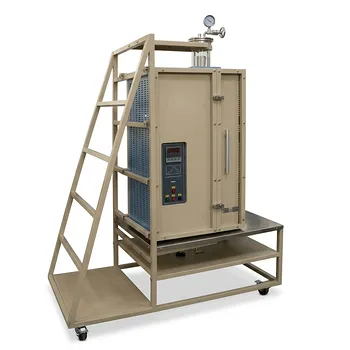
Split Vertical Tube Furnace with 1200C Quartz Tube and Stainless Steel Vacuum Flanges for Rapid Thermal Processing

High Temperature 1700C Tube Furnace with High Vacuum Turbomolecular Pump System and Multi Channel Mass Flow Controller Gas Mixer

1100C Tube Furnace with Vacuum Flange and Programmable Temperature Controller for Material Science and Industrial Heat Treatment

5 Inch Three Zone Rotary Tube Furnace with Integrated Gas Delivery System and 1200C Capability for Advanced Material CVD Processing

1700C Hydrogen Gas Tube Furnace with 60mm Alumina Process Tube and Integrated Hydrogen Safety Detector
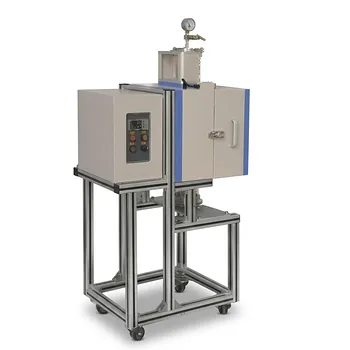
1200°C 5 Inch Vertical Quartz Tube Furnace with Stainless Steel Vacuum Flanges

High Temperature 1700C Six Zone Split Tube Furnace with Alumina Tube and Water Cooled Flanges

Compact Vertical Split Quartz Tube Furnace with Stainless Steel Vacuum Flanges for Rapid Thermal Quenching and Controlled Atmosphere Material Processing

High Temperature 1700C Benchtop Tube Furnace with 5 Inch Heating Zone High Purity Alumina Tube and Vacuum Sealing Flanges

1200C High Throughput Multi Channel Tube Furnace with 50mm Quartz Tubes for Annealing and Material Phase Diagram Research

Three Zone Tube Furnace with 11 Inch or 15 Inch Quartz Tube and Hinged Flanges for Vacuum Atmosphere Heat Treatment

1800C High Temperature Compact Vacuum Tube Furnace with 60mm OD Alumina Tube and Kanthal MoSi2 Heating Elements

High Temperature 1700C Vertical Tube Furnace for Powder Spherification and Material Sintering
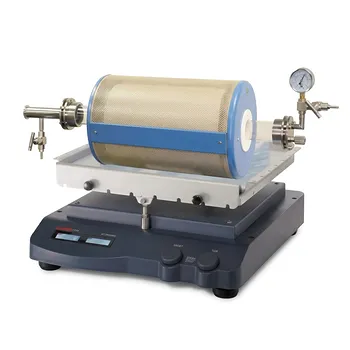
High Temperature Rocking Tube Furnace with Quartz Tube and Vacuum Flange for Materials Synthesis

High Temperature Automated 5 Inch Tube Furnace for Autonomous Material Research and Advanced Laboratory R&D
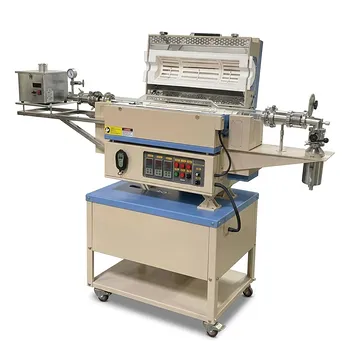
5 Inch Rotary Tube Furnace with Automatic Feeding and Receiving System 1200C Three Zone CVD Powder Processing