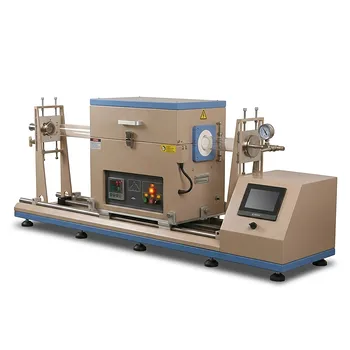
What role does a Tube Furnace play in the carbonization and activation of jute fibers? Optimize Porosity and Yield
Updated 3 months ago
The tube furnace serves as the critical reactor for transforming raw jute fibers into high-performance carbon materials. It provides a precisely controlled, oxygen-free thermal environment that facilitates pyrolysis while preventing the material from burning. By regulating temperature, heating rates, and inert gas flow, the furnace enables the removal of non-carbon elements and the development of the complex porous structures required for industrial applications.
Core Takeaway: A tube furnace is the fundamental tool for jute fiber processing because it isolates the material in an inert atmosphere, allowing for exact control over the chemical and structural reorganization needed to create high-surface-area activated carbon.
The Role of Atmosphere Control in Pyrolysis
Prevention of Oxidative Combustion
The primary function of a tube furnace is to maintain a continuous inert Nitrogen (N2) gas flow. This environment is essential for oxygen-free pyrolysis, ensuring that the jute fibers do not undergo oxidative combustion at high temperatures.
Removal of Non-Carbon Elements
Within this controlled atmosphere, the furnace facilitates the removal of hydrogen, oxygen, and organic volatiles. This process ensures the stable formation of a carbon framework by deoxygenating the material and enriching its carbon content.
Precision Thermal Management
Regulating Carbonization Temperatures
For jute fibers, the furnace typically maintains temperatures between 500°C and 650°C to establish the initial carbon structure. Depending on the desired degree of graphitization, some processes may extend this range to 800°C or 900°C to enhance electrical conductivity.
Control of Heating Rates
The equipment allows for exact programmed temperature increases, such as a steady 10°C/min ramp-up. This gradual heating is vital for the uniform release of volatile matter and prevents structural damage to the forming carbon skeleton.
Facilitating the Activation Process
Chemical Reaction Support
During activation, the tube furnace provide a uniform thermal field for jute fibers impregnated with agents like zinc chloride (ZnCl2). This stable energy input drives the chemical reactions necessary to etch the carbon surface.
Development of Porous Networks
The furnace environment promotes the formation of micro-pores and meso-pores, which are essential for high-adsorption materials. This process can dramatically increase the specific surface area of the carbon—in some cases, from approximately 23 m²/g to over 1900 m²/g.
Understanding the Trade-offs
Scale vs. Precision
While tube furnaces offer unmatched precision and atmosphere control, they are often limited by small batch volumes. Scaling up jute carbonization for mass production requires transitioning to larger industrial kilns, which may struggle to maintain the same level of thermal uniformity.
Sealing and Contamination Risks
The effectiveness of the process depends entirely on the integrity of the tube seals. Even minor leaks can introduce oxygen, leading to the "ashing" of the jute fibers and the loss of the entire batch.
How to Apply This to Your Project
Making the Right Choice for Your Goal
To achieve the best results with jute-based carbon, your furnace parameters must align with your specific material objectives.
- If your primary focus is High Adsorption: Prioritize activation at higher temperatures (700°C-800°C) with a steady chemical agent reaction time to maximize pore development.
- If your primary focus is Electrical Conductivity: Focus on high-temperature carbonization (above 850°C) to increase the degree of graphitization within the carbon skeleton.
- If your primary focus is Structural Integrity: Utilize a slower heating rate (5°C/min) to allow for the gentle release of volatiles without fracturing the fiber structure.
The tube furnace remains the most reliable instrument for converting raw biomass into sophisticated carbon structures through meticulous control of the thermal and chemical environment.
Summary Table:
| Process Stage | Key Function of Tube Furnace | Typical Parameters / Results |
|---|---|---|
| Carbonization | Pyrolysis in inert atmosphere (N2) | 500°C – 650°C; Removes non-carbon volatiles |
| Activation | Uniform thermal field for chemical etching | 700°C – 900°C; Develops micro/meso-pores |
| Thermal Control | Precise heating rate management | ~10°C/min; Prevents structural fractures |
| Material Improvement | Surface area expansion | Increase from 23 m²/g to over 1900 m²/g |
Unlock High-Performance Carbon Material Research with THERMUNITS
Precision is the difference between raw biomass and high-value activated carbon. THERMUNITS is a leading manufacturer of high-temperature laboratory equipment for material science and industrial R&D. We provide the advanced thermal stability and atmosphere integrity required for carbonization, CVD/PECVD, and complex heat treatments.
Our comprehensive range of solutions includes:
- Tube & Atmosphere Furnaces for precise pyrolysis and activation.
- Vacuum & Rotary Furnaces for scalable and specialized material processing.
- Hot Press & Vacuum Induction Melting (VIM) Furnaces for advanced metallurgy.
Ready to enhance your lab’s efficiency and material performance? Contact THERMUNITS today to find the perfect thermal processing solution for your research goals!
References
- Md. Shahabul Hossen, Gajanan Bhat. Synthesis, Activation, and Characterization of Carbon Fiber Precursor Derived from Jute Fiber. DOI: 10.1021/acsomega.4c01268
Mentioned Products
- Vertical 1700C Vacuum and Atmosphere Tube Furnace with 80mm Alumina Tube
- Compact High Temperature 1600C Tube Furnace with 50mm Alumina Tube and Vacuum Flanges for Material Sintering
- 900°C Max Rotary Tube Furnace with 8 Inch 310S Alloy Tube and Optional Multi Zone Heating for Industrial Material Calcination
- Split Vertical Tube Furnace with 1200C Quartz Tube and Stainless Steel Vacuum Flanges for Rapid Thermal Processing
- High Temperature 1700C Tube Furnace with High Vacuum Turbomolecular Pump System and Multi Channel Mass Flow Controller Gas Mixer
People Also Ask
- How is an industrial-grade vertical tube furnace utilized in smelting leaching residues? Enhance Metal Recovery Efficiency
- What is the function of a laboratory-grade vertical tube furnace in fast pyrolysis? Optimize Composite Research.
- How does a vertical tube furnace facilitate thermoelectric alloy melting? Precision synthesis for material homogeneity.
- Why is a thermocouple sensor indispensable for monitoring the vertical tube furnace during gallium oxide nanowire production? Optimize VLS Growth
- What are the advantages of using a vertical tube furnace for crucible experiments simulating steel-slag interactions?

Tech Team · ThermUnits
Last updated on Jun 03, 2026
Related Products

Vertical 1700C Vacuum and Atmosphere Tube Furnace with 80mm Alumina Tube

Compact High Temperature 1600C Tube Furnace with 50mm Alumina Tube and Vacuum Flanges for Material Sintering
900°C Max Rotary Tube Furnace with 8 Inch 310S Alloy Tube and Optional Multi Zone Heating for Industrial Material Calcination
Split Vertical Tube Furnace with 1200C Quartz Tube and Stainless Steel Vacuum Flanges for Rapid Thermal Processing

High Temperature 1700C Tube Furnace with High Vacuum Turbomolecular Pump System and Multi Channel Mass Flow Controller Gas Mixer

1100C Tube Furnace with Vacuum Flange and Programmable Temperature Controller for Material Science and Industrial Heat Treatment

5 Inch Three Zone Rotary Tube Furnace with Integrated Gas Delivery System and 1200C Capability for Advanced Material CVD Processing

1700C Hydrogen Gas Tube Furnace with 60mm Alumina Process Tube and Integrated Hydrogen Safety Detector

1200°C 5 Inch Vertical Quartz Tube Furnace with Stainless Steel Vacuum Flanges

High Temperature 1700C Six Zone Split Tube Furnace with Alumina Tube and Water Cooled Flanges

Compact Vertical Split Quartz Tube Furnace with Stainless Steel Vacuum Flanges for Rapid Thermal Quenching and Controlled Atmosphere Material Processing

High Temperature 1700C Benchtop Tube Furnace with 5 Inch Heating Zone High Purity Alumina Tube and Vacuum Sealing Flanges
1200C High Throughput Multi Channel Tube Furnace with 50mm Quartz Tubes for Annealing and Material Phase Diagram Research

1800C High Temperature Compact Vacuum Tube Furnace with 60mm OD Alumina Tube and Kanthal MoSi2 Heating Elements

Three Zone Tube Furnace with 11 Inch or 15 Inch Quartz Tube and Hinged Flanges for Vacuum Atmosphere Heat Treatment

High Temperature 1700C Vertical Tube Furnace for Powder Spherification and Material Sintering
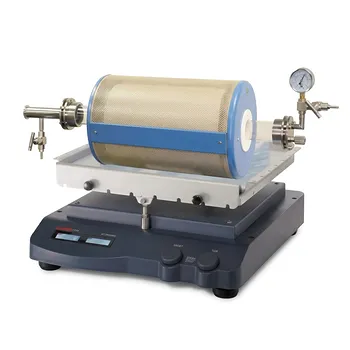
High Temperature Rocking Tube Furnace with Quartz Tube and Vacuum Flange for Materials Synthesis

High Temperature Automated 5 Inch Tube Furnace for Autonomous Material Research and Advanced Laboratory R&D
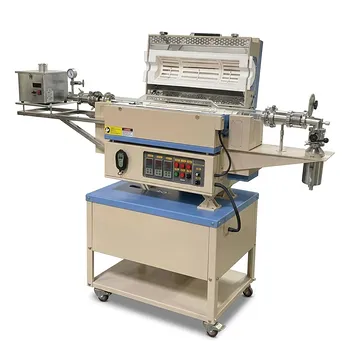
5 Inch Rotary Tube Furnace with Automatic Feeding and Receiving System 1200C Three Zone CVD Powder Processing