What role does a tube furnace play in converting Cu-BDC MOFs to Cu-carbon composites? Master Precision Pyrolysis
Updated 3 months ago
The tube furnace serves as the critical thermal reactor for the single-step carbonization of Cu-BDC precursors. By providing a localized, high-temperature environment under a strictly controlled atmosphere, it facilitates the simultaneous pyrolysis of organic ligands into a conductive carbon network and the reduction of copper nodes into active nanophases. This precise transformation is what converts a porous framework into a stable, catalytic Cu-carbon composite.
The tube furnace is the "engine" of MOF-to-composite conversion, providing the exact thermodynamic conditions required to strip organic components while preserving and distributing metallic active sites. It bridges the gap between a molecular framework and a functional, high-performance solid-state material.
The Mechanism of Thermal Transformation
The primary role of the tube furnace is to manage the transition of Cu-BDC from a metal-organic framework into a multi-phase composite.
Pyrolysis of Organic Ligands
The furnace applies high thermal energy—typically around 600°C—to trigger the deep thermal decomposition of the BDC (benzenedicarboxylate) ligands.
During this process, the organic components are stripped of volatile elements, leaving behind a stable, graphitized carbon framework. This resulting carbon network provides the structural foundation and electrical conductivity necessary for catalytic applications.
Metal Node Reduction and Distribution
As the organic framework decomposes, the tube furnace facilitates the transformation of copper nodes into uniformly distributed metallic copper and copper oxide nanophases.
The stable temperature zone ensures that these metal atoms do not aggregate into large, inactive clumps. Instead, they remain as high-surface-area nanocrystals embedded within the carbon pores, maximizing the material's catalytic activity.
Essential Environmental Controls
A tube furnace is selected for this process because it offers specific technical advantages that standard ovens cannot provide.
Atmospheric Regulation and Inert Protection
Converting Cu-BDC requires a continuous flow of nitrogen or argon to prevent the carbon from burning away in the presence of oxygen.
The furnace maintains this high-purity environment, ensuring that the ligands undergo pyrolysis (decomposition without oxygen) rather than combustion. This allows for the formation of specific topological defects and porous structures that are essential for the final composite's performance.
Thermal Uniformity and Linear Heating
The tube furnace allows for precise linear heating rates, such as 10°C per minute, which prevents structural collapse of the MOF during the transition.
Consistent temperature uniformity throughout the heating zone ensures that the resulting micro-nano structures are consistent across the entire batch. This level of control is vital for achieving high crystallinity and a uniform distribution of active sites.
Understanding the Trade-offs
While the tube furnace is indispensable, the process involves critical variables that must be managed to avoid material failure.
- Temperature Sensitivity: If the temperature is too low, the carbonization of ligands will be incomplete, resulting in low conductivity. Conversely, excessively high temperatures can cause sintering, where copper nanoparticles merge and lose their effective surface area.
- Atmospheric Purity: Any leakage of oxygen into the tube can result in the total oxidation of the carbon framework, leaving behind only bulk copper oxides rather than a composite.
- Throughput Limitations: Tube furnaces are typically designed for small-to-medium batch processing, which can be a bottleneck when scaling from laboratory research to industrial production.
Applying This Process to Your Material Goals
To achieve the best results when converting Cu-BDC or similar frameworks, your furnace settings must align with your desired material properties.
- If your primary focus is maximum catalytic surface area: Utilize a lower carbonization temperature (approx. 500-600°C) and a slow heating rate to prevent nanoparticle agglomeration.
- If your primary focus is high electrical conductivity: Opt for higher temperatures (up to 800°C or 900°C) under a strictly inert atmosphere to increase the degree of carbon graphitization.
- If your primary focus is specific pore structure: Ensure the use of high-purity argon or Ar/H2 mixtures to precisely control the stripping of atoms and the creation of topological defects.
By mastering the thermal and atmospheric variables within the tube furnace, you can precisely engineer the functional properties of Cu-carbon composites for advanced technological applications.
Summary Table:
| Process Parameter | Role of Tube Furnace | Impact on Final Composite |
|---|---|---|
| High-Temp Pyrolysis | Controlled heating to ~600°C+ | Converts organic BDC ligands into a conductive carbon network. |
| Atmosphere Control | Inert gas flow (Ar/N2) | Prevents carbon combustion and ensures reduction of copper nodes. |
| Thermal Uniformity | Stable heating zone | Ensures uniform distribution of copper nanoparticles without aggregation. |
| Linear Heating Rate | Precise ramp control (e.g., 10°C/min) | Maintains structural integrity and optimizes pore formation. |
Elevate Your Material Research with THERMUNITS Precision Furnaces
Are you looking to achieve superior crystallinity and catalytic performance in your MOF-derived composites? THERMUNITS is a leading manufacturer of high-temperature laboratory equipment specifically designed for material science and industrial R&D.
We provide a comprehensive suite of thermal processing solutions, including Tube, Vacuum, Atmosphere, and Rotary furnaces, as well as CVD/PECVD systems, to help you master the delicate transition from frameworks to functional materials. Whether you are optimizing copper nanophase distribution or enhancing carbon graphitization, our equipment delivers the thermal stability and atmospheric purity your research demands.
Contact THERMUNITS today to find the perfect thermal solution for your lab!
References
- Zubair Hasan, Mohammad Farhadur Rahman. Metal Organic Framework Derived Cu-Carbon Composite for the Effective Reduction of p-Nitrophenol. DOI: 10.14233/ajchem.2024.31153
Mentioned Products
- Vertical 1700C Vacuum and Atmosphere Tube Furnace with 80mm Alumina Tube
- Compact High Temperature 1600C Tube Furnace with 50mm Alumina Tube and Vacuum Flanges for Material Sintering
- 900°C Max Rotary Tube Furnace with 8 Inch 310S Alloy Tube and Optional Multi Zone Heating for Industrial Material Calcination
- Split Vertical Tube Furnace with 1200C Quartz Tube and Stainless Steel Vacuum Flanges for Rapid Thermal Processing
- High Temperature 1700C Tube Furnace with High Vacuum Turbomolecular Pump System and Multi Channel Mass Flow Controller Gas Mixer
People Also Ask
- How is an industrial-grade vertical tube furnace utilized in smelting leaching residues? Enhance Metal Recovery Efficiency
- What is the function of a laboratory-grade vertical tube furnace in fast pyrolysis? Optimize Composite Research.
- How does a vertical tube furnace facilitate thermoelectric alloy melting? Precision synthesis for material homogeneity.
- Why is a thermocouple sensor indispensable for monitoring the vertical tube furnace during gallium oxide nanowire production? Optimize VLS Growth
- What are the advantages of using a vertical tube furnace for crucible experiments simulating steel-slag interactions?

Tech Team · ThermUnits
Last updated on Jun 02, 2026
Related Products

Vertical 1700C Vacuum and Atmosphere Tube Furnace with 80mm Alumina Tube

Compact High Temperature 1600C Tube Furnace with 50mm Alumina Tube and Vacuum Flanges for Material Sintering
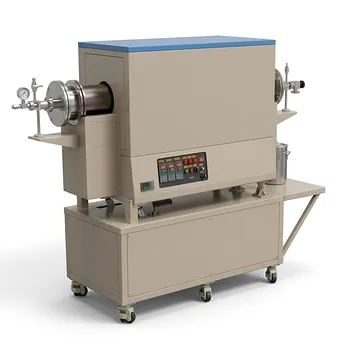
900°C Max Rotary Tube Furnace with 8 Inch 310S Alloy Tube and Optional Multi Zone Heating for Industrial Material Calcination
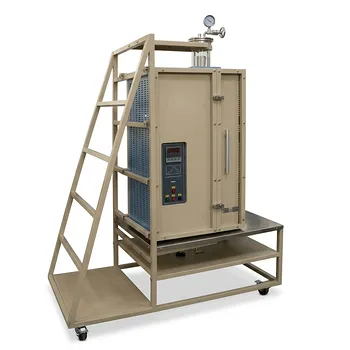
Split Vertical Tube Furnace with 1200C Quartz Tube and Stainless Steel Vacuum Flanges for Rapid Thermal Processing

High Temperature 1700C Tube Furnace with High Vacuum Turbomolecular Pump System and Multi Channel Mass Flow Controller Gas Mixer

1100C Tube Furnace with Vacuum Flange and Programmable Temperature Controller for Material Science and Industrial Heat Treatment

5 Inch Three Zone Rotary Tube Furnace with Integrated Gas Delivery System and 1200C Capability for Advanced Material CVD Processing

1200°C 5 Inch Vertical Quartz Tube Furnace with Stainless Steel Vacuum Flanges

1700C Hydrogen Gas Tube Furnace with 60mm Alumina Process Tube and Integrated Hydrogen Safety Detector

High Temperature 1700C Six Zone Split Tube Furnace with Alumina Tube and Water Cooled Flanges

Compact Vertical Split Quartz Tube Furnace with Stainless Steel Vacuum Flanges for Rapid Thermal Quenching and Controlled Atmosphere Material Processing

High Temperature 1700C Benchtop Tube Furnace with 5 Inch Heating Zone High Purity Alumina Tube and Vacuum Sealing Flanges

1200C High Throughput Multi Channel Tube Furnace with 50mm Quartz Tubes for Annealing and Material Phase Diagram Research

1800C High Temperature Compact Vacuum Tube Furnace with 60mm OD Alumina Tube and Kanthal MoSi2 Heating Elements

Three Zone Tube Furnace with 11 Inch or 15 Inch Quartz Tube and Hinged Flanges for Vacuum Atmosphere Heat Treatment

High Temperature 1700C Vertical Tube Furnace for Powder Spherification and Material Sintering
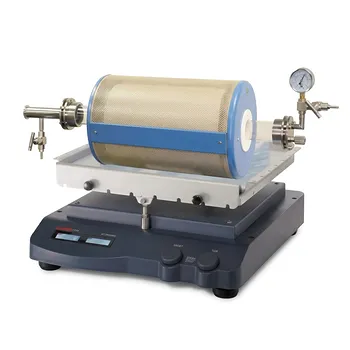
High Temperature Rocking Tube Furnace with Quartz Tube and Vacuum Flange for Materials Synthesis

High Temperature Automated 5 Inch Tube Furnace for Autonomous Material Research and Advanced Laboratory R&D
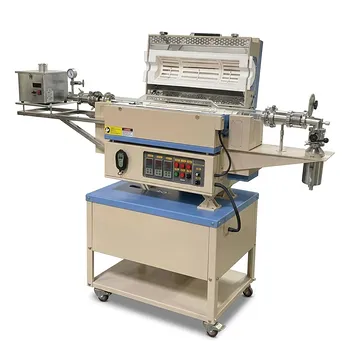
5 Inch Rotary Tube Furnace with Automatic Feeding and Receiving System 1200C Three Zone CVD Powder Processing