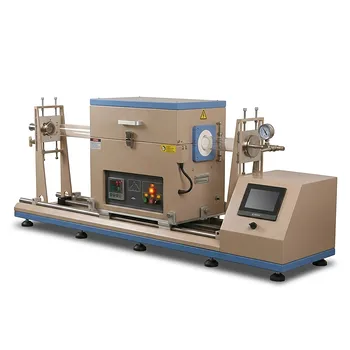
What role does a Tube Furnace play in the solid-state pyrolysis for US2? Enhancing Phase Purity & Oxidation Control
Updated 3 months ago
The Tube Furnace acts as the primary thermal reactor for the synthesis of Uranium Disulfide ($US_2$), providing the precise environmental control necessary for solid-state pyrolysis. It facilitates the conversion of single-source precursors into the final sulfide through a sequence of programmed temperature ramps and chemical transitions, specifically inducing alkene elimination under a flowing Argon atmosphere.
Core Takeaway: The Tube Furnace is essential for $US_2$ preparation because it maintains a highly uniform, anaerobic thermal zone that allows precursors to undergo complete thermochemical decomposition and crystalline transformation without oxidation.
Driving Chemical Transformation Through Controlled Heat
Inducing Alkene Elimination and Pyrolysis
The Tube Furnace provides the energy required to break molecular bonds within single-source precursors. By maintaining specific temperature profiles, the furnace induces alkene elimination reactions, which are the fundamental chemical steps needed to strip away organic components.
Ensuring Thermal Uniformity and Phase Purity
A critical role of the furnace is the maintenance of a stable thermal zone across the reaction chamber. This uniformity ensures that all precursor material experiences the same heating curve, preventing the formation of mixed phases and resulting in $US_2$ with a complete, high-quality crystal structure.
Managing Reaction Kinetics and Residence Time
Precise control over the heating ramps and holding times allows researchers to regulate the speed of the solid-phase reactions. This control is vital for ensuring that raw material components sufficiently diffuse and react, leading to high phase purity in the final product.
Maintaining a Strict Inert Environment
Preventing Oxidation and Combustion
Uranium and its sulfides are highly sensitive to oxygen at elevated temperatures. The Tube Furnace uses sealed flanges and a horizontal design to create an airtight environment where high-purity Argon or Nitrogen can flow continuously.
Facilitating Anaerobic Gas Release
As the precursors decompose, they release organic vapors and gases. The furnace’s flow-through design uses a carrier gas to purge these byproducts effectively, ensuring that the pyrolysis occurs in a pure environment and that the original structural characteristics of the sulfide are maintained.
Controlling the Reaction Atmosphere
By isolating the reaction from the ambient atmosphere, the furnace allows for the accurate study of gas release under anaerobic conditions. This isolation is mandatory for achieving the correct stoichiometry in Uranium Disulfide, as even trace oxygen could lead to the formation of unwanted oxides.
Understanding the Trade-offs
Temperature Gradient Limitations
While Tube Furnaces offer high uniformity in the center, a temperature gradient often exists near the ends of the tube. If the precursor sample is too large or poorly positioned, it may result in incomplete pyrolysis or non-uniform crystalline structures at the sample edges.
Heating Rate vs. Structural Integrity
Rapid heating rates can increase throughput but may lead to trapped gases or structural defects in the $US_2$ crystals. Conversely, excessively slow ramps may lead to undesirable secondary reactions or energy inefficiency, requiring a carefully optimized balance for each specific precursor.
Material Compatibility and Contamination
At the high temperatures required for $US_2$ synthesis (often between 350°C and 700°C), the choice of the inner tube material (e.g., quartz or alumina) is critical. Incompatible materials can react with the sulfur or uranium vapors, leading to sample contamination or degradation of the furnace tube itself.
Applying This to Your Synthesis Process
Achieving high-quality Uranium Disulfide requires aligning the furnace capabilities with your specific precursor chemistry.
- If your primary focus is Phase Purity: Prioritize the length of the isothermal holding time and ensure the sample is placed precisely within the furnace's "sweet spot" (the central uniform zone).
- If your primary focus is Morphology Control: Focus on regulating the carrier gas flow rate and the cooling ramp to influence how the $US_2$ crystals precipitate and settle.
- If your primary focus is Preventing Oxidation: Implement a dual-stage purging process before heating and use oxygen-absorbing traps on your Argon input lines.
By mastering the thermal and atmospheric variables of the Tube Furnace, you ensure the reliable and repeatable production of high-crystallinity Uranium Disulfide.
Summary Table:
| Key Feature of Tube Furnace | Impact on Uranium Disulfide (US2) Synthesis |
|---|---|
| Thermal Uniformity | Ensures consistent crystal structure and high phase purity across the sample. |
| Inert Gas Atmosphere | Prevents oxidation of sensitive uranium precursors using Argon/Nitrogen flow. |
| Programmed Temperature Control | Manages alkene elimination kinetics and optimizes reaction residence time. |
| Flow-through Design | Effectively purges organic vapors and reaction byproducts for a pure environment. |
| Sealed Flange System | Maintains the strict anaerobic conditions required for accurate stoichiometry. |
Elevate Your Material Synthesis with THERMUNITS Precision Engineering
Achieving high-crystallinity Uranium Disulfide requires more than just heat—it requires total environmental control. THERMUNITS is a leading manufacturer of high-temperature laboratory equipment dedicated to supporting material science and industrial R&D. We provide the specialized thermal solutions necessary for complex processes like solid-state pyrolysis.
Our expertise covers a wide range of advanced equipment, including:
- Tube & Rotary Furnaces for uniform pyrolysis and gas-phase reactions.
- Vacuum & Atmosphere Furnaces for strict anaerobic processing.
- Muffle, Hot Press, and Vacuum Induction Melting (VIM) Furnaces.
- CVD/PECVD Systems and high-quality Thermal Elements.
Whether you are refining precursors or scaling up production, THERMUNITS delivers the reliability and precision your research demands.
Contact our technical experts today to discuss your specific furnace requirements and optimize your heat treatment results!
References
- Sheridon N. Kelly, Stefan G. Minasian. Formation of uranium disulfide from a uranium thioamidate single-source precursor. DOI: 10.1039/d4sc03422h
Mentioned Products
- Vertical 1700C Vacuum and Atmosphere Tube Furnace with 80mm Alumina Tube
- Compact High Temperature 1600C Tube Furnace with 50mm Alumina Tube and Vacuum Flanges for Material Sintering
- 900°C Max Rotary Tube Furnace with 8 Inch 310S Alloy Tube and Optional Multi Zone Heating for Industrial Material Calcination
- Split Vertical Tube Furnace with 1200C Quartz Tube and Stainless Steel Vacuum Flanges for Rapid Thermal Processing
- High Temperature 1700C Tube Furnace with High Vacuum Turbomolecular Pump System and Multi Channel Mass Flow Controller Gas Mixer
People Also Ask
- How is an industrial-grade vertical tube furnace utilized in smelting leaching residues? Enhance Metal Recovery Efficiency
- What is the function of a laboratory-grade vertical tube furnace in fast pyrolysis? Optimize Composite Research.
- How does a vertical tube furnace facilitate thermoelectric alloy melting? Precision synthesis for material homogeneity.
- Why is a thermocouple sensor indispensable for monitoring the vertical tube furnace during gallium oxide nanowire production? Optimize VLS Growth
- What are the advantages of using a vertical tube furnace for crucible experiments simulating steel-slag interactions?

Tech Team · ThermUnits
Last updated on Jun 03, 2026
Related Products

Vertical 1700C Vacuum and Atmosphere Tube Furnace with 80mm Alumina Tube

Compact High Temperature 1600C Tube Furnace with 50mm Alumina Tube and Vacuum Flanges for Material Sintering
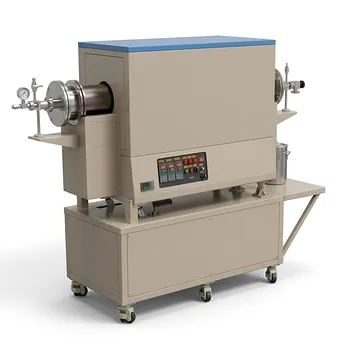
900°C Max Rotary Tube Furnace with 8 Inch 310S Alloy Tube and Optional Multi Zone Heating for Industrial Material Calcination
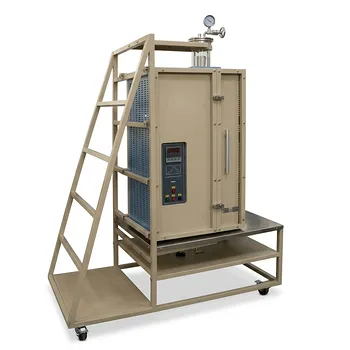
Split Vertical Tube Furnace with 1200C Quartz Tube and Stainless Steel Vacuum Flanges for Rapid Thermal Processing

High Temperature 1700C Tube Furnace with High Vacuum Turbomolecular Pump System and Multi Channel Mass Flow Controller Gas Mixer

1100C Tube Furnace with Vacuum Flange and Programmable Temperature Controller for Material Science and Industrial Heat Treatment
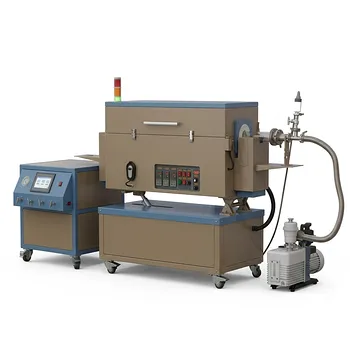
5 Inch Three Zone Rotary Tube Furnace with Integrated Gas Delivery System and 1200C Capability for Advanced Material CVD Processing

High Temperature 1700C Six Zone Split Tube Furnace with Alumina Tube and Water Cooled Flanges
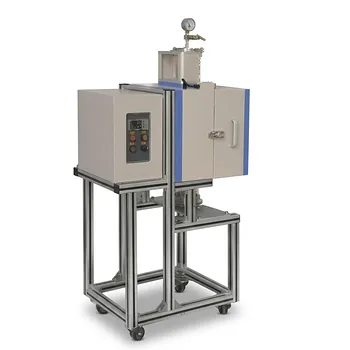
1200°C 5 Inch Vertical Quartz Tube Furnace with Stainless Steel Vacuum Flanges
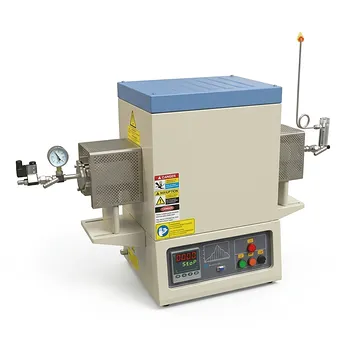
1700C Hydrogen Gas Tube Furnace with 60mm Alumina Process Tube and Integrated Hydrogen Safety Detector

Compact Vertical Split Quartz Tube Furnace with Stainless Steel Vacuum Flanges for Rapid Thermal Quenching and Controlled Atmosphere Material Processing

High Temperature 1700C Benchtop Tube Furnace with 5 Inch Heating Zone High Purity Alumina Tube and Vacuum Sealing Flanges

1200C High Throughput Multi Channel Tube Furnace with 50mm Quartz Tubes for Annealing and Material Phase Diagram Research
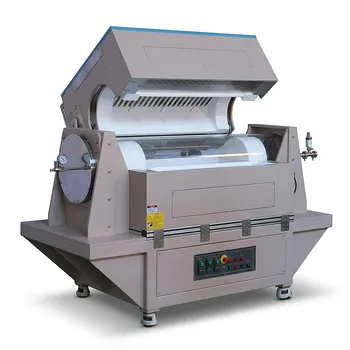
Three Zone Tube Furnace with 11 Inch or 15 Inch Quartz Tube and Hinged Flanges for Vacuum Atmosphere Heat Treatment

1800C High Temperature Compact Vacuum Tube Furnace with 60mm OD Alumina Tube and Kanthal MoSi2 Heating Elements

High Temperature 1700C Vertical Tube Furnace for Powder Spherification and Material Sintering
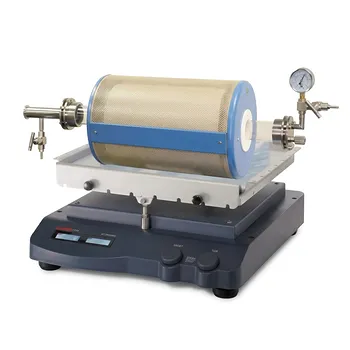
High Temperature Rocking Tube Furnace with Quartz Tube and Vacuum Flange for Materials Synthesis

High Temperature Automated 5 Inch Tube Furnace for Autonomous Material Research and Advanced Laboratory R&D
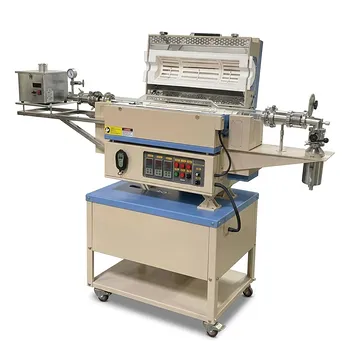
5 Inch Rotary Tube Furnace with Automatic Feeding and Receiving System 1200C Three Zone CVD Powder Processing