What role does a tube furnace play in the synthesis of Chevrel Phase Compounds (CPCs)? Optimize Your SHS Reactions
Updated 3 months ago
The primary role of a tube furnace in the synthesis of Chevrel Phase Compounds (CPCs) is to act as a precision thermal activation source. It provides the specific high-temperature environment, often around 1050°C, necessary to deliver the initial activation energy to precursors encapsulated in quartz tubes. This heat triggers a Self-propagating High-temperature Synthesis (SHS) reaction, allowing the material to complete its transformation using its own internal chemical energy.
The tube furnace serves as the "igniter" for the chemical reaction, providing a controlled window of external heat that transitions precursors into high-purity crystalline structures. By managing both the energy input and the atmospheric environment, it ensures the final compounds achieve the correct phase purity and morphology.
The Mechanism of Thermal Activation
Triggering the SHS Reaction
In CPC synthesis, the tube furnace is not always required for the entire duration of the process. Its critical function is to provide the initial energy threshold required to start the Self-propagating High-temperature Synthesis (SHS). Once the furnace reaches the target temperature (such as 1050°C), the internal chemical heat of the reaction takes over to finish the synthesis.
Short-Duration Thermal Precision
Unlike traditional sintering which may take hours or days, the tube furnace may only need to provide external heat for a short burst, such as 10 minutes. This brief but intense exposure is sufficient to activate the pellets without wasting energy or risking excessive grain growth. The furnace's ability to maintain a stable temperature zone ensures that the reaction triggers uniformly across the precursor material.
Environmental and Structural Integrity
Prevention of Oxidation
CPCs, particularly telluride-based versions like $In_2Mo_6Te_6$, are highly sensitive to oxygen. The tube furnace environment, often combined with high-vacuum or inert gas settings, protects these materials from oxidation during the heating phase. This is vital for maintaining the integrity of the tellurium (Te) components and ensuring the final product is a high-purity crystal.
Facilitating Atomic Diffusion
For solid-phase synthesis, the tube furnace provides the thermal energy necessary for atomic diffusion between elements like molybdenum, indium, and tellurium. The precisely controlled heating curves allow atoms to rearrange into unique quasi-one-dimensional or complex bulk crystal structures. Without this uniform heat field, the precursors would fail to reach the necessary kinetic state for structural transformation.
Understanding the Trade-offs
Thermal Gradients and Uniformity
While tube furnaces provide excellent control, they can suffer from temperature gradients near the ends of the tube. If the precursor pellets are positioned outside the "constant temperature zone," the SHS reaction may trigger unevenly, leading to secondary phases or incomplete reactions. Careful placement and furnace calibration are required to ensure the entire sample receives the same activation energy.
Material Compatibility and Constraints
The use of quartz tubes for encapsulation limits the maximum temperature of the synthesis, as quartz can soften or react at extreme heats. Additionally, the rapid heat release from an SHS reaction inside a sealed tube creates pressure risks. Technicians must balance the need for high activation temperatures with the structural limits of the containment vessel.
How to Apply This to Your Synthesis Goal
Choosing the Right Process Parameters
The application of a tube furnace depends entirely on the specific chemistry of the Chevrel Phase you are targeting.
- If your primary focus is Rapid SHS Synthesis: Set the furnace to a high activation temperature (e.g., 1050°C) but limit the dwell time to the minimum required for ignition (approx. 10 minutes).
- If your primary focus is Telluride Crystal Purity: Utilize a high-vacuum tube furnace to prevent oxidation of Te components and focus on a slow, controlled cooling curve to promote crystal growth.
- If your primary focus is Nanocatalyst Distribution: Prioritize the furnace's atmosphere control (reducing or inert gases) to manage the particle size and active site distribution of the CPC.
By precisely calibrating the tube furnace as a thermal trigger, you can harness the internal energy of Chevrel Phase reactions to produce high-purity materials with minimal external energy expenditure.
Summary Table:
| Feature | Function in CPC Synthesis | Key Benefit |
|---|---|---|
| Thermal Activation | Provides ~1050°C to trigger SHS | Initiates reaction using internal chemical energy |
| Atmosphere Control | High-vacuum or inert gas shielding | Prevents oxidation of sensitive telluride components |
| Precision Timing | Short, intense heat bursts (e.g., 10 min) | Minimizes energy waste and limits excessive grain growth |
| Uniform Heat Field | Facilitates atomic diffusion | Ensures phase purity and correct crystal morphology |
Elevate Your Material Research with THERMUNITS
As a leading manufacturer of high-temperature laboratory equipment, THERMUNITS provides the precision thermal solutions required for complex material science and industrial R&D. Our high-performance Tube Furnaces, Vacuum Furnaces, and CVD/PECVD systems are engineered to deliver the stable temperature zones and atmosphere control vital for synthesizing high-purity Chevrel Phase Compounds.
Whether you are focusing on SHS synthesis, telluride purity, or nanocatalyst distribution, our comprehensive range—including Muffle, Rotary, and Hot Press furnaces—ensures your lab achieves superior heat treatment results.
Ready to optimize your synthesis process? Contact our experts today to find the ideal thermal processing solution for your research goals!
References
- Milind Pawar, Pelagia‐Irene Gouma. Photocatalytic Desulfurization of Thiophene with Chevrel Phase Ni<sub>2</sub>Mo<sub>6</sub>S<sub>8</sub> Synthesized by SHS. DOI: 10.1021/acsomega.4c04213
Mentioned Products
- 5 Inch Two Zone Rotary Tube Furnace 1100C for Powder CVD and Material Synthesis
- Two Zone Rotary Tube Furnace for Powder CVD Coating and Core Shell Material Synthesis 1100C
- 1500C 3-Zone Rotary Tube Furnace 60mm with Automatic Powder Feeding and Receiving System for Continuous Material Synthesis
- High Temperature Dual Zone Rotating Tube Furnace 1500C Silicon Carbide Heating for Advanced Material Synthesis
- 1500C Max Dual Zone Rotary Tube Furnace with 60 mm OD Alumina Tube for High Temperature Material Synthesis
People Also Ask
- Why is a Tube Furnace typically utilized for CVD? Achieve Precision in Graphene and 2D Material Synthesis
- How does a rotary tube furnace improve the processing of granular materials? Enhance Uniformity and Reaction Kinetics
- In what ways do rotary tube furnaces enhance chemical and specialty mineral processing? Drive Precision and Uniformity.
- Why is the precise optimization of residence time essential in the catalyst calcination process? Maximize Your Yields.
- Why use a rotary tube furnace for FACS carbonization? Ensure uniform morphology and prevent sphere agglomeration.

Tech Team · ThermUnits
Last updated on Jun 03, 2026
Related Products
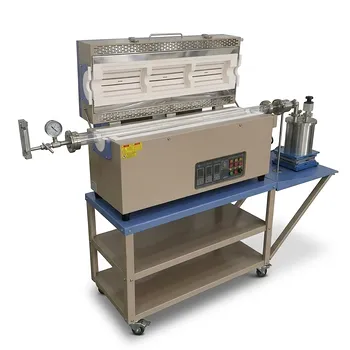
5 Inch Two Zone Rotary Tube Furnace 1100C for Powder CVD and Material Synthesis
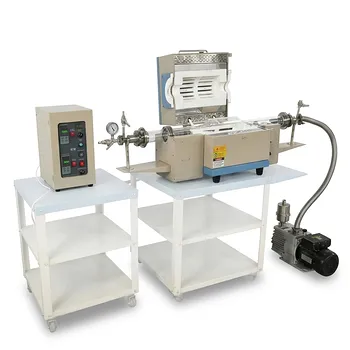
Two Zone Rotary Tube Furnace for Powder CVD Coating and Core Shell Material Synthesis 1100C
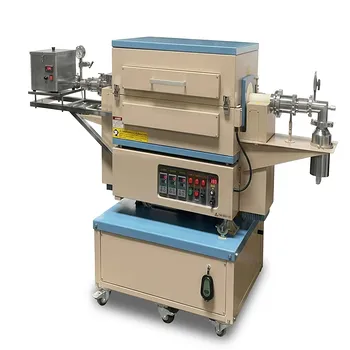
1500C 3-Zone Rotary Tube Furnace 60mm with Automatic Powder Feeding and Receiving System for Continuous Material Synthesis
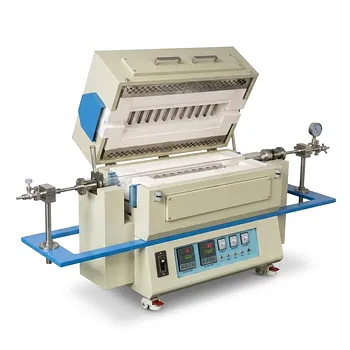
High Temperature Dual Zone Rotating Tube Furnace 1500C Silicon Carbide Heating for Advanced Material Synthesis
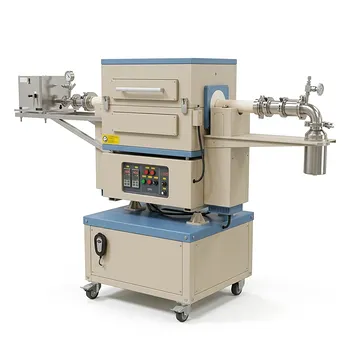
1500C Max Dual Zone Rotary Tube Furnace with 60 mm OD Alumina Tube for High Temperature Material Synthesis
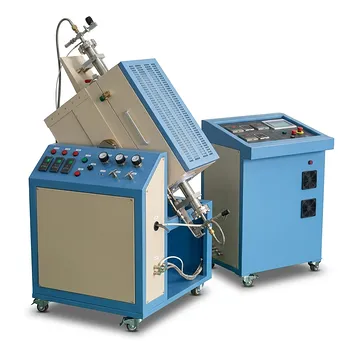
1100C High Pressure Rocking Tube Furnace with 2 Inch Super Alloy Processing Tube for Material Synthesis
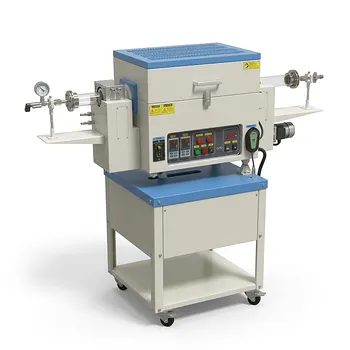
4 Inch Two Zone Rotary CVD Tube Furnace for High Temperature Battery Material Synthesis and Advanced Material Calcination
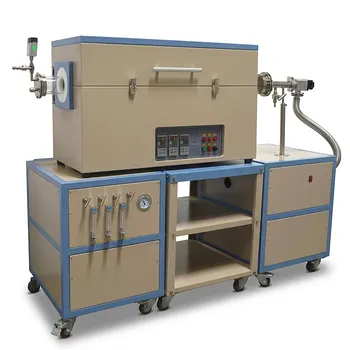
Three Zone Quartz Tube Furnace with 3 Channel Gas Mixer Vacuum Pump and Anti Corrosive Vacuum Gauge
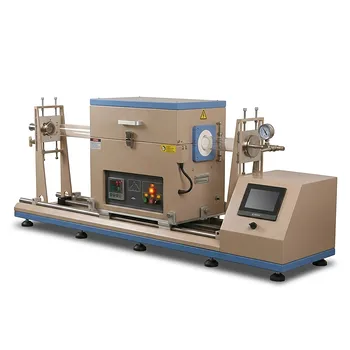
1200C Sliding Tube Furnace for Rapid Thermal Processing and CVD Graphene Growth with 100mm OD Capacity

Compact High Temperature 1600C Tube Furnace with 50mm Alumina Tube and Vacuum Flanges for Material Sintering

High Temperature 1700C Vertical Tube Furnace for Powder Spherification and Material Sintering
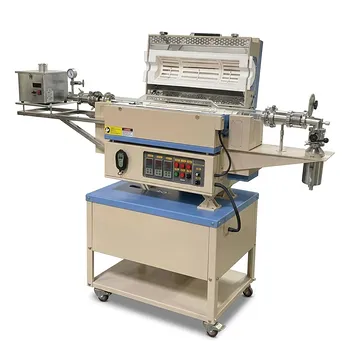
5 Inch Rotary Tube Furnace with Automatic Feeding and Receiving System 1200C Three Zone CVD Powder Processing
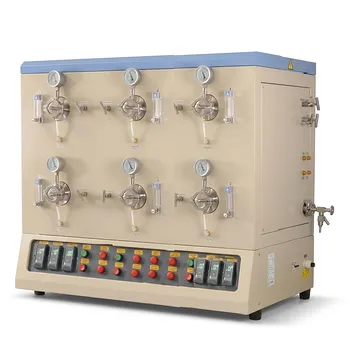
1200C High Throughput Multi Channel Tube Furnace with 50mm Quartz Tubes for Annealing and Material Phase Diagram Research
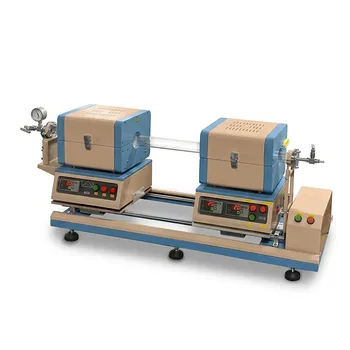
High Temperature 1200C Automatic Sliding Dual Zone Tube Furnace for 2D Transition Metal Dichalcogenides Growth and Material Sublimation Research
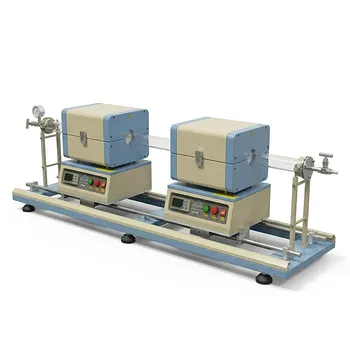
1200C Max Dual Sliding Tube Furnace with 50 mm Tube Flanges for CVD
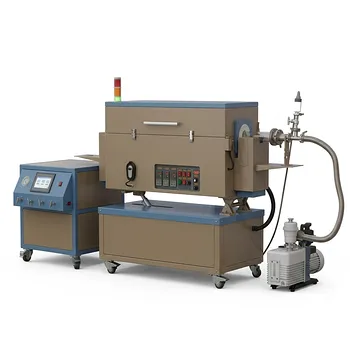
5 Inch Three Zone Rotary Tube Furnace with Integrated Gas Delivery System and 1200C Capability for Advanced Material CVD Processing
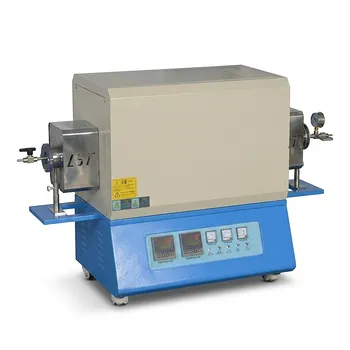
High Temperature Dual Zone Vacuum Tube Furnace for Material Research and CVD Processing
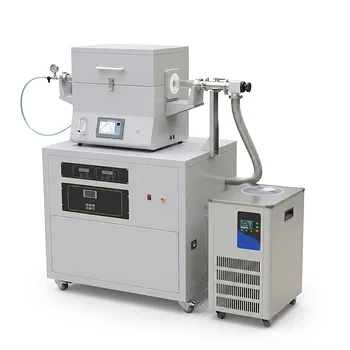
Split Chamber CVD Tube Furnace with Vacuum Station Chemical Vapor Deposition System Machine
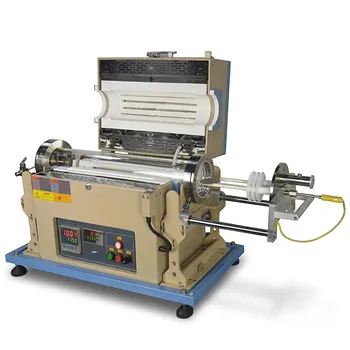
1200°C High Temperature 4 Inch Tube Furnace with Sliding Flange for CVD Systems
