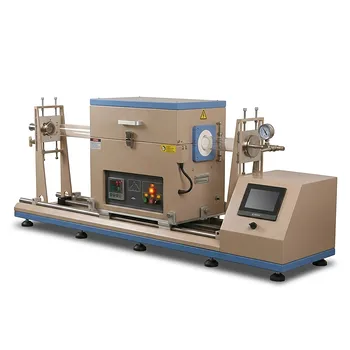
What role does a Tube Furnace play in PCN synthesis? Optimize Protonated Carbon Nitride Quality with Precision Control
Updated 3 months ago
The tube furnace is the fundamental reactor for PCN synthesis, providing the precise thermal energy and inert environment necessary to convert precursor molecules into a structured polymer. Specifically, it facilitates multi-stage thermal polymerization and preliminary exfoliation of raw materials at temperatures ranging from 550°C to 600°C.
Core Takeaway: A tube furnace serves as a precision-controlled thermal environment that manages the chemical transformation of melamine precursors into protonated carbon nitride. By maintaining stable temperatures and an inert atmosphere, it ensures the material achieves the specific layered structure and crystallinity required for high-quality nanosheets.
Facilitating the Thermal Polymerization Reaction
High-Temperature Multi-Stage Heating
The primary role of the tube furnace is to provide a precise high-temperature environment for the thermal treatment of raw materials. In the synthesis of protonated carbon nitride (PCN), this often involves multi-stage heating at specific intervals, such as 550°C and 600°C.
These temperature plateaus are critical for the sequential molecular rearrangement of precursors. Without the stability provided by a high-precision furnace, the chemical bonds may not form correctly, leading to incomplete polymerization.
Conversion of Melamine Precursors
Raw materials like melamine undergo a complex chemical transformation within the furnace. The heat drives the polycondensation process, where small molecules link together to form the bulk carbon nitride framework.
This process is highly sensitive to temperature fluctuations. A tube furnace ensures that the heat is distributed evenly, allowing for a uniform reaction that establishes the structural foundation for the final product.
Managing the Synthesis Environment
Argon Atmosphere Protection
The tube furnace allows for the introduction of a controlled argon atmosphere during the heating process. This inert environment is essential to prevent the oxidation or combustion of the carbon precursors when exposed to high heat.
By displacing oxygen, the argon gas ensures that the chemical energy is used purely for polymerization and carbonization. This protection is vital for maintaining the yield and purity of the PCN powder.
Precise Control of Heating Rates
The ability to set a specific heating rate (e.g., 2°C/min or 3°C/min) is a key advantage of tube furnaces. Slow, controlled heating allows for the gradual release of gases and the steady growth of the crystal lattice.
In contrast, rapid heating can sometimes be used to suppress the sublimation loss of monomers. The tube furnace provides the flexibility to adjust these rates based on the specific requirements of the PCN morphology being targeted.
Driving Structural Development
Preliminary Thermal Exfoliation
Beyond simple polymerization, the tube furnace facilitates preliminary thermal exfoliation. As the temperature rises to 600°C, the internal pressures and thermal energy begin to weaken the van der Waals forces between the layers of the bulk material.
This step is critical for researchers intending to produce high-quality nanosheets. The furnace effectively "prepares" the material, making subsequent exfoliation steps more efficient and successful.
Optimizing Crystallinity and Porosity
The stable high-temperature zone within the furnace determines the graphitization degree and crystallinity of the resulting powder. Maintaining a constant temperature ensures that the quaternary nitrogen functional groups are successfully integrated into the framework.
This control also influences the porosity and surface area of the PCN. These structural characteristics are the primary drivers of the material's performance in applications like photocatalysis or energy storage.
Understanding the Trade-offs
Sublimation and Material Loss
One significant challenge in tube furnace synthesis is the sublimation of precursors. If the heating rate is too slow or the tube is not properly sealed, a large portion of the melamine may vaporize before it can polymerize, leading to low yields.
Thermal Gradients
In larger tube furnaces, thermal gradients can occur where the temperature at the center of the tube differs from the edges. This can result in non-uniform PCN powder, where some particles are fully polymerized while others remain in an intermediate state.
Complexity of Atmosphere Management
Maintaining a constant flow of argon or other gases requires precise regulation. Any leak in the system that allows oxygen to enter can result in the combustion of the sample, potentially ruining the synthesis and damaging the quartz boat or tube.
How to Apply This to Your Project
Recommendations for Synthesis Goals
- If your primary focus is high crystallinity: Use a slow heating rate (approx. 2°C/min) and a longer dwell time at 550°C to allow for maximum molecular ordering.
- If your primary focus is high-yield nanosheet precursors: Prioritize the multi-stage heating process up to 600°C to maximize preliminary thermal exfoliation within the furnace.
- If your primary focus is preventing monomer loss: Experiment with rapid thermal processing by placing the sample into a preheated furnace zone to quickly bypass the sublimation temperature range.
By mastering the thermal and atmospheric variables of the tube furnace, you can precisely engineer the structural properties of protonated carbon nitride for your specific application.
Summary Table:
| Feature | Role in PCN Synthesis | Key Benefit |
|---|---|---|
| Temperature Range | 550°C - 600°C | Facilitates multi-stage thermal polymerization and molecular rearrangement. |
| Atmosphere Control | Argon (Inert) | Prevents oxidation and combustion of precursors, ensuring high purity. |
| Heating Rate | 2°C/min - 3°C/min | Manages crystallinity, graphitization degree, and suppresses sublimation loss. |
| Thermal Exfoliation | High-energy heating | Weakens van der Waals forces for superior nanosheet precursor development. |
Elevate Your R&D with THERMUNITS Precision Thermal Solutions
Achieving the perfect crystalline structure for protonated carbon nitride (PCN) requires more than just heat—it requires the absolute precision and atmosphere control provided by THERMUNITS equipment. As a leading manufacturer of high-temperature laboratory equipment, we empower material scientists and industrial researchers with reliable, state-of-the-art thermal processing tools.
From high-performance Tube Furnaces and Atmosphere Furnaces to advanced CVD/PECVD systems, Vacuum Induction Melting furnaces (VIM), and Hot Press furnaces, our comprehensive range is designed to meet the rigorous demands of modern material synthesis. Whether you need Muffle, Rotary, or Dental furnaces, our solutions ensure uniform heating and consistent results every time.
Ready to optimize your heat treatment process? Contact our expert engineering team today to discuss your specific requirements and discover how THERMUNITS can accelerate your next breakthrough!
References
- Qian Chen, Yongji Gong. Macroscopically uniform interface layer with Li+ conductive channels for high-performance Li metal batteries. DOI: 10.1038/s41467-024-54310-1
Mentioned Products
- Vertical 1700C Vacuum and Atmosphere Tube Furnace with 80mm Alumina Tube
- Compact High Temperature 1600C Tube Furnace with 50mm Alumina Tube and Vacuum Flanges for Material Sintering
- 900°C Max Rotary Tube Furnace with 8 Inch 310S Alloy Tube and Optional Multi Zone Heating for Industrial Material Calcination
- Split Vertical Tube Furnace with 1200C Quartz Tube and Stainless Steel Vacuum Flanges for Rapid Thermal Processing
- High Temperature 1700C Tube Furnace with High Vacuum Turbomolecular Pump System and Multi Channel Mass Flow Controller Gas Mixer
People Also Ask
- How is an industrial-grade vertical tube furnace utilized in smelting leaching residues? Enhance Metal Recovery Efficiency
- What is the function of a laboratory-grade vertical tube furnace in fast pyrolysis? Optimize Composite Research.
- How does a vertical tube furnace facilitate thermoelectric alloy melting? Precision synthesis for material homogeneity.
- Why is a thermocouple sensor indispensable for monitoring the vertical tube furnace during gallium oxide nanowire production? Optimize VLS Growth
- What are the advantages of using a vertical tube furnace for crucible experiments simulating steel-slag interactions?

Tech Team · ThermUnits
Last updated on Jun 02, 2026
Related Products
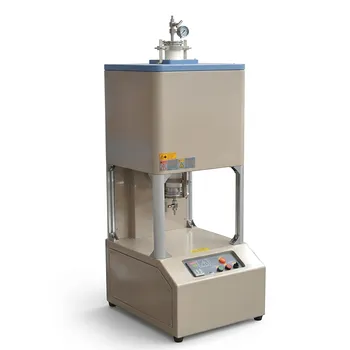
Vertical 1700C Vacuum and Atmosphere Tube Furnace with 80mm Alumina Tube
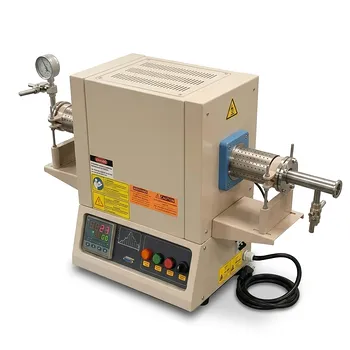
Compact High Temperature 1600C Tube Furnace with 50mm Alumina Tube and Vacuum Flanges for Material Sintering
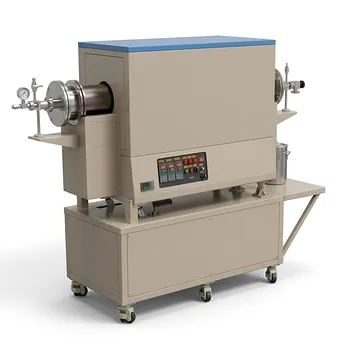
900°C Max Rotary Tube Furnace with 8 Inch 310S Alloy Tube and Optional Multi Zone Heating for Industrial Material Calcination
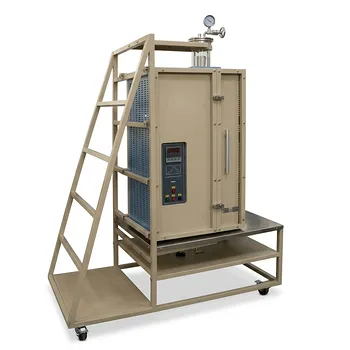
Split Vertical Tube Furnace with 1200C Quartz Tube and Stainless Steel Vacuum Flanges for Rapid Thermal Processing
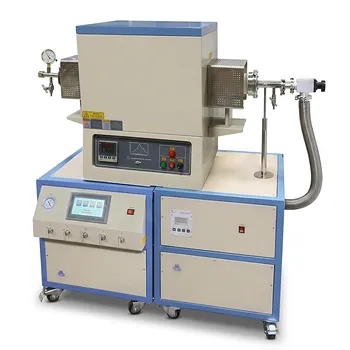
High Temperature 1700C Tube Furnace with High Vacuum Turbomolecular Pump System and Multi Channel Mass Flow Controller Gas Mixer
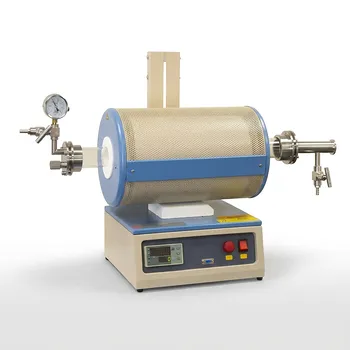
1100C Tube Furnace with Vacuum Flange and Programmable Temperature Controller for Material Science and Industrial Heat Treatment
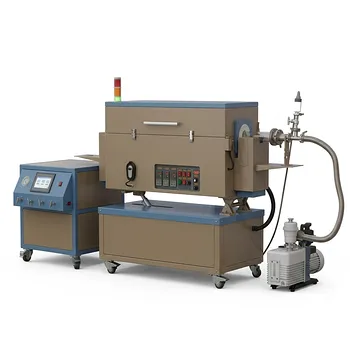
5 Inch Three Zone Rotary Tube Furnace with Integrated Gas Delivery System and 1200C Capability for Advanced Material CVD Processing
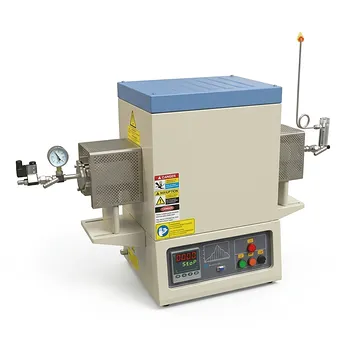
1700C Hydrogen Gas Tube Furnace with 60mm Alumina Process Tube and Integrated Hydrogen Safety Detector
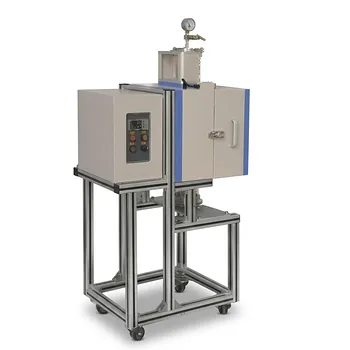
1200°C 5 Inch Vertical Quartz Tube Furnace with Stainless Steel Vacuum Flanges
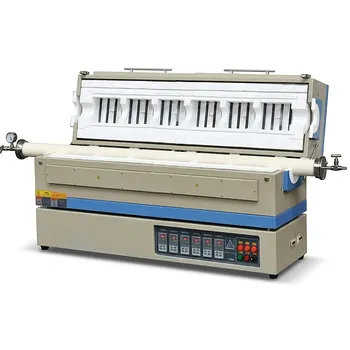
High Temperature 1700C Six Zone Split Tube Furnace with Alumina Tube and Water Cooled Flanges
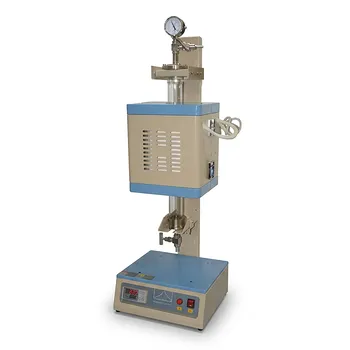
Compact Vertical Split Quartz Tube Furnace with Stainless Steel Vacuum Flanges for Rapid Thermal Quenching and Controlled Atmosphere Material Processing

High Temperature 1700C Benchtop Tube Furnace with 5 Inch Heating Zone High Purity Alumina Tube and Vacuum Sealing Flanges
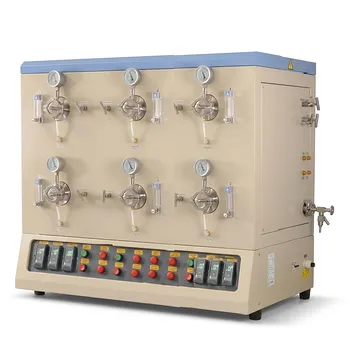
1200C High Throughput Multi Channel Tube Furnace with 50mm Quartz Tubes for Annealing and Material Phase Diagram Research
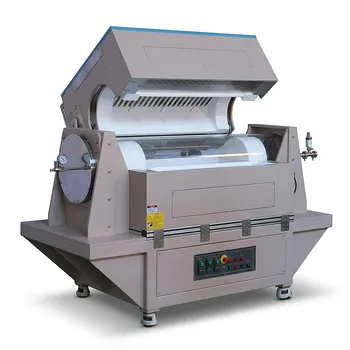
Three Zone Tube Furnace with 11 Inch or 15 Inch Quartz Tube and Hinged Flanges for Vacuum Atmosphere Heat Treatment

1800C High Temperature Compact Vacuum Tube Furnace with 60mm OD Alumina Tube and Kanthal MoSi2 Heating Elements

High Temperature 1700C Vertical Tube Furnace for Powder Spherification and Material Sintering
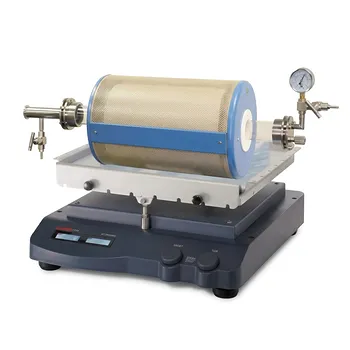
High Temperature Rocking Tube Furnace with Quartz Tube and Vacuum Flange for Materials Synthesis

High Temperature Automated 5 Inch Tube Furnace for Autonomous Material Research and Advanced Laboratory R&D
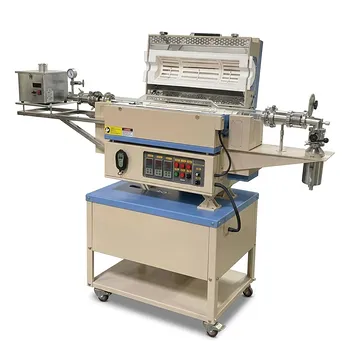
5 Inch Rotary Tube Furnace with Automatic Feeding and Receiving System 1200C Three Zone CVD Powder Processing