What role does a vertical atmosphere tube furnace play in boron evaporation kinetics? Enhancing Research Precision
Updated 5 months ago
A vertical atmosphere tube furnace serves as the foundational reaction environment for studying the kinetics of boron evaporation. By providing a stable thermal zone reaching up to 1361°C and a strictly controlled gas flow, it allows researchers to isolate specific variables that drive chemical reactions. This specialized equipment ensures that gas-phase products are continuously removed, preventing the reaction from stalling and allowing for accurate measurement of evaporation rates.
The central role of a vertical atmosphere tube furnace is to maintain a constant-temperature reaction zone while simulating specific redox environments. Its configuration facilitates the suspension of samples and the continuous flow of gases, which is essential for observing how boron behaves under varying high-temperature conditions.
The Functional Importance of Vertical Configuration
Precision Sample Suspension
The vertical orientation of the furnace is critical because it allows for the suspension of samples within the hot zone. This setup minimizes contact with crucible surfaces that could interfere with the evaporation process or react with the boron. It also allows for easier integration of high-sensitivity weighing systems to track mass loss in real-time.
Dynamic Removal of Gas-Phase Products
A constant flow of gases, such as nitrogen or argon, ensures that evaporated substances are promptly flushed from the reaction zone. If these gases were allowed to accumulate, the local concentration would increase, potentially slowing the reaction or reaching a state of equilibrium. This continuous removal is what allows the evaporation kinetics to be studied in a steady state.
Simulating Complex Chemical Environments
Precise Redox Atmosphere Control
By introducing specific mixtures of gases like carbon monoxide (CO) and carbon dioxide (CO2), the furnace can simulate diverse redox environments. This control is vital for understanding how different atmospheric compositions accelerate or inhibit boron evaporation. The furnace tube’s sealing performance ensures that these gas ratios remain stable throughout the duration of the experiment.
Thermal Energy as a Kinetic Driver
The furnace provides the uniform thermal field necessary to drive the movement of atoms and the dissolution of components. Stable temperatures, often reaching between 800°C and 1361°C, provide the activation energy required for boron to transition from a solid or liquid phase into a gas. This precision ensures that the kinetic data collected is both reliable and reproducible across multiple trials.
Understanding the Trade-offs and Limitations
Gas Flow and Temperature Gradients
While high gas flow rates are necessary to remove evaporated products, they can introduce thermal gradients within the tube. If the gas is not pre-heated, it may cool the sample surface, leading to inaccuracies in the recorded reaction temperature. Researchers must balance the need for product removal with the requirement for a perfectly isothermal environment.
Material Compatibility and Contamination
At temperatures exceeding 1000°C, the furnace tube material itself can become a factor. Elements from the tube or the sample holder can outgas or migrate, potentially contaminating the boron sample and skewing the kinetic results. Selecting the correct tube material (such as high-purity alumina or quartz) is a necessary trade-off between cost and chemical inertness.
Applying Furnace Technology to Your Research Goals
Choosing the right experimental parameters is essential for obtaining valid kinetic data in boron studies.
- If your primary focus is determining evaporation rates: Prioritize a furnace with high gas-flow stability to ensure that gas-phase saturation never limits the reaction speed.
- If your primary focus is simulating industrial redox conditions: Focus on integrated gas-mixing systems that allow for precise, automated control of $CO/CO_2$ or $H_2/Ar$ ratios.
- If your primary focus is long-term material stability: Select a furnace with high-precision PID controllers to prevent temperature fluctuations that could lead to non-linear evaporation data.
By meticulously controlling the thermal and atmospheric environment, the vertical tube furnace transforms a complex chemical process into a measurable and understandable kinetic study.
Summary Table:
| Feature | Role in Boron Kinetics Experiments | Key Benefit |
|---|---|---|
| Vertical Setup | Facilitates sample suspension & mass tracking | Minimizes surface contact & enables real-time data |
| Dynamic Gas Flow | Continuous removal of gas-phase products | Prevents reaction stalling & maintains steady state |
| Atmosphere Control | Simulates specific redox environments (e.g., CO/CO2) | Allows study of atmospheric influence on evaporation |
| Thermal Stability | Provides uniform energy up to 1361°C | Ensures reliable, reproducible kinetic activation |
Elevate Your Research with THERMUNITS Thermal Solutions
Precision is the backbone of successful material science and industrial R&D. At THERMUNITS, we are a leading manufacturer dedicated to providing high-performance laboratory heat treatment equipment. Our extensive range includes Vertical Atmosphere Tube Furnaces, Muffle, Vacuum, Rotary, and Hot Press furnaces, as well as CVD/PECVD systems and Vacuum Induction Melting (VIM) furnaces.
Whether you are conducting complex boron evaporation studies or developing new materials, our equipment offers the stability and control necessary for breakthrough results.
Ready to optimize your lab’s thermal processing? Contact us today to consult with our experts and find the perfect furnace solution for your specific research needs.
References
- Stamatis Flemetakis, Stephan Klemme. The effect of oxygen fugacity on the evaporation of boron from aluminoborosilicate melt. DOI: 10.5194/ejm-36-173-2024
Mentioned Products
- Vertical 1700C Vacuum and Atmosphere Tube Furnace with 80mm Alumina Tube
- High Temperature Vertical Atmosphere Controlled Furnace with Automatic Bottom Loading and 1700°C Capacity for Advanced Material Research
- Compact Vertical Split Quartz Tube Furnace with Stainless Steel Vacuum Flanges for Rapid Thermal Quenching and Controlled Atmosphere Material Processing
- Three Zone Heating Split Vertical Tube Furnace 1700 High Temperature Vacuum Atmosphere Thermal Process System
- High Temperature 1700C Vertical Tube Furnace for Powder Spherification and Material Sintering
People Also Ask
- How is an industrial-grade vertical tube furnace utilized in smelting leaching residues? Enhance Metal Recovery Efficiency
- What is the function of a laboratory-grade vertical tube furnace in fast pyrolysis? Optimize Composite Research.
- How does a vertical tube furnace facilitate thermoelectric alloy melting? Precision synthesis for material homogeneity.
- Why is a thermocouple sensor indispensable for monitoring the vertical tube furnace during gallium oxide nanowire production? Optimize VLS Growth
- What are the advantages of using a vertical tube furnace for crucible experiments simulating steel-slag interactions?

Tech Team · ThermUnits
Last updated on Apr 14, 2026
Related Products

Vertical 1700C Vacuum and Atmosphere Tube Furnace with 80mm Alumina Tube
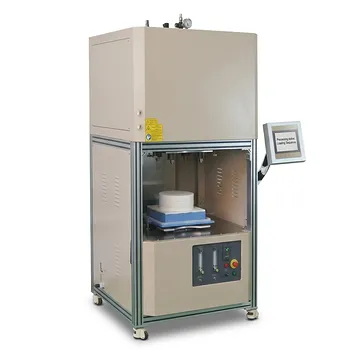
High Temperature Vertical Atmosphere Controlled Furnace with Automatic Bottom Loading and 1700°C Capacity for Advanced Material Research

Compact Vertical Split Quartz Tube Furnace with Stainless Steel Vacuum Flanges for Rapid Thermal Quenching and Controlled Atmosphere Material Processing
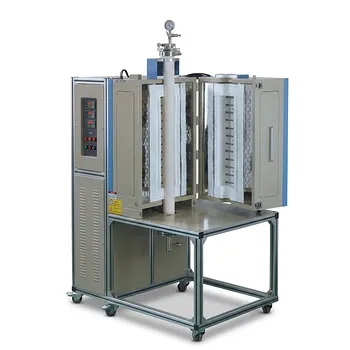
Three Zone Heating Split Vertical Tube Furnace 1700 High Temperature Vacuum Atmosphere Thermal Process System

High Temperature 1700C Vertical Tube Furnace for Powder Spherification and Material Sintering
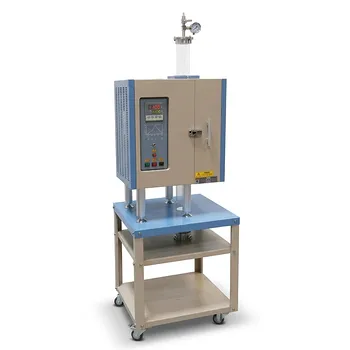
1100°C Split Vertical Tube Furnace with 80mm Quartz Tube and Stainless Steel Vacuum Flanges
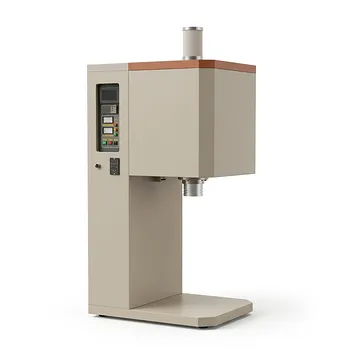
Vertical Openable Tube Furnace 0-1700c High Temperature Laboratory System for CVD and Vacuum Heat Treatment
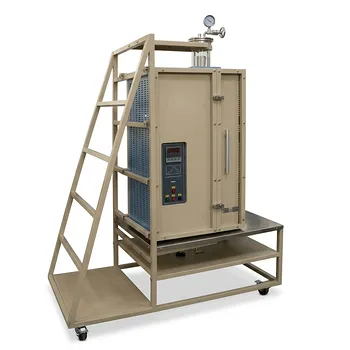
Split Vertical Tube Furnace with 1200C Quartz Tube and Stainless Steel Vacuum Flanges for Rapid Thermal Processing
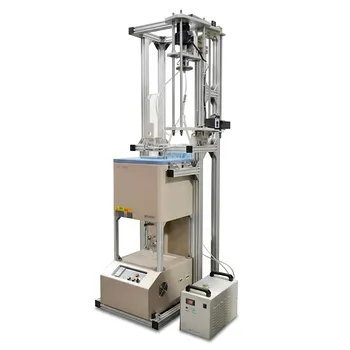
500C Vacuum Vertical Tube Furnace 84mm OD Sample Rotation Lifting System
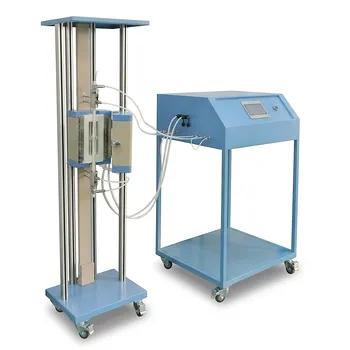
High Temperature Vertical Tube Furnace for Small Solid Oxide Fuel Cell Testing with Four Channel Gas Control
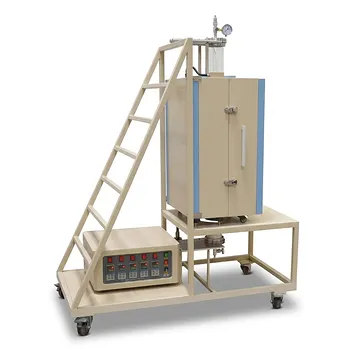
Five Zone Split Vertical Tube Furnace 1200C Max with 4 Inch Quartz Tube and Stainless Steel Vacuum Flanges
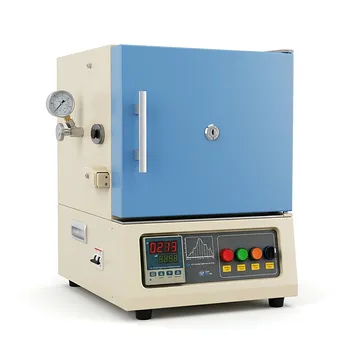
1200C Hybrid Muffle and Tube Furnace for Material Research with Dual Atmosphere Control Quartz Tubes
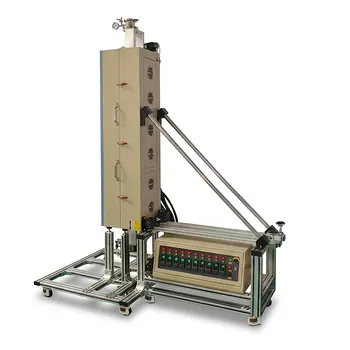
1200°C 10-Zone Split Tube Furnace with Horizontal and Vertical Mounting for Multi-Zone Thermal Gradients and Large Diameter Material Processing

1200°C 5 Inch Vertical Quartz Tube Furnace with Stainless Steel Vacuum Flanges
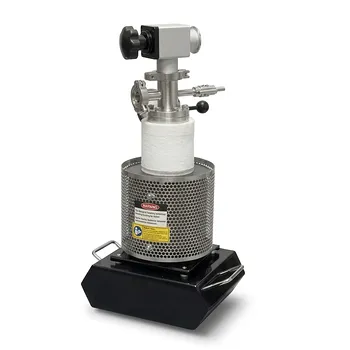
High Temperature 1100C Compact Top Loading Vertical Vacuum Tube Furnace for High Vacuum Noble Metal Melting and Material Research

Three Zone Tube Furnace with 11 Inch or 15 Inch Quartz Tube and Hinged Flanges for Vacuum Atmosphere Heat Treatment
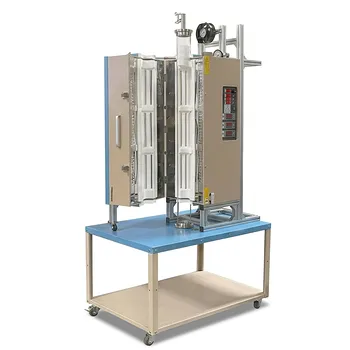
1200C Three Zone Split Vertical Tube Furnace 4 Inch Quartz Tube Stainless Steel Vacuum Flanges
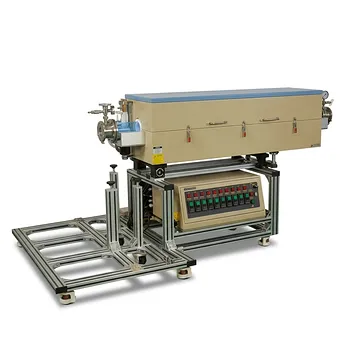
Ten Zone Multi Orientation Laboratory Tube Furnace for 1200C High Temperature Gradient Thermal Processing
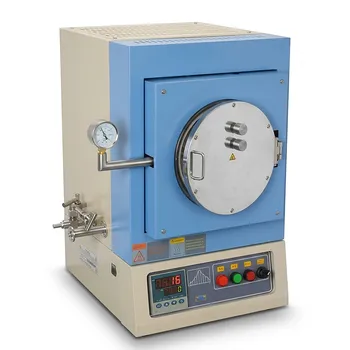
1100°C High Temperature Quartz Chamber Furnace 8 Inch OD with 7.6 Liter Capacity and Vacuum Atmosphere Capability
