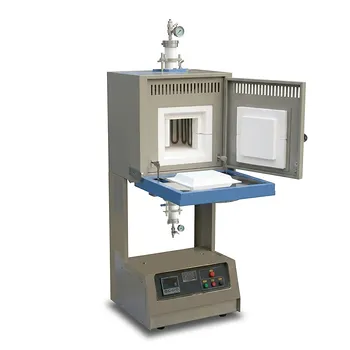
What role does an industrial high-temperature tube furnace play in the calcination of NCM622? Optimize Cathode Quality
Updated 6 months ago
The industrial high-temperature tube furnace is the fundamental reactor for the phase transformation and structural refinement of NCM622 cathode materials. It provides a precisely controlled thermal environment, typically around 850 °C, and a regulated oxygen atmosphere that allows lithium salt precursors to melt and transition metal ions to organize. This process is essential for achieving the ordered rhombohedral layered structure required for high-performance lithium-ion batteries.
The core role of the tube furnace is to provide the thermodynamic conditions necessary for solid-state reactions and ion diffusion. By maintaining stable temperature fields and oxygen partial pressures, the furnace ensures that ions reach their correct lattice sites, minimizing structural defects and maximizing electrochemical stability.
Engineering the Atomic Architecture
Facilitating Ion Diffusion and Doping
At temperatures such as 850 °C, the lithium salt precursors within the furnace chamber reach their melting point. This liquid phase allows lithium ions and dopants, such as magnesium, to undergo thermal diffusion into the interior of transition metal hydroxide particles. This precise thermal control is what enables site-selective doping, which stabilizes the material's structure during repeated charging cycles.
Transitioning to an Ordered Layered Structure
The furnace acts as a driver for the formation of the alpha-NaFeO2 type hexagonal layered system. Without the sustained heat and oxygen supply provided by the furnace, the material might remain in a disordered rock-salt or spinel phase. The thermal energy forces a transition into a highly ordered structure, which is critical for creating the channels necessary for rapid lithium-ion migration.
Mitigating Cation Mixing
One of the most critical roles of the furnace is the reduction of cation mixing, where nickel ions occupy sites intended for lithium. By maintaining a specific temperature-programmed environment, the furnace drives transition metal ions back into their designated layers. This structural "repair" or refinement is essential for ensuring the battery can maintain its capacity over time.
Precision Control of Chemical Reactions
Atmospheric Regulation and Oxygen Capture
The high-temperature tube furnace is not merely a heater but a controlled atmospheric environment. A constant oxygen flow is maintained to facilitate oxygen capture within the crystal lattice, which is vital for the transition from damaged phases back to a functional rhombohedral structure. It also ensures that residual carbon components and organic binders are completely oxidized and removed.
Regulating Reaction Kinetics and Gradients
The furnace's temperature control system regulates the sintering duration, which directly influences the diffusion depth of elements like aluminum. This allows engineers to fine-tune the element concentration gradient within the cathode particles. By following specific heating curves, the furnace ensures that chemical reactions between carbonates and oxides are completed while effectively releasing byproducts like carbon dioxide.
Ensuring Batch Consistency and Uniformity
The thermal uniformity inside a tube furnace is superior to many other heating methods. This consistency is vital for ensuring that the entire batch of NCM622 powder reaches the same phase composition. Uniform heating prevents the formation of secondary impurity phases that could degrade the final battery's performance.
Understanding the Technical Trade-offs
The Balance of Temperature and Time
High temperatures are necessary for crystallization, but excessive heat or prolonged sintering can lead to particle agglomeration. If particles grow too large, the lithium-ion diffusion path increases, which can reduce the power density of the resulting battery. Finding the "sweet spot" between complete crystallization and particle size control is a constant challenge in industrial calcination.
Atmosphere Sensitivity and Equipment Seals
The reliance on a controlled oxygen atmosphere means that any leakage in the tube furnace seals can lead to oxygen deficiency. This deficiency often results in increased cation mixing and a higher presence of Ni2+ in the lithium layers. Maintaining the integrity of the furnace's atmosphere is a high-maintenance but non-negotiable requirement for producing high-quality NCM622.
How to Apply This to Your Production Goal
Making the Right Choice for Your Project
The specific parameters used within the high-temperature tube furnace should be dictated by the current state of your raw materials and your desired final specifications.
- If your primary focus is synthesizing new NCM622: Prioritize a stable 850 °C environment with a high oxygen flow to ensure complete crystallization and minimal cation mixing.
- If your primary focus is the regeneration of spent materials: Use a two-stage thermal approach, starting at 450 °C to remove binders before moving to higher temperatures for structural restoration.
- If your primary focus is fine-tuning rate performance: Adjust the sintering duration and heating curves to control the element concentration gradient and limit particle growth.
Proper calibration of the high-temperature tube furnace is the single most important factor in transforming raw precursors into high-capacity, stable NCM622 cathode materials.
Summary Table:
| Key Role | Technical Mechanism | Impact on Battery Performance |
|---|---|---|
| Phase Transformation | Driving alpha-NaFeO2 type layered structure | Enhances Li-ion migration channels |
| Atmospheric Control | Regulated oxygen partial pressure | Minimizes cation mixing and defects |
| Ion Diffusion | Facilitating dopant (e.g., Mg) migration | Increases structural stability during cycles |
| Kinetic Regulation | Controlling element concentration gradients | Optimizes rate performance and capacity |
| Thermal Uniformity | Consistent 850 °C temperature fields | Ensures batch reliability and purity |
Elevate Your Battery Research with THERMUNITS Precision Furnaces
As a leading manufacturer of high-temperature laboratory equipment for material science, THERMUNITS provides the advanced thermal processing solutions essential for high-performance cathode synthesis. Whether you are conducting fundamental R&D or scaling up production, our comprehensive range of equipment—including Tube Furnaces, Atmosphere Furnaces, Muffle Furnaces, and CVD/PECVD systems—delivers the precise temperature control and atmospheric integrity required for NCM622 calcination.
Why partner with THERMUNITS?
- Superior Temperature Uniformity: Eliminate batch inconsistency with our state-of-the-art heating elements.
- Precision Atmosphere Control: Achieve optimal oxygen saturation for perfect rhombohedral structures.
- Versatile Solutions: From Rotary kilns to Vacuum Induction Melting (VIM) furnaces, we cover all heat treatment needs.
Ready to optimize your calcination process? Contact our technical experts today to find the ideal furnace solution for your laboratory or industrial R&D project!
References
- Gogwon Choe, Yong‐Tae Kim. Re-evaluation of battery-grade lithium purity toward sustainable batteries. DOI: 10.1038/s41467-024-44812-3
Mentioned Products
- 900°C Max Rotary Tube Furnace with 8 Inch 310S Alloy Tube and Optional Multi Zone Heating for Industrial Material Calcination
- High Temperature Tube Furnace 1500C with Sliding Flanges and 50mm OD for Rapid Thermal Processing Fast Heating and Cooling
- High Temperature 1700C Vertical Tube Furnace for Powder Spherification and Material Sintering
- Compact High Temperature 1600C Tube Furnace with 50mm Alumina Tube and Vacuum Flanges for Material Sintering
- High Temperature 1700C Tube Furnace with High Vacuum Turbomolecular Pump System and Multi Channel Mass Flow Controller Gas Mixer
People Also Ask
- How does a rotary tube furnace improve the processing of granular materials? Enhance Uniformity and Reaction Kinetics
- Why use a rotary tube furnace for FACS carbonization? Ensure uniform morphology and prevent sphere agglomeration.
- Why is the precise optimization of residence time essential in the catalyst calcination process? Maximize Your Yields.
- In what ways do rotary tube furnaces enhance chemical and specialty mineral processing? Drive Precision and Uniformity.
- What parameters must operators control to maintain product quality in a rotary furnace? Master Your Heat Treatment.

Tech Team · ThermUnits
Last updated on Apr 14, 2026
Related Products
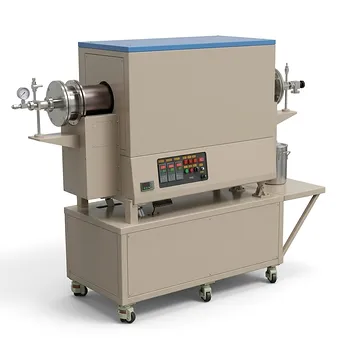
900°C Max Rotary Tube Furnace with 8 Inch 310S Alloy Tube and Optional Multi Zone Heating for Industrial Material Calcination
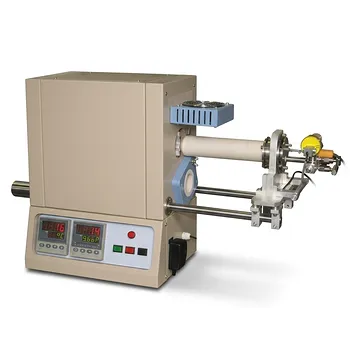
High Temperature Tube Furnace 1500C with Sliding Flanges and 50mm OD for Rapid Thermal Processing Fast Heating and Cooling
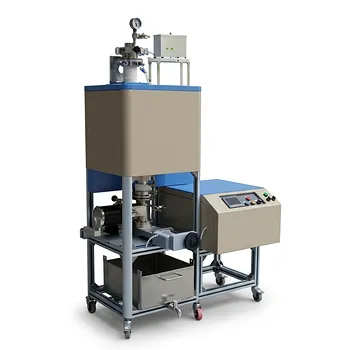
High Temperature 1700C Vertical Tube Furnace for Powder Spherification and Material Sintering
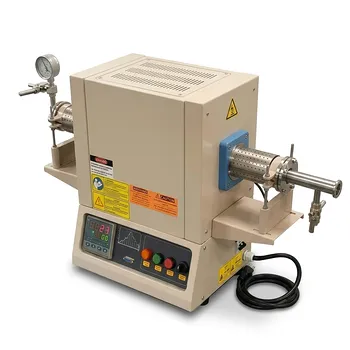
Compact High Temperature 1600C Tube Furnace with 50mm Alumina Tube and Vacuum Flanges for Material Sintering
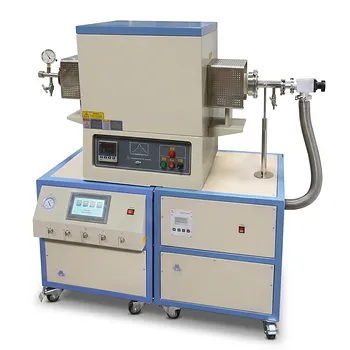
High Temperature 1700C Tube Furnace with High Vacuum Turbomolecular Pump System and Multi Channel Mass Flow Controller Gas Mixer
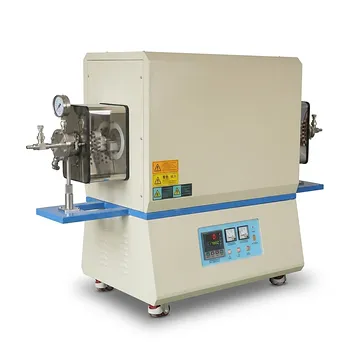
High Temperature 1800C Atmosphere Tube Furnace for CVD Research and Vacuum Sintering Precision Heat Treatment
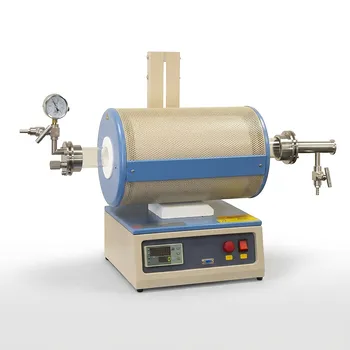
1100C Tube Furnace with Vacuum Flange and Programmable Temperature Controller for Material Science and Industrial Heat Treatment
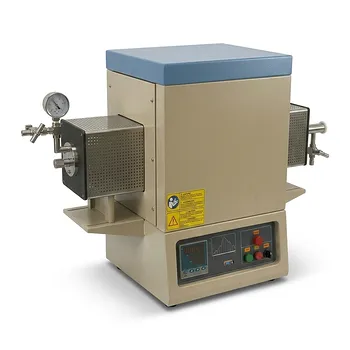
High Temperature 1700C Benchtop Tube Furnace with 5 Inch Heating Zone High Purity Alumina Tube and Vacuum Sealing Flanges
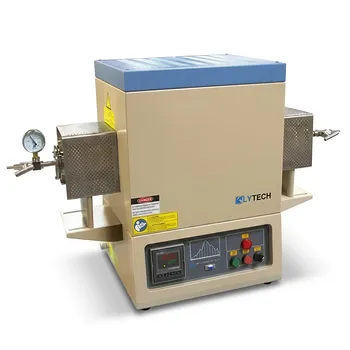
1800C High Temperature Compact Vacuum Tube Furnace with 60mm OD Alumina Tube and Kanthal MoSi2 Heating Elements
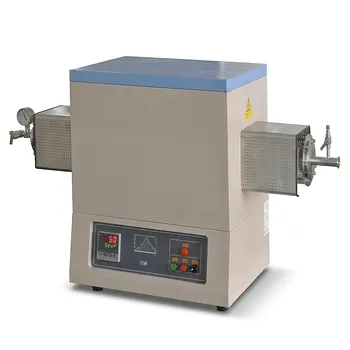
High Temperature 1700C Tube Furnace with 4 Inch OD Alumina Tube and Vacuum Sealing Flanges
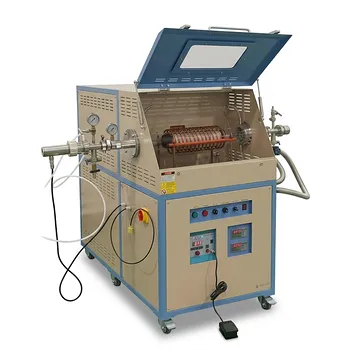
Ultra High Temperature 2300C Induction Heated Graphite Tube Furnace with Infrared Control
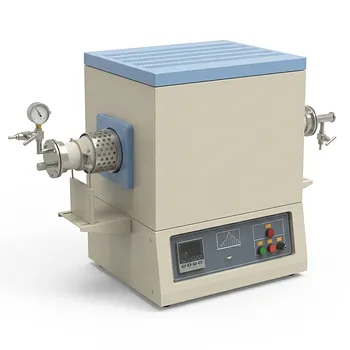
1750°C High Temperature Benchtop Vacuum Atmosphere Tube Furnace with Kanthal Super 1800 Heating Elements and 60mm Alumina Processing Tube
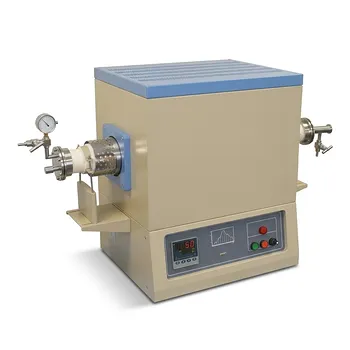
1700C High Temperature Alumina Tube Furnace with 18 Inch Heated Zone and Vacuum Sealing Flanges
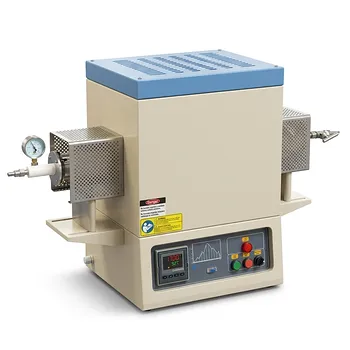
High Temperature Three Zone Tube Furnace 1700C with Alumina Tube and Water Cooled Flanges
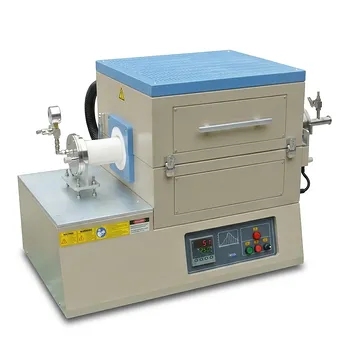
High Temperature 1700C Split Tube Furnace with Vacuum Flanges Valves and 60mm Alumina Tube
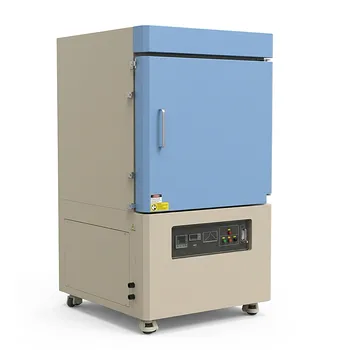
Industrial Large Box Furnace 1700C 216L High Temp Muffle Sintering System
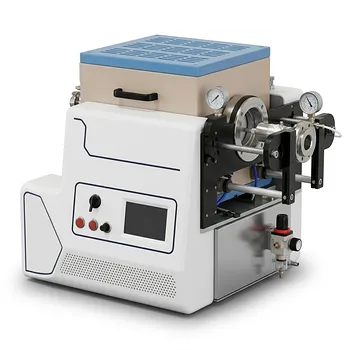
High Temperature Automated 5 Inch Tube Furnace for Autonomous Material Research and Advanced Laboratory R&D
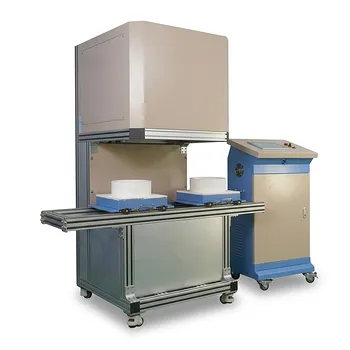
High Temperature Bottom Loading Vertical Furnace 1700C Dual Stage Sample Processing System 18L Large Capacity Thermal Treatment Equipment
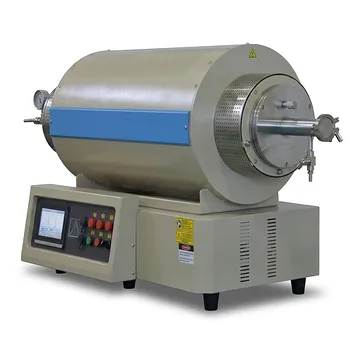
1200C Max Three Zone Tube Furnace 6 Inch OD Max with Tube and Flange