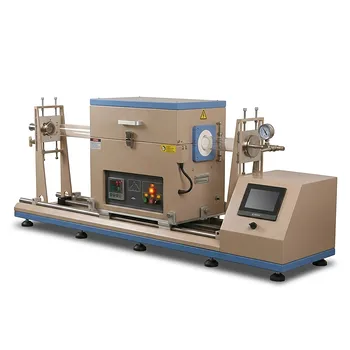
What role does the reducing atmosphere provided by a tube furnace play in the post-treatment process of Cu-GDYNT?
Updated 3 months ago
The reducing atmosphere in a tube furnace serves as a dual-purpose purification and optimization agent for Cu-GDYNT (Copper Graphdiyne Nanotubes). Specifically, it removes surface-level contaminants like moisture and solvents while chemically reducing oxygen-containing impurities to increase the metallic copper content. This process directly enhances the material’s electrical conductivity and ensures a more effective distribution of active catalytic sites.
The core role of the reducing atmosphere is to facilitate a controlled chemical transformation that purifies the Cu-GDYNT surface and maximizes its metallic properties. By eliminating oxidation and impurities, the tube furnace creates a high-performance catalyst carrier with optimized conductivity.
Surface Purification and Impurity Removal
Eliminating Residual Volatiles
During the post-treatment phase, the H2/N2 gas mixture acts as a carrier and reactant to strip away residual solvents and moisture. These volatiles are often trapped on the nanotubes' surface during the manufacturing process and can interfere with subsequent applications if not removed.
Stripping Oxygen-Containing Impurities
Manufacturing processes often introduce unwanted oxygen-containing groups into the graphdiyne structure. The high-temperature reducing atmosphere facilitates a chemical reaction that removes this oxygen, returning the material to a more pristine state and preventing unwanted secondary reactions.
Enhancing Metallic Properties and Conductivity
Increasing Metallic Copper Content
The heat provided by the tube furnace, combined with the reducing gas, facilitates the conversion of copper species into their metallic state. Increasing the metallic copper content is vital because it shifts the material's properties toward higher purity and better chemical stability.
Optimizing Catalyst Carrier Efficiency
By refining the copper within the graphdiyne matrix, the treatment optimizes the electrical conductivity of the catalyst carrier. This process also ensures that the active sites—where the chemical reactions actually occur—are distributed more effectively across the nanotubes' surface area.
Understanding the Trade-offs
Risk of Particle Coarsening and Sintering
While high temperatures are necessary for reduction, excessive heat can lead to particle coarsening or sintering. If the temperature profile is not strictly regulated, the copper particles may aggregate, which reduces the active surface area and degrades the catalyst's performance.
Balancing Reduction and Structural Integrity
A reducing atmosphere must be carefully balanced; if it is too aggressive or the exposure is too long, there is a risk of affecting the Graphdiyne lattice itself. Maintaining the delicate balance between removing oxygen and preserving the carbon structure is the primary challenge in this post-treatment.
Achieving Optimal Post-Treatment Results
To achieve the best results with Cu-GDYNT post-treatment, you must align the tube furnace settings with your specific performance requirements.
- If your primary focus is Maximum Conductivity: Prioritize higher metallic copper conversion by ensuring a stable, high-purity hydrogen flow and precise high-temperature soaking.
- If your primary focus is Surface Area Preservation: Use a strictly controlled heating curve to prevent particle sintering and maintain a high density of active sites.
- If your primary focus is Structural Stability: Utilize a nitrogen-rich inert mixture with a lower hydrogen concentration to prevent the over-reduction of the carbon framework.
A precisely controlled reducing environment is the defining factor in transforming raw Cu-GDYNT into a high-efficiency catalytic material.
Summary Table:
| Process Function | Key Benefit | Impact on Cu-GDYNT |
|---|---|---|
| Impurity Removal | Strips volatiles & oxygen | High-purity pristine surface |
| Chemical Reduction | Increases metallic copper | Enhanced electrical conductivity |
| Surface Refinement | Optimizes active sites | Maximized catalytic efficiency |
| Controlled Heating | Prevents particle sintering | Preserved high surface area |
Precision Thermal Solutions for Material Science
THERMUNITS is a leading manufacturer of high-temperature laboratory equipment for material science and industrial R&D. We offer a comprehensive range of thermal processing solutions, including Tube, Atmosphere, Vacuum, Muffle, and Rotary furnaces, as well as CVD/PECVD systems, Dental Furnaces, and vacuum induction melting furnaces (VIM).
For complex applications like Cu-GDYNT post-treatment, our systems provide the stable reducing environments and precise temperature control necessary to maximize metallic properties and catalytic efficiency while preserving structural integrity.
Enhance your research outcomes with specialized heat treatment technology.
Contact Our Technical Team Today
References
- Yan Lv, Fucang Liang. Preparation and Support Effect of Graphdiyne Nanotubes with Abundant Cu Quantum Dots. DOI: 10.3390/molecules29061410
Mentioned Products
- Vertical 1700C Vacuum and Atmosphere Tube Furnace with 80mm Alumina Tube
- Compact High Temperature 1600C Tube Furnace with 50mm Alumina Tube and Vacuum Flanges for Material Sintering
- 900°C Max Rotary Tube Furnace with 8 Inch 310S Alloy Tube and Optional Multi Zone Heating for Industrial Material Calcination
- Split Vertical Tube Furnace with 1200C Quartz Tube and Stainless Steel Vacuum Flanges for Rapid Thermal Processing
- High Temperature 1700C Tube Furnace with High Vacuum Turbomolecular Pump System and Multi Channel Mass Flow Controller Gas Mixer
People Also Ask
- How is an industrial-grade vertical tube furnace utilized in smelting leaching residues? Enhance Metal Recovery Efficiency
- What is the function of a laboratory-grade vertical tube furnace in fast pyrolysis? Optimize Composite Research.
- How does a vertical tube furnace facilitate thermoelectric alloy melting? Precision synthesis for material homogeneity.
- Why is a thermocouple sensor indispensable for monitoring the vertical tube furnace during gallium oxide nanowire production? Optimize VLS Growth
- What are the advantages of using a vertical tube furnace for crucible experiments simulating steel-slag interactions?

Tech Team · ThermUnits
Last updated on Jun 02, 2026
Related Products

Vertical 1700C Vacuum and Atmosphere Tube Furnace with 80mm Alumina Tube

Compact High Temperature 1600C Tube Furnace with 50mm Alumina Tube and Vacuum Flanges for Material Sintering
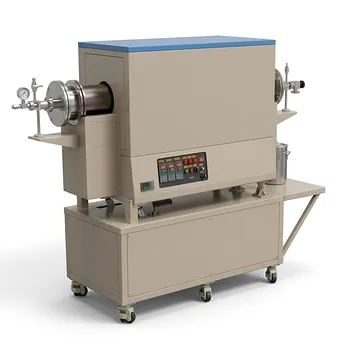
900°C Max Rotary Tube Furnace with 8 Inch 310S Alloy Tube and Optional Multi Zone Heating for Industrial Material Calcination
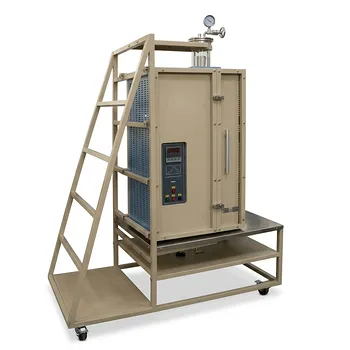
Split Vertical Tube Furnace with 1200C Quartz Tube and Stainless Steel Vacuum Flanges for Rapid Thermal Processing

High Temperature 1700C Tube Furnace with High Vacuum Turbomolecular Pump System and Multi Channel Mass Flow Controller Gas Mixer

1100C Tube Furnace with Vacuum Flange and Programmable Temperature Controller for Material Science and Industrial Heat Treatment
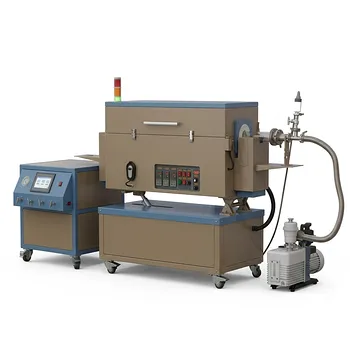
5 Inch Three Zone Rotary Tube Furnace with Integrated Gas Delivery System and 1200C Capability for Advanced Material CVD Processing

1700C Hydrogen Gas Tube Furnace with 60mm Alumina Process Tube and Integrated Hydrogen Safety Detector

1200°C 5 Inch Vertical Quartz Tube Furnace with Stainless Steel Vacuum Flanges

High Temperature 1700C Six Zone Split Tube Furnace with Alumina Tube and Water Cooled Flanges

Compact Vertical Split Quartz Tube Furnace with Stainless Steel Vacuum Flanges for Rapid Thermal Quenching and Controlled Atmosphere Material Processing

High Temperature 1700C Benchtop Tube Furnace with 5 Inch Heating Zone High Purity Alumina Tube and Vacuum Sealing Flanges
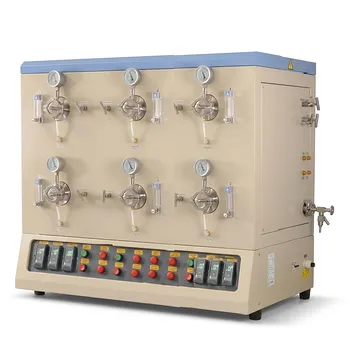
1200C High Throughput Multi Channel Tube Furnace with 50mm Quartz Tubes for Annealing and Material Phase Diagram Research
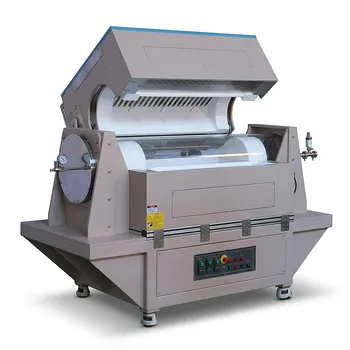
Three Zone Tube Furnace with 11 Inch or 15 Inch Quartz Tube and Hinged Flanges for Vacuum Atmosphere Heat Treatment

1800C High Temperature Compact Vacuum Tube Furnace with 60mm OD Alumina Tube and Kanthal MoSi2 Heating Elements

High Temperature 1700C Vertical Tube Furnace for Powder Spherification and Material Sintering
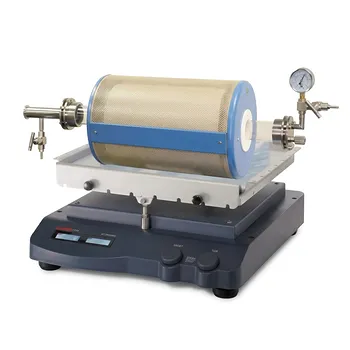
High Temperature Rocking Tube Furnace with Quartz Tube and Vacuum Flange for Materials Synthesis

High Temperature Automated 5 Inch Tube Furnace for Autonomous Material Research and Advanced Laboratory R&D
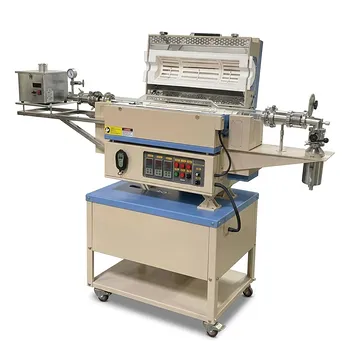
5 Inch Rotary Tube Furnace with Automatic Feeding and Receiving System 1200C Three Zone CVD Powder Processing