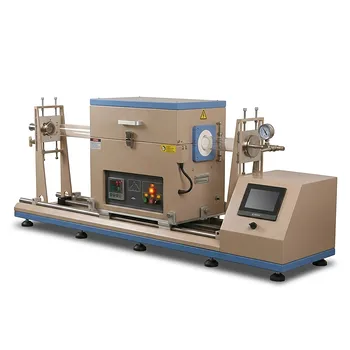
What role does tube furnace annealing play in the synthesis of Co3O4 nanosheets? Master Precise Phase Transformation
Updated 3 months ago
Tube furnace annealing is the critical thermal process that converts chemical precursors into functional Cobalt Tetroxide ($Co_3O_4$) nanosheets through controlled oxidation. By maintaining a precise environment of 600°C in air, the furnace facilitates a complete solid-phase reaction that transforms cobalt acetate into a specific crystalline phase. This stage is not merely a heating step; it is the architectural phase where individual nanoparticles self-assemble into the stacked nanosheet structures required for high-performance applications.
Core Takeaway: The tube furnace acts as a precision reactor that governs the chemical purity, crystalline structure, and morphology of $Co_3O_4$. Its primary role is to drive the self-assembly of nanoparticles into high-surface-area nanosheets while ensuring the complete removal of precursor functional groups.
Precise Phase Transformation and Chemical Purity
Complete Precursor Conversion
The tube furnace provides the sustained thermal energy necessary to break the bonds of cobalt acetate precursors. At the target temperature of 600°C, functional groups like hydroxyls are removed, allowing the material to transition fully into Cobalt Tetroxide.
Achieving Phase Purity
Operating in an air environment within the furnace ensures that the cobalt reacts with sufficient oxygen to form $Co_3O_4$ rather than lower-order oxides. This results in a material with high phase purity, which is essential for consistent performance in enzymatic and catalytic roles.
Lattice Ordering and Crystallinity
Thermal excitation within the furnace promotes the ordering of the crystal lattice. This process increases the crystallinity of the metal oxide, which directly enhances the structural stability and electrical conductivity of the resulting nanosheets.
Morphological Engineering of Nanosheets
Self-Assembly of Nanoparticles
A defining role of the tube furnace is inducing the self-assembly of individual nanoparticles. Under specific thermal conditions, these particles arrange themselves into a stacked nanosheet structure rather than remaining as disordered clusters.
Surface Area Optimization
The formation of nanosheets is vital for creating a high specific surface area. This physical characteristic is the primary driver for enhanced enzymatic activity and faster reaction kinetics in electrochemical applications.
Grain Size Regulation
The precision of the furnace allows researchers to control the grain size of the $Co_3O_4$ crystals, often ranging between 15 to 24 nm. This nanometer-scale control is critical for maintaining the "nano" properties that differentiate these sheets from bulk materials.
Understanding the Trade-offs and Limitations
Temperature Sensitivity
The balance between crystallinity and surface area is delicate. While higher temperatures improve the ordering of the crystal lattice, excessive heat can lead to grain growth and sintering, which collapses the nanosheet structure and reduces the available surface area.
Atmospheric Influence
The choice of atmosphere is a "make or break" factor. While $Co_3O_4$ synthesis typically requires air for oxidation, any fluctuation in gas flow or the accidental introduction of inert gases can result in incomplete oxidation or the formation of unintended cobalt phases.
Thermal Gradients
Inexpensive or poorly calibrated tube furnaces may suffer from temperature gradients. If the precursor is not heated uniformly, the resulting nanosheets will exhibit inconsistent grain sizes and varying levels of catalytic activity across the sample.
How to Apply This to Your Synthesis Goals
The use of a tube furnace should be tailored to the specific performance requirements of your final material.
- If your primary focus is Maximum Catalytic Activity: Prioritize precise temperature control at 600°C to ensure the highest possible specific surface area through successful nanosheet self-assembly.
- If your primary focus is Structural Stability and Conductivity: Focus on the duration of the annealing process to promote superior lattice ordering and high crystallinity, even if it results in slightly larger grain sizes.
- If your primary focus is Phase Purity for Sensors: Ensure a constant, regulated flow of air within the tube furnace to guarantee the complete conversion of precursors and avoid sub-oxide contamination.
By mastering the thermal environment of the tube furnace, you transform a simple chemical mixture into a sophisticated, high-performance nanomaterial.
Summary Table:
| Key Role | Impact on Synthesis | Critical Parameter |
|---|---|---|
| Phase Transformation | Converts cobalt acetate into pure crystalline $Co_3O_4$ | 600°C in Air Atmosphere |
| Morphological Engineering | Induces self-assembly of nanoparticles into nanosheets | Uniform Thermal Energy |
| Property Regulation | Controls grain size (15-24 nm) and lattice ordering | Annealing Duration |
| Surface Optimization | Increases specific surface area for catalytic activity | Precise Temperature Control |
Elevate Your Nanomaterial Research with THERMUNITS
Unlock the full potential of your material synthesis with THERMUNITS, a leading manufacturer of high-temperature laboratory equipment. Whether you are synthesizing $Co_3O_4$ nanosheets or developing next-generation catalysts, our advanced thermal solutions—including Tube, Vacuum, Atmosphere, Muffle, and Rotary furnaces—provide the precision and uniformity required for critical phase transformations.
From CVD/PECVD systems to Vacuum Induction Melting furnaces, we empower material scientists and industrial R&D teams with tools designed for superior morphology control and chemical purity.
Ready to optimize your heat treatment process? Contact our experts today to find the perfect furnace for your laboratory!
References
- Yanan Huang, Lei Lu. Facile synthesis of nanoparticles-stacked Co3O4 nanoflakes with catalase-like activity for accelerating wound healing. DOI: 10.1093/rb/rbae006
Mentioned Products
- Vertical 1700C Vacuum and Atmosphere Tube Furnace with 80mm Alumina Tube
- Compact High Temperature 1600C Tube Furnace with 50mm Alumina Tube and Vacuum Flanges for Material Sintering
- 900°C Max Rotary Tube Furnace with 8 Inch 310S Alloy Tube and Optional Multi Zone Heating for Industrial Material Calcination
- Split Vertical Tube Furnace with 1200C Quartz Tube and Stainless Steel Vacuum Flanges for Rapid Thermal Processing
- High Temperature 1700C Tube Furnace with High Vacuum Turbomolecular Pump System and Multi Channel Mass Flow Controller Gas Mixer
People Also Ask
- How is an industrial-grade vertical tube furnace utilized in smelting leaching residues? Enhance Metal Recovery Efficiency
- What is the function of a laboratory-grade vertical tube furnace in fast pyrolysis? Optimize Composite Research.
- How does a vertical tube furnace facilitate thermoelectric alloy melting? Precision synthesis for material homogeneity.
- Why is a thermocouple sensor indispensable for monitoring the vertical tube furnace during gallium oxide nanowire production? Optimize VLS Growth
- What are the advantages of using a vertical tube furnace for crucible experiments simulating steel-slag interactions?

Tech Team · ThermUnits
Last updated on Jun 02, 2026
Related Products

Vertical 1700C Vacuum and Atmosphere Tube Furnace with 80mm Alumina Tube

Compact High Temperature 1600C Tube Furnace with 50mm Alumina Tube and Vacuum Flanges for Material Sintering
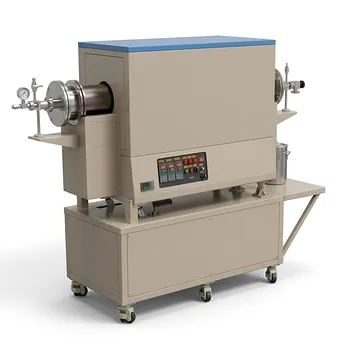
900°C Max Rotary Tube Furnace with 8 Inch 310S Alloy Tube and Optional Multi Zone Heating for Industrial Material Calcination
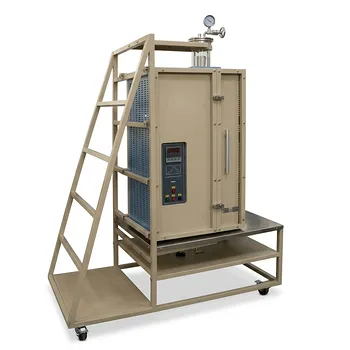
Split Vertical Tube Furnace with 1200C Quartz Tube and Stainless Steel Vacuum Flanges for Rapid Thermal Processing

High Temperature 1700C Tube Furnace with High Vacuum Turbomolecular Pump System and Multi Channel Mass Flow Controller Gas Mixer

1100C Tube Furnace with Vacuum Flange and Programmable Temperature Controller for Material Science and Industrial Heat Treatment
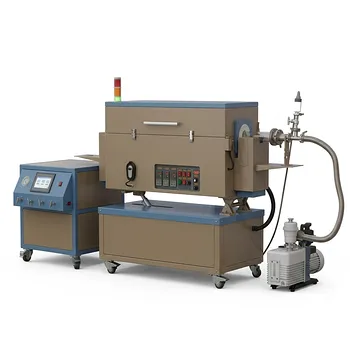
5 Inch Three Zone Rotary Tube Furnace with Integrated Gas Delivery System and 1200C Capability for Advanced Material CVD Processing
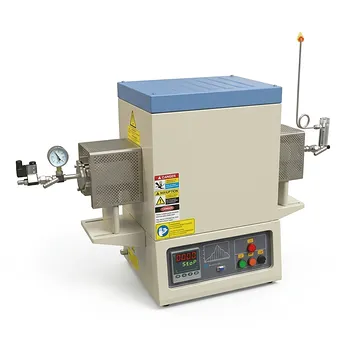
1700C Hydrogen Gas Tube Furnace with 60mm Alumina Process Tube and Integrated Hydrogen Safety Detector

1200°C 5 Inch Vertical Quartz Tube Furnace with Stainless Steel Vacuum Flanges

High Temperature 1700C Six Zone Split Tube Furnace with Alumina Tube and Water Cooled Flanges

Compact Vertical Split Quartz Tube Furnace with Stainless Steel Vacuum Flanges for Rapid Thermal Quenching and Controlled Atmosphere Material Processing

High Temperature 1700C Benchtop Tube Furnace with 5 Inch Heating Zone High Purity Alumina Tube and Vacuum Sealing Flanges
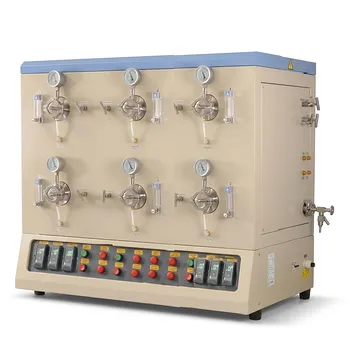
1200C High Throughput Multi Channel Tube Furnace with 50mm Quartz Tubes for Annealing and Material Phase Diagram Research

Three Zone Tube Furnace with 11 Inch or 15 Inch Quartz Tube and Hinged Flanges for Vacuum Atmosphere Heat Treatment

1800C High Temperature Compact Vacuum Tube Furnace with 60mm OD Alumina Tube and Kanthal MoSi2 Heating Elements

High Temperature 1700C Vertical Tube Furnace for Powder Spherification and Material Sintering
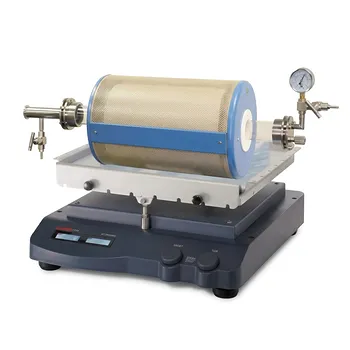
High Temperature Rocking Tube Furnace with Quartz Tube and Vacuum Flange for Materials Synthesis

High Temperature Automated 5 Inch Tube Furnace for Autonomous Material Research and Advanced Laboratory R&D
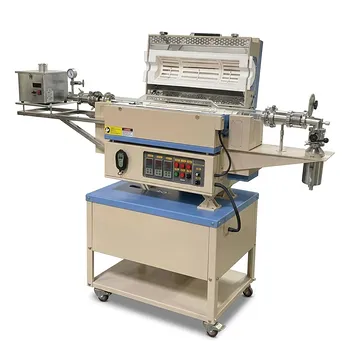
5 Inch Rotary Tube Furnace with Automatic Feeding and Receiving System 1200C Three Zone CVD Powder Processing