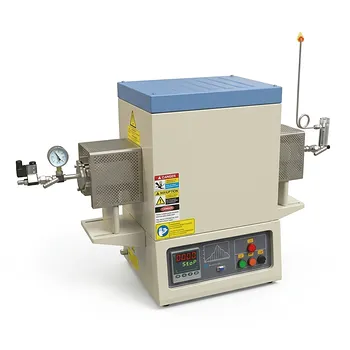
What technical conditions does a horizontal Tube Furnace provide for boron removal in coal? Precision Analysis Guide
Updated 6 months ago
The horizontal tube furnace acts as a controlled flow reactor that provides a stable, forced convection environment for coal analysis. By allowing for the precise regulation of gas mixtures and flow rates, such as nitrogen-oxygen blends at 200 mL/min, it enables researchers to isolate the mechanics of boron volatilization from secondary deposition. This setup ensures that heat exchange and chemical reactions occur under strictly defined atmospheric conditions, which is impossible in standard muffle furnaces.
A horizontal tube furnace transforms coal testing from a static heating process into a dynamic flow experiment. It provides the forced convection and chemical purity required to accurately measure how specific gas-phase dynamics influence the removal and transport of boron.
Precision Control of the Reaction Environment
Forced Convection vs. Natural Convection
Unlike a muffle furnace, which relies on unpredictable natural convection, a tube furnace facilitates forced convection. This allows for a constant, measurable flow of clean gases over the coal sample, ensuring that the kinetic energy of the gas remains a known variable.
Accurate Atmosphere Regulation
The system allows for the introduction of specific gas-phase chemical species with high precision. By controlling the ratio of gases like nitrogen and oxygen, researchers can simulate various stages of combustion or gasification to see how oxygen concentration directly impacts boron removal.
Regulated Heat Exchange Rates
The design of the horizontal furnace ensures that heat exchange between the gas and the solid sample is consistent. This stability is critical for verifying whether boron volatilization is driven by temperature alone or by the mechanical stripping effect of the gas flow.
Optimizing the Gas-Solid Interface
Horizontal Alignment for Uniformity
The horizontal orientation allows samples to be placed in alumina boats that align parallel to the gas stream. This ensures that the simulated flue gas flows uniformly over the entire surface of the coal or ash, preventing "dead zones" where boron might otherwise re-deposit.
Maintaining Chemical Purity
High-purity alumina boats remain chemically stable at temperatures reaching 700°C and beyond. This stability prevents cross-contamination between the sample container and the coal, ensuring that the detected boron levels are a result of the coal-gas interaction rather than a reaction with the crucible.
Isolation of Volatilization and Deposition
Because the gas moves in a linear path, the furnace can effectively separate the volatilization zone (where boron leaves the coal) from the deposition zone (where it may settle further down the tube). This separation is essential for understanding the full lifecycle of boron during the coal cleaning or combustion process.
Understanding the Trade-offs
Spatial Temperature Gradients
While the center of the tube provides a "constant temperature zone," the ends of the tube naturally experience lower temperatures. If a sample is too large or improperly placed, it may be subject to a temperature gradient that skews the volatilization data.
Throughput and Sample Volume
Tube furnaces are generally designed for smaller sample sizes compared to industrial muffle furnaces. This focus on precision over volume means that results are highly accurate for fundamental research but may require multiple runs to ensure statistical significance across different coal batches.
Gas Velocity Limitations
Extremely high flow rates can lead to thermal shock or cooling of the sample surface, which might interfere with the intended reaction temperature. Researchers must balance the need for high flow velocities with the requirement for thermal equilibrium.
How to Apply This to Your Research
When configuring a horizontal tube furnace for boron removal studies, your setup should be dictated by your specific investigative goals:
- If your primary focus is Boron Volatilization Kinetics: Use a stable flow rate (e.g., 200 mL/min) and high-purity alumina boats to ensure that weight loss or chemical changes are solely due to gas-solid interactions.
- If your primary focus is Secondary Deposition Patterns: Utilize a longer furnace tube to create a temperature gradient downstream, allowing you to observe where boron species transition from gas back to solid.
- If your primary focus is Flue Gas Interaction: Precisely mix SO3 or other trace gases into the carrier stream to simulate the complex chemical environment of a coal-fired power plant.
By mastering the forced convection environment of a horizontal tube furnace, you can move beyond simple heating to achieve a granular understanding of boron behavior in coal.
Summary Table:
| Technical Feature | Technical Advantage | Research Impact |
|---|---|---|
| Forced Convection | Controlled flow rates (e.g., 200 mL/min) | Isolates volatilization from secondary deposition |
| Atmosphere Regulation | Precise N2/O2 or trace gas mixing | Simulates specific combustion or gasification stages |
| Horizontal Alignment | Parallel gas-solid interface | Ensures uniform heating and prevents "dead zones" |
| Material Stability | High-purity alumina components | Prevents sample contamination at 700°C+ |
| Zonal Separation | Linear flow path | Distinguishes volatilization zones from deposition zones |
Elevate Your Research with THERMUNITS Precision Furnaces
Achieve unparalleled control over your material science experiments. THERMUNITS is a leading manufacturer of high-temperature laboratory equipment, providing advanced thermal processing solutions for industrial R&D.
Whether you need a specialized Tube Furnace for gas-flow studies or high-performance Muffle, Vacuum, Atmosphere, Rotary, or Hot Press furnaces, we offer the expertise to support your breakthroughs. From CVD/PECVD systems and Dental Furnaces to Electric Rotary Kilns and Vacuum Induction Melting (VIM) furnaces, our equipment is engineered for thermal stability and peak performance.
Ready to optimize your laboratory heat treatment processes? Contact THERMUNITS today to discuss your specific requirements with our technical experts and discover how our solutions can enhance your research outcomes.
References
- Jonah Gamutan, Tetsuya Nagasaka. Low-Temperature Thermal Treatment and Boron Speciation Analysis from Coals. DOI: 10.3390/su16135770
Mentioned Products
- Multi Position Tube Furnace 1100C for Laboratory Material Research and Advanced Industrial Thermal Processing
- 1200°C 10-Zone Split Tube Furnace with Horizontal and Vertical Mounting for Multi-Zone Thermal Gradients and Large Diameter Material Processing
- Ten Zone Multi Orientation Laboratory Tube Furnace for 1200C High Temperature Gradient Thermal Processing
- Split Vertical Tube Furnace with 1200C Quartz Tube and Stainless Steel Vacuum Flanges for Rapid Thermal Processing
- High Temperature 1700C Vertical Tube Furnace for Powder Spherification and Material Sintering
People Also Ask
- Why use a tube furnace for oxygen annealing LaCrO3/LaMnO3? Optimize Phase Transition & Magnetic Performance.
- What key role does a laboratory high-temperature tube furnace play in the production of carbon nanofibers? Guide
- How is a laboratory high-temperature tube furnace utilized to research the products of aluminothermic reduction? Advanced Metallurgical Solutions
- Why is a tube furnace required for pre-oxidation? Enhance Ti(Nb)-Si-C coating adhesion and substrate durability.
- What role does a laboratory tube furnace play during the carbonization stage of seaweed-residue carbon aerogel materials?

Tech Team · ThermUnits
Last updated on Apr 14, 2026
Related Products
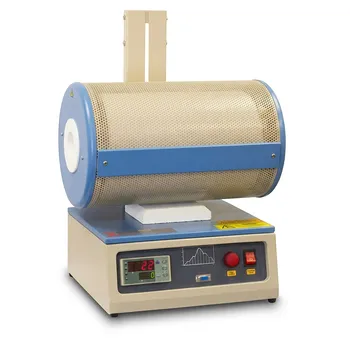
Multi Position Tube Furnace 1100C for Laboratory Material Research and Advanced Industrial Thermal Processing
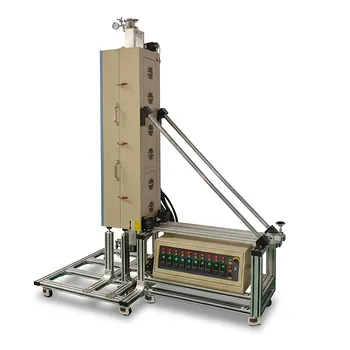
1200°C 10-Zone Split Tube Furnace with Horizontal and Vertical Mounting for Multi-Zone Thermal Gradients and Large Diameter Material Processing
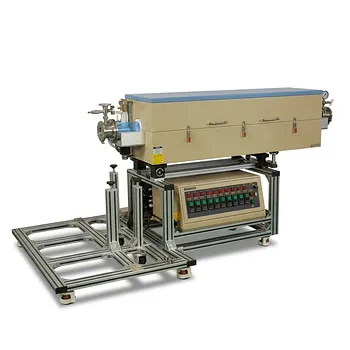
Ten Zone Multi Orientation Laboratory Tube Furnace for 1200C High Temperature Gradient Thermal Processing
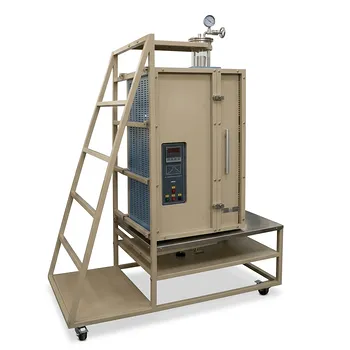
Split Vertical Tube Furnace with 1200C Quartz Tube and Stainless Steel Vacuum Flanges for Rapid Thermal Processing
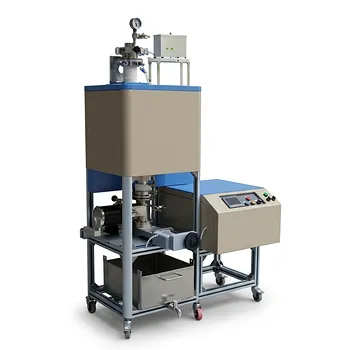
High Temperature 1700C Vertical Tube Furnace for Powder Spherification and Material Sintering
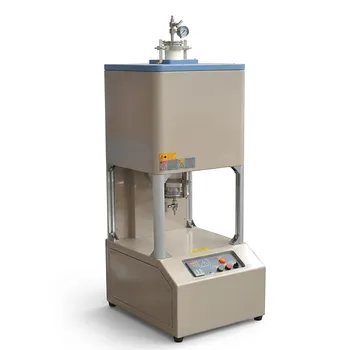
Vertical 1700C Vacuum and Atmosphere Tube Furnace with 80mm Alumina Tube
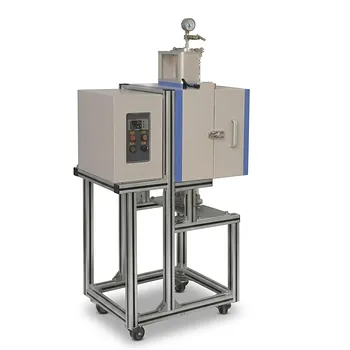
1200°C 5 Inch Vertical Quartz Tube Furnace with Stainless Steel Vacuum Flanges
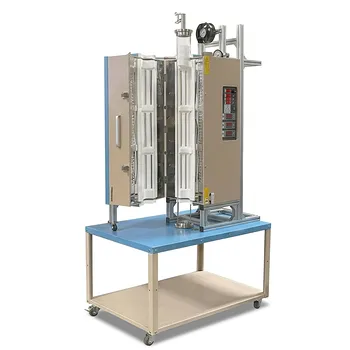
1200C Three Zone Split Vertical Tube Furnace 4 Inch Quartz Tube Stainless Steel Vacuum Flanges
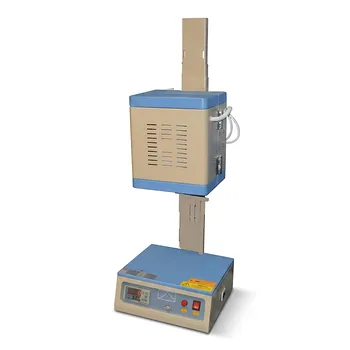
High Temperature Vertical Split Tube Furnace with PID Temperature Controller for 1 and 2 Inch Processing Tubes
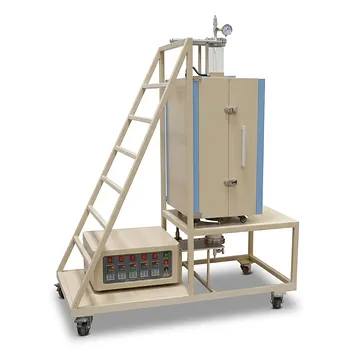
Five Zone Split Vertical Tube Furnace 1200C Max with 4 Inch Quartz Tube and Stainless Steel Vacuum Flanges
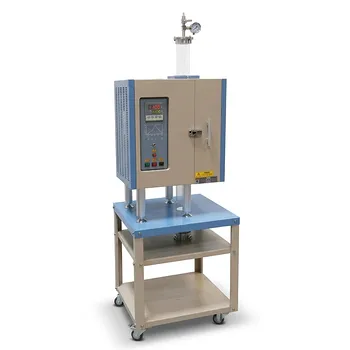
1100°C Split Vertical Tube Furnace with 80mm Quartz Tube and Stainless Steel Vacuum Flanges
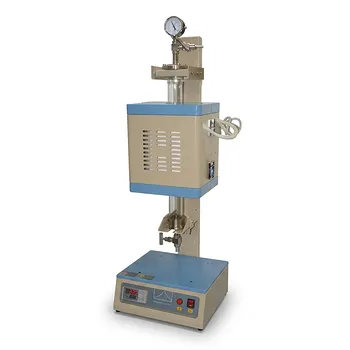
Compact Vertical Split Quartz Tube Furnace with Stainless Steel Vacuum Flanges for Rapid Thermal Quenching and Controlled Atmosphere Material Processing
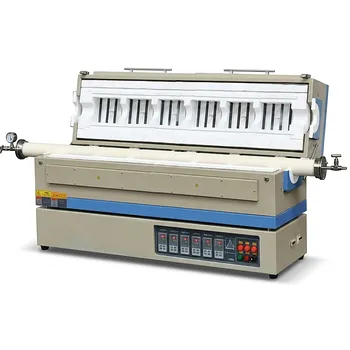
High Temperature 1700C Six Zone Split Tube Furnace with Alumina Tube and Water Cooled Flanges
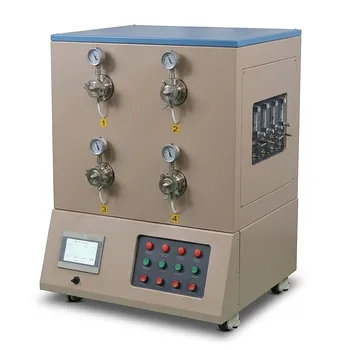
High Throughput 1200C Four Channel Tube Furnace with 3 Inch Quartz Tubes for Multi Zone Annealing and Material Research
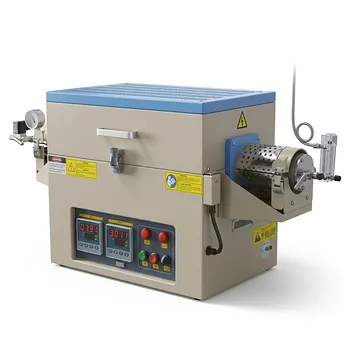
1100C Dual Zone Hydrogen Gas Tube Furnace with Quartz Tube and Integrated H2 Leak Detection System
1200C Max Three Zone Tube Furnace 6 Inch OD Max with Tube and Flange
1200C High Throughput Multi Channel Tube Furnace with 50mm Quartz Tubes for Annealing and Material Phase Diagram Research
1500C Eight Zone Split Tube Furnace for Thermal Gradient Processing and Advanced Material Research
1100C Tube Furnace with Vacuum Flange and Programmable Temperature Controller for Material Science and Industrial Heat Treatment