Why are high-purity alumina crucibles preferred for 1200°C phosphor synthesis? Essential Purity & Stability.
Updated 3 months ago
The preference for high-purity alumina crucibles in phosphor synthesis is driven by their exceptional chemical inertness and thermal stability at 1200°C. Unlike standard ceramic containers, high-purity alumina (corundum) does not react with reactive raw materials such as Calcium Oxide (CaO) or Europium Oxide ($Eu_2O_3$). This prevents the leaching of impurity ions into the phosphor’s crystal lattice, ensuring the material’s luminescent properties and chemical purity remain uncompromised.
High-purity alumina crucibles act as an inert "chemical fortress," protecting the sensitive phosphor lattice from container-borne contamination that would otherwise degrade optical performance and lead to fluorescence quenching.
The Critical Role of Chemical Inertness
Preventing Lattice Contamination
At 1200°C, solid-state reactions are highly energetic, increasing the risk of ion migration. High-purity alumina prevents foreign metal ions from the container from entering the phosphor crystal lattice, which is vital for maintaining the intended electronic transitions.
Compatibility with Reactive Precursors
Standard ceramics often contain silicates or impurities that react with alkaline earth oxides like CaO or rare-earth dopants like $Eu_2O_3$. Alumina remains chemically stable in the presence of these active precursors, ensuring the final product reaches its targeted stoichiometric composition.
Maintaining Luminescent Integrity
Even trace amounts of impurities from a container can act as "killer centers" within the phosphor. By using high-purity alumina, researchers prevent fluorescence quenching, ensuring the accuracy of the sample’s luminescent characteristics and quantum efficiency.
Thermal Stability and Structural Reliability
Exceptional Refractoriness
High-purity alumina is designed to withstand extreme environments, often rated for temperatures up to 1450°C or higher. At the 1200°C threshold required for oxide phosphor synthesis, the crucible maintains its structural strength without softening or deforming.
Physical Support During Long Soaks
Phosphor synthesis often requires several hours of constant temperature processing to ensure proper phase formation. Alumina provides a stable physical environment that does not fluctuate in mass or integrity during these prolonged heating cycles.
Resistance to Corrosive Vapors
In many synthesis environments, the release of volatile components can degrade standard containers. Alumina’s high-temperature resistance extends to its ability to resist corrosion from various salt precursors and vapors, maintaining a clean reaction zone.
Understanding the Trade-offs
Thermal Shock Sensitivity
While high-purity alumina is thermally stable, it is notoriously sensitive to thermal shock. Rapid heating or cooling cycles can cause the material to crack, requiring controlled ramp rates that can extend the duration of the synthesis process.
Cost and Material Grade
High-purity alumina (typically 99.9%) is significantly more expensive than standard lab-grade ceramics. Choosing a lower-grade alumina crucible to save costs can introduce secondary contamination, negating the benefits of using alumina in the first place.
How to Apply This to Your Synthesis
Selecting the right container is a balance between material purity requirements and budgetary constraints.
- If your primary focus is Maximum Quantum Efficiency: Use 99.9% high-purity alumina to eliminate any risk of fluorescence quenching caused by container-borne transition metals.
- If your primary focus is Structural Phase Analysis: Alumina is the standard choice to ensure that the detected phases, such as Silico-Ferrites or complex oxides, are not artifacts of container reactions.
- If your primary focus is High-Throughput Screening: Ensure your furnace cooling profiles are strictly managed to prevent the brittle failure of alumina crucibles during rapid cycling.
By prioritizing the chemical neutrality of the reaction vessel, you ensure that the observed optical properties are a true reflection of the synthesized material rather than a result of environmental contamination.
Summary Table:
| Key Factor | High-Purity Alumina (99.9%) | Standard Ceramic Containers |
|---|---|---|
| Chemical Reactivity | Minimal; prevents lattice impurities | Higher; reacts with CaO/Eu2O3 |
| Thermal Stability | Maintains strength at 1200°C+ | May soften or contaminate samples |
| Optical Impact | Prevents fluorescence quenching | Impurities act as 'killer centers' |
| Primary Usage | Precision material R&D | General-purpose heating |
Enhance Your Material Research with THERMUNITS Precision
THERMUNITS is a leading manufacturer of high-temperature laboratory equipment dedicated to material science and industrial R&D. We offer a comprehensive range of thermal processing solutions—including Muffle, Vacuum, Atmosphere, Tube, and Hot Press furnaces, as well as CVD/PECVD systems, Dental Furnaces, and Vacuum Induction Melting furnaces (VIM)—designed to ensure the purity and integrity of your synthesis.
Maximize your quantum efficiency and structural reliability with equipment built for extreme precision. Contact us today to find your solution and learn how our thermal expertise can accelerate your innovation.
References
- Casper van Aarle, H.T. Hintzen. Demonstration of Eu<sup>3+</sup> → Eu<sup>2+</sup> Energy Transfer in NIR Emitting CaO:Eu<sup>2+</sup>,Eu<sup>3+</sup> LED Phosphor and its Implication for the Role of Eu<sup>3+</sup> as a Killer Center for Long Wavelength Eu<sup>2+</sup> Emission. DOI: 10.1002/adom.202401738
Mentioned Products
- 600°C Vertical Crucible Furnace with SS316 Alloy Reactor and 6 Port Vacuum Flange
- 1100C High Temperature Vacuum Crucible Furnace with Quartz Chamber for Thermal Processing and Sintering
- Vertical Crucible Furnace 1000C High Temperature Laboratory Equipment 4.7 Inch Diameter Chamber SS316 Anti Corrosive Enclosure
- High Temperature Vertical Crucible Furnace with 22L Heating Chamber and 1200C Maximum Temperature
- 1100C Crucible Melting Furnace with Stirring Function for Glovebox and Air Sensitive Alloy Research
People Also Ask
- How does a high vacuum sintering furnace at 600 Celsius affect the microstructure of Al-TiC composites? Expert Analysis
- How should the choice between a Quartz crucible and an Alumina crucible be made for La2O2S? Optimize Material Purity
- Why use ceramic crucibles for coal nano-hybrid heat treatment? Ensure Purity and Thermal Stability.
- What role does a vacuum tube furnace play in palladium membrane treatment? Achieve 600°C Stability & Prevent Brittle Phases
- Why is a high-temperature furnace with precise temperature control necessary for Ag8SiS6 alloy synthesis? Ensure Safety.

Tech Team · ThermUnits
Last updated on Jun 03, 2026
Related Products
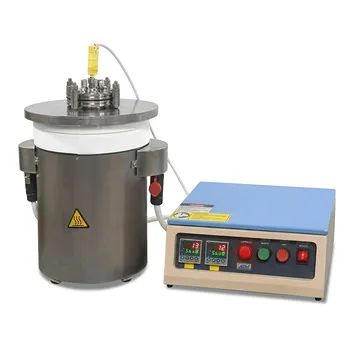
600°C Vertical Crucible Furnace with SS316 Alloy Reactor and 6 Port Vacuum Flange
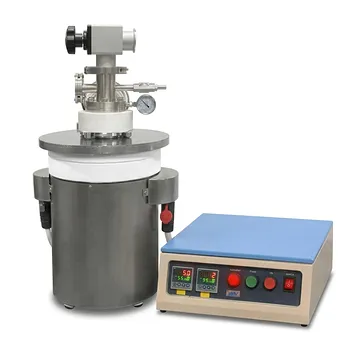
1100C High Temperature Vacuum Crucible Furnace with Quartz Chamber for Thermal Processing and Sintering
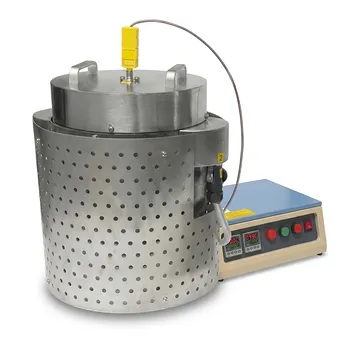
Vertical Crucible Furnace 1000C High Temperature Laboratory Equipment 4.7 Inch Diameter Chamber SS316 Anti Corrosive Enclosure
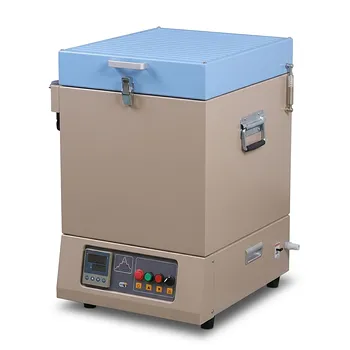
High Temperature Vertical Crucible Furnace with 22L Heating Chamber and 1200C Maximum Temperature
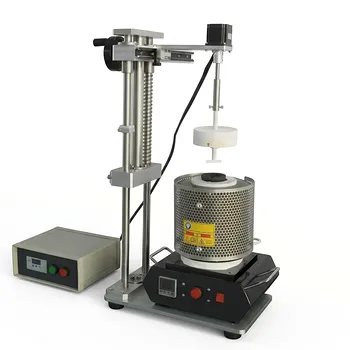
1100C Crucible Melting Furnace with Stirring Function for Glovebox and Air Sensitive Alloy Research
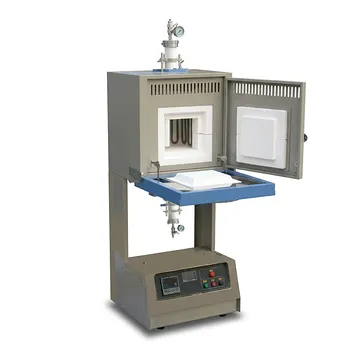
Vertical Hybrid High Temperature Furnace 1500C Alumina Tube SOFC Fuel Cell Testing Laboratory Heat Treatment Research Equipment
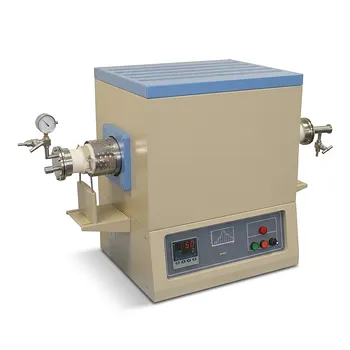
1700C High Temperature Alumina Tube Furnace with 18 Inch Heated Zone and Vacuum Sealing Flanges
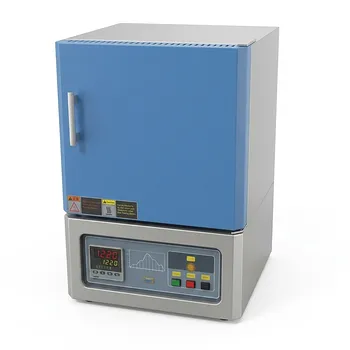
High Temperature Benchtop Muffle Furnace 1700C 10L Chamber Alumina Fiber Insulation MoSi2 Heating Elements
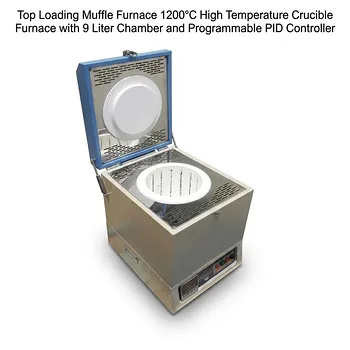
Top Loading Muffle Furnace 1200°C High Temperature Crucible Furnace with 9 Liter Chamber and Programmable PID Controller
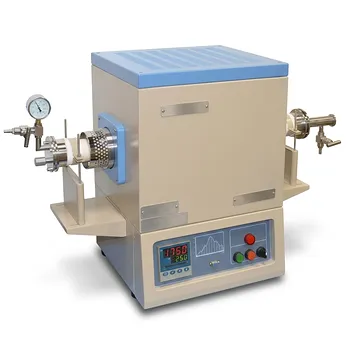
High Temperature Compact Vacuum Tube Furnace 1750C Max 60mm OD Alumina Tube

Compact High Temperature 1600C Tube Furnace with 50mm Alumina Tube and Vacuum Flanges for Material Sintering
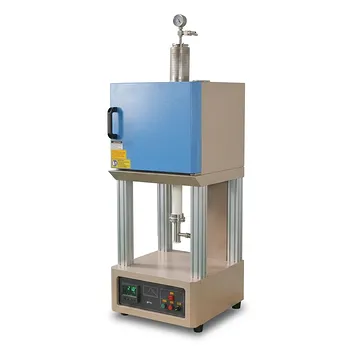
Hybrid High Temperature Tube and Box Furnace 1700C with 2 Inch Alumina Tube for Material Research
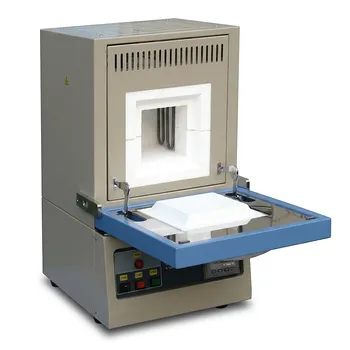
High Temperature 1800C Compact Muffle Furnace with Kanthal Super 1900 Heating Elements and 1.7L Alumina Chamber

1800C High Temperature Compact Vacuum Tube Furnace with 60mm OD Alumina Tube and Kanthal MoSi2 Heating Elements
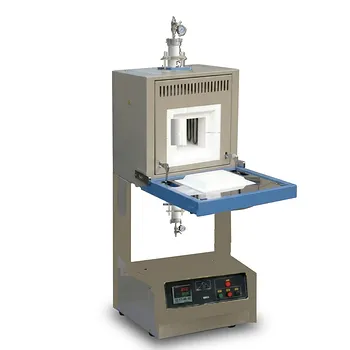
High Temperature Vertical Hybrid Furnace with Alumina Tube and SiC Heating for SOFC Coin Cell Testing and Atmosphere Processing

1750°C High Temperature Benchtop Vacuum Atmosphere Tube Furnace with Kanthal Super 1800 Heating Elements and 60mm Alumina Processing Tube
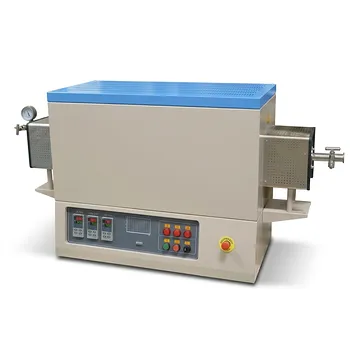
Three Zone Alumina Tube Furnace with Vacuum Flanges High Temperature 1700C Thermal Gradient CVD System
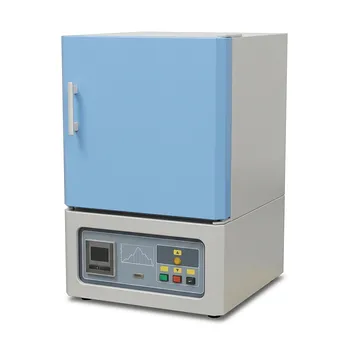
1800C Bench Top Muffle Furnace with Kanthal Super 1900 Heating Elements and 3.6L Alumina Fiber Chamber
1800C Bench Top Muffle Furnace 18 Liters with Kanthal Super 1900 Heating Elements for High Purity Ceramic Sintering and Material Research