Why are high-purity alumina rods used in VTE? Ensure Structural Stability & Purity.
Updated 3 months ago
High-purity alumina rods are essential technical components that provide high-temperature structural support to suspend crystal samples above a lithium-rich powder source. Their primary role is to prevent direct physical contact between the crystals and the reactive powder at temperatures ranging from 1100 °C to 1200 °C. By isolating the materials, these rods ensure that lithium ion migration occurs strictly through controlled vapor transport and internal solid-state diffusion rather than through unpredictable solid-phase contamination.
Core Takeaway: High-purity alumina rods act as a chemically inert physical barrier that prevents adhesion and contamination between the crystal and the powder source. This isolation is critical for maintaining the stoichiometric precision of the Vapor Transport Equilibration (VTE) process.
Ensuring Thermal and Structural Stability
Resistance to High-Temperature Deformation
The VTE process requires sustained heat, often exceeding 1100 °C, which would cause lesser materials to soften or warp. High-purity alumina possesses a high melting point and a low thermal expansion coefficient, ensuring the rods remain straight and rigid throughout the thermal cycle.
This stability maintains the precise spatial gap required between the crystal and the lithium source. If the supports were to deform, the resulting contact could cause irreversible damage through adhesion or "sticking" between the components.
Preventing Solid-Phase Diffusion
When materials touch at 1200 °C, atoms can migrate directly across the contact interface in a process known as solid-phase diffusion. Alumina rods eliminate this interface, forcing the lithium to enter the vapor phase before interacting with the crystal.
By restricting the reaction to the vapor phase, researchers can precisely control the equilibration rate. This ensures the resulting crystal has a uniform chemical composition throughout its structure.
Maintaining Chemical and Material Purity
Chemical Inertness at Extreme Temperatures
High-purity alumina is selected because it is exceptionally chemically inert, meaning it does not react with the lithium-rich powder or the crystal samples. This inertness is vital for preventing the introduction of metallic impurities that could degrade the crystal's performance.
Even at temperatures as high as 1400 °C, alumina does not participate in solid-state reactions with common ceramic or metallic samples. This ensures that the only chemical changes occurring are the ones intended by the experimental design.
Minimizing Metallic Contamination
In sensitive processes like VTE or CVD, the presence of trace metals can poisoned the active sites of a catalyst or alter the semiconductor properties of a material. Using high-purity alumina ensures that no external metallic ions are leached into the environment.
This level of purity is necessary to maintain the intrinsic characteristics of the target material. Technical grade or "low purity" ceramics often contain binders that outgas or migrate at high temperatures, which would ruin the VTE results.
Understanding the Trade-offs
While high-purity alumina is the industry standard, it is not without functional considerations. Its surface friction characteristics can influence how materials move or shrink during high-temperature densification, which may affect geometric accuracy in certain sintering applications.
Furthermore, while alumina is thermally stable, it is susceptible to thermal shock. Rapid heating or cooling cycles can cause the rods to crack, meaning the VTE furnace must be ramped up and down at controlled, gradual rates to preserve the structural integrity of the supports.
How to Apply Knowledge of Alumina Supports
When designing a high-temperature equilibration or sintering experiment, the choice of support material dictates the purity of your final product.
- If your primary focus is Absolute Chemical Purity: Always specify high-purity (99.9%+) alumina to prevent the migration of trace metallic binders into your sample.
- If your primary focus is Geometric Precision: Ensure the alumina supports are positioned to provide a flat reference plane, accounting for potential friction that might resist sample shrinkage.
- If your primary focus is Process Repeatability: Utilize alumina’s high-temperature stability to maintain consistent thermodynamic zones across multiple experimental runs.
By effectively utilizing these alumina supports, you ensure that the Vapor Transport Equilibration process remains a clean, controlled, and highly predictable method for crystal modification.
Summary Table:
| Feature | Benefit | Impact on VTE Process |
|---|---|---|
| Chemical Inertness | Prevents unwanted reactions | High stoichiometric precision and sample purity |
| High Melting Point | Resists deformation at 1200°C+ | Maintains critical spatial gaps across thermal cycles |
| Physical Isolation | Blocks solid-phase diffusion | Forces migration through controlled vapor transport |
| Alumina Purity (99.9%+) | Minimizes metallic leaching | Protects intrinsic electronic/material properties |
Elevate Your R&D with THERMUNITS Precision Engineering
Maximize the success of your Vapor Transport Equilibration and high-temperature research with industrial-leading equipment from THERMUNITS. As a premier manufacturer specialize in material science solutions, we provide the high-purity components and advanced thermal systems required for world-class results.
Our extensive product range serves laboratory and industrial R&D needs, including:
- High-Temperature Furnaces: Muffle, Vacuum, Atmosphere, Tube, and Rotary models.
- Advanced Systems: CVD/PECVD systems, Vacuum Induction Melting (VIM), and Hot Press furnaces.
- Specialized Equipment: Dental Furnaces, Electric Rotary Kilns, and premium Thermal Elements.
Don't let contamination or thermal instability compromise your data. Contact THERMUNITS today to discuss your specific heat treatment requirements and discover how our expertise can accelerate your material science breakthroughs.
References
- Éva Tichy‐Rács, Yuriy Suhak. Influence of Li‐Stoichiometry on Electrical and Acoustic Properties and Temperature Stability of Li(Nb,Ta)O<sub>3</sub> Solid Solutions up to 900 °C. DOI: 10.1002/pssa.202300962
Mentioned Products
- High Temperature 1700C Benchtop Tube Furnace with 5 Inch Heating Zone High Purity Alumina Tube and Vacuum Sealing Flanges
- High Temperature 1700C Six Zone Split Tube Furnace with Alumina Tube and Water Cooled Flanges
- High Temperature 1700C Tube Furnace with 4 Inch OD Alumina Tube and Vacuum Sealing Flanges
- 1700C High Temperature Alumina Tube Furnace with 18 Inch Heated Zone and Vacuum Sealing Flanges
- High Temperature Compact Vacuum Tube Furnace 1750C Max 60mm OD Alumina Tube
People Also Ask
- How are high-temperature tube furnaces utilized to repair etching damage? Precision Lattice Restoration Solutions
- What is the function of a high-temperature tube furnace in the synthesis of g-C3N4? Optimize Thermal Polycondensation
- What impact does the heating rate of a tube furnace have on biochar microstructure? Optimize Your Material R&D.
- What is the role of a high-temperature tube furnace in the calcination process of ZnO/In2O3 nanocomposites?
- Conditions for nZVI Synthesis in Tube Furnaces? Learn to Optimize Thermal and Atmospheric Control for High Purity.

Tech Team · ThermUnits
Last updated on Jun 03, 2026
Related Products

High Temperature 1700C Benchtop Tube Furnace with 5 Inch Heating Zone High Purity Alumina Tube and Vacuum Sealing Flanges
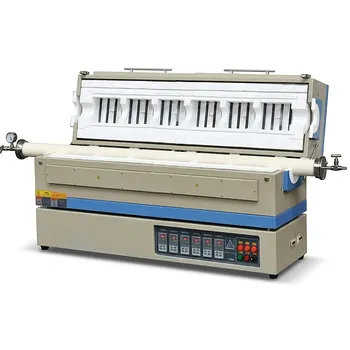
High Temperature 1700C Six Zone Split Tube Furnace with Alumina Tube and Water Cooled Flanges
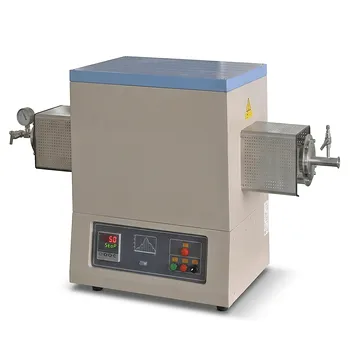
High Temperature 1700C Tube Furnace with 4 Inch OD Alumina Tube and Vacuum Sealing Flanges
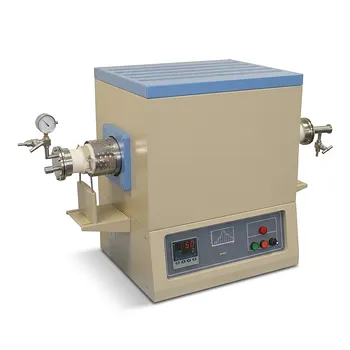
1700C High Temperature Alumina Tube Furnace with 18 Inch Heated Zone and Vacuum Sealing Flanges
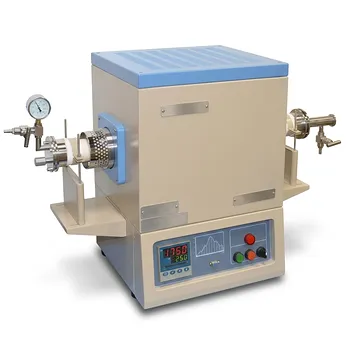
High Temperature Compact Vacuum Tube Furnace 1750C Max 60mm OD Alumina Tube
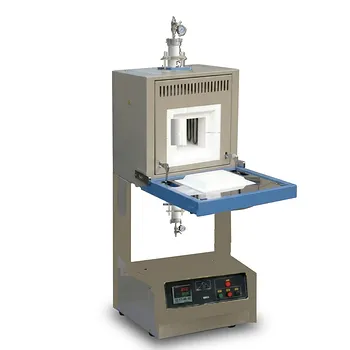
High Temperature Vertical Hybrid Furnace with Alumina Tube and SiC Heating for SOFC Coin Cell Testing and Atmosphere Processing
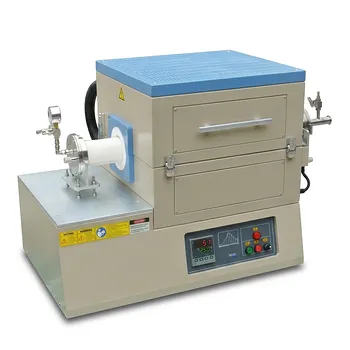
High Temperature 1700C Split Tube Furnace with Vacuum Flanges Valves and 60mm Alumina Tube
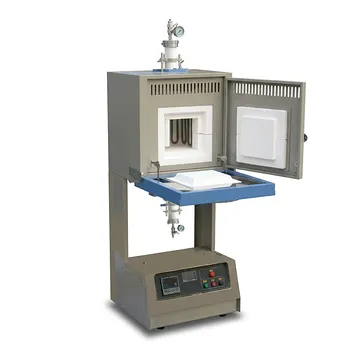
Vertical Hybrid High Temperature Furnace 1500C Alumina Tube SOFC Fuel Cell Testing Laboratory Heat Treatment Research Equipment
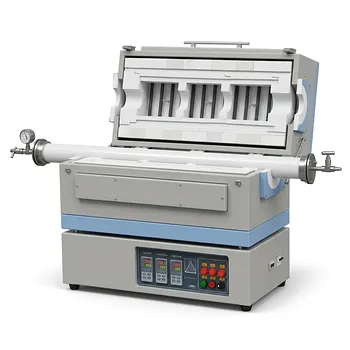
High Temperature 1500C Three Zone Split Tube Furnace with 80mm Alumina Tube and Vacuum Flange
