Why are high-purity quartz boats selected for SWCNT purification? Ensure Chemical Purity & Thermal Stability.
Updated 3 months ago
High-purity quartz boats are selected for single-walled carbon nanotube (SWCNT) purification because they provide a chemically inert and thermally stable environment at temperatures exceeding 800°C. This ensures that the delicate purification process—often involving corrosive chloride vapors—does not introduce secondary metallic contaminants or trigger unintended chemical reactions that would degrade the nanotubes' structural integrity.
Core Takeaway: High-purity quartz is the industry standard because it acts as a "neutral" vessel, surviving extreme heat and corrosive atmospheres without leaching impurities that would otherwise compromise the electronic and mechanical properties of SWCNTs.
Thermal Integrity Under Extreme Conditions
Superior High-Temperature Resistance
SWCNT purification and synthesis often require environments reaching between 760°C and 900°C. High-purity quartz maintains its structural shape and mechanical strength at these levels, whereas lesser materials might soften or deform.
Thermal Shock and Rapid Cooling
The material is uniquely capable of withstanding rapid temperature fluctuations without cracking. This allows researchers to move the boat quickly from the furnace's hot zone to a cooling zone, which is essential for "freezing" the nanotubes' state and preventing unwanted structural changes after processing.
Maintaining the Constant Temperature Zone
The physical properties of quartz allow it to be placed precisely within the center of a furnace’s constant temperature zone. This ensures the SWCNT samples are subjected to a uniform thermal environment, which is critical for consistent purification yields.
Chemical Inertness and Purity Control
Resistance to Corrosive Atmospheres
During purification, SWCNTs are often exposed to corrosive chloride vapors or strong alkaline activators like KOH. High-purity quartz is chemically stable in these environments, ensuring the vessel does not react with the reaction gases or the carbon nanotubes themselves.
Elimination of Metallic Migration
Even trace amounts of metal ions can act as unintended catalysts or impurities, ruining the selectivity of the growth process. High-purity quartz prevents the migration of impurity metal ions into the carbon materials, maintaining the high purity of the final product.
Preventing Secondary Contamination
By remaining non-reactive with catalyst powders and process gases like acetylene, the quartz boat ensures that chemical reactions occur only at the intended catalytic sites. This clean platform is vital for ensuring the resulting nanotubes meet strict industrial and scientific specifications.
Structural and Geometric Advantages
Optimizing Gas Diffusion
The flat, open design of a quartz boat ensures that reaction gases can fully diffuse through the catalyst and nanotube layers. This maximizes the contact between the purifying agents and the nanotubes, significantly enhancing conversion efficiency.
Accommodating Material Expansion
The low profile of a quartz boat within a reaction tube reserves sufficient expansion space for the upward growth of nanotubes. This prevents solid carbon products from clogging the tube and maintains a steady flow of process gases throughout the duration of the reaction.
Understanding the Trade-offs
Brittleness and Handling
While quartz is thermally robust, it is physically brittle and susceptible to mechanical impact. Careful handling is required to avoid fractures, especially after repeated heating cycles which can lead to devitrification (crystallization).
Temperature Thresholds
Standard high-purity quartz begins to soften or lose its properties if pushed significantly beyond 1100°C to 1200°C. For processes requiring ultra-high temperatures, quartz may need to be replaced by more expensive ceramic alternatives like alumina, though these often lack the same level of chemical inertness.
How to Apply This to Your Project
Recommendations Based on Goal
- If your primary focus is Maximum Sample Purity: Always opt for high-purity quartz (99.9% or higher) to ensure that no metallic ions migrate into your SWCNTs during the carbonization phase.
- If your primary focus is High-Throughput Processing: Utilize the "half-tube" boat design to ensure gas flow remains unobstructed even as the volume of your carbon product expands during growth.
- If your primary focus is Fast Cycle Times: Leverage quartz’s thermal shock resistance to implement rapid cooling protocols, allowing for quicker sample retrieval without damaging the boat.
By prioritizing high-purity quartz, you ensure that the complex chemistry of SWCNT purification remains controlled, predictable, and free from external contamination.
Summary Table:
| Feature | Advantage for SWCNT Purification | Technical Note |
|---|---|---|
| Thermal Stability | Maintains shape at 760°C - 900°C | Essential for consistent furnace placement |
| Thermal Shock Resistance | Allows for rapid cooling/quenching | Prevents cracking during quick temperature shifts |
| Chemical Inertness | Resists chloride vapors & KOH activators | Prevents vessel degradation during reaction |
| High Purity | Eliminates metallic ion migration | Ensures nanotubes meet electronic specifications |
| Geometric Design | Optimizes gas diffusion & expansion | Prevents clogging and maximizes conversion yield |
Precision Heat Treatment Solutions by THERMUNITS
As a leading manufacturer of high-temperature laboratory equipment for material science and industrial R&D, THERMUNITS provides the advanced thermal systems required for high-purity SWCNT processing. Our comprehensive range of solutions—including Tube, Vacuum, Atmosphere, and Muffle furnaces, as well as CVD/PECVD systems—is designed to work seamlessly with high-purity quartz and ceramic components to guarantee contamination-free results.
Why partner with THERMUNITS?
- Superior Control: Precise thermal zones for consistent material yields.
- Versatility: Solutions spanning from Dental Furnaces to industrial Electric Rotary Kilns and Vacuum Induction Melting (VIM).
- Expertise: Specialized support for thermal elements and custom heat treatment setups.
Ready to enhance your lab's efficiency and material purity? Contact us today to discuss your project!
References
- Yiman Huang, Xilai Jia. Freon–CO<sub>2</sub>-assisted purification of single-walled carbon nanotubes. DOI: 10.1039/d4na00610k
Mentioned Products
- Compact Vertical Split Quartz Tube Furnace with Stainless Steel Vacuum Flanges for Rapid Thermal Quenching and Controlled Atmosphere Material Processing
- 1200°C 5 Inch Vertical Quartz Tube Furnace with Stainless Steel Vacuum Flanges
- 1100°C High Temperature Quartz Chamber Furnace 8 Inch OD with 7.6 Liter Capacity and Vacuum Atmosphere Capability
- 1100°C Large Diameter Quartz Tube Furnace with 24 Inch Heating Zone and Water Cooled Flanges
- 1200C High Temperature Atmosphere Controlled Vertical Quenching Tube Furnace with 4 Inch Quartz Tube
People Also Ask
- Why integrate a vertical split tube furnace with hydraulic loading for HSECC? Essential for In-Situ Fire Simulation.
- What is the role of a split vertical tube furnace during flash sintering of 8YSZ and 20SDC? Master Ultra-Fast R&D
- What is the primary engineering purpose for using a customized ventilation hood when operating a split tube furnace? RCF Safety
- Why is a quartz tube furnace necessary for phosphorus-doped MoS2/GO preparation? Ensure Purity & Precise Synthesis
- What is the primary function of a Quartz Tube Furnace in ZnO VLS growth? Master High-Precision Nanowire Synthesis

Tech Team · ThermUnits
Last updated on Jun 02, 2026
Related Products

Compact Vertical Split Quartz Tube Furnace with Stainless Steel Vacuum Flanges for Rapid Thermal Quenching and Controlled Atmosphere Material Processing

1200°C 5 Inch Vertical Quartz Tube Furnace with Stainless Steel Vacuum Flanges
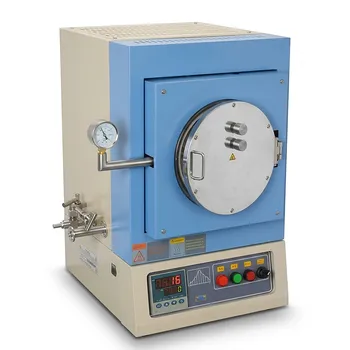
1100°C High Temperature Quartz Chamber Furnace 8 Inch OD with 7.6 Liter Capacity and Vacuum Atmosphere Capability
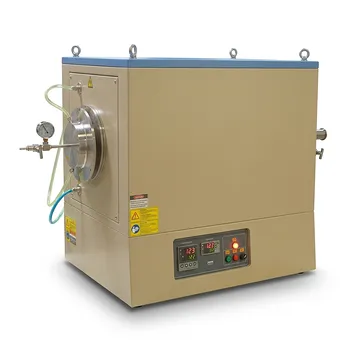
1100°C Large Diameter Quartz Tube Furnace with 24 Inch Heating Zone and Water Cooled Flanges
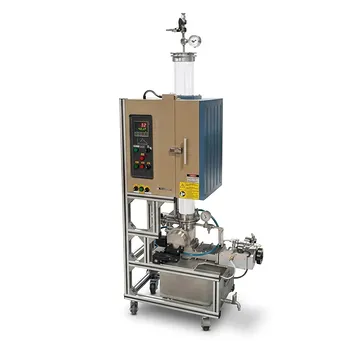
1200C High Temperature Atmosphere Controlled Vertical Quenching Tube Furnace with 4 Inch Quartz Tube
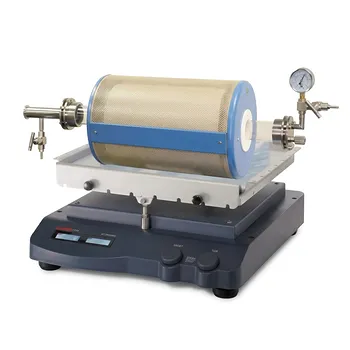
High Temperature Rocking Tube Furnace with Quartz Tube and Vacuum Flange for Materials Synthesis
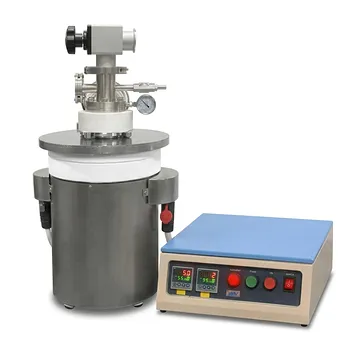
1100C High Temperature Vacuum Crucible Furnace with Quartz Chamber for Thermal Processing and Sintering
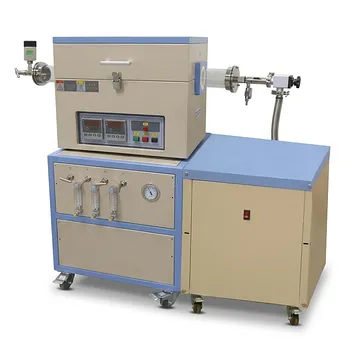
Dual Zone Quartz Tube Furnace with 80mm Diameter 1200C Max Temperature 3 Channel Gas Mixer and Vacuum Pump System