Why are K-type thermocouple sensors used for thermoelectric glass? Achieve Precise Real-Time Thermal Efficiency Data
Updated 3 months ago
K-type thermocouple sensors are the preferred choice because they provide a highly linear response and rapid thermal sensitivity, enabling the real-time capture of the precise temperature gradients necessary to calculate thermoelectric conversion efficiency. They bridge the gap between thermal insulation and power generation by providing the accurate data required to validate both functions simultaneously.
K-type thermocouples enable the precise monitoring of the temperature differences—often around 30 K—across thermoelectric glass, a metric that is foundational for calculating energy conversion efficiency. Their combination of linear response and high-speed sensitivity ensures that laboratory measurements remain accurate and reliable under fluctuating conditions.
The Role of Linearity and Sensitivity in Efficiency
Maintaining Data Integrity through Linear Response
K-type thermocouples are selected primarily for their excellent linear response across standard laboratory temperature ranges. This linearity simplifies the translation of voltage signals into temperature data, ensuring that the measured difference between the inner and outer surfaces is predictable and consistent.
Capturing High-Speed Thermal Fluctuations
The fast thermal sensitivity of these sensors allows them to record subtle fluctuations on the glass surfaces in real-time. This is critical for thermoelectric glass, where even minor changes in the thermal gradient can significantly impact the calculated power generation output.
Establishing the Core Temperature Baseline
The temperature difference (ΔT) between surfaces serves as the core baseline for determining how well the glass converts heat into electricity. By accurately capturing a ΔT of approximately 30 K, K-type sensors provide the empirical evidence needed to validate the material's thermoelectric performance.
The Critical Importance of Real-Time Feedback
Preventing Material Deformation
In higher temperature ranges, such as 600°C to 700°C, glass exhibits extreme exponential sensitivity in its viscosity. High-precision thermocouples provide the real-time feedback necessary to ensure the glass does not reach deformation points during testing or processing.
Mitigating Measurement Uncertainty
Because properties like diffusion coefficients and atom surface mobility are highly dependent on temperature, minor fluctuations can lead to massive errors in kinetic studies. K-type thermocouples act as the primary feedback signal for closed-loop control systems, keeping the environment within strict tolerances (e.g., ±3°C).
Validating Dual-Function Performance
Thermoelectric glass must serve as both an insulator and a power generator. Accurate monitoring ensures that the thermal insulation properties are not compromised while the glass is simultaneously generating electricity from the captured heat.
Understanding the Trade-offs
Potential for Sensor Drift
While K-type thermocouples are versatile and cost-effective, they can experience calibration drift over long periods of exposure to high temperatures. This requires periodic validation against a known standard to maintain the accuracy of efficiency calculations.
Sensitivity to Environmental Factors
K-type sensors are susceptible to oxidation in certain atmospheres, which can degrade the wire and alter the voltage output. In vacuum furnaces or specialized coating environments, the protection and placement of the thermocouple are just as important as the sensor type itself.
Redundancy and Error Handling
In high-stakes experiments, relying on a single sensor can be risky. Expert setups often use multi-point or dual-channel configurations to cross-reference data and ensure that a single sensor failure does not result in a catastrophic loss of experimental integrity.
How to Optimize Temperature Monitoring for Your Goals
To achieve the best results with K-type thermocouples in glass or thin-film applications, you must align your sensor configuration with your specific technical objectives.
- If your primary focus is Maximum Conversion Accuracy: Prioritize sensors with a high-precision calibration specifically around the 30 K ΔT range to ensure your efficiency calculations are as tight as possible.
- If your primary focus is Material Structural Integrity: Use a dual-channel setup to monitor both the sample core and the ambient environment, identifying inflection points that could indicate material stress or phase changes.
- If your primary focus is Thin-Film Stability: Ensure the thermocouple is positioned as close to the substrate as possible to monitor the surface mobility of atoms, preventing the tempering or softening of the underlying material.
Precise temperature monitoring is not merely a measurement task, but the fundamental anchor for validating the energy efficiency and structural viability of advanced thermoelectric materials.
Summary Table:
| Feature | Advantage for Thermoelectric Glass | Impact on Research |
|---|---|---|
| Linear Response | Predictable voltage-to-temperature translation | Simplifies data integrity & efficiency calculations |
| High Sensitivity | Captures subtle real-time surface fluctuations | Accurate monitoring of the critical 30 K gradient |
| Real-time Feedback | Immediate detection of thermal changes | Prevents glass deformation at high temperatures |
| Versatility | Reliable performance across standard ranges | Validates both insulation and power generation |
Elevate Your Material Research with THERMUNITS Precision
Precise temperature control is the backbone of advanced material science. THERMUNITS is a leading manufacturer of high-temperature laboratory equipment, providing the accuracy required to validate energy efficiency and structural integrity in every experiment.
Whether you are developing thermoelectric materials or specialized thin films, our comprehensive range of solutions—including Muffle, Vacuum, Atmosphere, Tube, Rotary, and Hot Press furnaces, CVD/PECVD systems, and Vacuum Induction Melting (VIM) furnaces—is engineered to meet the most demanding thermal processing standards.
Don't let measurement uncertainty compromise your results. Contact us today to discuss how our high-performance furnaces and thermal elements can enhance your laboratory's R&D capabilities!
References
- Mustafa Majid Rashak Al-Fartoos, Asif Ali Tahir. A semi-transparent thermoelectric glazing nanogenerator with aluminium doped zinc oxide and copper iodide thin films. DOI: 10.1038/s44172-024-00291-4
Mentioned Products
- High Temperature Benchtop Muffle Furnace with Quartz Observation Window for Thermal Imaging and Material Analysis
- High Temperature Three Zone Tube Furnace 1700C with Alumina Tube and Water Cooled Flanges
- Induction Heating System with Temperature Control for High Temperature Vacuum Sintering and Melting
- Triple Tube Compact Hybrid Muffle Furnace 1000C High Vacuum Thermal Processing System
- High Temperature 1700C Dual Zone Tube Furnace for Material Science and Industrial Chemical Vapor Deposition Research
People Also Ask
- What is the function of a muffle furnace in aluminoborosilicate glass prep? Stabilize Raw Materials for Superior Purity
- What is the function of a high-temperature muffle furnace in phosphorus-modified zeolite catalyst preparation?
- What is the function of a high-temp muffle furnace in Ni-V oxide synthesis? Optimize your material's performance.
- What role does a high-temperature muffle furnace play in evaluating the mineral composition of rock samples? LOI & XRF Guide
- What is the purpose of using muffle or tube furnaces in glass synthesis? Achieve Precise Melt-Quenching & Homogeneity

Tech Team · ThermUnits
Last updated on Jun 03, 2026
Related Products
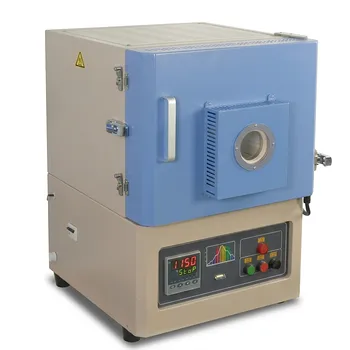
High Temperature Benchtop Muffle Furnace with Quartz Observation Window for Thermal Imaging and Material Analysis
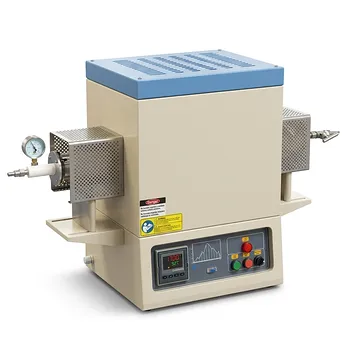
High Temperature Three Zone Tube Furnace 1700C with Alumina Tube and Water Cooled Flanges
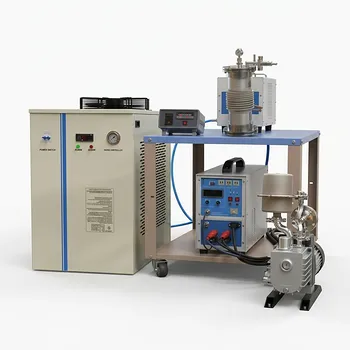
Induction Heating System with Temperature Control for High Temperature Vacuum Sintering and Melting
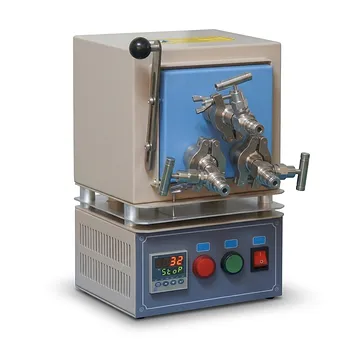
Triple Tube Compact Hybrid Muffle Furnace 1000C High Vacuum Thermal Processing System
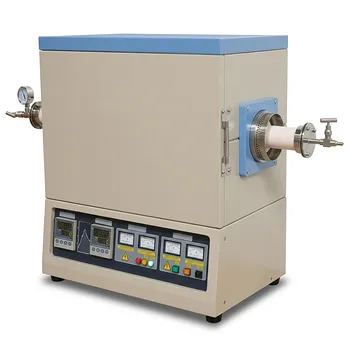
High Temperature 1700C Dual Zone Tube Furnace for Material Science and Industrial Chemical Vapor Deposition Research
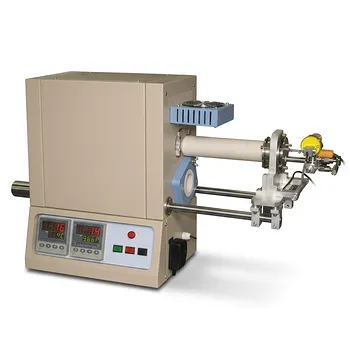
High Temperature Tube Furnace 1500C with Sliding Flanges and 50mm OD for Rapid Thermal Processing Fast Heating and Cooling
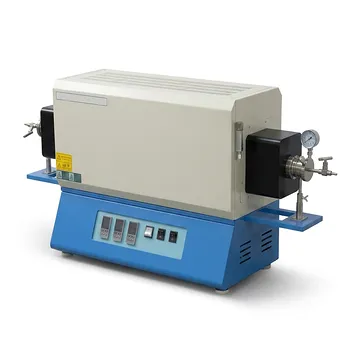
High Temperature Three Temperature Zone Tube Furnace for Advanced Material Science Sintering and Chemical Vapor Deposition Applications
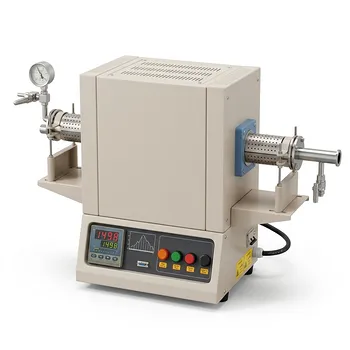
1500C High Temperature Compact Tube Furnace 2 Inch OD with Vacuum Flanges and Complete Accessories
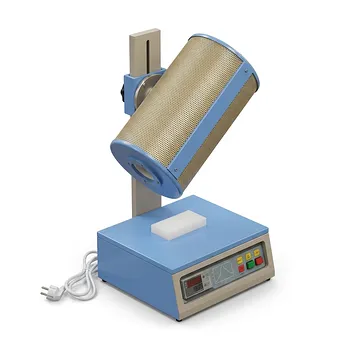
1100°C Vertical Laboratory Furnace for DIY Tubular Reactors with PID Temperature Controller
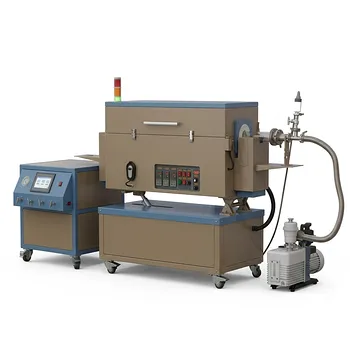
5 Inch Three Zone Rotary Tube Furnace with Integrated Gas Delivery System and 1200C Capability for Advanced Material CVD Processing
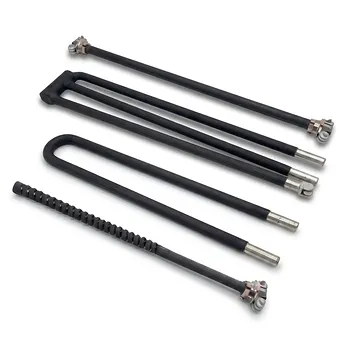
Silicon Carbide SiC Thermal Heating Elements for Industrial Electric Furnaces
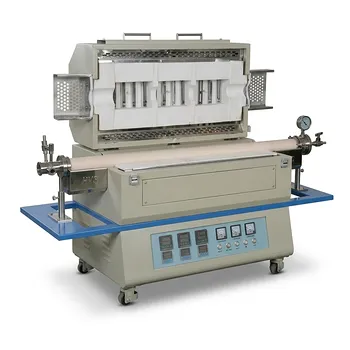
Three Temperature Zone Fast Heating Furnace 1500C Laboratory High Precision Thermal Processing System
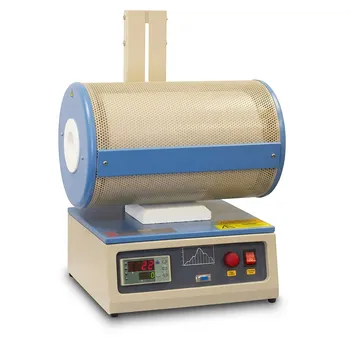
Multi Position Tube Furnace 1100C for Laboratory Material Research and Advanced Industrial Thermal Processing
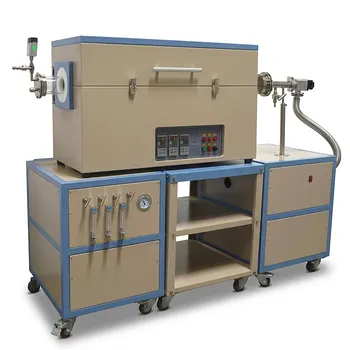
Three Zone Quartz Tube Furnace with 3 Channel Gas Mixer Vacuum Pump and Anti Corrosive Vacuum Gauge
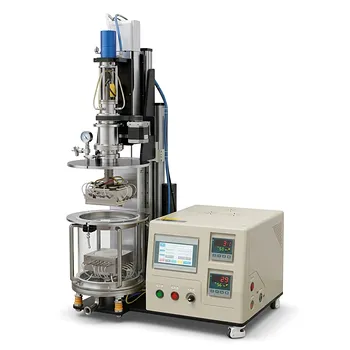
High Temperature 800C Rapid Thermal Processing Furnace with Rotating Sample Holder for Close Spaced Sublimation and Thin Film Solar Cell Research
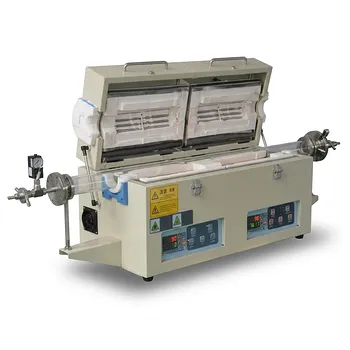
Elongated Two Temperature Zone Pipe Furnace for Industrial Heat Treatment and Material Science Research
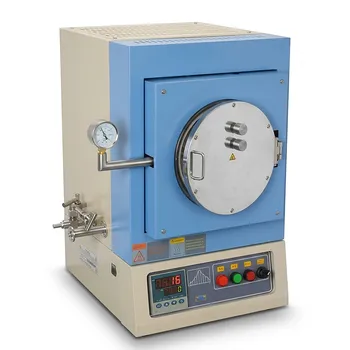
1100°C High Temperature Quartz Chamber Furnace 8 Inch OD with 7.6 Liter Capacity and Vacuum Atmosphere Capability
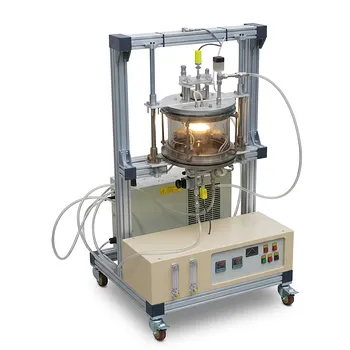
Two Zones CSS Furnace for Rapid Thermal Processing Thin Film Coating 3 Inch Diameter 650C
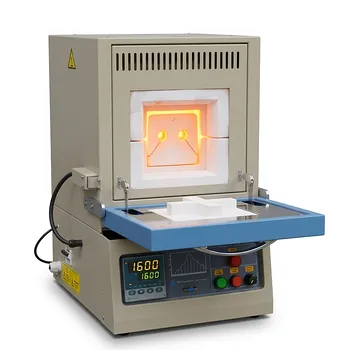
High Temperature Compact Muffle Furnace 1700 C with 30 Segment Programmable Controller and 1.7L Cubic Chamber