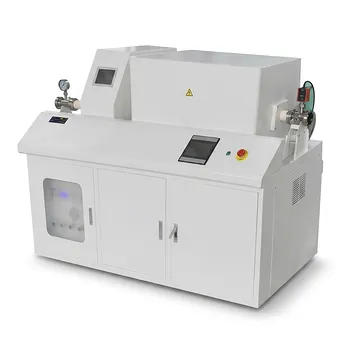
Why are multi-channel MFCs necessary in Hy-MOCVD for 2D semiconductors? Precision Control for Atomic-Scale Growth
Updated 3 months ago
Multi-channel Mass Flow Controllers (MFC) are the critical hardware component required to achieve nanometer-scale control over the synthesis of 2D semiconductors. In the Hybrid Metal-Organic Chemical Vapor Deposition (Hy-MOCVD) process, these devices provide the precise regulation of feed ratios between carrier gases and gas-phase precursors. This level of control is essential for determining nucleation density, grain size, and the digital customization of chemical compositions to ensure high process repeatability.
The necessity of multi-channel MFCs stems from the extreme sensitivity of 2D material growth to gas-phase concentration gradients. By strictly managing the mixing ratios and injection timing of precursors, these controllers enable the reliable production of high-quality, large-area monolayer films.
Precise Control of Growth Dynamics
Regulating Nucleation and Grain Size
The concentration gradient of precursors within the reaction chamber directly dictates how 2D crystals begin to form on a substrate. Multi-channel MFCs allow researchers to fine-tune the delivery of precursors like diethyl sulfide (DES) or dimethyl selenide (DMSe), directly influencing the nucleation density.
Without this precision, the resulting film may suffer from irregular grain sizes or unwanted overlapping. Steady flow rates ensure that atoms are supplied at a rate that promotes the growth of large, high-quality single crystals rather than a disordered polycrystalline film.
Managing Carrier Gas Influence
Carrier gases such as Argon (Ar) and Hydrogen (H2) do more than just transport precursors; they determine the flux of vapors reaching the substrate. The stability of these flows affects the boundary layer thickness and internal pressure fluctuations during the CVD process.
Precise regulation of the carrier gas ensures that the transport efficiency remains constant throughout the growth cycle. This stability is vital for producing films with narrow exciton linewidths, which is a primary indicator of high electronic and optical quality.
Structural and Chemical Customization
Engineering Superlattices and Heterostructures
Advanced 2D semiconductors often require the creation of superlattices where different materials are layered at the nanometer scale. Multi-channel MFCs enable the alternate introduction of different precursors with exact injection timing.
By adjusting the duration and flow rate of each gas phase, engineers can control the width and pitch of these structures. This capability is necessary for area-selective deposition and the creation of complex electronic patterns.
Achieving Precise Doping Concentrations
Transitioning a material from a semiconductor to a metallic or superconducting state requires PPM-level control of dopants. MFCs regulate the introduction of dopant gases to determine the depth and uniformity of atomic substitution within the crystal lattice.
This "digital customization" allows for the repeatable production of materials with specific electrical properties. It prevents the common pitfall of over-doping, which can introduce structural defects or unwanted impurities.
Understanding the Trade-offs
While multi-channel MFCs offer unparalleled control, they introduce significant system complexity. Each additional channel increases the potential for leaks or cross-contamination if the manifold system is not properly maintained.
Furthermore, high-precision MFCs require frequent calibration to account for the specific thermal properties of different precursor gases. Using a controller calibrated for Nitrogen to measure a metal-organic vapor without the correct conversion factors will lead to significant stoichiometric errors in the final film.
How to Apply This to Your Project
Achieving high-quality 2D semiconductor growth requires matching your MFC configuration to your specific material goals.
- If your primary focus is large-area monolayer uniformity: Prioritize MFCs with ultra-high stability in the carrier gas channels to maintain a constant boundary layer.
- If your primary focus is complex heterostructures: Invest in multi-channel systems with fast response times (low millisecond range) to ensure sharp interfaces between different material layers.
- If your primary focus is electronic grade doping: Select MFCs designed for low-flow regimes that can accurately handle PPM-level concentrations without drifting.
By mastering the regulation of gas-phase dynamics through multi-channel MFCs, you transform MOCVD from a volatile chemical reaction into a precise tool for atomic-scale manufacturing.
Summary Table:
| Key Function | Impact on 2D Semiconductors | Operational Benefit |
|---|---|---|
| Nucleation Control | Determines grain size and film density | Prevents disordered polycrystalline growth |
| Carrier Gas Flux | Maintains constant boundary layer thickness | Ensures narrow exciton linewidths (high quality) |
| Precursor Switching | Enables nanometer-scale superlattices | Allows for sharp interfaces in heterostructures |
| PPM Doping | Digital customization of electrical states | Precise transition from semiconductor to metallic |
Elevate Your Material Research with THERMUNITS
As a leading manufacturer of high-temperature laboratory equipment for material science and industrial R&D, THERMUNITS provides the precision tools you need to master atomic-scale manufacturing. Whether you are synthesizing 2D semiconductors or engineering complex heterostructures, our comprehensive range of thermal processing solutions—including CVD/PECVD systems, Muffle, Vacuum, Atmosphere, Tube, and Rotary furnaces—is designed to meet the most rigorous research standards.
From high-precision Mass Flow Controller (MFC) integration to specialized Vacuum Induction Melting (VIM) and Dental Furnaces, we deliver the reliability and control essential for your next breakthrough.
Ready to optimize your Hy-MOCVD process? Contact our experts today to discuss how our laboratory heat treatment equipment can enhance your lab's efficiency and results.
References
- Zhepeng Zhang, Andrew J. Mannix. Chemically Tailored Growth of 2D Semiconductors via Hybrid Metal–Organic Chemical Vapor Deposition. DOI: 10.1021/acsnano.4c02164
Mentioned Products
- Cylindrical Resonator MPCVD Machine System for Microwave Plasma Chemical Vapor Deposition and Lab Diamond Growth
- Multi Heating Zones CVD Tube Furnace System for Precision Chemical Vapor Deposition and Advanced Material Synthesis
- 915MHz MPCVD Diamond Machine Microwave Plasma Chemical Vapor Deposition System Reactor
- 1200C Max 6 Channel High Cleanliness Hydrogen Furnace for High Throughput Annealing
- Vertical Openable Tube Furnace 0-1700c High Temperature Laboratory System for CVD and Vacuum Heat Treatment
People Also Ask
- How does the high concentration of atomic hydrogen in MPCVD benefit diamond growth? The Key to Gem-Grade Quality.
- What are the typical operating pressure ranges and vacuum requirements for MPCVD systems? Optimize Your Material Growth
- What technical parameters are critical for optimizing the growth of single-crystal diamonds in MPCVD systems? Expert Guide
- What are the technical advantages of the electrodeless plasma design in MPCVD systems? Purity & Precision in Synthesis
- How does the versatility of gas compatibility in MPCVD systems compare to filament-based CVD methods? Purity & Doping.

Tech Team · ThermUnits
Last updated on Jun 03, 2026
Related Products
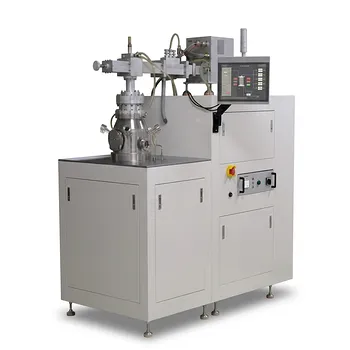
Cylindrical Resonator MPCVD Machine System for Microwave Plasma Chemical Vapor Deposition and Lab Diamond Growth
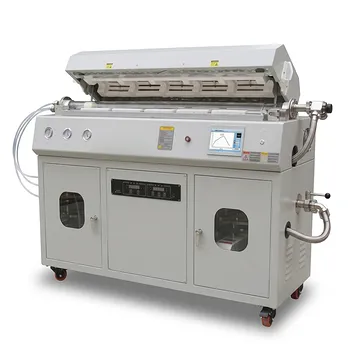
Multi Heating Zones CVD Tube Furnace System for Precision Chemical Vapor Deposition and Advanced Material Synthesis
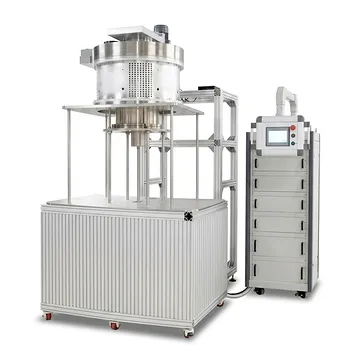
915MHz MPCVD Diamond Machine Microwave Plasma Chemical Vapor Deposition System Reactor
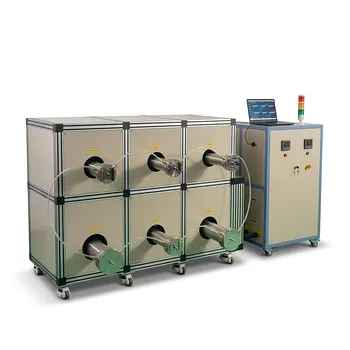
1200C Max 6 Channel High Cleanliness Hydrogen Furnace for High Throughput Annealing
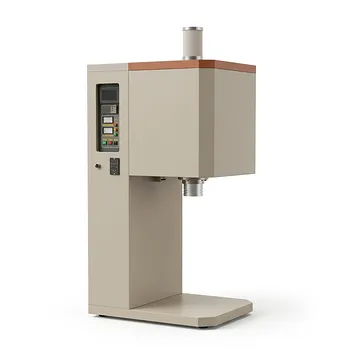
Vertical Openable Tube Furnace 0-1700c High Temperature Laboratory System for CVD and Vacuum Heat Treatment
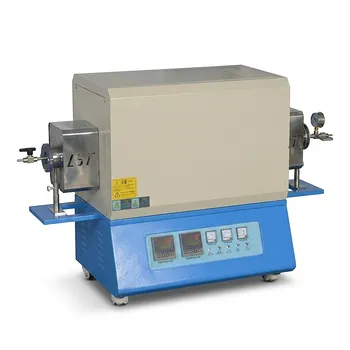
High Temperature Dual Zone Vacuum Tube Furnace for Material Research and CVD Processing
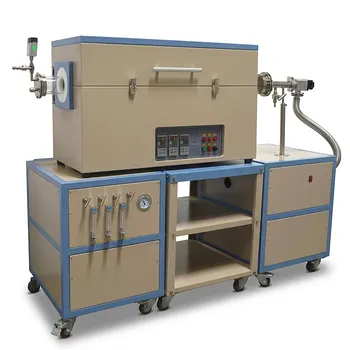
Three Zone Quartz Tube Furnace with 3 Channel Gas Mixer Vacuum Pump and Anti Corrosive Vacuum Gauge
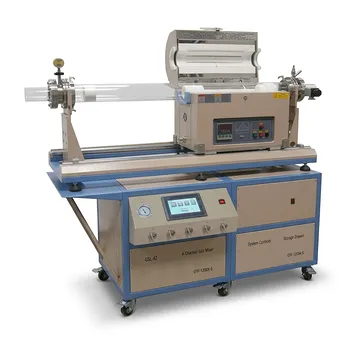
Dual Tube 100mm 80mm CVD Sliding Furnace with 4 Channel Gas Mixing and Vacuum System