Why are quartz reaction tubes and quartz boats selected for transition metal disulfide synthesis setups? Essential for Purity
Updated 3 months ago
Quartz reaction tubes and quartz boats are selected for transition metal disulfide (TMD) synthesis because they provide an exceptionally stable, chemically neutral environment at the extreme temperatures required for crystal growth. These components can withstand temperatures exceeding 1100°C without deforming or reacting with corrosive precursors like sulfur vapor or carbon disulfide ($CS_2$). By acting as a non-reactive barrier, quartz ensures that the final semiconductor products, such as $MoS_2$ or $WS_2$, remain free from metallic impurities that would otherwise degrade their electronic properties.
Core Takeaway: Quartz is the material of choice because its unique combination of high-temperature resilience and chemical inertness prevents container-derived contamination, ensuring the structural and electronic integrity of synthesized two-dimensional materials.
Exceptional Thermal Stability and Resilience
Performance Under High-Temperature Stress
TMD synthesis often requires temperatures ranging from 800°C to over 1100°C to facilitate the sulfurization of metal oxides. Quartz maintains its structural integrity in these environments, resisting deformation or melting where other materials might fail.
Resistance to Thermal Shock
The synthesis process involves rapid heating and cooling cycles that can cause many materials to crack. Quartz possesses excellent thermal shock resistance, allowing it to endure these temperature fluctuations without compromising the sealed vacuum or the purity of the internal atmosphere.
Chemical Inertness and Purity Preservation
Prevention of Precursor Reactions
Reactants such as molybdenum trioxide ($MoO_3$) and corrosive sulfur vapors are highly reactive at high temperatures. Quartz does not react with these precursors, ensuring that the chemical stoichiometry of the reaction remains controlled and predictable.
Eliminating Impurity Diffusion
Even trace amounts of metallic impurities from a container can "dope" a semiconductor, fundamentally altering its performance. High-purity quartz prevents impurity diffusion, which is critical for maintaining the specific semiconductor properties and morphological consistency of 2D thin films.
Protection Against Corrosive Atmospheres
Some synthesis setups utilize carbon disulfide ($CS_2$) or complex reduction atmospheres to facilitate growth. The chemical stability of quartz ensures it remains unetched and non-reactive even when exposed to these aggressive chemical vapors.
Precision Control of Reaction Dynamics
Optimization of Gas Flow and Transport
The quartz tube serves as a precise flow channel for carrier gases like Argon or Nitrogen. Controlled gas flow dynamics within the tube ensure that reactant vapors are transported uniformly to the substrate, which is essential for large-scale, high-quality crystal growth.
Space-Confined Growth Configurations
Researchers often use smaller "inner" quartz tubes to create space-confined environments. This configuration reconfigures gas velocity and turbulence, increasing molecular collision frequencies to enable the growth of specialized structures, such as twisted-angle molybdenum disulfide.
Thermal Buffering and Fluid Stabilization
Placing quartz components at the inlet and outlet of a furnace acts as a thermal buffer. This arrangement eliminates turbulence and stabilizes the ambient temperature, creating a highly consistent environment throughout the entire deposition cycle.
Understanding the Trade-offs
Temperature Limitations
While quartz is resilient, it has an upper continuous-use limit near 1100°C–1200°C. Exceeding these temperatures can lead to devitrification, where the quartz transitions from a glassy state to a crystalline state, becoming brittle and opaque.
Chemical Sensitivities
Quartz is highly susceptible to etching by hydrofluoric acid (HF) and can be attacked by strong alkalis at elevated temperatures. Contamination from handling, such as oils from skin, can also cause localized devitrification (permanent clouding) when the quartz is heated.
Structural Fragility
Unlike metallic or certain ceramic components, quartz is inherently brittle. Physical impacts or improper mounting in a furnace can lead to catastrophic failure, potentially exposing hazardous precursor vapors to the laboratory environment.
How to Apply This to Your Setup
Making the Right Choice for Your Goal
- If your primary focus is maximum product purity: Use high-purity synthetic quartz boats to eliminate the risk of trace metal leaching into your TMD crystals.
- If your primary focus is growing complex 2D morphologies: Utilize a "tube-in-tube" quartz configuration to manipulate gas phase turbulence and precursor concentration.
- If your primary focus is long-term equipment durability: Ensure the quartz is cleaned with high-purity solvents (not HF) and handled with gloves to prevent devitrification during high-heat cycles.
By leveraging the chemical neutrality and thermal endurance of quartz, researchers can achieve the high-precision environment necessary for the reliable synthesis of next-generation semiconductor materials.
Summary Table:
| Feature | Advantage for TMD Synthesis |
|---|---|
| Thermal Stability | Maintains structural integrity up to 1100°C-1200°C during sulfurization. |
| Chemical Inertness | Prevents reactions with precursors like sulfur vapor and MoO3. |
| High Purity | Eliminates metallic impurity diffusion into semiconductor products. |
| Thermal Shock Resistance | Withstands rapid heating and cooling cycles without cracking. |
| Gas Flow Control | Facilitates precise vapor transport and space-confined growth dynamics. |
Elevate Your Material Research with THERMUNITS
Precise control over thermal and chemical environments is critical for high-performance transition metal disulfide synthesis. THERMUNITS is a leading manufacturer specializing in high-temperature laboratory equipment for material science. We offer high-purity Tube Furnaces, CVD/PECVD systems, and Vacuum Furnaces specifically designed to support the rigorous demands of 2D material R&D.
Our thermal solutions ensure superior temperature uniformity and chemical stability, helping you achieve high-quality MoS2, WS2, and other TMD crystals. Contact us today to discuss your specific laboratory heat treatment requirements and see how our expertise can accelerate your research results!
References
- Vladislav Buravets, Oleksiy Lyutakov. Rapid and Universal Synthesis of 2D Transition Metal (Ti, Zr, Hf, V, Nb, Ta, Cr, Mo, and W) Sulfides through Oxide Sulfurization in CS<sub>2</sub> Vapor. DOI: 10.1021/acs.inorgchem.4c00475
Mentioned Products
- Dual Zone Quartz Tube Furnace with 80mm Diameter 1200C Max Temperature 3 Channel Gas Mixer and Vacuum Pump System
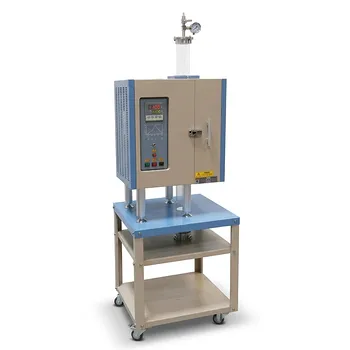
- 1200°C 5 Inch Vertical Quartz Tube Furnace with Stainless Steel Vacuum Flanges
- 1100°C Large Diameter Quartz Tube Furnace with 24 Inch Heating Zone and Water Cooled Flanges
- Compact Vertical Split Quartz Tube Furnace with Stainless Steel Vacuum Flanges for Rapid Thermal Quenching and Controlled Atmosphere Material Processing
- Rapid Thermal Processing Sliding Tube Furnace with 4 Inch OD Quartz Tube and 900C IR Heating
People Also Ask
- How do dual-zone quartz tube furnaces achieve controllable material preparation? Optimize Perovskite VD Processes
- What are the technical advantages of using a dual-zone tube furnace for growing large PdCoO2 crystals via CVT? Expert Tips
- Purpose of the reverse gradient step in CVT growth? Master Crystal Purity with Dual-Zone Furnaces
- Why is it necessary to place MoS2 devices in a dual-zone tube furnace for annealing? Optimize Lattice Repair & Doping
- Why is a dual-zone tube furnace necessary for ReO3-doped Cu2Te CVD? Essential for precise precursor synchronization.

Tech Team · ThermUnits
Last updated on Jun 02, 2026
Related Products
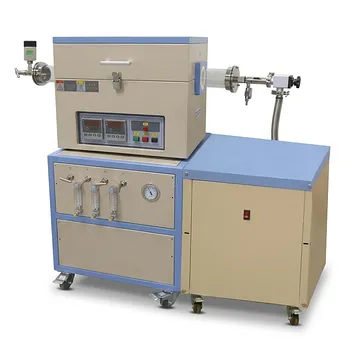
Dual Zone Quartz Tube Furnace with 80mm Diameter 1200C Max Temperature 3 Channel Gas Mixer and Vacuum Pump System

1200°C 5 Inch Vertical Quartz Tube Furnace with Stainless Steel Vacuum Flanges
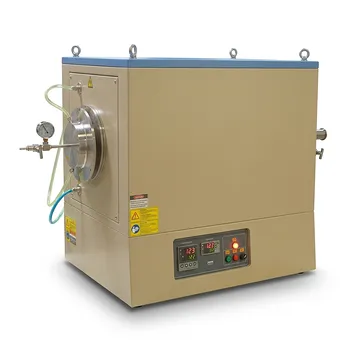
1100°C Large Diameter Quartz Tube Furnace with 24 Inch Heating Zone and Water Cooled Flanges

Compact Vertical Split Quartz Tube Furnace with Stainless Steel Vacuum Flanges for Rapid Thermal Quenching and Controlled Atmosphere Material Processing
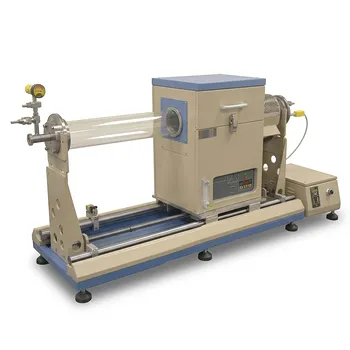
Rapid Thermal Processing Sliding Tube Furnace with 4 Inch OD Quartz Tube and 900C IR Heating
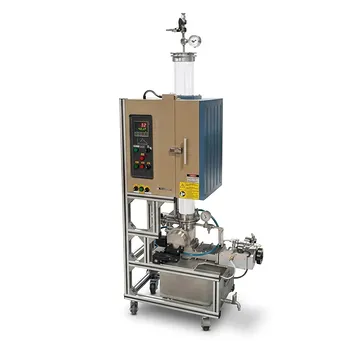
1200C High Temperature Atmosphere Controlled Vertical Quenching Tube Furnace with 4 Inch Quartz Tube
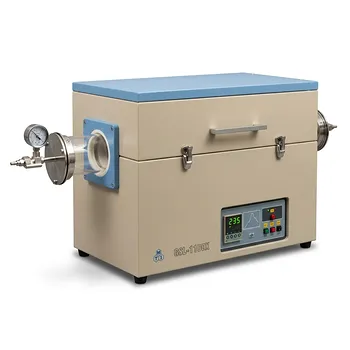
Single Zone Tube Furnace 5 Inch Quartz Tube 36 Inch Heating Zone Vacuum Flanges
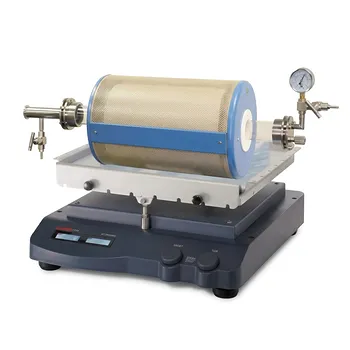
High Temperature Rocking Tube Furnace with Quartz Tube and Vacuum Flange for Materials Synthesis

Three Zone Tube Furnace with 11 Inch or 15 Inch Quartz Tube and Hinged Flanges for Vacuum Atmosphere Heat Treatment
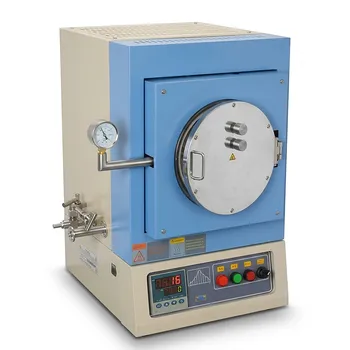
1100°C High Temperature Quartz Chamber Furnace 8 Inch OD with 7.6 Liter Capacity and Vacuum Atmosphere Capability
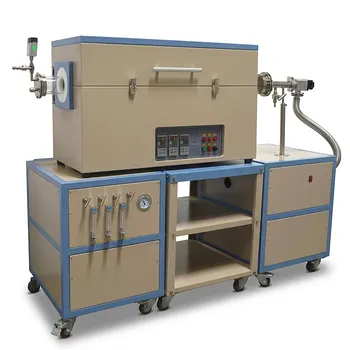
Three Zone Quartz Tube Furnace with 3 Channel Gas Mixer Vacuum Pump and Anti Corrosive Vacuum Gauge
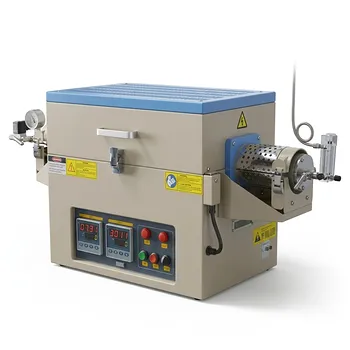
1100C Dual Zone Hydrogen Gas Tube Furnace with Quartz Tube and Integrated H2 Leak Detection System
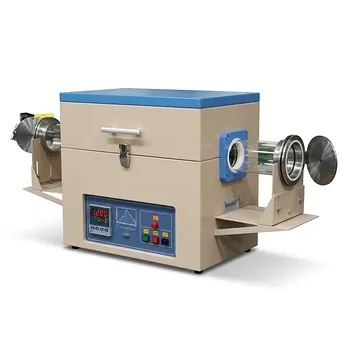
High Temperature 1200C Split Tube Furnace with Hinged Vacuum Flanges and 4 Inch Quartz Tube for Laboratory Research
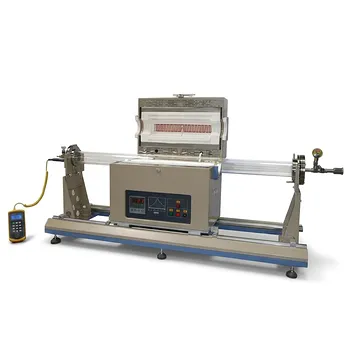
1200C Max Sliding Tube Furnace with 80mm OD Quartz Tube and Vacuum Flanges for Rapid Thermal Processing Fast Heating and Cooling
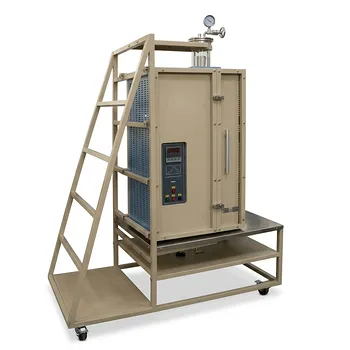
Split Vertical Tube Furnace with 1200C Quartz Tube and Stainless Steel Vacuum Flanges for Rapid Thermal Processing
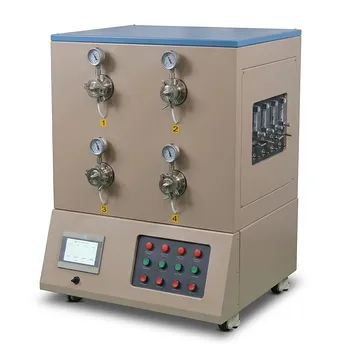
High Throughput 1200C Four Channel Tube Furnace with 3 Inch Quartz Tubes for Multi Zone Annealing and Material Research
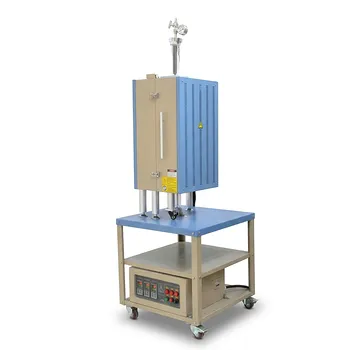
1200C Three Zone Vertical Tube Furnace with 2 Inch Quartz Tube and Vacuum Flanges
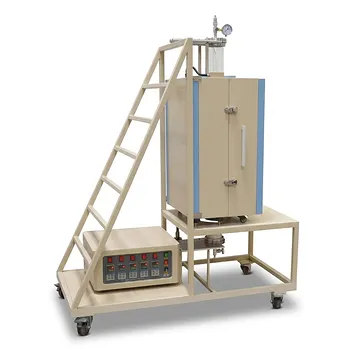
Five Zone Split Vertical Tube Furnace 1200C Max with 4 Inch Quartz Tube and Stainless Steel Vacuum Flanges

High Temperature Automated 5 Inch Tube Furnace for Autonomous Material Research and Advanced Laboratory R&D