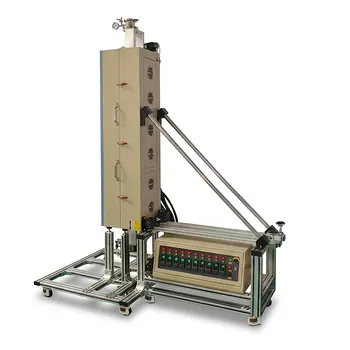
Purpose of the reverse gradient step in CVT growth? Master Crystal Purity with Dual-Zone Furnaces
Updated 5 months ago
The reverse gradient step is a critical pre-growth purification phase designed to sanitize the crystallization environment. By temporarily setting the growth zone to a higher temperature than the source zone, researchers can thermally "scrub" the inner walls of the reaction vessel. This ensures that when the formal growth process begins, the resulting single crystals are free from competitive nucleation and structural defects.
The primary purpose of a reverse gradient is to eliminate unwanted micro-seeds and chemical impurities from the growth zone before synthesis begins. This preparation creates a pristine environment that significantly improves the structural integrity and electronic purity of the final crystal.
The Mechanics of Surface Purification
Thermal Decontamination of the Growth Zone
In a standard Chemical Vapor Transport (CVT) setup, the source material is heated to a higher temperature than the growth zone to drive material transport. During the reverse gradient step, this logic is flipped: the growth zone is heated to a higher temperature than the source zone.
This temperature inversion causes any volatile impurities or stray particles currently residing in the growth zone to migrate back toward the source end. It effectively "cleans" the internal surfaces of the quartz tube or ampoule through targeted thermal evaporation.
Eliminating Parasitic Nucleation Sites
Unwanted "micro-seeds"—tiny particles of the target material or contaminants—often cling to the walls of the growth zone before the process starts. If left unchecked, these seeds act as uncontrolled nucleation points, leading to the growth of many small, low-quality crystals rather than one large, high-quality ingot.
The reverse gradient step ensures these micro-seeds are vaporized or moved back to the source end. This forced migration ensures that when the temperature is later corrected for growth, nucleation happens only where and when the researcher intends.
Enhancing Material Properties and Quality
Impact on Structural Integrity
By ensuring the growth surface is pristine, the reverse gradient step allows for the development of crystals with high structural perfection. Without the interference of "fine particles" or unwanted residues, the crystal lattice can form with fewer dislocations and grain boundaries.
This is particularly vital for materials like $PdCoO_2$ or $CuCrSe_2$, where the smooth surface of the single crystal is a requirement for advanced physical measurements. A clean environment leads to crystals with smooth surfaces and well-defined facets.
Improving the Residual Resistivity Ratio (RRR)
For metallic or semi-metallic crystals, the Residual Resistivity Ratio (RRR) is a definitive benchmark of purity and crystalline order. The reverse gradient step has been shown to significantly enhance the RRR of synthesized crystals.
By removing trace impurities that would otherwise be incorporated into the crystal lattice, the process reduces electron scattering sites. This results in a material that exhibits superior electronic transport properties at low temperatures.
Understanding the Trade-offs
Process Time and Energy Consumption
Implementing a reverse gradient adds several hours, or even days, to the overall synthesis timeline. This requires a stable, dual-zone tube furnace capable of maintaining precise temperature control over long durations, which increases the energy footprint of the experiment.
Potential for Source Contamination
While the goal is to clean the growth zone, driving impurities back to the source end can sometimes concentrate contaminants within the raw precursor material. If the source material is highly sensitive to its own vapor phase impurities, this concentration effect must be carefully managed to avoid degrading the feedstock.
How to Apply This to Your Growth Project
To achieve the best results in Chemical Vapor Transport, the use of a reverse gradient should be tailored to your specific material goals and equipment capabilities.
- If your primary focus is maximizing electronic purity (RRR): Utilize a prolonged reverse gradient step to ensure all trace volatile contaminants are fully removed from the growth zone before reversing the temperatures.
- If your primary focus is growing large single crystals: Prioritize the removal of micro-seeds during the reverse step to prevent competitive nucleation and ensure all material deposits on a single, controlled site.
- If your primary focus is high-throughput production: Consider a shorter, more intense high-temperature burst in the growth zone to balance the cleaning requirements with the need for faster processing times.
By mastering the flexible temperature control of a dual-zone furnace, you transform the reaction vessel from a simple container into a precision-purified environment for superior crystal growth.
Summary Table:
| Feature | Description | Key Benefit |
|---|---|---|
| Thermal Cleaning | Growth zone heated higher than source zone | Removes volatile impurities and residue |
| Nucleation Control | Vaporizes unwanted "micro-seeds" | Prevents competitive nucleation for single crystals |
| Structural Quality | Pristine crystallization environment | Reduces dislocations and grain boundaries |
| Electronic Purity | Removal of trace contaminants | Significantly enhances the Residual Resistivity Ratio (RRR) |
Elevate Your Material Science Research with THERMUNITS
At THERMUNITS, we understand that high-quality crystal growth starts with precision thermal control. As a leading manufacturer of high-temperature laboratory equipment, we provide the advanced tools necessary for successful CVT, CVD, and specialized material synthesis.
Our comprehensive range of thermal processing solutions includes:
- Dual-Zone Tube Furnaces for precise gradient control
- Muffle, Vacuum, and Atmosphere Furnaces
- CVD/PECVD Systems and Dental Furnaces
- Rotary Kilns, Hot Press, and Vacuum Induction Melting (VIM) Furnaces
- Thermal Elements and customized heat treatment equipment
Maximize your lab's efficiency and achieve superior material integrity. Contact THERMUNITS Today to consult with our experts on the right furnace solution for your R&D or industrial application.
References
- Yi Zhang, Chris Leighton. Crystal-chemical origins of the ultrahigh conductivity of metallic delafossites. DOI: 10.1038/s41467-024-45239-6
Mentioned Products
- Dual Zone Quartz Tube Furnace with 80mm Diameter 1200C Max Temperature 3 Channel Gas Mixer and Vacuum Pump System
- Dual Zone Tube Furnace 1100C with 11 Inch Quartz Tube and Vacuum Flanges for 8 Inch Wafer Processing
- 1200C Dual Zone Split Tube Furnace with Fused Quartz Tube and Vacuum Flanges Available in 60mm 80mm and 100mm Diameters
- High Temperature Dual Zone Tube Furnace for Material Science Research and Professional Thermal Processing
- Dual Zone Split Tube Quenching Furnace with High Vacuum Atmosphere Control and Rapid Cooling
People Also Ask
- How do dual-zone quartz tube furnaces achieve controllable material preparation? Optimize Perovskite VD Processes
- What are the technical advantages of using a dual-zone tube furnace for growing large PdCoO2 crystals via CVT? Expert Tips
- Why is it necessary to place MoS2 devices in a dual-zone tube furnace for annealing? Optimize Lattice Repair & Doping
- Why is a dual-zone tube furnace necessary for ReO3-doped Cu2Te CVD? Essential for precise precursor synchronization.
- What are the primary technical advantages of using a dual-zone tube furnace for MoS2? Optimize CVD Precision & Yield

Tech Team · ThermUnits
Last updated on Apr 14, 2026
Related Products
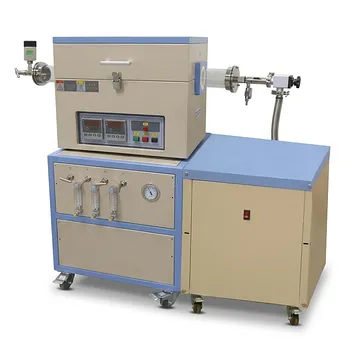
Dual Zone Quartz Tube Furnace with 80mm Diameter 1200C Max Temperature 3 Channel Gas Mixer and Vacuum Pump System
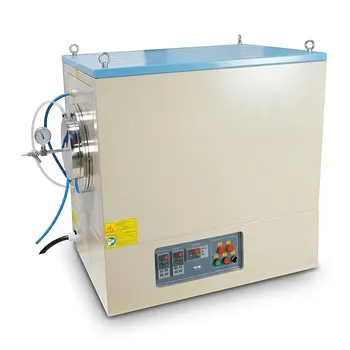
Dual Zone Tube Furnace 1100C with 11 Inch Quartz Tube and Vacuum Flanges for 8 Inch Wafer Processing
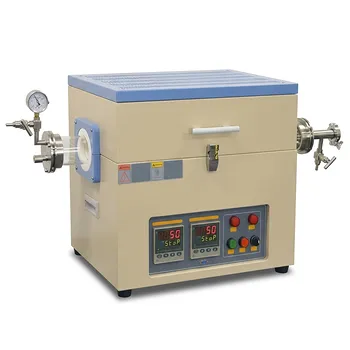
1200C Dual Zone Split Tube Furnace with Fused Quartz Tube and Vacuum Flanges Available in 60mm 80mm and 100mm Diameters
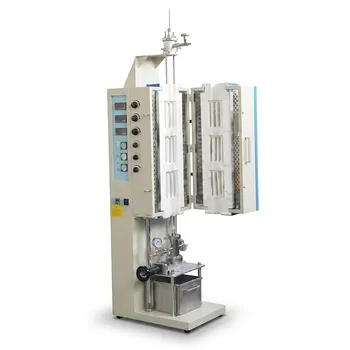
High Temperature Dual Zone Tube Furnace for Material Science Research and Professional Thermal Processing
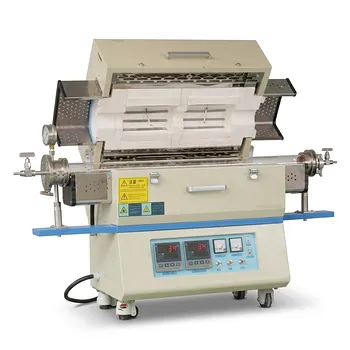
Dual Zone Split Tube Quenching Furnace with High Vacuum Atmosphere Control and Rapid Cooling
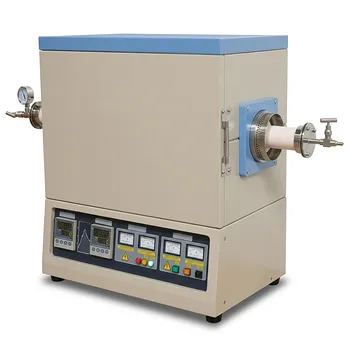
High Temperature 1700C Dual Zone Tube Furnace for Material Science and Industrial Chemical Vapor Deposition Research
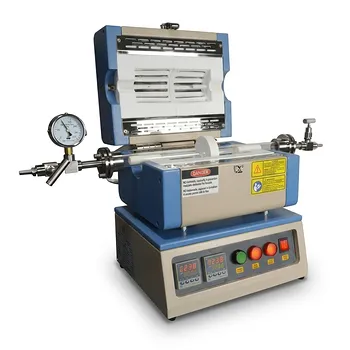
Dual Heating Zone 1200C Compact Split Tube Furnace with Optional 1" - 2" Tube and Vacuum Flanges
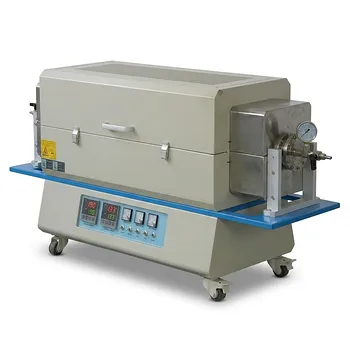
High Temperature Elongated Dual Zone Tube Furnace for Material Research and Industrial Heat Treatment
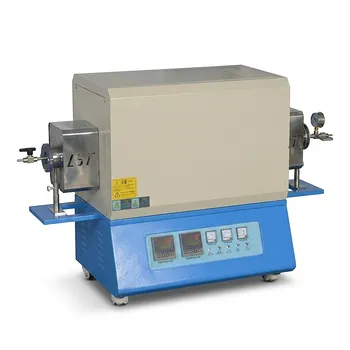
High Temperature Dual Zone Vacuum Tube Furnace for Material Research and CVD Processing
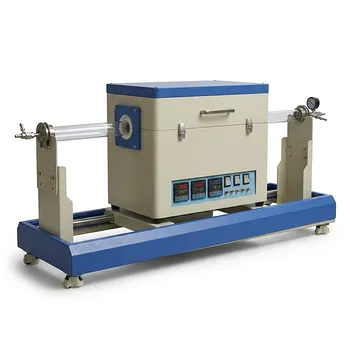
Double Temperature Zone Double Cover Tube Furnace for High Temperature CVD and Vacuum Annealing
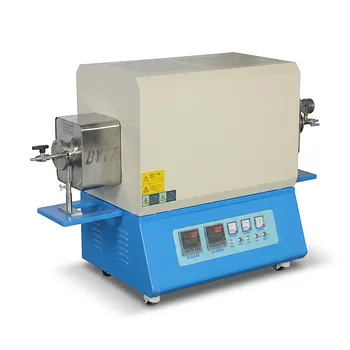
High Temperature Dual Zone Split Tube Furnace for Advanced Atmosphere Sintering and Vacuum CVD Applications
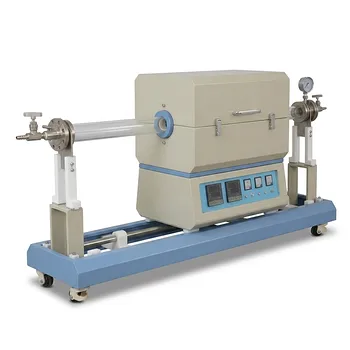
Double Zone Fast Heating Tube Furnace High Temperature Vacuum Atmosphere System
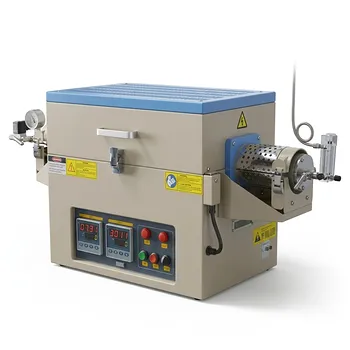
1100C Dual Zone Hydrogen Gas Tube Furnace with Quartz Tube and Integrated H2 Leak Detection System
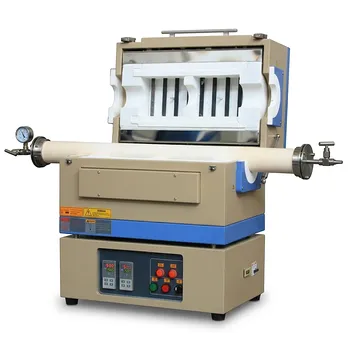
1500C Two Zone Split Tube Furnace with Vacuum Flange and 80mm Alumina Tube
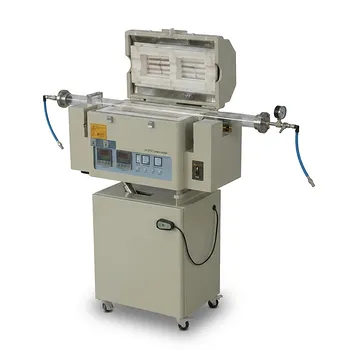
Double Temperature Revolving Tube Furnace with Precision Rotation and Adjustable Inclination for Advanced Material Research
Elongated Two Temperature Zone Pipe Furnace for Industrial Heat Treatment and Material Science Research
Two Zone Rotary Tube Furnace for Powder CVD Coating and Core Shell Material Synthesis 1100C
Two Zone IR Heating Rapid Thermal Processing RTP Tube Furnace with 4 Inch ID Quartz Tube and Sliding Sample Holders
Two Zones CSS Furnace for Rapid Thermal Processing Thin Film Coating 3 Inch Diameter 650C