What are the technical advantages of using a dual-zone tube furnace for growing large PdCoO2 crystals via CVT? Expert Tips
Updated 5 months ago
A dual-zone tube furnace provides the precise, independent temperature control necessary to establish a stable thermal gradient for Chemical Vapor Transport (CVT). For PdCoO2 growth, it allows the source zone to be maintained at 760°C while the growth zone sits at 710°C, creating a specific thermodynamic driving force. This controlled environment enables palladium and cobalt chloride vapors to migrate and deposit slowly at the cooler end, resulting in single crystals that are significantly larger and higher in quality than those produced by traditional methods.
The dual-zone furnace acts as the critical engine for the CVT process by decoupling the evaporation and deposition environments. This independence allows researchers to fine-tune vapor pressures and migration speeds, ensuring the slow, steady crystallization required for large-scale single crystals.
Establishing the Thermodynamic Driving Force
Precise Temperature Gradient Management
The primary technical advantage is the ability to create a constant temperature gradient ($\Delta T$) between two distinct points. In the synthesis of PdCoO2, this gradient (typically 50°C) serves as the driving force for gas-phase transport.
Without this precise delta, the gaseous intermediate products would not migrate directionally. The dual-zone configuration ensures that the thermal field remains stable over long growth periods, which is essential for uniform crystal development.
Independent Control of Precursor Environments
Dual-zone systems allow the source end and the sink end to operate as independent thermodynamic systems. This is vital when dealing with precursors that have different saturated vapor pressures or sublimation points.
By setting the source at a higher temperature (760°C), the furnace ensures the solid precursors react with the transport agent to form gaseous complexes. The independent growth zone (710°C) then provides the exact thermal "sink" required for these complexes to revert to solid form as single crystals.
Optimizing Growth Kinetics and Quality
Slow Crystallization for Maximum Dimension
Large single crystals require a slow and controlled deposition rate to prevent the formation of multiple small nuclei. The dual-zone furnace allows for the "fine-tuning" of the migration speed by adjusting the temperature differential.
A stable thermal environment prevents sudden surges in vapor concentration. This stability ensures that existing crystals grow larger rather than new, smaller crystals forming simultaneously, which is a common failure in single-zone systems.
Ensuring Ideal Stoichiometry
The quality of PdCoO2 crystals depends heavily on maintaining the correct stoichiometric ratio in the gaseous reaction zone. Because dual-zone furnaces provide independent heating, they can compensate for differences in the volatility of different precursors.
This precise control over evaporation rates ensures that the chemical composition of the migrating vapor remains consistent. The result is a high-purity crystal structure with fewer defects and superior electronic properties.
Understanding the Trade-offs and Pitfalls
The Risk of Thermal Fluctuation
While dual-zone furnaces offer precision, they are sensitive to external thermal interference. If the insulation between the two zones is insufficient, "thermal crosstalk" can occur, where the temperature of one zone unintentionally raises the temperature of the other.
Finding the "Goldilocks" Gradient
Selecting the correct $\Delta T$ is a delicate balance. If the gradient is too steep, the deposition happens too quickly, leading to poor crystal quality and structural defects; if it is too shallow, the transport rate becomes too slow to grow crystals of meaningful size within a practical timeframe.
How to Apply This to Your Project
Making the Right Choice for Your Goal
- If your primary focus is maximizing crystal size: Maintain a strictly stable, moderate temperature gradient (such as 50°C) over an extended period to encourage slow, singular nucleation.
- If your primary focus is high chemical purity: Prioritize the independent calibration of the source zone temperature to ensure the precursors reach their ideal vapor pressures without decomposition.
- If your primary focus is rapid prototyping: Experiment with steeper gradients to increase the transport rate, acknowledging that this may result in smaller, "mica-like" or sub-millimeter crystals.
The technical precision of a dual-zone furnace is the fundamental requirement for transforming volatile metal chlorides into the high-quality, large-scale PdCoO2 crystals required for advanced materials research.
Summary Table:
| Technical Feature | Advantage for CVT Process | Impact on PdCoO2 Crystals |
|---|---|---|
| Independent Heating Zones | Separates source evaporation from sink deposition | Ensures ideal vapor pressure and stoichiometry |
| Precise Thermal Gradient | Creates a stable 50°C driving force (760°C to 710°C) | Facilitates consistent directional gas-phase transport |
| Stable Growth Kinetics | Maintains slow and steady crystallization rates | Prevents multi-nucleation; yields larger single crystals |
| Decoupled Control | Compensates for different precursor volatility | Produces high-purity structures with fewer defects |
Elevate Your Material Research with THERMUNITS
Are you looking to achieve superior precision in your Chemical Vapor Transport (CVT) or high-temperature synthesis projects? THERMUNITS is a leading manufacturer of high-performance laboratory equipment tailored for material science and industrial R&D.
From growing high-purity PdCoO2 single crystals to complex chemical vapor deposition, our advanced thermal solutions provide the stability and control your research demands. Our comprehensive product range includes:
- Precision Furnaces: Tube (Single/Multi-zone), Muffle, Vacuum, Atmosphere, and Dental Furnaces.
- Advanced Systems: CVD/PECVD systems, Rotary Kilns, and Vacuum Induction Melting (VIM) furnaces.
- Specialized Tools: Hot Press furnaces, Thermal Elements, and custom heat treatment equipment.
Ready to optimize your laboratory's efficiency? Contact our technical experts today to find the perfect furnace configuration for your specific application.
References
- Yi Zhang, Chris Leighton. Crystal-chemical origins of the ultrahigh conductivity of metallic delafossites. DOI: 10.1038/s41467-024-45239-6
Mentioned Products
- Dual Zone Quartz Tube Furnace with 80mm Diameter 1200C Max Temperature 3 Channel Gas Mixer and Vacuum Pump System
- Dual Zone Tube Furnace 1100C with 11 Inch Quartz Tube and Vacuum Flanges for 8 Inch Wafer Processing
- 1200C Dual Zone Split Tube Furnace with Fused Quartz Tube and Vacuum Flanges Available in 60mm 80mm and 100mm Diameters
- High Temperature Dual Zone Tube Furnace for Material Science Research and Professional Thermal Processing
- Dual Zone Split Tube Quenching Furnace with High Vacuum Atmosphere Control and Rapid Cooling
People Also Ask
- How do dual-zone quartz tube furnaces achieve controllable material preparation? Optimize Perovskite VD Processes
- Purpose of the reverse gradient step in CVT growth? Master Crystal Purity with Dual-Zone Furnaces
- Why is it necessary to place MoS2 devices in a dual-zone tube furnace for annealing? Optimize Lattice Repair & Doping
- Why is a dual-zone tube furnace necessary for ReO3-doped Cu2Te CVD? Essential for precise precursor synchronization.
- What are the primary technical advantages of using a dual-zone tube furnace for MoS2? Optimize CVD Precision & Yield

Tech Team · ThermUnits
Last updated on Apr 14, 2026
Related Products
Dual Zone Quartz Tube Furnace with 80mm Diameter 1200C Max Temperature 3 Channel Gas Mixer and Vacuum Pump System
Dual Zone Tube Furnace 1100C with 11 Inch Quartz Tube and Vacuum Flanges for 8 Inch Wafer Processing
1200C Dual Zone Split Tube Furnace with Fused Quartz Tube and Vacuum Flanges Available in 60mm 80mm and 100mm Diameters
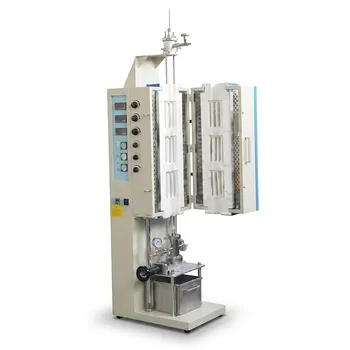
High Temperature Dual Zone Tube Furnace for Material Science Research and Professional Thermal Processing
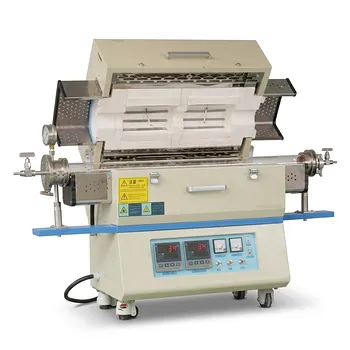
Dual Zone Split Tube Quenching Furnace with High Vacuum Atmosphere Control and Rapid Cooling
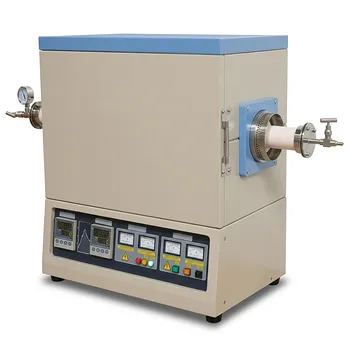
High Temperature 1700C Dual Zone Tube Furnace for Material Science and Industrial Chemical Vapor Deposition Research
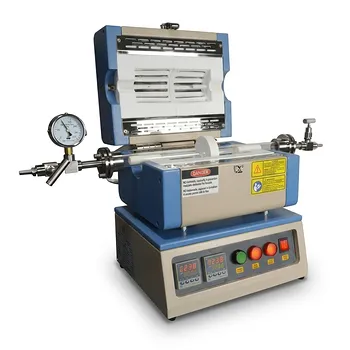
Dual Heating Zone 1200C Compact Split Tube Furnace with Optional 1" - 2" Tube and Vacuum Flanges
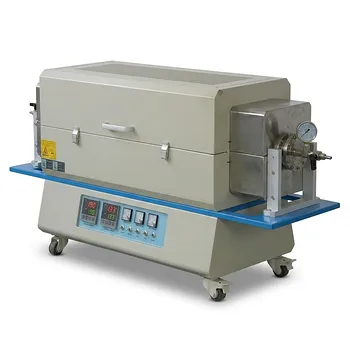
High Temperature Elongated Dual Zone Tube Furnace for Material Research and Industrial Heat Treatment
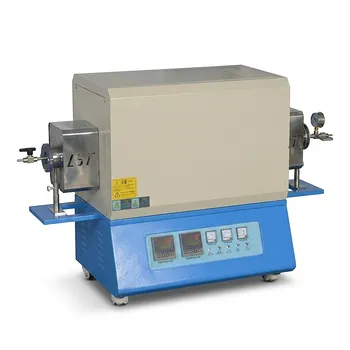
High Temperature Dual Zone Vacuum Tube Furnace for Material Research and CVD Processing
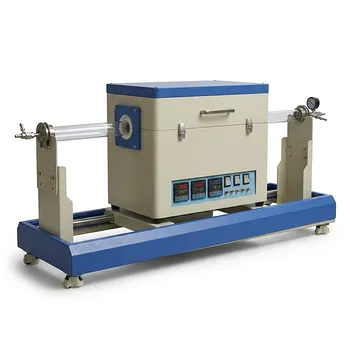
Double Temperature Zone Double Cover Tube Furnace for High Temperature CVD and Vacuum Annealing
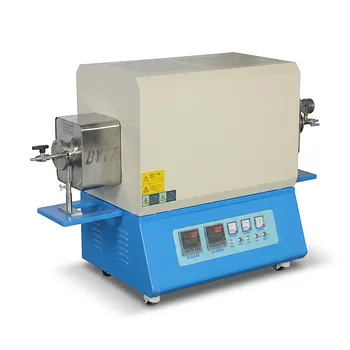
High Temperature Dual Zone Split Tube Furnace for Advanced Atmosphere Sintering and Vacuum CVD Applications
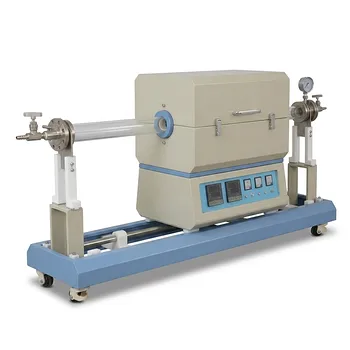
Double Zone Fast Heating Tube Furnace High Temperature Vacuum Atmosphere System
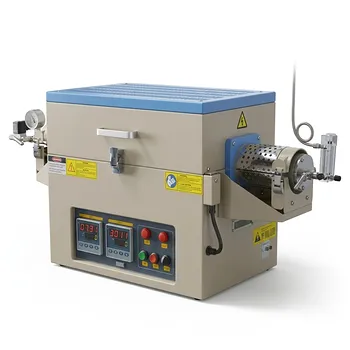
1100C Dual Zone Hydrogen Gas Tube Furnace with Quartz Tube and Integrated H2 Leak Detection System
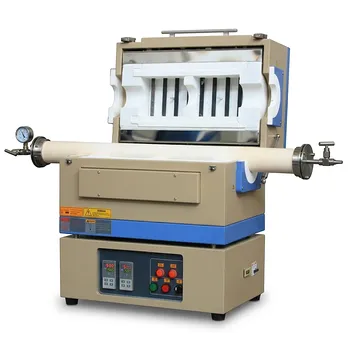
1500C Two Zone Split Tube Furnace with Vacuum Flange and 80mm Alumina Tube
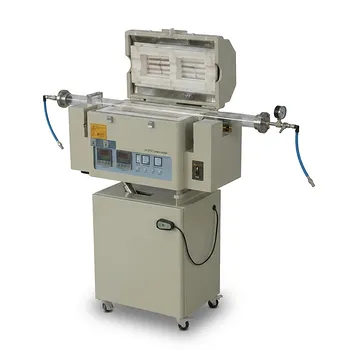
Double Temperature Revolving Tube Furnace with Precision Rotation and Adjustable Inclination for Advanced Material Research
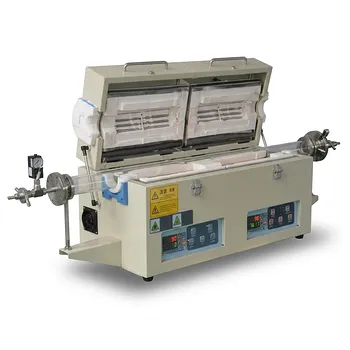
Elongated Two Temperature Zone Pipe Furnace for Industrial Heat Treatment and Material Science Research
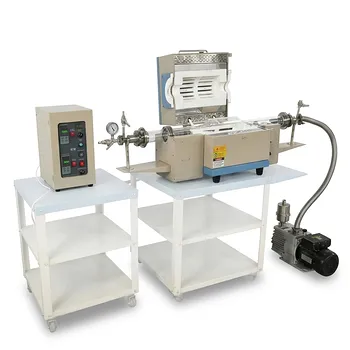
Two Zone Rotary Tube Furnace for Powder CVD Coating and Core Shell Material Synthesis 1100C
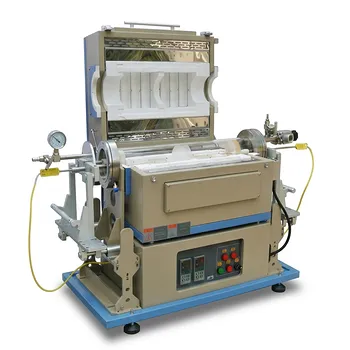
Two Zone IR Heating Rapid Thermal Processing RTP Tube Furnace with 4 Inch ID Quartz Tube and Sliding Sample Holders
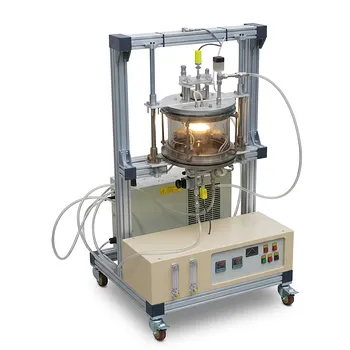
Two Zones CSS Furnace for Rapid Thermal Processing Thin Film Coating 3 Inch Diameter 650C