What are the technical advantages of using a dual-zone tube furnace system? Optimize Nanomaterial Growth & Stoichiometry
Updated 3 months ago
Independent thermal management is the primary technical advantage of a dual-zone tube furnace. By decoupling the evaporation temperature of the sulfur or selenium source from the growth temperature of the substrate, researchers can precisely regulate chalcogen vapor pressure without altering the reaction kinetics or crystal growth environment. This specific control allows for the tuning of nanomaterial dimensions, growth rates, and chemical composition with a level of repeatability impossible in single-zone systems.
A dual-zone tube furnace facilitates "thermal field partitioning," allowing the upstream evaporation rate and downstream reaction kinetics to be optimized as separate variables. This separation is essential for achieving precise stoichiometry and suppressing atomic defects in nanomaterials.
Decoupling Vapor Pressure from Reaction Kinetics
Independent Control of Precursor Evaporation
In sulfurization or selenization, the sulfur (S) or selenium (Se) powder is placed in the upstream zone, while the target substrate sits in the downstream zone. Because these elements have high vapor pressures at relatively low temperatures (130–420 °C), they would evaporate too quickly if placed in the same high-temperature environment required for material growth (730–770 °C). Independent heating allows the source to be maintained at a constant, lower temperature to ensure a steady and predictable supply of vapor.
Regulation of Supersaturation Levels
By adjusting the upstream temperature independently, users can control the concentration of chalcogen vapor entering the reaction zone. This directly influences the "supersaturation" of the environment, which is the driving force behind the width, thickness, and growth rate of nanoribbons or monolayers. This precision ensures that the growth process is limited by the reaction at the substrate rather than an inconsistent supply of precursor material.
Enhancing Material Quality and Stoichiometry
Suppressing Vacancy Defects
A common challenge in nanomaterial synthesis is the formation of sulfur vacancies (Vs), which occur when there is insufficient chalcogen vapor during high-temperature growth. The dual-zone configuration enhances the probability of covalent bonding (e.g., Mo-S) by maintaining an optimized local concentration of sulfur vapor throughout the cooling and heating cycles. This results in crystals with fewer structural defects and superior electronic properties.
Managing Disparate Volatility
Many synthesis processes involve precursors with significantly different saturated vapor pressures, such as CsBr and PbBr2 or Sulfur and MoO3. A dual-temperature system allows for distinct temperature gradients to be set for each precursor based on its specific sublimation point. This ensures that the precursor vapors mix at the ideal stoichiometric ratio within the reaction zone, which is critical for synthesizing high-quality, large-scale monolayer crystals.
Controlling Morphology and Uniformity
Inhibiting Particle Coarsening
Tube furnaces provide a stable environment for dynamic gas flow and rapid thermal transitions. This capability, combined with independent zone control, allows for rapid cooling after growth is complete. Faster cooling rates effectively inhibit the coarsening of nanoparticles, resulting in a significantly narrower and more uniform particle size distribution compared to traditional heat treatment methods.
Uniform Deposition in 3D Structures
For complex 3D structures, such as nanowalls or porous scaffolds, a dual-zone system ensures uniform chemical reactions throughout the entire volume of the sample. By precisely controlling the residence time and flow direction of the vaporized source, the system achieves deep chemical penetration. This leads to a more uniform composition and higher catalytic activity in the final nanomaterial.
Understanding the Trade-offs
System Calibration Complexity
While dual-zone systems offer superior control, they require extensive calibration to account for the thermal "cross-talk" between zones. Heat from the high-temperature reaction zone can bleed into the lower-temperature evaporation zone through the tube wall and gas medium. Users must often implement physical heat shields or specific spacing between zones to maintain a true independent temperature gradient.
Gas Flow Sensitivity
The effectiveness of a dual-zone setup is heavily dependent on the carrier gas velocity. If the gas flow is too slow, precursors may deposit on the tube walls between zones; if it is too fast, the vapor may bypass the substrate before it has time to react. Balancing the evaporation rate with gas dynamics adds a layer of operational complexity that requires precise flow controllers and consistent pressure management.
How to Apply This to Your Project
Independent zone control is a powerful tool, but its application depends on your specific material goals.
- If your primary focus is Precise Doping: Use the upstream zone to regulate the exact timing and concentration of dopants to modify the electronic structure of your substrate without affecting its crystal growth.
- If your primary focus is Large-Scale Monolayers: Prioritize calibrating the temperature of each precursor zone to ensure the vapor pressures reach the substrate at the perfect stoichiometric ratio.
- If your primary focus is Defect Reduction: Maintain a high sulfur/selenium vapor pressure during both the heating and cooling phases to prevent the formation of vacancies in the crystal lattice.
The dual-zone tube furnace transforms sulfurization from a volatile, unpredictable process into a precise, tunable chemical synthesis.
Summary Table:
| Technical Advantage | Impact on Process | Resulting Benefit |
|---|---|---|
| Independent Thermal Zones | Decouples precursor evaporation from substrate growth | Precise regulation of chalcogen vapor pressure |
| Saturation Regulation | Controls concentration of S/Se vapor in the tube | Precise tuning of nanoribbon width and thickness |
| Stoichiometry Control | Maintains vapor concentration during heating/cooling | Suppression of vacancy defects (Vs) in crystals |
| Thermal Field Partitioning | Accommodates precursors with disparate volatilities | Ideal stoichiometric ratios for complex compounds |
| Rapid Transitioning | Enables fast cooling post-synthesis | Inhibits particle coarsening for uniform size |
Elevate Your Nanomaterial Research with THERMUNITS
Precision in sulfurization and selenization requires advanced thermal control. THERMUNITS is a leading manufacturer of high-temperature laboratory equipment, providing material science and industrial R&D experts with high-performance thermal processing solutions.
Our comprehensive range of equipment includes:
- Tube Furnaces & CVD/PECVD Systems (Perfect for dual-zone nanomaterial synthesis)
- Vacuum & Atmosphere Furnaces
- Rotary, Muffle, and Hot Press Furnaces
- Vacuum Induction Melting (VIM) & Dental Furnaces
Don't let vacancy defects or inconsistent vapor pressure compromise your results. Contact THERMUNITS today to discuss how our specialized heat treatment systems can optimize your laboratory's efficiency and material quality!
References
- Xufan Li, Avetik R. Harutyunyan. Width-dependent continuous growth of atomically thin quantum nanoribbons from nanoalloy seeds in chalcogen vapor. DOI: 10.1038/s41467-024-54413-9
Mentioned Products
- Dual Zone Quartz Tube Furnace with 80mm Diameter 1200C Max Temperature 3 Channel Gas Mixer and Vacuum Pump System
- Dual Zone Tube Furnace 1100C with 11 Inch Quartz Tube and Vacuum Flanges for 8 Inch Wafer Processing
- 1200C Dual Zone Split Tube Furnace with Fused Quartz Tube and Vacuum Flanges Available in 60mm 80mm and 100mm Diameters
- High Temperature Dual Zone Tube Furnace for Material Science Research and Professional Thermal Processing
- Dual Zone Split Tube Quenching Furnace with High Vacuum Atmosphere Control and Rapid Cooling
People Also Ask
- How do dual-zone quartz tube furnaces achieve controllable material preparation? Optimize Perovskite VD Processes
- What are the technical advantages of using a dual-zone tube furnace for growing large PdCoO2 crystals via CVT? Expert Tips
- Purpose of the reverse gradient step in CVT growth? Master Crystal Purity with Dual-Zone Furnaces
- Why is it necessary to place MoS2 devices in a dual-zone tube furnace for annealing? Optimize Lattice Repair & Doping
- Why is a dual-zone tube furnace necessary for ReO3-doped Cu2Te CVD? Essential for precise precursor synchronization.

Tech Team · ThermUnits
Last updated on Jun 03, 2026
Related Products
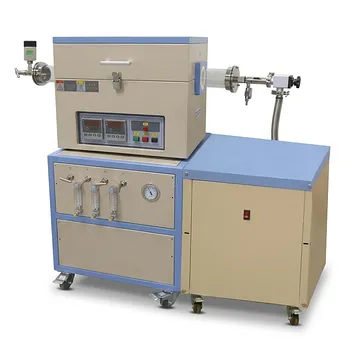
Dual Zone Quartz Tube Furnace with 80mm Diameter 1200C Max Temperature 3 Channel Gas Mixer and Vacuum Pump System
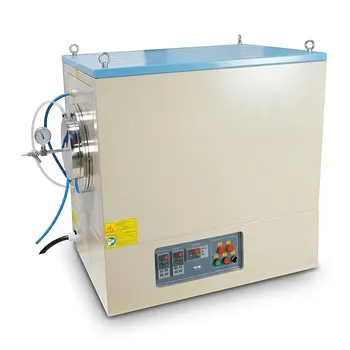
Dual Zone Tube Furnace 1100C with 11 Inch Quartz Tube and Vacuum Flanges for 8 Inch Wafer Processing
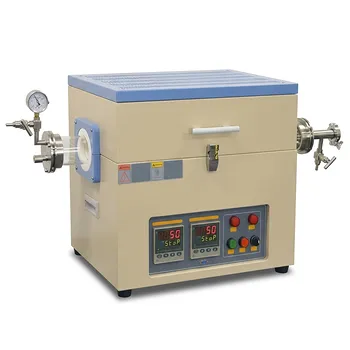
1200C Dual Zone Split Tube Furnace with Fused Quartz Tube and Vacuum Flanges Available in 60mm 80mm and 100mm Diameters
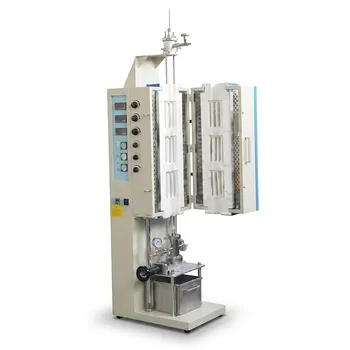
High Temperature Dual Zone Tube Furnace for Material Science Research and Professional Thermal Processing
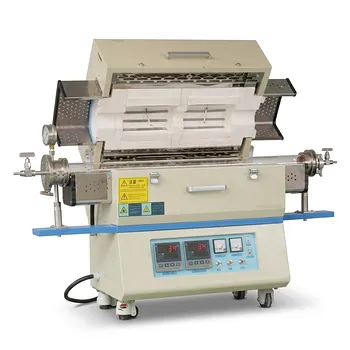
Dual Zone Split Tube Quenching Furnace with High Vacuum Atmosphere Control and Rapid Cooling
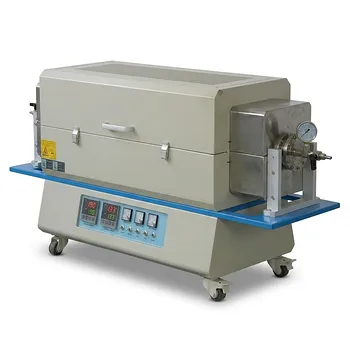
High Temperature Elongated Dual Zone Tube Furnace for Material Research and Industrial Heat Treatment
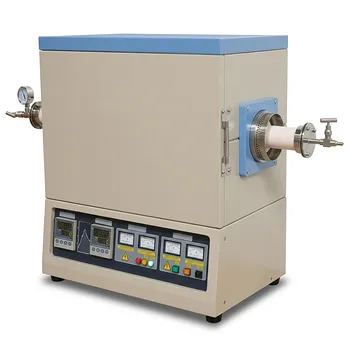
High Temperature 1700C Dual Zone Tube Furnace for Material Science and Industrial Chemical Vapor Deposition Research
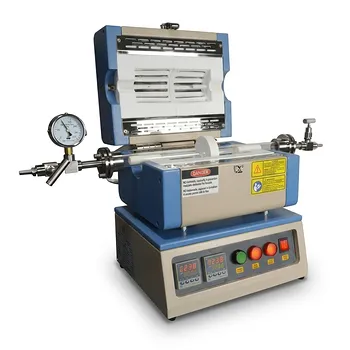
Dual Heating Zone 1200C Compact Split Tube Furnace with Optional 1" - 2" Tube and Vacuum Flanges
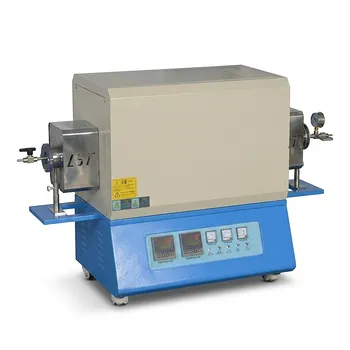
High Temperature Dual Zone Vacuum Tube Furnace for Material Research and CVD Processing
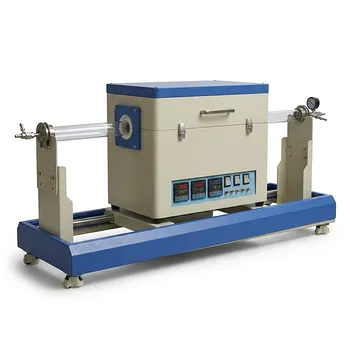
Double Temperature Zone Double Cover Tube Furnace for High Temperature CVD and Vacuum Annealing
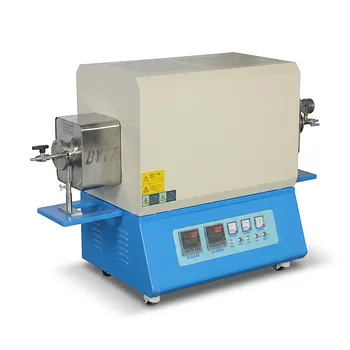
High Temperature Dual Zone Split Tube Furnace for Advanced Atmosphere Sintering and Vacuum CVD Applications
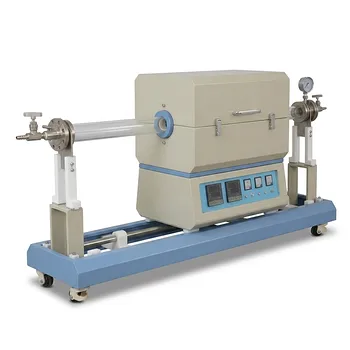
Double Zone Fast Heating Tube Furnace High Temperature Vacuum Atmosphere System
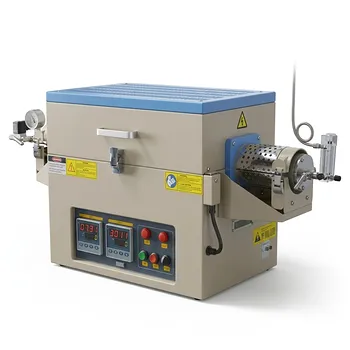
1100C Dual Zone Hydrogen Gas Tube Furnace with Quartz Tube and Integrated H2 Leak Detection System
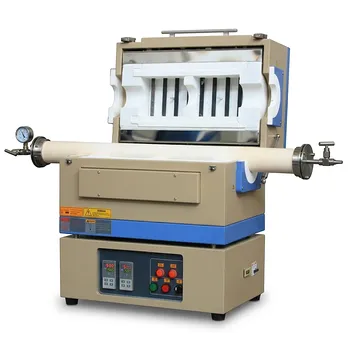
1500C Two Zone Split Tube Furnace with Vacuum Flange and 80mm Alumina Tube
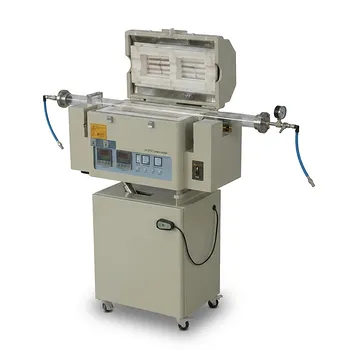
Double Temperature Revolving Tube Furnace with Precision Rotation and Adjustable Inclination for Advanced Material Research
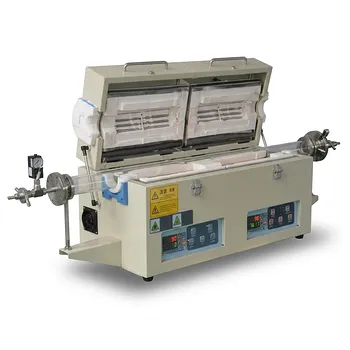
Elongated Two Temperature Zone Pipe Furnace for Industrial Heat Treatment and Material Science Research
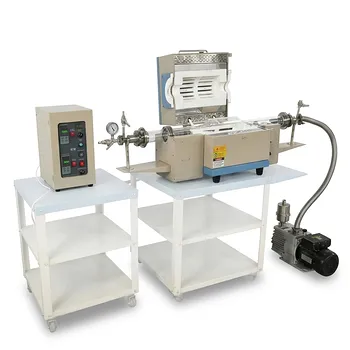
Two Zone Rotary Tube Furnace for Powder CVD Coating and Core Shell Material Synthesis 1100C
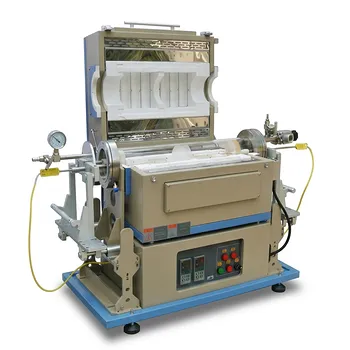
Two Zone IR Heating Rapid Thermal Processing RTP Tube Furnace with 4 Inch ID Quartz Tube and Sliding Sample Holders
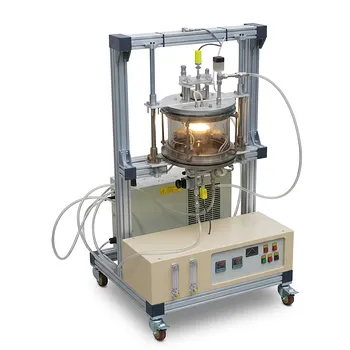
Two Zones CSS Furnace for Rapid Thermal Processing Thin Film Coating 3 Inch Diameter 650C