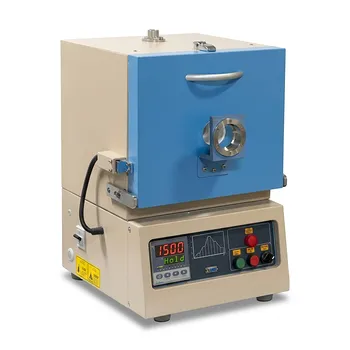
Why are the Laboratory Tube Furnace and its atmosphere control system essential for the phosphidation of MnCo2O4.5? Master Precise Synthesis
Updated 3 months ago
The Laboratory Tube Furnace is the critical reactor for the phosphidation of $MnCo_2O_{4.5}$ because it creates a strictly controlled environment for gas-solid interactions. It facilitates the high-temperature pyrolysis of phosphorus precursors (such as sodium hypophosphite) into reactive $PH_3$ gas while simultaneously excluding oxygen to prevent unwanted secondary oxidation. This dual role ensures successful surface phosphorus doping and the formation of oxygen vacancies, which are vital for enhancing the material's electrical conductivity.
The tube furnace acts as both a precision heat source and a chemical isolation chamber, enabling the controlled conversion of oxides to phosphides by managing the solid-gas interface and preventing atmospheric contamination.
The Role of Controlled Thermal Energy
Pyrolysis of Phosphorus Sources
The phosphidation process requires a constant high-temperature environment to decompose solid reagents like sodium hypophosphite into phosphine ($PH_3$) gas. The tube furnace provides the stable thermal energy necessary to initiate this pyrolysis, ensuring a steady supply of reactive phosphorus vapor.
Facilitating Anion Exchange
High temperatures provided by the furnace are essential for the solid-gas interface reaction. This thermal energy allows phosphorus atoms to displace oxygen atoms or integrate into the lattice, facilitating the anion exchange required to transform crystalline oxides into nanocrystalline phosphides.
The Necessity of Atmosphere Control
Excluding Oxygen Contamination
At the high temperatures required for phosphidation, metal oxides are highly susceptible to over-oxidation. The atmosphere control system replaces ambient air with inert gases like argon or nitrogen, preventing oxygen from interfering with the reduction and doping process.
Carrier Gas and Vapor Distribution
The system maintains a continuous flow of inert gas to act as a carrier for the generated $PH_3$ gas. This ensures that the phosphorus vapor is distributed uniformly across the $MnCo_2O_{4.5}$ precursor, leading to a homogenous reaction and consistent material properties.
Material Transformation and Defect Engineering
Induction of Oxygen Vacancies
The precise chemical vapor environment within the tube furnace promotes the generation of oxygen vacancies on the oxide surface. These vacancies serve as active sites that significantly enhance the material's chemical adsorption capacity and overall electrochemical performance.
Surface Phosphorus Doping
By controlling the concentration of phosphorus vapor and the duration of exposure, the furnace enables precise surface doping. This modification is key to altering the electronic structure of $MnCo_2O_{4.5}$, which directly improves its material conductivity.
Understanding the Trade-offs and Challenges
Gas Flow Rate Sensitivity
The velocity of the carrier gas must be meticulously balanced; flow rates that are too high may sweep the $PH_3$ gas away before it can react, while rates that are too low can lead to non-uniform phosphidation. Achieving the ideal solid-gas interface requires precise calibration of the atmosphere control system.
Temperature Gradients and Phase Purity
Tube furnaces can experience thermal gradients where the temperature at the center differs from the ends. If the temperature is not uniform, it can result in mixed-phase impurities, where some portions of the sample remain as oxides while others over-react into bulk phosphides.
Hazardous Byproduct Management
The reaction produces $PH_3$, which is toxic and flammable. While the atmosphere control system is essential for the reaction, it also necessitates a robust exhaust and scrubbing system to safely manage the discharge of unreacted phosphorus vapors.
How to Apply This to Your Project
When utilizing a Laboratory Tube Furnace for phosphidation, your technical approach should shift based on your specific material requirements.
- If your primary focus is Maximizing Conductivity: Prioritize the induction of oxygen vacancies by using a strictly inert Argon atmosphere and optimizing the "dwell time" at peak temperature.
- If your primary focus is Phase Purity: Ensure a high-purity inert gas flow (such as $N_2$ or $Ar$) is established well before heating begins to completely eliminate trace oxygen.
- If your primary focus is Uniform Surface Doping: Use a consistent flow rate of carrier gas to ensure the phosphorus vapor reaches all surfaces of the precursor material equally.
By mastering the synergy between thermal precision and atmospheric purity, you can achieve the exacting chemical transitions required for high-performance electrocatalytic materials.
Summary Table:
| Process Component | Key Function | Material Impact |
|---|---|---|
| High-Temp Reactor | Pyrolysis of $PH_3$ precursors | Initiates chemical vapor phase |
| Inert Atmosphere | Oxygen exclusion & gas carrier | Prevents oxidation & ensures uniform doping |
| Thermal Precision | Controlled heat source | Induction of oxygen vacancies |
| Flow Control | Uniform vapor distribution | Ensures phase purity & electrochemical performance |
Elevate Your Material Science Research with THERMUNITS
Precise atmospheric control and thermal uniformity are non-negotiable for successful phosphidation and advanced material synthesis. THERMUNITS is a leading manufacturer of high-performance laboratory equipment designed for material science and industrial R&D. We provide the robust technology needed to master complex gas-solid interactions.
Our comprehensive range of thermal processing solutions includes:
- Tube & Atmosphere Furnaces: Essential for controlled gas environments.
- CVD/PECVD Systems: For advanced chemical vapor deposition.
- Specialized Equipment: Muffle, Vacuum, Rotary, Hot Press, and Dental Furnaces.
- Advanced Solutions: Vacuum induction melting (VIM) and electric rotary kilns.
Ready to optimize your laboratory’s heat treatment efficiency? Contact us today to discuss your project requirements and discover how our expert-engineered furnaces can enhance your research outcomes.
References
- Gaofeng Li, Dianbo Ruan. Synergy of Oxygen Vacancy and Surface Modulation Endows Hollow Hydrangea-like MnCo2O4.5 with Enhanced Capacitive Performance. DOI: 10.3390/ijms25105075
Mentioned Products
- Compact Hybrid Muffle and Tube Furnace for 1000C Controlled Atmosphere Laboratory Material Sintering
- Compact Vertical Split Quartz Tube Furnace with Stainless Steel Vacuum Flanges for Rapid Thermal Quenching and Controlled Atmosphere Material Processing
- High Temperature Tilting Rotary Tubular Furnace for Continuous Powder Thermal Processing and Controlled Atmosphere Sintering
- 1000C Mini Tube Furnace with 20mm Quartz Tube and Vacuum Flanges for Material Science Research and Controlled Atmosphere Small Sample Processing
- 1700C High Temperature Alumina Tube Furnace with 18 Inch Heated Zone and Vacuum Sealing Flanges
People Also Ask
- Why is an atmosphere-controlled tube furnace required for the pre-sulfidation of NiMo/gamma-Al2O3 catalysts?
- Why is an atmosphere-controlled tube furnace required for 800 °C CNF annealing? Essential for Oxidative Protection.
- Why is an atmosphere-controlled tube furnace required for [email protected]/C preparation? Key for Purity & Structure
- Why is an atmosphere-controlled tube furnace required for single-atom sensor calcination? Ensure Atomic Dispersion.
- What is the function of a controlled atmosphere tube furnace in LiGa alloying? Achieving High-Purity Thermal Synthesis

Tech Team · ThermUnits
Last updated on Jun 02, 2026
Related Products
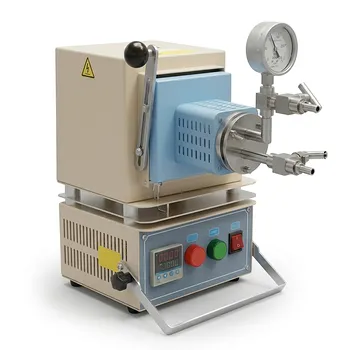
Compact Hybrid Muffle and Tube Furnace for 1000C Controlled Atmosphere Laboratory Material Sintering

Compact Vertical Split Quartz Tube Furnace with Stainless Steel Vacuum Flanges for Rapid Thermal Quenching and Controlled Atmosphere Material Processing
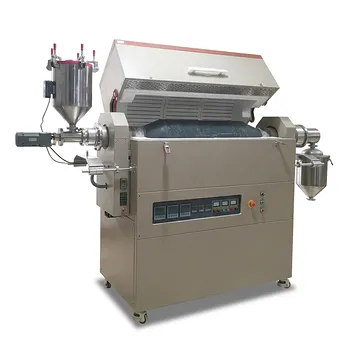
High Temperature Tilting Rotary Tubular Furnace for Continuous Powder Thermal Processing and Controlled Atmosphere Sintering
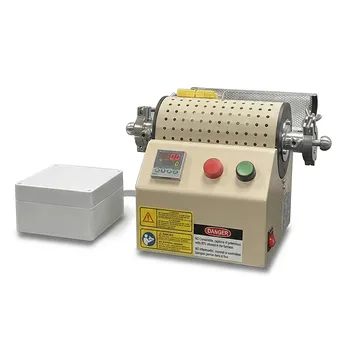
1000C Mini Tube Furnace with 20mm Quartz Tube and Vacuum Flanges for Material Science Research and Controlled Atmosphere Small Sample Processing
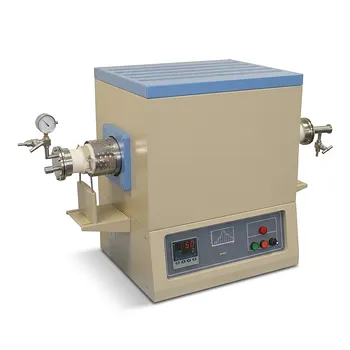
1700C High Temperature Alumina Tube Furnace with 18 Inch Heated Zone and Vacuum Sealing Flanges
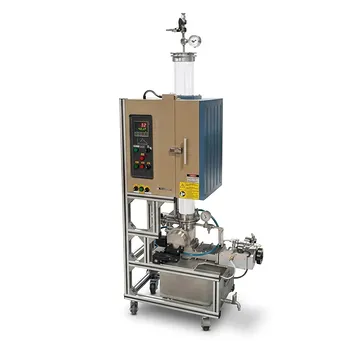
1200C High Temperature Atmosphere Controlled Vertical Quenching Tube Furnace with 4 Inch Quartz Tube
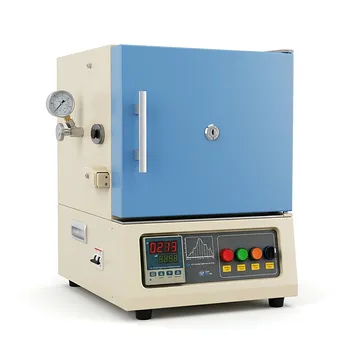
1200C Hybrid Muffle and Tube Furnace for Material Research with Dual Atmosphere Control Quartz Tubes
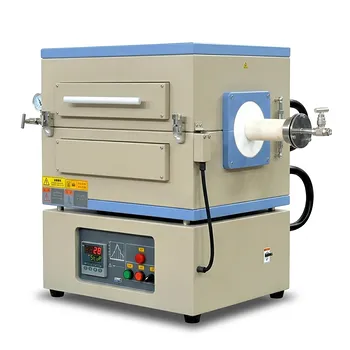
1500°C Split Tube Furnace with Alumina Tube and Vacuum Sealing Flanges for Material Research
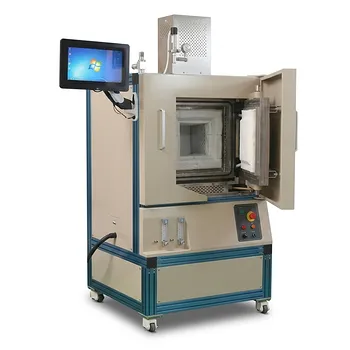
High Temperature Oxygen and Inert Atmosphere Controlled Furnace 8 Liter 1700C Sintering System for Advanced Materials RD
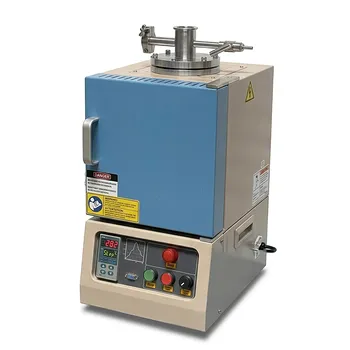
High Temperature Hybrid Muffle and Tube Furnace with Vacuum Capability and PID Control
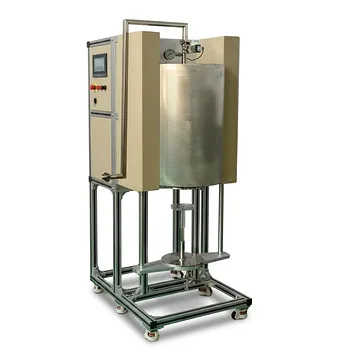
1200°C Atmosphere Controlled Automatic Bottom Loading Furnace with 6 Inch Quartz Tube
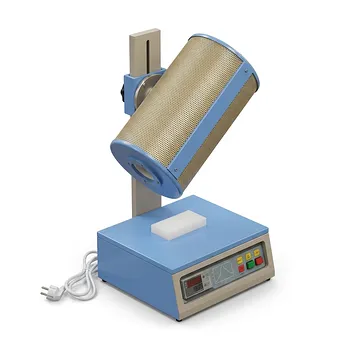
1100°C Vertical Laboratory Furnace for DIY Tubular Reactors with PID Temperature Controller
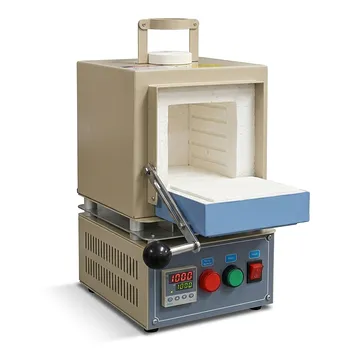
Compact 1000C Muffle Furnace with Programmable Controller and 2 Inch Top Port for Vacuum and Atmosphere Material Research

Vertical 1700C Vacuum and Atmosphere Tube Furnace with 80mm Alumina Tube
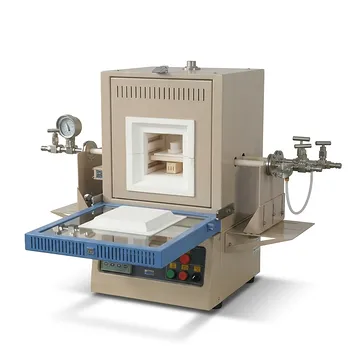
1700C Compact Hybrid Furnace with Dual Layer Box Sintering and Controlled Atmosphere Alumina Tubes

High Temperature Automated 5 Inch Tube Furnace for Autonomous Material Research and Advanced Laboratory R&D

High Temperature 1700C Tube Furnace with High Vacuum Turbomolecular Pump System and Multi Channel Mass Flow Controller Gas Mixer
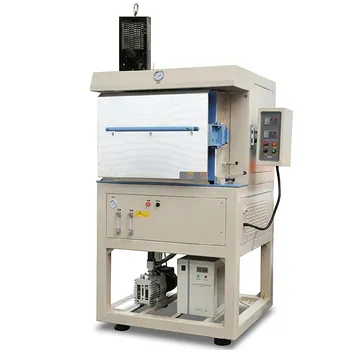
1200C Hydrogen Atmosphere Box Furnace with 5 Heated Sides and 64L Chamber

1800C High Temperature Compact Vacuum Tube Furnace with 60mm OD Alumina Tube and Kanthal MoSi2 Heating Elements