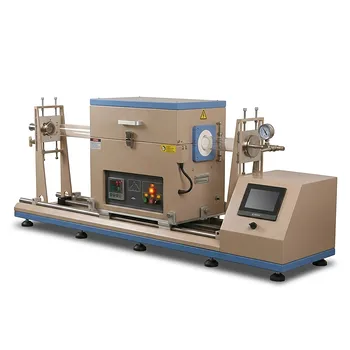
Why can a Tube Furnace using spent coffee grounds achieve more energy-efficient lithium recovery? Low-Temp Bio-Reduction
Updated 3 months ago
The energy efficiency of lithium recovery is fundamentally redefined by leveraging the unique chemical properties of spent coffee grounds. In a specialized tube furnace environment, this process operates at a relatively low temperature of 600 °C, significantly below the extreme heat required for traditional carbothermic reduction. This shift is made possible by a gas-solid synergistic mechanism that drastically lowers the activation energy required for the chemical reaction.
Utilizing spent coffee grounds in a controlled tube furnace allows for a low-temperature reduction process that bypasses the high energy barriers of traditional smelting. By harnessing the reactive gases generated by biomass, the system achieves lithium recovery with a fraction of the industrial energy footprint.
The Mechanics of Low-Temperature Reduction
Lowering the Activation Energy
Traditional carbothermic reduction relies on solid-to-solid contact, which requires massive thermal energy to initiate the oxygen stripping process. By contrast, the spent coffee grounds act as a catalyst-rich biomass that shifts the reaction kinetics.
This shift lowers the activation energy, meaning the chemical bonds can be broken and reorganized at much lower thermal thresholds. This results in a process that is not just slightly more efficient, but fundamentally less energy-intensive.
The Role of Volatile Biomass Gases
As the coffee grounds heat up within the furnace, they release a suite of reducing gases such as carbon monoxide and hydrogen. These gases permeate the lithium-bearing material much more effectively than solid carbon could.
This gas-phase interaction ensures a more uniform and rapid reduction. Because the gases are highly reactive, they do the "heavy lifting" of the reduction process at temperatures as low as 600 °C.
The Precision of the Tube Furnace Environment
Controlling Pressure and Temperature
A tube furnace is critical because it provides a sealed, highly controllable environment. Unlike open-air or less precise furnaces, it can maintain the exact reaction pressure necessary to keep reducing gases in contact with the target material.
By precisely managing these variables, the furnace prevents the waste of the biomass-generated gases. This containment ensures that every unit of energy and every molecule of gas is utilized for the recovery process.
Enabling Gas-Solid Synergy
The "secret sauce" of this method is the gas-solid synergistic reduction mechanism. This describes the way the solid biomass and the evolved gases work together to strip oxygen from the lithium compounds.
The tube furnace acts as a micro-reactor that stabilizes this synergy. This allows the recovery process to stay consistent and efficient, avoiding the "cold spots" or uneven heating common in larger industrial kilns.
Understanding the Trade-offs
Feedstock Variability and Consistency
One primary challenge is the compositional consistency of spent coffee grounds. Depending on the source, the moisture content and lipid profile of the grounds can vary, which may affect the volume of reducing gases produced.
Operators must implement a pre-treatment or drying phase to ensure the biomass behaves predictably. Failure to control for these variables can lead to fluctuations in the reduction efficiency and final yield.
Scalability and Throughput Limits
While tube furnaces offer unmatched precision, they are typically smaller in scale than massive industrial rotary kilns. Transitioning from a laboratory tube furnace to high-volume production requires careful engineering to maintain the same pressure and temperature uniformity.
Maintaining the gas-solid synergy becomes increasingly complex as the reactor size increases. Scaling up requires sophisticated gas management systems to ensure the biomass volatiles do not escape before the reaction is complete.
How to Apply This to Your Project
Making the Right Choice for Your Goal
To successfully implement biomass-based lithium recovery, you must align your equipment and feedstock strategy with your specific energy targets.
- If your primary focus is Maximum Energy Savings: Prioritize the use of a high-precision tube furnace to maintain the 600 °C threshold and capture all biomass volatiles.
- If your primary focus is Industrial Throughput: Explore continuous-feed tube furnace designs that can handle larger volumes of coffee grounds while maintaining a sealed, pressurized environment.
- If your primary focus is Process Stability: Implement a standardized pre-treatment process for your spent coffee grounds to ensure a consistent gas output during the heating phase.
By integrating the precision of a tube furnace with the reactive power of biomass, you can transform lithium recovery from a high-heat industrial burden into a streamlined, low-energy process.
Summary Table:
| Feature | Traditional Carbothermic | Biomass + Tube Furnace |
|---|---|---|
| Operating Temp | Typically >1000°C | Optimized ~600°C |
| Reaction Medium | Solid-to-Solid | Gas-Solid Synergy |
| Reducing Agent | Industrial Coke/Coal | Spent Coffee Grounds (Biomass) |
| Activation Energy | High | Significantly Lowered |
| Environmental Impact | High Carbon Footprint | Low Carbon & Resource Circular |
Elevate Your R&D with Precision Thermal Solutions
At THERMUNITS, we are dedicated to supporting material science and industrial R&D with high-performance laboratory equipment. Whether you are pioneering low-energy lithium recovery or exploring advanced synthesis, our thermal processing solutions provide the precision and reliability you need to succeed.
Our comprehensive product range includes:
- Advanced Furnaces: Tube, Muffle, Vacuum, Atmosphere, Rotary, and Hot Press Furnaces.
- Specialized Systems: CVD/PECVD systems, Dental Furnaces, and Electric Rotary Kilns.
- Heavy-Duty Equipment: Vacuum Induction Melting (VIM) furnaces and high-quality Thermal Elements.
Ready to optimize your heat treatment process? Contact our technical experts today to discuss your specific requirements and discover how our equipment can enhance your laboratory's efficiency and results.
References
- Md. Anik Hasan, Veena Sahajwalla. Sustainable regeneration of cathode active materials from spent lithium-ion batteries by repurposing waste coffee powder. DOI: 10.1039/d4gc05048g
Mentioned Products
- Vertical 1700C Vacuum and Atmosphere Tube Furnace with 80mm Alumina Tube
- Compact High Temperature 1600C Tube Furnace with 50mm Alumina Tube and Vacuum Flanges for Material Sintering
- 900°C Max Rotary Tube Furnace with 8 Inch 310S Alloy Tube and Optional Multi Zone Heating for Industrial Material Calcination
- Split Vertical Tube Furnace with 1200C Quartz Tube and Stainless Steel Vacuum Flanges for Rapid Thermal Processing
- High Temperature 1700C Tube Furnace with High Vacuum Turbomolecular Pump System and Multi Channel Mass Flow Controller Gas Mixer
People Also Ask
- How is an industrial-grade vertical tube furnace utilized in smelting leaching residues? Enhance Metal Recovery Efficiency
- What is the function of a laboratory-grade vertical tube furnace in fast pyrolysis? Optimize Composite Research.
- How does a vertical tube furnace facilitate thermoelectric alloy melting? Precision synthesis for material homogeneity.
- Why is a thermocouple sensor indispensable for monitoring the vertical tube furnace during gallium oxide nanowire production? Optimize VLS Growth
- What are the advantages of using a vertical tube furnace for crucible experiments simulating steel-slag interactions?

Tech Team · ThermUnits
Last updated on Jun 03, 2026
Related Products

Vertical 1700C Vacuum and Atmosphere Tube Furnace with 80mm Alumina Tube

Compact High Temperature 1600C Tube Furnace with 50mm Alumina Tube and Vacuum Flanges for Material Sintering
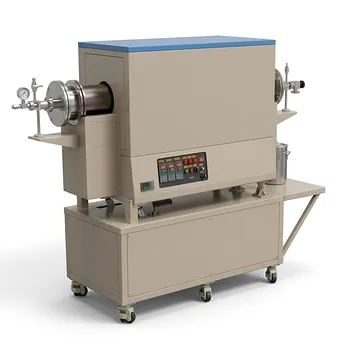
900°C Max Rotary Tube Furnace with 8 Inch 310S Alloy Tube and Optional Multi Zone Heating for Industrial Material Calcination
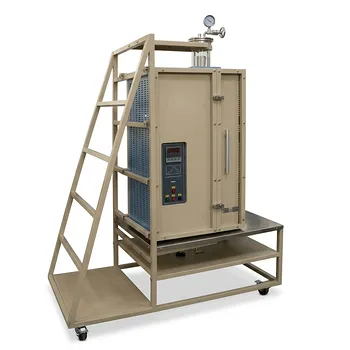
Split Vertical Tube Furnace with 1200C Quartz Tube and Stainless Steel Vacuum Flanges for Rapid Thermal Processing

High Temperature 1700C Tube Furnace with High Vacuum Turbomolecular Pump System and Multi Channel Mass Flow Controller Gas Mixer

1100C Tube Furnace with Vacuum Flange and Programmable Temperature Controller for Material Science and Industrial Heat Treatment
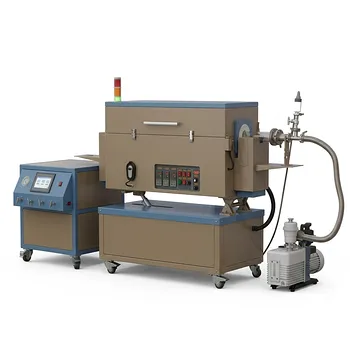
5 Inch Three Zone Rotary Tube Furnace with Integrated Gas Delivery System and 1200C Capability for Advanced Material CVD Processing
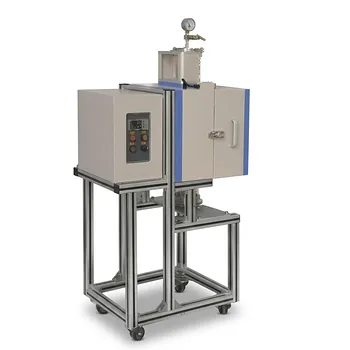
1200°C 5 Inch Vertical Quartz Tube Furnace with Stainless Steel Vacuum Flanges
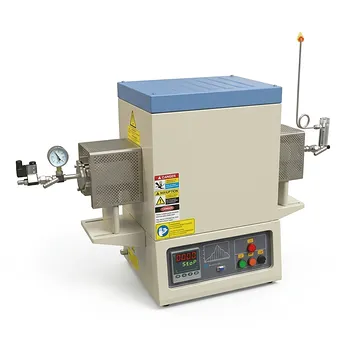
1700C Hydrogen Gas Tube Furnace with 60mm Alumina Process Tube and Integrated Hydrogen Safety Detector

High Temperature 1700C Six Zone Split Tube Furnace with Alumina Tube and Water Cooled Flanges

Compact Vertical Split Quartz Tube Furnace with Stainless Steel Vacuum Flanges for Rapid Thermal Quenching and Controlled Atmosphere Material Processing

High Temperature 1700C Benchtop Tube Furnace with 5 Inch Heating Zone High Purity Alumina Tube and Vacuum Sealing Flanges
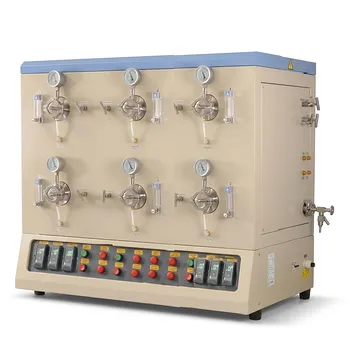
1200C High Throughput Multi Channel Tube Furnace with 50mm Quartz Tubes for Annealing and Material Phase Diagram Research

1800C High Temperature Compact Vacuum Tube Furnace with 60mm OD Alumina Tube and Kanthal MoSi2 Heating Elements
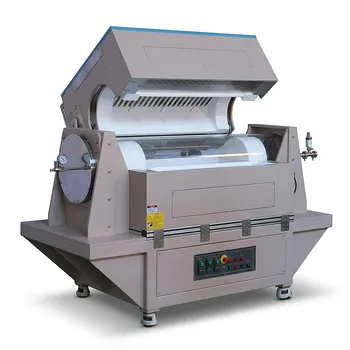
Three Zone Tube Furnace with 11 Inch or 15 Inch Quartz Tube and Hinged Flanges for Vacuum Atmosphere Heat Treatment

High Temperature 1700C Vertical Tube Furnace for Powder Spherification and Material Sintering
High Temperature Rocking Tube Furnace with Quartz Tube and Vacuum Flange for Materials Synthesis

High Temperature Automated 5 Inch Tube Furnace for Autonomous Material Research and Advanced Laboratory R&D
5 Inch Rotary Tube Furnace with Automatic Feeding and Receiving System 1200C Three Zone CVD Powder Processing