Why does a horizontal tube furnace require a nitrogen-protected environment? Prevent Oxidation & Maximize Carbon Yield
Updated 3 months ago
The use of nitrogen in a horizontal tube furnace is a critical safeguard against material loss during high-temperature processing. At activation temperatures (typically 550°C and above), carbon microspheres react violently with oxygen, leading to combustion. A nitrogen-protected environment displaces oxygen, shifting the process from destructive burning to constructive chemical activation.
Core Takeaway: Nitrogen creates an inert atmosphere that prevents the carbon precursor from oxidizing into ash, allowing phosphoric acid to instead perform the precise chemical dehydration and dehydrogenation required to build a high-surface-area pore structure.
Preventing Oxidative Destruction
Eliminating Aerobic Combustion
At temperatures required for phosphoric acid activation, carbon materials become highly reactive to oxygen. Without a nitrogen shield, the carbon microspheres would undergo aerobic combustion, effectively burning away before the activation process can even begin.
Protecting Carbon Yield
The nitrogen flow ensures that the internal furnace environment remains oxygen-free, preserving the structural integrity of the carbon framework. This protection is what allows the biomass or precursor to convert into a carbon-rich skeleton rather than being lost as gaseous CO2 or residual ash.
Facilitating Thermal Rearrangement
An inert environment allows for the stable thermal rearrangement of atoms within the carbon structure. This controlled heating is essential for the eventual graphitization or hardening of the carbon, which is necessary for high-performance applications like electrode manufacturing.
Facilitating the Activation Chemistry
Enabling Dehydrogenation and Dehydration
Phosphoric acid acts as a chemical dehydrating agent that helps develop the internal pore structure of the microspheres. Nitrogen provides the stable, non-reactive background needed for these specific chemical reactions—dehydrogenation and dehydration—to occur fully across the carbon framework.
Maximizing Specific Surface Area
Under a nitrogen blanket, the phosphoric acid can effectively etch the carbon to create a highly developed microporous and mesoporous structure. This process is what transforms the material from a low-surface-area precursor into an activated carbon with a surface area exceeding 800 m²/g.
Removing Volatile Impurities
A continuous flow of high-purity nitrogen (often maintained at rates like 500 mL/min) serves a dual purpose. Beyond displacing oxygen, the moving gas carries away volatile pyrolysis by-products and impurities generated during the reaction, ensuring the "activator" and the carbon substrate react with maximum efficiency.
The Role of the Tube Infrastructure
Atmospheric Isolation via Quartz or Steel
The stainless steel or quartz tube acts as a sealed reaction vessel that isolates the sample from the outside air. These materials are chosen for their high-temperature resistance and ability to withstand thermal shock while maintaining a gas-tight environment for the nitrogen flow.
Precise Thermal Control
A horizontal tube furnace provides a uniform and precisely controlled temperature zone. This precision, combined with a nitrogen atmosphere, ensures that the activation happens at the exact preset temperature required for the specific chemistry of phosphoric acid.
Understanding the Trade-offs
- Gas Flow Rate Sensitivity: If the nitrogen flow is too low, residual oxygen or reaction by-products may linger, leading to partial oxidation. Conversely, excessively high flow rates can cause localized cooling or waste expensive high-purity gas.
- Material Limitations: While quartz tubes offer excellent visibility and thermal shock resistance, they can be etched by certain chemicals over time. Stainless steel is more durable but may introduce metallic contaminants if the activation chemicals are highly corrosive at extreme temperatures.
- Purity Requirements: Using "industrial-grade" nitrogen rather than "high-purity" nitrogen can introduce trace moisture or oxygen, which may slightly degrade the specific surface area or yield of the final carbon product.
How to Apply This to Your Project
If your primary focus is maximizing carbon yield: Ensure your nitrogen flow starts well before the furnace begins to heat up to ensure all oxygen is displaced from the tube's "dead zones."
If your primary focus is achieving the highest surface area: Focus on maintaining a steady, consistent nitrogen flow rate to effectively sweep away pyrolysis gases that could otherwise clog developing pores.
If your primary focus is material purity: Opt for a high-purity quartz tube to avoid the potential for metallic leaching that can occur with stainless steel in the presence of phosphoric acid.
By strictly controlling the internal atmosphere, you transform a simple heating process into a precise chemical synthesis tool for advanced carbon materials.
Summary Table:
| Feature | Function in Activation | Impact on Final Product |
|---|---|---|
| Nitrogen Atmosphere | Displaces oxygen and prevents combustion | Preserves carbon structure; prevents ash formation |
| Phosphoric Acid | Acts as a chemical dehydrating agent | Develops high surface area (>800 m²/g) |
| Tube Isolation | Provides a gas-tight, sealed reaction zone | Ensures consistent temperature and inert purity |
| Continuous Flow | Sweeps away volatile pyrolysis by-products | Prevents pore clogging and ensures high purity |
| Thermal Control | Regulates precise activation temperatures | Facilitates stable atomic rearrangement |
Elevate Your Material Synthesis with THERMUNITS
Achieving precision in high-temperature chemical activation requires equipment you can trust. THERMUNITS is a leading manufacturer of high-performance laboratory equipment tailored for material science and industrial R&D. We offer a comprehensive suite of thermal solutions, including high-purity Tube Furnaces, Vacuum/Atmosphere Furnaces, CVD/PECVD systems, and Vacuum Induction Melting (VIM) furnaces designed to provide the stable, inert environments your research demands.
Whether you are scaling carbon microsphere production or exploring advanced heat treatments, our expert team is here to provide the technical support and high-quality equipment needed to maximize your yields.
Ready to optimize your thermal processing?
Contact THERMUNITS Today to discuss your specific requirements and request a custom quote!
References
- Saeed Alhawtali, Chun‐Yang Yin. Date Palm Leaflet-Derived Carbon Microspheres Activated Using Phosphoric Acid for Efficient Lead (II) Adsorption. DOI: 10.3390/c10010026
Mentioned Products
- 1200°C 10-Zone Split Tube Furnace with Horizontal and Vertical Mounting for Multi-Zone Thermal Gradients and Large Diameter Material Processing
- Multi Position Tube Furnace 1100C for Laboratory Material Research and Advanced Industrial Thermal Processing
- Ten Zone Multi Orientation Laboratory Tube Furnace for 1200C High Temperature Gradient Thermal Processing
- Vertical 1700C Vacuum and Atmosphere Tube Furnace with 80mm Alumina Tube
- Split Vertical Tube Furnace with 1200C Quartz Tube and Stainless Steel Vacuum Flanges for Rapid Thermal Processing
People Also Ask
- What is the primary engineering purpose for using a customized ventilation hood when operating a split tube furnace? RCF Safety
- What are the technical advantages of using a multi-zone independently controlled tube furnace in the modified USP process?
- How does a split tube furnace contribute to the thermal stabilization of Clignin@H-TiO2? Achieve Structural Precision
- What are the specific advantages and use cases for a split tube furnace? Optimize Lab Efficiency & Material Research
- What are the advantages of using a split tube furnace for heating a catalytic reactor? Boost Efficiency and Precision

Tech Team · ThermUnits
Last updated on Jun 02, 2026
Related Products
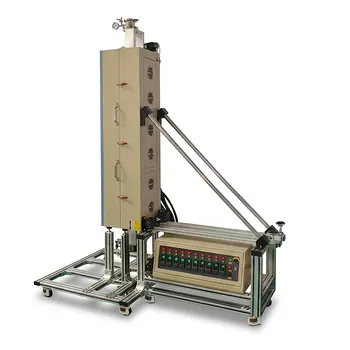
1200°C 10-Zone Split Tube Furnace with Horizontal and Vertical Mounting for Multi-Zone Thermal Gradients and Large Diameter Material Processing
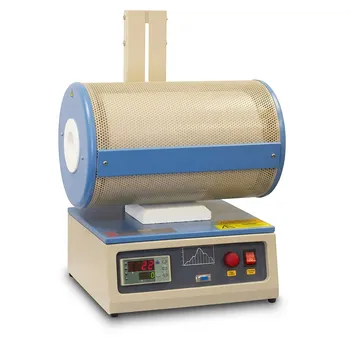
Multi Position Tube Furnace 1100C for Laboratory Material Research and Advanced Industrial Thermal Processing
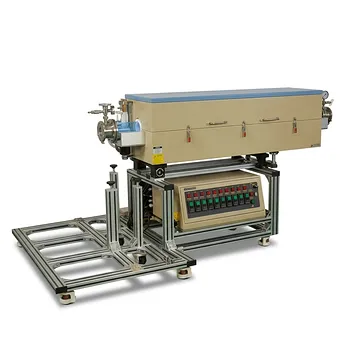
Ten Zone Multi Orientation Laboratory Tube Furnace for 1200C High Temperature Gradient Thermal Processing

Vertical 1700C Vacuum and Atmosphere Tube Furnace with 80mm Alumina Tube
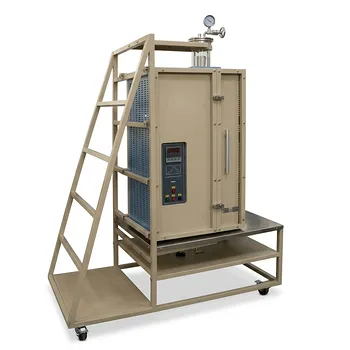
Split Vertical Tube Furnace with 1200C Quartz Tube and Stainless Steel Vacuum Flanges for Rapid Thermal Processing
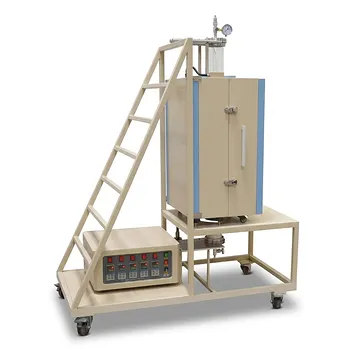
Five Zone Split Vertical Tube Furnace 1200C Max with 4 Inch Quartz Tube and Stainless Steel Vacuum Flanges

High Temperature 1700C Vertical Tube Furnace for Powder Spherification and Material Sintering

1200°C 5 Inch Vertical Quartz Tube Furnace with Stainless Steel Vacuum Flanges
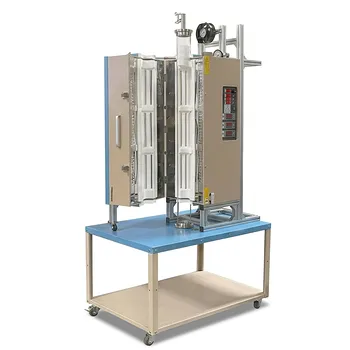
1200C Three Zone Split Vertical Tube Furnace 4 Inch Quartz Tube Stainless Steel Vacuum Flanges
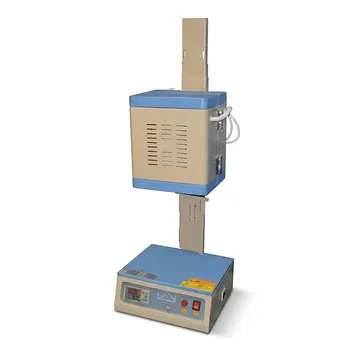
High Temperature Vertical Split Tube Furnace with PID Temperature Controller for 1 and 2 Inch Processing Tubes
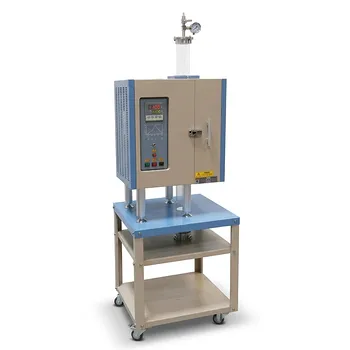
1100°C Split Vertical Tube Furnace with 80mm Quartz Tube and Stainless Steel Vacuum Flanges

Compact Vertical Split Quartz Tube Furnace with Stainless Steel Vacuum Flanges for Rapid Thermal Quenching and Controlled Atmosphere Material Processing
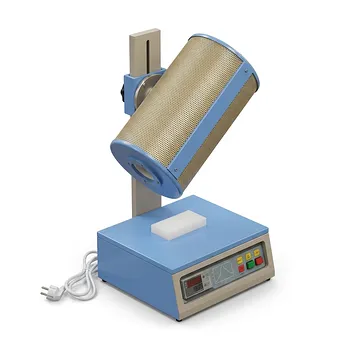
1100°C Vertical Laboratory Furnace for DIY Tubular Reactors with PID Temperature Controller

High Temperature 1700C Six Zone Split Tube Furnace with Alumina Tube and Water Cooled Flanges
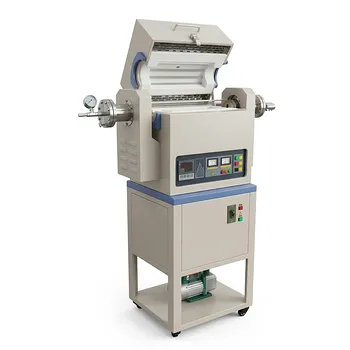
High Temperature Rotary Tilt Tubular Furnaces for Advanced Powder Sintering and Material Processing

High Temperature 1700C Benchtop Tube Furnace with 5 Inch Heating Zone High Purity Alumina Tube and Vacuum Sealing Flanges
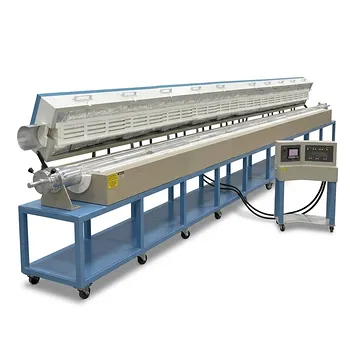
12 Zone Ultra Long Split Tube Furnace with 20 Foot Quartz Tube and 1100C Max Temperature
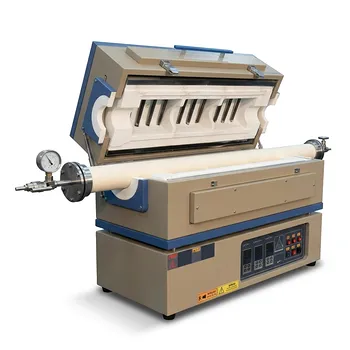
1600C Three Zone Split Tube Furnace with Alumina Tube and Vacuum Flange
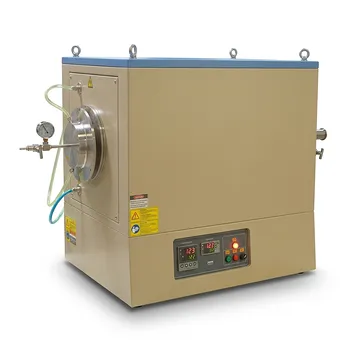
1100°C Large Diameter Quartz Tube Furnace with 24 Inch Heating Zone and Water Cooled Flanges
