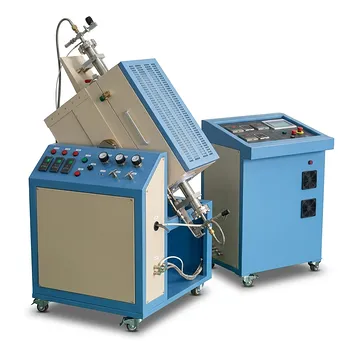
What are the primary functions of a high-temperature tube furnace for Inconel 718? Master Debinding & Pre-sintering.
Updated 3 months ago
The high-temperature tube furnace serves as the critical transition environment for Inconel 718 parts, primarily facilitating the complete removal of organic binders and the initiation of metallic bonding. During the debinding stage, the furnace utilizes thermal decomposition at stages around 600 °C to eliminate polymers like PVA or LDPE while preventing oxidation through a controlled atmosphere. In the subsequent pre-sintering phase, the temperature is elevated to approximately 1260 °C to form initial sintering necks between metal particles, providing the part with its first stage of mechanical densification.
The primary function of a high-temperature tube furnace is to manage the delicate transition from a polymer-bound "green body" to a preliminary metal "brown body." It achieves this by balancing slow-rate thermal decomposition with atmospheric protection to ensure structural integrity before final heat treatment.
Managing Thermal Decomposition and Outgassing
The debinding phase is a high-risk period where organic materials must be removed without compromising the geometry of the part.
Elimination of Organic Binders
The furnace provides a stable thermal field that allows polyvinyl alcohol (PVA) or low-density polyethylene (LDPE) binders to decompose into small gaseous molecules. These gases diffuse slowly through the material’s pre-formed pores, ensuring the organic substances are purged entirely.
Prevention of Internal Defects
By utilizing extremely low heating rates—sometimes as slow as 0.1 °C per minute—the tube furnace prevents the buildup of internal pressure. This precision is vital to avoid micro-cracks, bloating, or pores that can occur if the binder decomposes faster than the gas can escape the part's matrix.
Establishing the Preliminary Metallic Structure
Once the binders are removed, the furnace must prepare the loose metal powder for the final stages of solidification.
Formation of Sintering Necks
As the furnace temperature rises toward 1260 °C, the metal particles begin to fuse at their contact points, a process known as the formation of sintering necks. This step is the foundation of the part's eventual structural strength, transforming a fragile powder compact into a handleable metallic component.
Preliminary Densification
The heat treatment curve in the tube furnace facilitates initial densification, where the part begins to shrink and the void space between particles is reduced. This stage is critical for ensuring the alloy can withstand the more aggressive thermal cycles required for final solution and aging treatments.
Atmospheric Control and Alloy Integrity
Inconel 718 is highly sensitive to its environment at high temperatures, requiring the furnace to act as a protective shield.
Preventing Surface Oxidation
The tube furnace maintains a controlled atmosphere, often using inert gases like Argon or Nitrogen, to displace oxygen. This prevents the formation of oxide layers on the Inconel 718 surface, which would otherwise interfere with particle fusion and degrade the alloy's final mechanical properties.
Microstructural Preparation
The furnace environment begins the process of adjusting the Inconel 718 microstructure by initiating the dissolution of brittle phases, such as the Laves phase. This prepares the matrix for the subsequent precipitation of strengthening phases like γ'' (gamma double prime) and γ' (gamma prime) during later aging cycles.
Understanding the Trade-offs
While high-temperature tube furnaces are essential, they require a meticulous balance of parameters that present specific challenges.
- Heating Rate Sensitivity: If the temperature is increased too rapidly during debinding, the internal pressure from escaping gases will cause irreversible macroscopic defects or structural failure.
- Atmospheric Purity: Any leak or impurity in the inert gas supply can lead to internal oxidation, which is often impossible to correct in later manufacturing stages.
- Thermal Gradients: Large parts may experience uneven heating across the tube; minimal temperature gradients are required to prevent warping or non-uniform densification.
How to Apply This to Your Project
To achieve the best results with Inconel 718 in a tube furnace, your operational strategy should align with your specific material goals.
- If your primary focus is structural integrity: Prioritize a multi-stage heating program with a 600 °C hold and a very slow ramp rate to ensure 100% binder removal without internal cracking.
- If your primary focus is maximizing material strength: Ensure the pre-sintering temperature reaches 1260 °C to promote robust sintering necks and the initial dissolution of the brittle Laves phase.
- If your primary focus is surface quality: Maintain a high-purity Argon atmosphere throughout both debinding and pre-sintering to prevent any oxidative discoloration or scaling.
By mastering the furnace's thermal curve and atmosphere, you ensure the successful evolution of Inconel 718 from a fragile green body to a high-performance metallic component.
Summary Table:
| Stage | Key Function | Temperature | Critical Parameter |
|---|---|---|---|
| Debinding | Organic Binder Removal | ~600 °C | Ultra-low heating rate (0.1°C/min) |
| Pre-sintering | Sintering Neck Formation | ~1260 °C | Inert Atmosphere (Argon/Nitrogen) |
| Atmosphere Control | Oxidation Prevention | Room Temp to 1260°C | Gas Purity & Flow Rate |
| Microstructural Prep | Phase Dissolution | Up to 1260 °C | Thermal Uniformity |
Elevate Your Material Research with THERMUNITS
As a leading manufacturer of high-temperature laboratory equipment, THERMUNITS provides the precision required for the most demanding Inconel 718 heat treatment cycles. Our advanced Tube Furnaces, Vacuum Systems, and Atmospheric Furnaces offer the stable thermal fields and atmospheric purity essential for flawless debinding and pre-sintering in material science and industrial R&D.
Why partner with THERMUNITS?
- Precision Control: Achieve the ultra-low ramp rates necessary to prevent micro-cracking and internal pressure buildup.
- Atmospheric Integrity: High-purity gas environments to ensure zero oxidation and superior alloy integrity.
- Versatile Solutions: A comprehensive range including Muffle, Rotary, and Hot Press furnaces, CVD/PECVD systems, and Vacuum Induction Melting (VIM) furnaces.
Don't let internal defects or oxidation compromise your material's performance. Contact our expert team today to find the perfect thermal processing solution for your laboratory or production line!
References
- Sourabh Paul, Kamran Mumtaz. Use of aqueous polyvinyl alcohol in binder jetting of Inconel 718. DOI: 10.1007/s00170-024-14649-7
Mentioned Products
- High Temperature Tube Furnace 1500C with Sliding Flanges and 50mm OD for Rapid Thermal Processing Fast Heating and Cooling
- High Temperature 1700C Tube Furnace with High Vacuum Turbomolecular Pump System and Multi Channel Mass Flow Controller Gas Mixer
- 1750°C High Temperature Benchtop Vacuum Atmosphere Tube Furnace with Kanthal Super 1800 Heating Elements and 60mm Alumina Processing Tube
- High Temperature 1700C Benchtop Tube Furnace with 5 Inch Heating Zone High Purity Alumina Tube and Vacuum Sealing Flanges
- High Temperature Split Tube Furnace 1500C for Material Research Vacuum and Atmosphere Thermal Processing
People Also Ask
- How are high-temperature tube furnaces utilized to repair etching damage? Precision Lattice Restoration Solutions
- What core conditions does a high-temperature tube furnace provide for rGO aerogels? Mastering Precision Synthesis.
- What role does a high-temperature tube furnace play in CVD synthesis of silicon nanowires? Master VLS Growth Precision.
- How does precision tube furnace control influence CoFe nanoparticle formation? Master Your Bimetallic Synthesis.
- What role does a high-temperature tube furnace play in the sulfidation heat treatment of CoS@C/MXene nanocomposites? Guide

Tech Team · ThermUnits
Last updated on Jun 02, 2026
Related Products

High Temperature Tube Furnace 1500C with Sliding Flanges and 50mm OD for Rapid Thermal Processing Fast Heating and Cooling

High Temperature 1700C Tube Furnace with High Vacuum Turbomolecular Pump System and Multi Channel Mass Flow Controller Gas Mixer
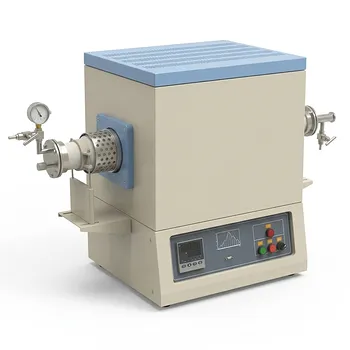
1750°C High Temperature Benchtop Vacuum Atmosphere Tube Furnace with Kanthal Super 1800 Heating Elements and 60mm Alumina Processing Tube

High Temperature 1700C Benchtop Tube Furnace with 5 Inch Heating Zone High Purity Alumina Tube and Vacuum Sealing Flanges
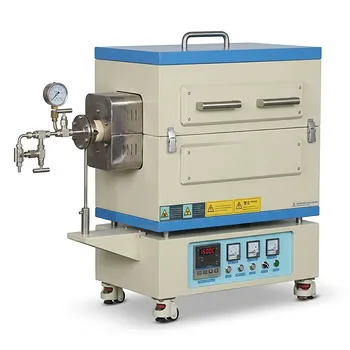
High Temperature Split Tube Furnace 1500C for Material Research Vacuum and Atmosphere Thermal Processing
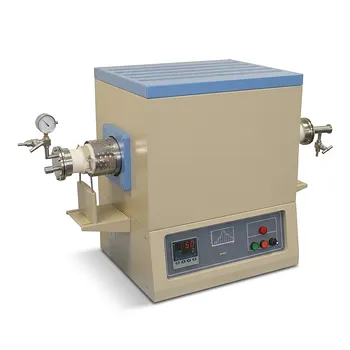
1700C High Temperature Alumina Tube Furnace with 18 Inch Heated Zone and Vacuum Sealing Flanges

1800C High Temperature Compact Vacuum Tube Furnace with 60mm OD Alumina Tube and Kanthal MoSi2 Heating Elements

Compact High Temperature 1600C Tube Furnace with 50mm Alumina Tube and Vacuum Flanges for Material Sintering
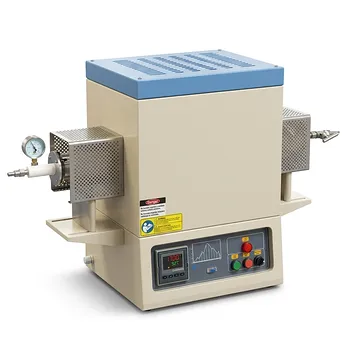
High Temperature Three Zone Tube Furnace 1700C with Alumina Tube and Water Cooled Flanges
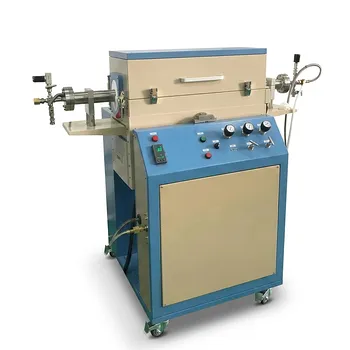
High Temperature Rocking Tube Furnace 1700°C Alumina Processing Tube with Precision Oscillation for Material Synthesis
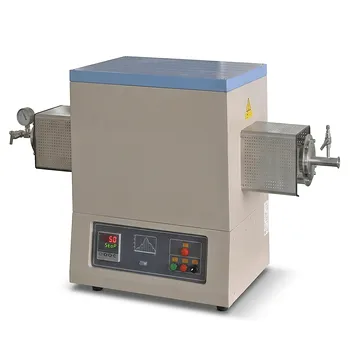
High Temperature 1700C Tube Furnace with 4 Inch OD Alumina Tube and Vacuum Sealing Flanges

High Temperature 1700C Vertical Tube Furnace for Powder Spherification and Material Sintering
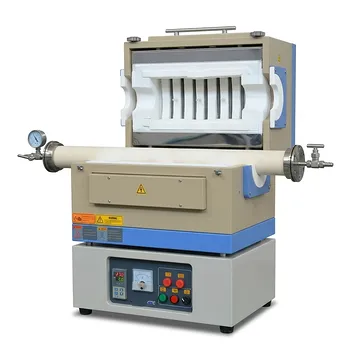
High Temperature 1600C Split Tube Furnace Vacuum Flanges Valves Optional 60mm 80mm Alumina Tube

High Temperature Automated 5 Inch Tube Furnace for Autonomous Material Research and Advanced Laboratory R&D

High Temperature 1700C Six Zone Split Tube Furnace with Alumina Tube and Water Cooled Flanges
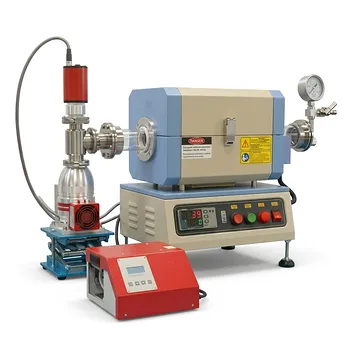
High Vacuum Compact Tube Furnace 1200C with Integrated Turbo Pump System and 8 Inch Heating Zone
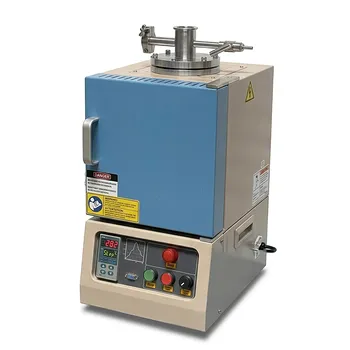
High Temperature Hybrid Muffle and Tube Furnace with Vacuum Capability and PID Control
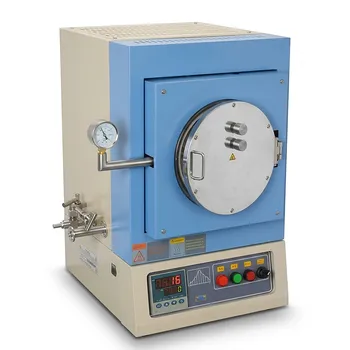
1100°C High Temperature Quartz Chamber Furnace 8 Inch OD with 7.6 Liter Capacity and Vacuum Atmosphere Capability

1100C Tube Furnace with Vacuum Flange and Programmable Temperature Controller for Material Science and Industrial Heat Treatment