Why is a constant nitrogen flow required within a tube furnace during the preparation of g-C3N4? Optimize Your Synthesis
Updated 3 months ago
The requirement for constant nitrogen flow is fundamentally about atmospheric control and chemical kinetics. During the thermal polymerization of precursors like urea or melamine, a nitrogen flow creates an inert environment that prevents the oxidative decomposition of the material into carbon oxides. Simultaneously, the flow physically removes gaseous byproducts such as ammonia, which shifts the chemical equilibrium to favor the formation of a high-purity, graphitic structure.
A constant nitrogen flow acts as both a chemical shield against oxidation and a mechanical sweep for reaction byproducts. This dual function is essential for ensuring the structural integrity, purity, and electronic properties of graphitic carbon nitride ($g-C_3N_4$).
Prevention of Oxidative Decomposition
Excluding Atmospheric Oxygen
At the high temperatures required for $g-C_3N_4$ synthesis—typically around 550 °C—the presence of oxygen leads to oxidative combustion. Instead of polymerizing into a graphitic structure, the carbon-rich precursors would react with oxygen to form $CO_2$ and other gases, essentially "ashing" the material.
Preserving the Precursor Chemistry
The nitrogen flow displaces air within the tube furnace, ensuring the thermal polymerization occurs in an anaerobic environment. This preservation is critical for maintaining the specific nitrogen-to-carbon ratios required for the final product's chemical identity.
Kinetic Management and Equilibrium
Removal of Gaseous Byproducts
The conversion of precursors into $g-C_3N_4$ generates significant amounts of ammonia ($NH_3$) and other volatile dehydration products. If these gases are allowed to accumulate in the furnace, they can inhibit the forward progress of the polymerization reaction.
Shifting the Reaction Equilibrium
A constant nitrogen flow continuously "sweeps" these byproducts away from the reaction site. According to Le Chatelier's principle, removing products from a system in equilibrium drives the reaction toward the formation of more products, leading to a more complete and efficient synthesis.
Structural and Functional Integrity
Formation of $\pi$-Conjugated Systems
The goal of the synthesis is to create a stable, highly delocalized $\pi$-conjugated system. Nitrogen flow ensures that the thermal rearrangement of atoms proceeds without interference from oxidative side reactions that would break these conjugated chains.
Protecting Substrates and Conductivity
In cases where $g-C_3N_4$ is synthesized directly onto substrates like Fluorine-doped Tin Oxide (FTO), nitrogen flow protects the conductive layer. Preventing the oxidation of the FTO ensures that the final photoelectrode maintains the high charge transport capability required for electrochemical applications.
Understanding the Trade-offs
Flow Rate Calibration
While flow is necessary, the rate must be precisely controlled via a mass flow controller. A flow rate that is too low may fail to remove byproducts effectively, while a rate that is too high can cause temperature fluctuations or physically carry away fine precursor powders before they can react.
Purity vs. Cost
The effectiveness of the process depends on the purity of the nitrogen (typically 99.99%). Using lower-grade nitrogen introduces trace amounts of oxygen and moisture, which can degrade the photocatalytic activity and structural stability of the resulting $g-C_3N_4$.
How to Apply This to Your Synthesis
Recommendations for Precise Control
To achieve high-quality graphitic carbon nitride, the atmospheric conditions must be strictly managed throughout the heating and cooling cycles.
- If your primary focus is high purity: Use a high-purity (99.99%+) nitrogen source and a mass flow controller set to a steady rate (e.g., 50 mL/min) to ensure complete byproduct removal.
- If your primary focus is substrate-based electrodes: Ensure nitrogen flow starts before heating begins to purge all oxygen and protect the conductive properties of the FTO or ITO glass.
- If your primary focus is structural yield: Monitor the flow rate carefully to prevent the mechanical loss of light precursors like urea while maintaining enough volume to shift the reaction equilibrium.
Proper nitrogen management transforms a simple heating process into a controlled chemical synthesis, ensuring the resulting carbon nitride is structurally sound and functionally active.
Summary Table:
| Function | Benefit | Impact on g-C3N4 |
|---|---|---|
| Oxidation Prevention | Excludes atmospheric oxygen | Prevents combustion; maintains C/N ratio |
| Byproduct Removal | Sweeps away NH3 and volatiles | Shifts equilibrium via Le Chatelier's principle |
| Atmospheric Control | Anaerobic environment | Ensures formation of $\pi$-conjugated systems |
| Substrate Protection | Prevents conductive layer oxidation | Maintains charge transport for FTO/ITO electrodes |
Elevate Your Material Research with THERMUNITS
Precision atmospheric control is the key to high-purity graphitic carbon nitride synthesis. THERMUNITS is a leading manufacturer of high-temperature laboratory equipment, providing specialized thermal processing solutions for material science and industrial R&D.
Our comprehensive range includes:
- Advanced Tube & Atmosphere Furnaces with integrated mass flow controllers for precise gas management.
- CVD/PECVD Systems for sophisticated thin-film and material deposition.
- Specialized Equipment: Muffle, Vacuum, Rotary, and Hot Press furnaces, Dental Furnaces, and Vacuum Induction Melting (VIM) systems.
Whether you are scaling up synthesis or conducting fundamental research, THERMUNITS delivers the thermal stability and atmospheric integrity your project demands. Contact us today to find the perfect furnace for your laboratory!
References
- Abniel Machín, Francisco Márquez. Synergistic Effects of Co3O4-gC3N4-Coated ZnO Nanoparticles: A Novel Approach for Enhanced Photocatalytic Degradation of Ciprofloxacin and Hydrogen Evolution via Water Splitting. DOI: 10.3390/ma17051059
Mentioned Products
- Vertical 1700C Vacuum and Atmosphere Tube Furnace with 80mm Alumina Tube
- Compact High Temperature 1600C Tube Furnace with 50mm Alumina Tube and Vacuum Flanges for Material Sintering
- 900°C Max Rotary Tube Furnace with 8 Inch 310S Alloy Tube and Optional Multi Zone Heating for Industrial Material Calcination
- Split Vertical Tube Furnace with 1200C Quartz Tube and Stainless Steel Vacuum Flanges for Rapid Thermal Processing
- High Temperature 1700C Tube Furnace with High Vacuum Turbomolecular Pump System and Multi Channel Mass Flow Controller Gas Mixer
People Also Ask
- How is an industrial-grade vertical tube furnace utilized in smelting leaching residues? Enhance Metal Recovery Efficiency
- What is the function of a laboratory-grade vertical tube furnace in fast pyrolysis? Optimize Composite Research.
- How does a vertical tube furnace facilitate thermoelectric alloy melting? Precision synthesis for material homogeneity.
- Why is a thermocouple sensor indispensable for monitoring the vertical tube furnace during gallium oxide nanowire production? Optimize VLS Growth
- What are the advantages of using a vertical tube furnace for crucible experiments simulating steel-slag interactions?

Tech Team · ThermUnits
Last updated on Jun 02, 2026
Related Products

Vertical 1700C Vacuum and Atmosphere Tube Furnace with 80mm Alumina Tube

Compact High Temperature 1600C Tube Furnace with 50mm Alumina Tube and Vacuum Flanges for Material Sintering
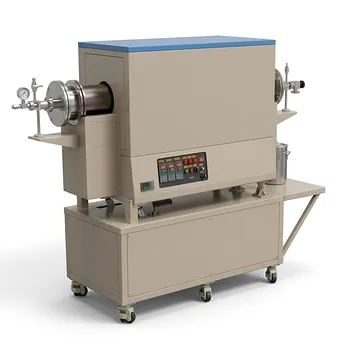
900°C Max Rotary Tube Furnace with 8 Inch 310S Alloy Tube and Optional Multi Zone Heating for Industrial Material Calcination
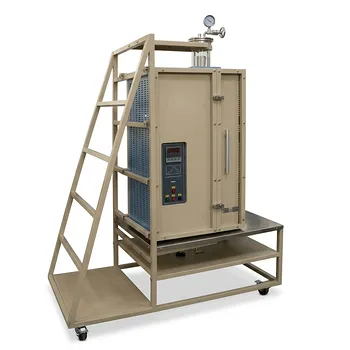
Split Vertical Tube Furnace with 1200C Quartz Tube and Stainless Steel Vacuum Flanges for Rapid Thermal Processing

High Temperature 1700C Tube Furnace with High Vacuum Turbomolecular Pump System and Multi Channel Mass Flow Controller Gas Mixer

1100C Tube Furnace with Vacuum Flange and Programmable Temperature Controller for Material Science and Industrial Heat Treatment
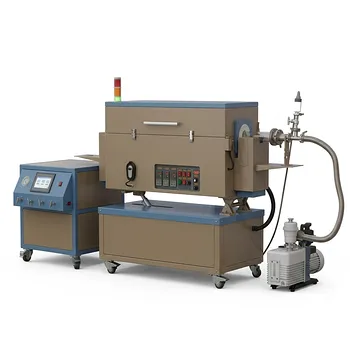
5 Inch Three Zone Rotary Tube Furnace with Integrated Gas Delivery System and 1200C Capability for Advanced Material CVD Processing

1200°C 5 Inch Vertical Quartz Tube Furnace with Stainless Steel Vacuum Flanges

High Temperature 1700C Six Zone Split Tube Furnace with Alumina Tube and Water Cooled Flanges
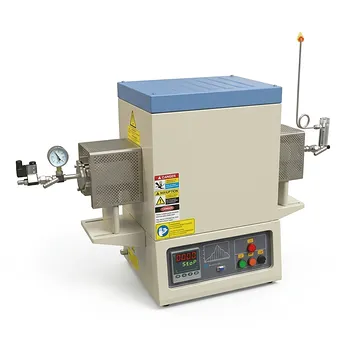
1700C Hydrogen Gas Tube Furnace with 60mm Alumina Process Tube and Integrated Hydrogen Safety Detector

Compact Vertical Split Quartz Tube Furnace with Stainless Steel Vacuum Flanges for Rapid Thermal Quenching and Controlled Atmosphere Material Processing

High Temperature 1700C Benchtop Tube Furnace with 5 Inch Heating Zone High Purity Alumina Tube and Vacuum Sealing Flanges

1800C High Temperature Compact Vacuum Tube Furnace with 60mm OD Alumina Tube and Kanthal MoSi2 Heating Elements
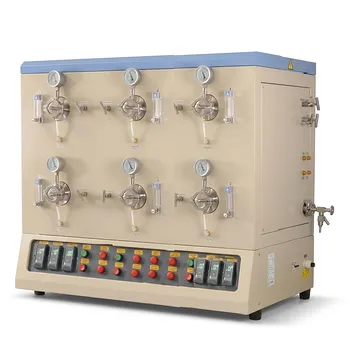
1200C High Throughput Multi Channel Tube Furnace with 50mm Quartz Tubes for Annealing and Material Phase Diagram Research
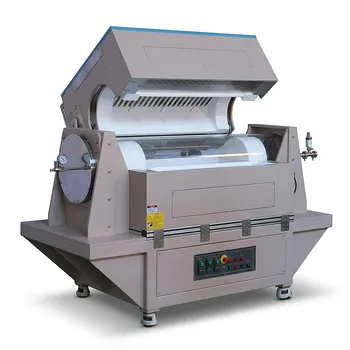
Three Zone Tube Furnace with 11 Inch or 15 Inch Quartz Tube and Hinged Flanges for Vacuum Atmosphere Heat Treatment

High Temperature 1700C Vertical Tube Furnace for Powder Spherification and Material Sintering
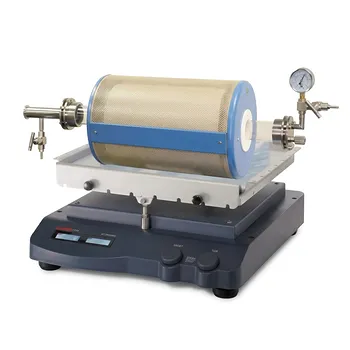
High Temperature Rocking Tube Furnace with Quartz Tube and Vacuum Flange for Materials Synthesis

High Temperature Automated 5 Inch Tube Furnace for Autonomous Material Research and Advanced Laboratory R&D
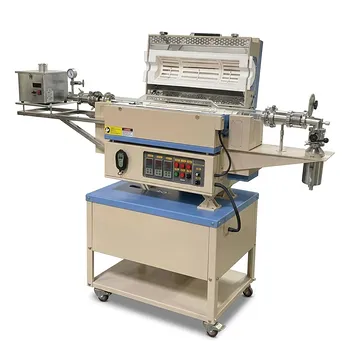
5 Inch Rotary Tube Furnace with Automatic Feeding and Receiving System 1200C Three Zone CVD Powder Processing