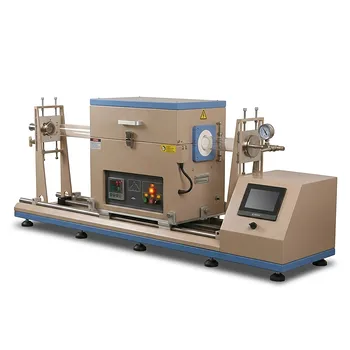
Why is a continuous high-purity nitrogen flow required for GS-CNSs? Achieve High Yield and Structural Integrity
Updated 3 months ago
The use of continuous high-purity nitrogen flow is essential for creating a stable, inert environment during the carbonization process. This nitrogen atmosphere displaces oxygen and water vapor within the tube furnace, preventing the peanut skin-derived material from undergoing combustion or excessive oxidation at high temperatures. By maintaining these anaerobic conditions, the process ensures that the organic precursors are converted into carbon nanospheres (GS-CNSs) with high carbon content and intact structural morphology rather than being lost to thermal erosion or burning.
Core Takeaway: Continuous nitrogen flow acts as a protective shield that transforms a potential combustion reaction into a controlled pyrolytic process, directly determining the yield, purity, and structural integrity of the resulting carbon nanospheres.
Preventing Oxidative Destruction and Material Loss
Displacement of Atmospheric Oxygen
The primary role of nitrogen is to purge the tube furnace of oxygen, which would otherwise react violently with organic matter at high temperatures. High-purity nitrogen (typically 99.99% or higher) ensures that even trace amounts of oxygen are removed, shifting the reaction from burning to pyrolysis.
Maximizing Carbon Yield
In the absence of an inert atmosphere, peanut skin powder would oxidize into gaseous carbon dioxide and ash, resulting in near-zero yield. The nitrogen flow ensures that the carbon backbone of the biomass remains intact, allowing it to reorganize into a carbon-rich biochar structure.
Protecting Against Thermal Erosion
High temperatures, often ranging from 400°C to 800°C or higher, make carbon materials highly susceptible to erosion by residual oxygen. A steady flow of nitrogen prevents this "thermal etching," ensuring that the mass of the final product remains consistent with theoretical expectations.
Preserving Morphology and Surface Chemistry
Ensuring Intact Nanosphere Morphology
The formation of GS-CNSs depends on the precise transition of peanut skin components into spherical structures. An inert atmosphere prevents the oxidation that would otherwise warp or destroy these delicate nanostructures, ensuring the final material retains its intended three-dimensional shape.
Controlling Functional Groups and Defects
Nitrogen flow helps maintain specific oxygen-containing functional groups and lattice defects that are critical for the material's performance, such as electromagnetic wave absorption or catalytic activity. Without this control, high-temperature oxidation would strip these groups away, fundamentally altering the material's chemical properties.
Removal of Gaseous Byproducts
As the peanut skin decomposes, it releases volatile organic compounds and gaseous byproducts. A continuous flow (often around 200 mL/min) effectively carries these vapors out of the furnace, preventing them from re-depositing into the pores of the nanospheres, which would otherwise reduce porosity and surface area.
Understanding the Trade-offs
Flow Rate Sensitivity
While a continuous flow is necessary, the rate must be carefully calibrated. A flow that is too low may fail to fully exclude oxygen or remove byproducts, while a flow that is too high can cause significant temperature gradients or cool the sample prematurely, leading to inconsistent carbonization.
Purity vs. Cost
Using high-purity nitrogen is a requirement for research-grade nanospheres, as even minor impurities (like water vapor or oxygen) can introduce unwanted surface oxides. However, the cost of ultra-high-purity (UHP) gas and the infrastructure to maintain a leak-free system are significant factors in scaling up production.
Heat Transfer Implications
Nitrogen also plays a secondary role in heat distribution within the tube. While it helps stabilize the atmosphere, it can also carry heat away from the heating zone, requiring the furnace to work harder to maintain a constant pyrolytic temperature.
How to Optimize Nitrogen Use for Your Project
To achieve the best results when synthesizing carbon nanospheres, consider the following recommendations based on your specific objectives:
- If your primary focus is maximizing carbon yield: Ensure the furnace is purged for at least 30 minutes prior to heating to completely eliminate residual oxygen.
- If your primary focus is high surface area and porosity: Maintain a higher continuous flow rate (e.g., 200 mL/min) to prevent the secondary deposition of volatile byproducts into the material pores.
- If your primary focus is specific surface chemistry: Use ultra-high-purity nitrogen (99.999%) to prevent trace oxidation from altering the ratio of oxygen-containing functional groups.
- If your primary focus is structural uniformity: Calibrate the flow rate to be high enough for protection but low enough to avoid Creating turbulent cooling pockets that cause uneven heating.
By masterfully controlling the nitrogen environment, you ensure that the complex organic structure of peanut skins is successfully distilled into high-performance carbon nanospheres.
Summary Table:
| Feature | Role of Nitrogen Flow | Impact on Final Product |
|---|---|---|
| Atmosphere Control | Displaces $O_2$ and $H_2O$ | Prevents combustion and material loss |
| Yield Optimization | Inhibits thermal erosion | Maximizes carbon backbone retention |
| Morphology | Protects 3D structures | Ensures intact spherical nanostructures |
| Byproduct Removal | Purges volatile compounds | Maintains high porosity and surface area |
| Surface Chemistry | Stabilizes functional groups | Preserves specific catalytic properties |
Elevate Your Materials Research with THERMUNITS
Precise atmosphere control is the cornerstone of successful pyrolytic carbonization. THERMUNITS is a leading manufacturer of high-temperature laboratory equipment for material science and industrial R&D. We empower researchers to produce high-purity GS-CNSs and advanced materials through our industry-leading thermal solutions.
Our comprehensive range includes:
- Advanced Tube & Atmosphere Furnaces: Optimized for stable inert gas flow and oxygen-free environments.
- CVD/PECVD Systems: For precise control over nanostructure growth and surface chemistry.
- Custom Solutions: From Rotary and Vacuum furnaces to Hot Press systems and specialized Thermal Elements.
Whether you are scaling up carbon nanosphere production or refining laboratory heat treatments, our equipment ensures the thermal stability and atmospheric purity your project demands.
Ready to optimize your carbonization process?
Contact our experts today to find your perfect furnace solution!
References
- Aman Sharma, Gurumurthy Hegde. Efficient cationic dye removal from water through <i>Arachis hypogaea</i> skin-derived carbon nanospheres: a rapid and sustainable approach. DOI: 10.1039/d4na00254g
Mentioned Products
- Vertical 1700C Vacuum and Atmosphere Tube Furnace with 80mm Alumina Tube
- Compact High Temperature 1600C Tube Furnace with 50mm Alumina Tube and Vacuum Flanges for Material Sintering
- 900°C Max Rotary Tube Furnace with 8 Inch 310S Alloy Tube and Optional Multi Zone Heating for Industrial Material Calcination
- Split Vertical Tube Furnace with 1200C Quartz Tube and Stainless Steel Vacuum Flanges for Rapid Thermal Processing
- High Temperature 1700C Tube Furnace with High Vacuum Turbomolecular Pump System and Multi Channel Mass Flow Controller Gas Mixer
People Also Ask
- How is an industrial-grade vertical tube furnace utilized in smelting leaching residues? Enhance Metal Recovery Efficiency
- What is the function of a laboratory-grade vertical tube furnace in fast pyrolysis? Optimize Composite Research.
- How does a vertical tube furnace facilitate thermoelectric alloy melting? Precision synthesis for material homogeneity.
- Why is a thermocouple sensor indispensable for monitoring the vertical tube furnace during gallium oxide nanowire production? Optimize VLS Growth
- What are the advantages of using a vertical tube furnace for crucible experiments simulating steel-slag interactions?

Tech Team · ThermUnits
Last updated on Jun 03, 2026
Related Products

Vertical 1700C Vacuum and Atmosphere Tube Furnace with 80mm Alumina Tube

Compact High Temperature 1600C Tube Furnace with 50mm Alumina Tube and Vacuum Flanges for Material Sintering
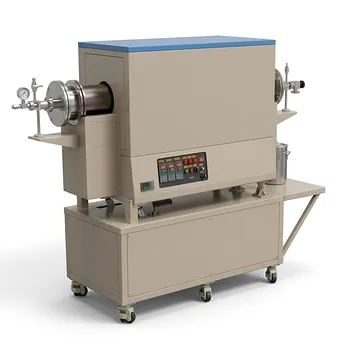
900°C Max Rotary Tube Furnace with 8 Inch 310S Alloy Tube and Optional Multi Zone Heating for Industrial Material Calcination
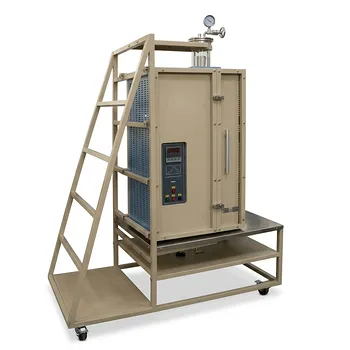
Split Vertical Tube Furnace with 1200C Quartz Tube and Stainless Steel Vacuum Flanges for Rapid Thermal Processing

High Temperature 1700C Tube Furnace with High Vacuum Turbomolecular Pump System and Multi Channel Mass Flow Controller Gas Mixer

1100C Tube Furnace with Vacuum Flange and Programmable Temperature Controller for Material Science and Industrial Heat Treatment
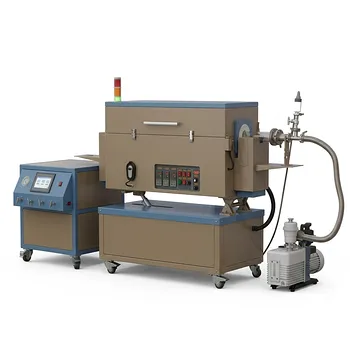
5 Inch Three Zone Rotary Tube Furnace with Integrated Gas Delivery System and 1200C Capability for Advanced Material CVD Processing

1200°C 5 Inch Vertical Quartz Tube Furnace with Stainless Steel Vacuum Flanges

High Temperature 1700C Six Zone Split Tube Furnace with Alumina Tube and Water Cooled Flanges
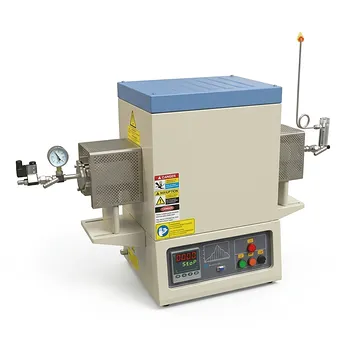
1700C Hydrogen Gas Tube Furnace with 60mm Alumina Process Tube and Integrated Hydrogen Safety Detector

Compact Vertical Split Quartz Tube Furnace with Stainless Steel Vacuum Flanges for Rapid Thermal Quenching and Controlled Atmosphere Material Processing

High Temperature 1700C Benchtop Tube Furnace with 5 Inch Heating Zone High Purity Alumina Tube and Vacuum Sealing Flanges

1800C High Temperature Compact Vacuum Tube Furnace with 60mm OD Alumina Tube and Kanthal MoSi2 Heating Elements
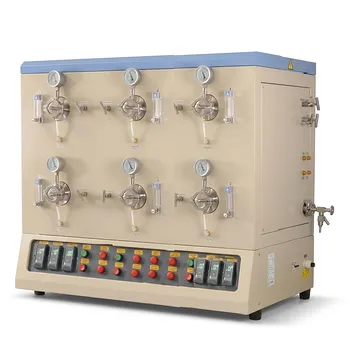
1200C High Throughput Multi Channel Tube Furnace with 50mm Quartz Tubes for Annealing and Material Phase Diagram Research
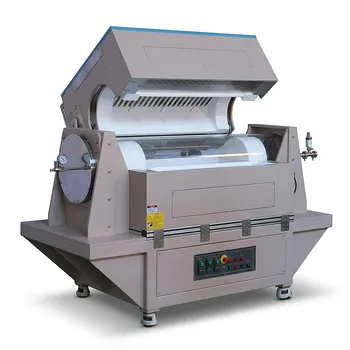
Three Zone Tube Furnace with 11 Inch or 15 Inch Quartz Tube and Hinged Flanges for Vacuum Atmosphere Heat Treatment

High Temperature 1700C Vertical Tube Furnace for Powder Spherification and Material Sintering
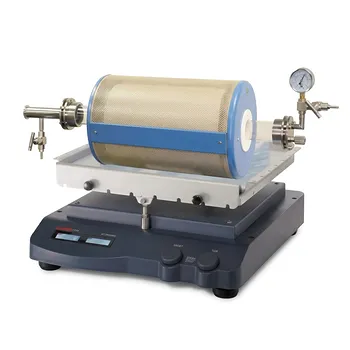
High Temperature Rocking Tube Furnace with Quartz Tube and Vacuum Flange for Materials Synthesis

High Temperature Automated 5 Inch Tube Furnace for Autonomous Material Research and Advanced Laboratory R&D
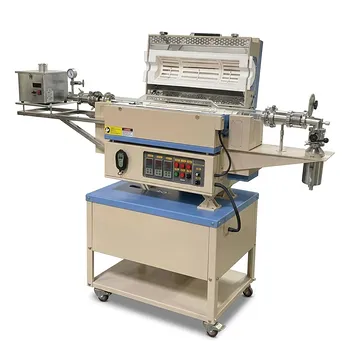
5 Inch Rotary Tube Furnace with Automatic Feeding and Receiving System 1200C Three Zone CVD Powder Processing