Why is a dual-quartz-boat layout utilized during the carbonization of Ni/WS2/WC in a tube furnace? Key Process Insights
Updated 3 months ago
The dual-quartz-boat layout is a strategic spatial configuration designed to facilitate gas-phase doping and controlled chemical transformation. By separating the solid carbon source from the metallic precursors, the system uses the furnace's carrier gas to transport reactive vapors precisely where they are needed. This prevents direct solid-state contamination while ensuring a uniform reaction across the entire surface of the Ni/WS2 precursors to form the desired Ni/WS2/WC heterojunction.
The dual-boat configuration enables a "vapor-solid" reaction mechanism, where the carbon source sublimates upstream and reacts with downstream precursors. This spatial separation is critical for achieving high-purity Ni/WS2/WC composites through uniform carbonization and controlled reduction.
The Role of Spatial Separation in Gas-Phase Doping
Facilitating the Vapor-Solid Reaction
The upstream quartz boat holds melamine, which serves as the carbon source for the synthesis. As the tube furnace reaches specific temperatures, the melamine decomposes and sublimates into carbon-containing gases.
These gases are then carried by a continuous flow of Ar/H2 carrier gas toward the second boat. This setup ensures that the carbon interacts with the precursors only in its gaseous phase, which is essential for uniform penetration.
Protecting Precursor Integrity
The second boat, positioned in the furnace’s center hot zone, contains the NiS/WS2 precursors. By keeping these solids physically separate from the melamine, the system prevents unwanted solid-state side reactions or direct physical contamination.
This allows the carbon atoms to diffuse evenly into the WS2 lattice at the atomic level. This precision is what enables the successful displacement reaction required to form Tungsten Carbide (WC).
Achieving Precise Thermochemical Transformations
Catalytic Reduction and Carbide Formation
In the high-temperature environment of the center zone (typically 500-700°C), the carbon vapor reacts with the WS2 nanosheets. This reaction facilitates the transformation of tungsten disulfide into tungsten carbide.
Simultaneously, the reducing atmosphere (Ar/H2) facilitates the reduction of nickel sulfide into metallic nickel nanoparticles. The dual-boat layout ensures that these two distinct processes—carbonization and reduction—happen in a synchronized, controlled manner.
Maintaining a Controlled Atmosphere
The choice of quartz boats is critical because they are chemically inert and can withstand temperatures up to 1100°C. They ensure that no impurities from the container leach into the Ni/WS2/WC composite during pyrolysis.
Furthermore, the layout works in tandem with the furnace's inert atmosphere to prevent the oxidation of the carbon matrix. This preserves the morphological integrity of the nanosheets and protects the catalytic active sites.
Understanding the Trade-offs and Limitations
Sensitivity to Flow Dynamics
The success of the dual-boat method depends heavily on the flow rate of the carrier gas. If the flow is too high, the carbon vapors may pass over the precursors too quickly to react effectively.
If the flow is too low, the carbon concentration may become stagnant or uneven. This often leads to incomplete carbonization at the downstream end of the precursor boat, resulting in a non-uniform final product.
Temperature Gradient Challenges
While the layout manages spatial distribution, it requires precise thermal calibration across the furnace zones. The upstream boat must reach sublimation temperatures at the exact time the center zone is ready for the reaction.
If the temperature gradient is mismanaged, the carbon source might re-condense on the tube walls before reaching the precursors. This inefficiency can lead to inconsistent doping levels and the waste of raw materials.
How to Apply This to Your Synthesis Project
Achieving the ideal Ni/WS2/WC composite requires balancing the sublimation rate of your carbon source with the reaction kinetics of your metallic precursors.
- If your primary focus is uniform doping: Optimize the carrier gas flow rate and the distance between the boats to ensure a steady, even concentration of carbon vapor reaches the precursors.
- If your primary focus is material purity: Utilize high-purity quartz boats and maintain a strict inert environment to prevent the introduction of oxygen or container-based contaminants.
- If your primary focus is heterojunction formation: Carefully calibrate the center zone temperature to ensure it remains within the 500-700°C range required for the simultaneous reduction of nickel and formation of tungsten carbide.
Mastering the spatial and thermal dynamics of the dual-boat layout transforms a standard tube furnace into a high-precision tool for engineering advanced heterostructured nanomaterials.
Summary Table:
| Component | Material/Source | Primary Function | Advantage |
|---|---|---|---|
| Upstream Boat | Melamine (C source) | Sublimation into carbon vapor | Enables gas-phase doping |
| Downstream Boat | NiS/WS2 Precursors | Reaction & reduction zone | Ensures uniform penetration |
| Carrier Gas | Ar/H2 Mixture | Vapour transport & reduction | Prevents oxidation & maintains flow |
| Spatial Separation | N/A | Isolates solid reactants | Prevents physical contamination |
Precision Thermal Processing for Material Innovation
Achieving the perfect Ni/WS2/WC heterojunction requires more than just a setup—it requires high-precision equipment designed for complex vapor-solid reactions. THERMUNITS is a leading manufacturer of high-temperature laboratory equipment for material science and industrial R&D.
We provide a comprehensive range of thermal solutions to elevate your research, including:
- Advanced Tube & Rotary Furnaces for precise gas-phase doping.
- Vacuum & Atmosphere Furnaces for controlled environments.
- CVD/PECVD Systems for advanced coating and synthesis.
- Muffle, Hot Press, and Dental Furnaces for diverse heat treatments.
- Vacuum Induction Melting (VIM) and specialized Electric Rotary Kilns.
Whether you are scaling up industrial production or refining lab-scale synthesis, our thermal elements and systems ensure maximum uniformity and purity.
Ready to optimize your carbonization process?
Contact THERMUNITS today for a customized consultation!
References
- Yan Liu, Lanfang Wang. Ni/WS2/WC Composite Nanosheets as an Efficient Catalyst for Photoelectrochemical Hydrogen Peroxide Sensing and Hydrogen Evolution. DOI: 10.3390/ma17051037
Mentioned Products
- Vertical 1700C Vacuum and Atmosphere Tube Furnace with 80mm Alumina Tube
- Compact High Temperature 1600C Tube Furnace with 50mm Alumina Tube and Vacuum Flanges for Material Sintering
- 900°C Max Rotary Tube Furnace with 8 Inch 310S Alloy Tube and Optional Multi Zone Heating for Industrial Material Calcination
- Split Vertical Tube Furnace with 1200C Quartz Tube and Stainless Steel Vacuum Flanges for Rapid Thermal Processing
- High Temperature 1700C Tube Furnace with High Vacuum Turbomolecular Pump System and Multi Channel Mass Flow Controller Gas Mixer
People Also Ask
- How is an industrial-grade vertical tube furnace utilized in smelting leaching residues? Enhance Metal Recovery Efficiency
- What is the function of a laboratory-grade vertical tube furnace in fast pyrolysis? Optimize Composite Research.
- How does a vertical tube furnace facilitate thermoelectric alloy melting? Precision synthesis for material homogeneity.
- Why is a thermocouple sensor indispensable for monitoring the vertical tube furnace during gallium oxide nanowire production? Optimize VLS Growth
- What are the advantages of using a vertical tube furnace for crucible experiments simulating steel-slag interactions?

Tech Team · ThermUnits
Last updated on Jun 02, 2026
Related Products

Vertical 1700C Vacuum and Atmosphere Tube Furnace with 80mm Alumina Tube

Compact High Temperature 1600C Tube Furnace with 50mm Alumina Tube and Vacuum Flanges for Material Sintering
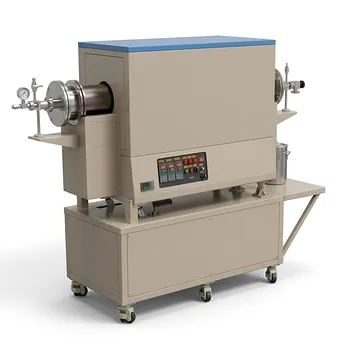
900°C Max Rotary Tube Furnace with 8 Inch 310S Alloy Tube and Optional Multi Zone Heating for Industrial Material Calcination
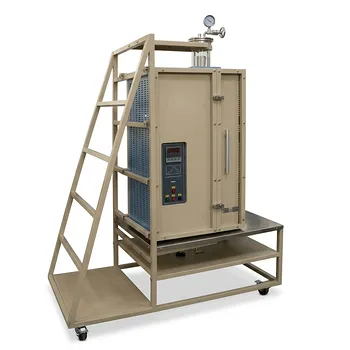
Split Vertical Tube Furnace with 1200C Quartz Tube and Stainless Steel Vacuum Flanges for Rapid Thermal Processing

High Temperature 1700C Tube Furnace with High Vacuum Turbomolecular Pump System and Multi Channel Mass Flow Controller Gas Mixer

1100C Tube Furnace with Vacuum Flange and Programmable Temperature Controller for Material Science and Industrial Heat Treatment
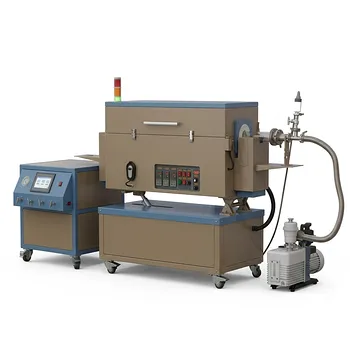
5 Inch Three Zone Rotary Tube Furnace with Integrated Gas Delivery System and 1200C Capability for Advanced Material CVD Processing

1700C Hydrogen Gas Tube Furnace with 60mm Alumina Process Tube and Integrated Hydrogen Safety Detector

1200°C 5 Inch Vertical Quartz Tube Furnace with Stainless Steel Vacuum Flanges

High Temperature 1700C Six Zone Split Tube Furnace with Alumina Tube and Water Cooled Flanges

Compact Vertical Split Quartz Tube Furnace with Stainless Steel Vacuum Flanges for Rapid Thermal Quenching and Controlled Atmosphere Material Processing

High Temperature 1700C Benchtop Tube Furnace with 5 Inch Heating Zone High Purity Alumina Tube and Vacuum Sealing Flanges

1200C High Throughput Multi Channel Tube Furnace with 50mm Quartz Tubes for Annealing and Material Phase Diagram Research
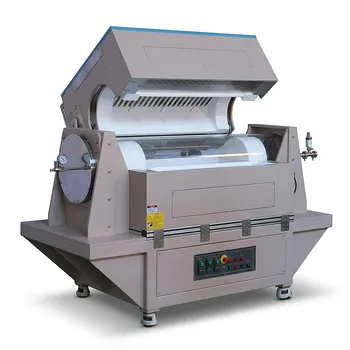
Three Zone Tube Furnace with 11 Inch or 15 Inch Quartz Tube and Hinged Flanges for Vacuum Atmosphere Heat Treatment

1800C High Temperature Compact Vacuum Tube Furnace with 60mm OD Alumina Tube and Kanthal MoSi2 Heating Elements

High Temperature 1700C Vertical Tube Furnace for Powder Spherification and Material Sintering
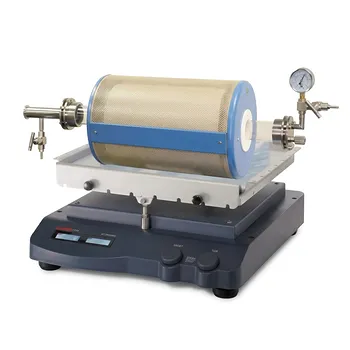
High Temperature Rocking Tube Furnace with Quartz Tube and Vacuum Flange for Materials Synthesis

High Temperature Automated 5 Inch Tube Furnace for Autonomous Material Research and Advanced Laboratory R&D
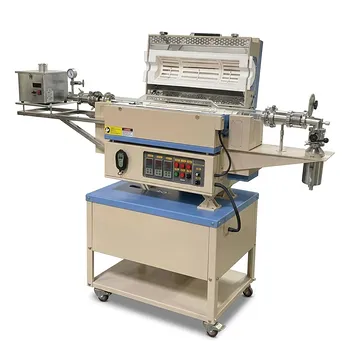
5 Inch Rotary Tube Furnace with Automatic Feeding and Receiving System 1200C Three Zone CVD Powder Processing