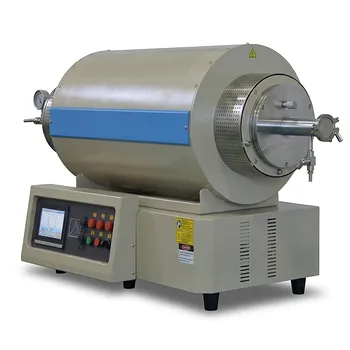
Why is a high-precision tube furnace with a bubbling device necessary for TiS2@NSC? Optimize Material Performance
Updated 5 months ago
The integration of a bubbling device and high-precision temperature control is essential for managing the volatile gas-phase sulfurization process of TiS2@NSC. This specific configuration ensures that carbon disulfide (CS2) is delivered consistently to the precursor at a stable 600 °C, facilitating an in-situ chemical displacement reaction. This controlled environment is what allows the titanium disulfide to form a uniform coating within the carbon nanosheet layers, which is critical for the physical confinement of polysulfides.
To synthesize high-quality TiS2@NSC, you must achieve precise control over both the chemical concentration of the sulfur source and the thermal energy of the reaction zone. Failure in either leads to non-uniform coatings and compromised material performance.
The Role of the Bubbling Device in Vapor Delivery
Controlled Introduction of the Sulfur Source
The bubbling device serves as the mechanism for introducing liquid CS2 into the furnace by using argon flow as a carrier gas. This allows for a steady, measurable supply of sulfur vapor to reach the solid precursor.
Facilitating Gas-Phase Displacement
By vaporizing the CS2, the system enables a gas-phase sulfurization process. This phase is more effective than solid-state reactions for penetrating the complex architecture of carbon nanosheets, ensuring a deeper and more thorough reaction.
Why High-Precision Temperature Control is Mandatory
Sustaining the 600 °C Reaction Threshold
The displacement reaction between CS2 vapor and the precursor requires a constant high-temperature zone maintained strictly at 600 °C. High-precision systems prevent fluctuations that could stall the reaction or lead to incomplete sulfurization.
Ensuring a Uniform Thermal Field
A stable thermal field within the furnace chamber is vital for in-situ generation. This uniformity ensures that the TiS2 coating develops evenly across all surfaces of the carbon nanosheets, rather than clustering in specific areas.
Managing Phase Transformation and Purity
Precise control prevents the formation of unwanted impurities or the collapse of the material's nanostructure. Much like the calcination of other advanced oxides, maintaining a specific heating rate reduces internal thermal stress that could otherwise damage the carbon framework.
The Importance of Physical Confinement
Enhancing Polysulfide Retention
The primary goal of this precise setup is the effective physical confinement of polysulfides. When the TiS2 is generated uniformly within the nanosheet layers, it acts as a barrier that prevents active materials from leaching during electrochemical cycling.
Maximizing Surface Area and Ion Transport
By using a controlled gas-phase approach, the material maintains its "open" structure. This facilitates faster ion transport, which is a direct result of avoiding the structural collapse that often occurs with less precise, high-heat methods.
Understanding the Trade-offs
Flow Rate vs. Vapor Concentration
If the argon flow in the bubbling device is too high, it may carry the CS2 through the furnace too quickly for a full reaction. Conversely, a flow that is too slow may result in insufficient sulfurization, leaving unreacted precursor in the core of the material.
Precision vs. System Complexity
While high-precision furnaces provide the necessary stability, they require meticulous calibration and maintenance. Any leak in the bubbling system or a drift in the thermocouple can lead to batch-to-batch inconsistency in the sulfur content of the TiS2@NSC.
How to Apply This to Your Project
Recommendations for Material Synthesis
- If your primary focus is maximizing cycle life: Prioritize the uniformity of the thermal field to ensure the best possible physical confinement of polysulfides.
- If your primary focus is reaction completeness: Closely monitor the bubbling rate of the CS2 to ensure a constant stoichiometry of sulfur vapor is available throughout the 600 °C hold time.
- If your primary focus is structural integrity: Utilize slow heating and cooling rates (e.g., 5°C/min) to prevent thermal stress from cracking the carbon nanosheet layers.
By mastering the synergy between vapor delivery and thermal stability, you ensure the production of TiS2@NSC materials with superior electrochemical properties and structural durability.
Summary Table:
| System Component | Primary Role | Impact on TiS2@NSC Material |
|---|---|---|
| Bubbling Device | Controlled CS2 vapor delivery via Argon | Ensures uniform gas-phase displacement within nanosheets |
| Precision Control | Maintains strict 600 °C threshold | Prevents phase impurities and structural nanostructure collapse |
| Argon Carrier Gas | Regulated sulfur source transport | Maintains consistent stoichiometry for complete sulfurization |
| Thermal Uniformity | Stable in-situ generation field | Maximizes polysulfide retention and ion transport efficiency |
Elevate Your Material Research with THERMUNITS
Achieve unparalleled precision in your sulfurization and heat treatment processes. THERMUNITS is a leading manufacturer specializing in high-performance laboratory equipment for material science and industrial R&D. Our advanced tube furnaces, integrated with precision gas delivery and bubbling systems, are specifically designed to meet the rigorous demands of CVD, PECVD, and complex in-situ chemical reactions like TiS2@NSC synthesis.
Our Comprehensive Thermal Solutions Include:
- High-precision Muffle, Vacuum, Atmosphere, and Tube Furnaces
- Advanced CVD/PECVD Systems and Rotary Kilns
- Specialized Hot Press and Dental Furnaces
- Vacuum Induction Melting (VIM) and Thermal Elements
Don't let temperature fluctuations or inconsistent vapor delivery compromise your research results. Contact our technical team today to find the perfect thermal processing solution for your laboratory!
References
- Tianhao Yao, Xiaogang Han. Encapsulation of Titanium Disulfide into MOF‐Derived N,S‐Doped Carbon Nanotablets Toward Suppressed Shuttle Effect and Enhanced Sodium Storage Performance. DOI: 10.1002/smll.202311126
Mentioned Products
- High Temperature 1700C Vertical Tube Furnace for Powder Spherification and Material Sintering
- Dual Zone Tube Furnace 1100C with 11 Inch Quartz Tube and Vacuum Flanges for 8 Inch Wafer Processing
- High Temperature Three Temperature Zone Tube Furnace for Advanced Material Science Sintering and Chemical Vapor Deposition Applications
- Compact Hybrid Muffle and Tube Furnace for 1000C Controlled Atmosphere Laboratory Material Sintering
- High Temperature Rocking Tube Furnace with Quartz Tube and Vacuum Flange for Materials Synthesis
People Also Ask
- What role does a high-temperature vertical tube furnace play in simulating high-carbon ferromanganese slag formation?
- What functions does a vertical high-temperature tube furnace perform? Master Industrial Sintering & R&D Simulation
- What is the primary function of a high-temperature tube furnace in Cu1-N-C synthesis? Precision Thermal Control.
- High-Temp Tube Furnace Role in Converting Microbial Proteins to Iron Single-Atom Sites: Expert Synthesis Guide
- What impact does the heating rate of a tube furnace have on biochar microstructure? Optimize Your Material R&D.

Tech Team · ThermUnits
Last updated on Apr 14, 2026
Related Products

High Temperature 1700C Vertical Tube Furnace for Powder Spherification and Material Sintering
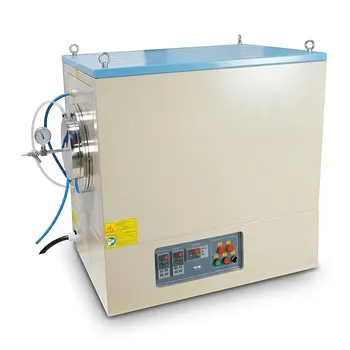
Dual Zone Tube Furnace 1100C with 11 Inch Quartz Tube and Vacuum Flanges for 8 Inch Wafer Processing
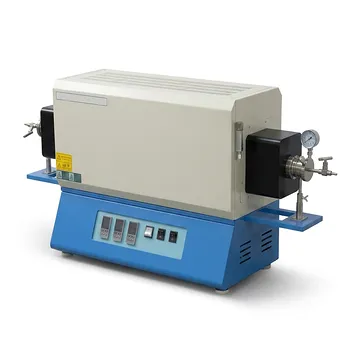
High Temperature Three Temperature Zone Tube Furnace for Advanced Material Science Sintering and Chemical Vapor Deposition Applications
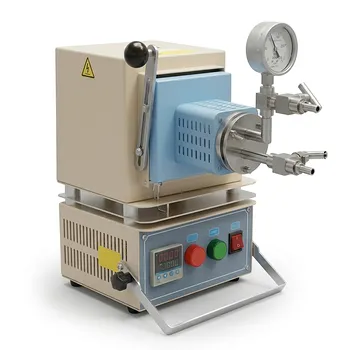
Compact Hybrid Muffle and Tube Furnace for 1000C Controlled Atmosphere Laboratory Material Sintering
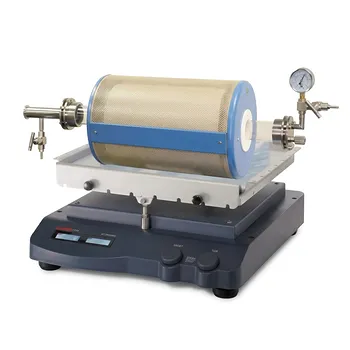
High Temperature Rocking Tube Furnace with Quartz Tube and Vacuum Flange for Materials Synthesis
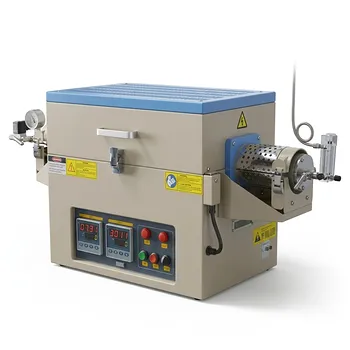
1100C Dual Zone Hydrogen Gas Tube Furnace with Quartz Tube and Integrated H2 Leak Detection System

Compact Vertical Split Quartz Tube Furnace with Stainless Steel Vacuum Flanges for Rapid Thermal Quenching and Controlled Atmosphere Material Processing
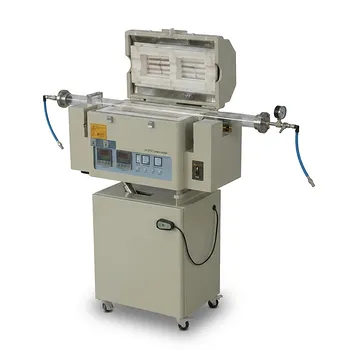
Double Temperature Revolving Tube Furnace with Precision Rotation and Adjustable Inclination for Advanced Material Research

Vertical 1700C Vacuum and Atmosphere Tube Furnace with 80mm Alumina Tube
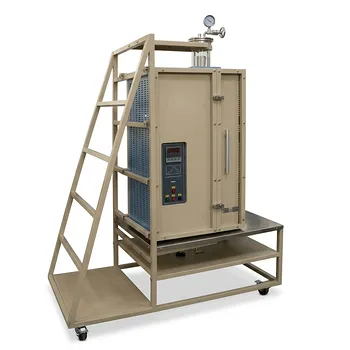
Split Vertical Tube Furnace with 1200C Quartz Tube and Stainless Steel Vacuum Flanges for Rapid Thermal Processing

5 Inch Three Zone Rotary Tube Furnace with Integrated Gas Delivery System and 1200C Capability for Advanced Material CVD Processing
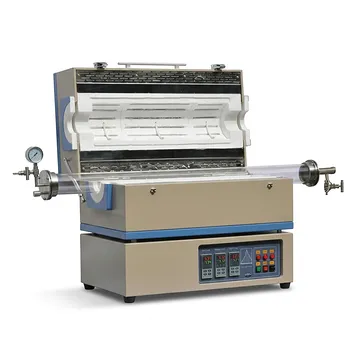
24 Inch Three Zone Split Tube Furnace with Optional Quartz Tube and Vacuum Flange System for High Temperature Material Synthesis
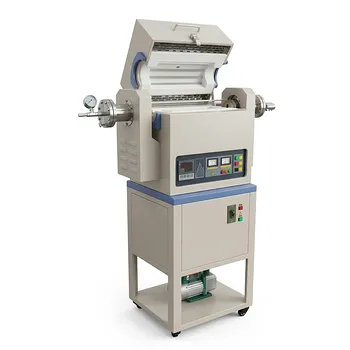
High Temperature Rotary Tilt Tubular Furnaces for Advanced Powder Sintering and Material Processing
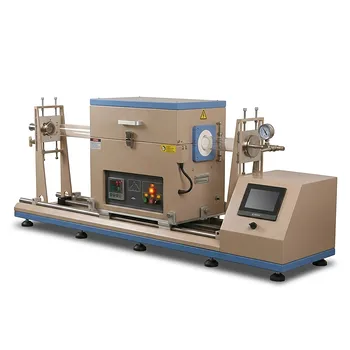
1200C Sliding Tube Furnace for Rapid Thermal Processing and CVD Graphene Growth with 100mm OD Capacity

1100C Tube Furnace with Vacuum Flange and Programmable Temperature Controller for Material Science and Industrial Heat Treatment

Three Zone Tube Furnace with 11 Inch or 15 Inch Quartz Tube and Hinged Flanges for Vacuum Atmosphere Heat Treatment
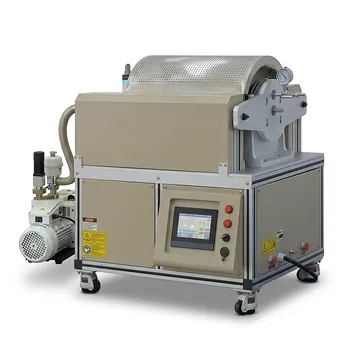
Automated 1200 C Tube Furnace for AI Material Research with 6 Inch OD and Sliding Flange
Double Zone Fast Heating Tube Furnace High Temperature Vacuum Atmosphere System
1100C High Pressure Rocking Tube Furnace with 2 Inch Super Alloy Processing Tube for Material Synthesis