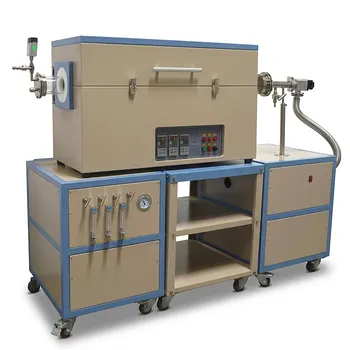
Why is a high-precision vacuum pump system necessary during the CVC process? Ensure High-Purity Nanomaterial Growth
Updated 3 months ago
A high-precision vacuum pump system is fundamental to Chemical Vapor Condensation (CVC) because it establishes the high-purity environment required to prevent material oxidation and provides the exact pressure control necessary to dictate nanoparticle size, shape, and phase. By reducing the reaction chamber to base pressures as low as 10⁻² Torr and maintaining specific operating ranges during synthesis, the system directly regulates the mean free path of precursor vapors and their decomposition rates.
The vacuum pump system serves as the primary regulator of the chemical environment, ensuring that the transition from precursor gas to solid nanoparticle occurs under controlled kinetic conditions rather than being disrupted by atmospheric impurities or erratic pressure fluctuations.
Establishing a High-Purity Growth Environment
Eliminating Atmospheric Contaminants
Before the heating process begins, the vacuum system must evacuate the chamber to remove residual oxygen, nitrogen, and moisture. These impurities can cause the unintended oxidation of precursors or catalysts, leading to chemical defects or the total failure of the synthesis process.
Preventing Parasitic Reactions
High-precision evacuation ensures that the only molecules present are those intended for the reaction. This prevents abnormal cracking of carbon sources or the incorporation of impurities that would otherwise degrade the crystal quality and intrinsic properties of the resulting nanomaterials.
Facilitating Efficient Precursor Sublimation
In many vapor processes, maintaining a low-pressure environment significantly lowers the boiling points of organic monomers or precursors. This allows for efficient sublimation, ensuring a stable and consistent flux of vapor to the reaction zone without requiring excessively high temperatures that might damage the materials.
Precision Control of Reaction Kinetics
Regulating the Mean Free Path
The vacuum system dictates the mean free path—the average distance a molecule travels before colliding with another. By controlling this distance, the system influences whether precursors react in the gas phase or on the substrate surface, which is a deciding factor in the morphology and wall thickness of the nanostructures.
Managing Decomposition Rates
Precise pressure maintenance during the reaction (often between 200 and 500 Torr) allows researchers to fine-tune the decomposition rate of precursor gases. This kinetic control is essential for achieving a specific phase composition, ensuring the nanoparticles reach the desired chemical state (e.g., metallic vs. ceramic phases).
Ensuring Plasma and Flux Stability
For processes involving plasma, the vacuum system works with flow meters to maintain a constant environment. This stability is critical for consistent plasma discharge, which directly impacts the structural uniformity and growth height of the synthesized materials.
Understanding the Trade-offs and Challenges
The Complexity of Dynamic Pressure Balancing
Maintaining a "high-precision" environment is difficult because CVC is a dynamic process where gases are constantly being injected and exhausted. Achieving a steady-state pressure requires the vacuum system to react instantly to changes in gas flow, or the resulting nanoparticles will suffer from inconsistent sizing.
Maintenance and Contamination Risks
While high-performance pumps are necessary, they are susceptible to damage from the very chemicals used in CVC. Corrosive precursor byproducts can degrade pump internal components, potentially leading to "backstreaming" where pump oil or contaminants migrate back into the reaction chamber if the system is not properly trapped or filtered.
Cost vs. Precision
There is a significant leap in capital investment when moving from standard industrial pumps to high-precision dry vacuum systems. While dry pumps eliminate the risk of oil contamination and provide deeper vacuums, they require more rigorous maintenance schedules and higher upfront costs, which must be weighed against the required purity of the final product.
How to Optimize Your Vacuum Strategy
Implementing the Right System for Your Goal
To achieve the best results in your synthesis, your vacuum strategy should align with your specific material requirements and throughput needs.
- If your primary focus is maximum material purity: Utilize an industrial-grade dry vacuum pump with multiple vacuum-purge cycles using high-purity inert gases like Argon to minimize residual oxygen partial pressure.
- If your primary focus is controlling nanoparticle morphology: Prioritize a system with high-precision pressure transducers and automated throttle valves to maintain a rock-steady mean free path during the growth phase.
- If your primary focus is high-yield precursor delivery: Ensure the vacuum system can achieve the specific low-pressure thresholds required to lower the sublimation temperature of your specific organic monomers.
By mastering the vacuum environment, you transform a chaotic chemical reaction into a predictable, high-precision manufacturing process for advanced nanomaterials.
Summary Table:
| Key Function | Impact on CVC Process | Material Benefit |
|---|---|---|
| Purity Control | Eliminates $O_2$, $N_2$, and moisture | Prevents oxidation and chemical defects |
| Pressure Stability | Regulates Mean Free Path | Dictates nanoparticle morphology and size |
| Kinetic Regulation | Manages decomposition rates | Ensures precise phase and chemical states |
| Sublimation Support | Lowers precursor boiling points | Enables stable vapor flux at lower temperatures |
| Dynamic Balancing | Reacts to instant gas flow changes | Guarantees consistent nanoparticle uniformity |
Elevate Your Material Synthesis with THERMUNITS
Precise vacuum control is the difference between a failed experiment and a breakthrough in nanomaterial engineering. THERMUNITS is a leading manufacturer of high-precision laboratory equipment, providing the advanced thermal processing solutions you need to master the CVC environment.
Our comprehensive range includes CVD/PECVD systems, Tube and Atmosphere furnaces, and Vacuum Induction Melting (VIM) furnaces, all engineered to deliver the stability required for cutting-edge R&D. Whether you are optimizing nanoparticle morphology or maximizing material purity, our technical experts are ready to design a solution tailored to your specific research goals.
Ready to optimize your high-temperature laboratory? Contact us today to speak with an expert and explore how THERMUNITS can empower your next innovation.
References
- Malek Ali. Applications of nanotechnology and nanoproduction techniques. DOI: 10.1515/eng-2024-0063
Mentioned Products
- Split Chamber CVD Tube Furnace with Vacuum Station Chemical Vapor Deposition System Machine
- Chemical Vapor Deposition CVD System Slide PECVD Tube Furnace with Liquid Gasifier PECVD Machine
- Versatile Chemical Vapor Deposition Tube Furnace System for Advanced Material Research and Industrial Coating Processes
- 915MHz MPCVD Diamond Machine Microwave Plasma Chemical Vapor Deposition System Reactor
- Radio Frequency Plasma Enhanced Chemical Vapor Deposition RF PECVD System for Laboratory and Industrial Thin Film Growth
People Also Ask
- Why is a Tube Furnace typically utilized for CVD? Achieve Precision in Graphene and 2D Material Synthesis
- What is the function of CVD furnaces in graphene prep? Enhancing Photodetector Charge Transport
- Why use CVD and a tube furnace for Pd3P0.95/NC catalyst phosphidation? Ensure high phase purity and performance.
- CVD Tube Furnace Advantages for Pd-P Catalyst Durability: Precision Control for 40,000+ Cycles
- How does a Chemical Vapor Deposition (CVD) tube furnace facilitate synchronized nitridation? Precision Nano-Engineering.

Tech Team · ThermUnits
Last updated on Jun 03, 2026
Related Products
Split Chamber CVD Tube Furnace with Vacuum Station Chemical Vapor Deposition System Machine
Chemical Vapor Deposition CVD System Slide PECVD Tube Furnace with Liquid Gasifier PECVD Machine
Versatile Chemical Vapor Deposition Tube Furnace System for Advanced Material Research and Industrial Coating Processes
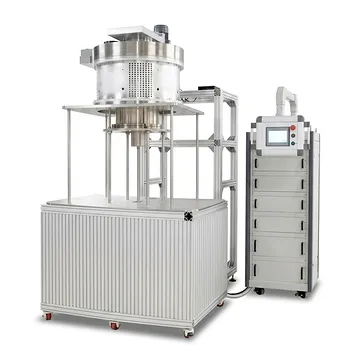
915MHz MPCVD Diamond Machine Microwave Plasma Chemical Vapor Deposition System Reactor
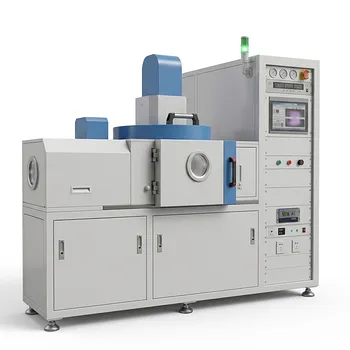
Radio Frequency Plasma Enhanced Chemical Vapor Deposition RF PECVD System for Laboratory and Industrial Thin Film Growth
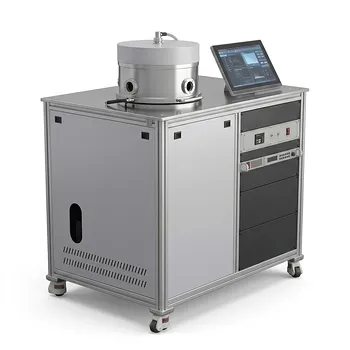
Inclined Rotary Plasma Enhanced Chemical Vapor Deposition PECVD System for Thin Film Deposition and Nanomaterial Synthesis
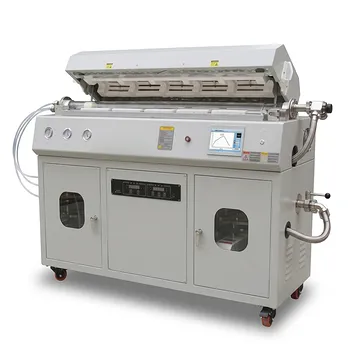
Multi Heating Zones CVD Tube Furnace System for Precision Chemical Vapor Deposition and Advanced Material Synthesis
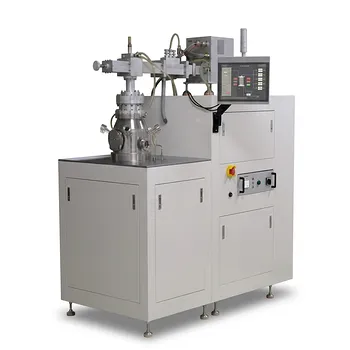
Cylindrical Resonator MPCVD Machine System for Microwave Plasma Chemical Vapor Deposition and Lab Diamond Growth
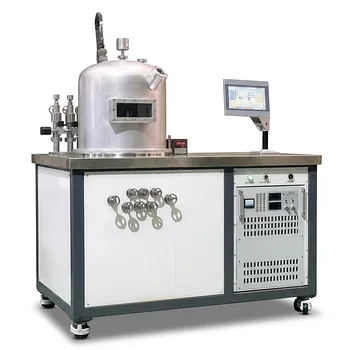
HFCVD Machine System for Nano Diamond Coating on Drawing Dies and Industrial Tools
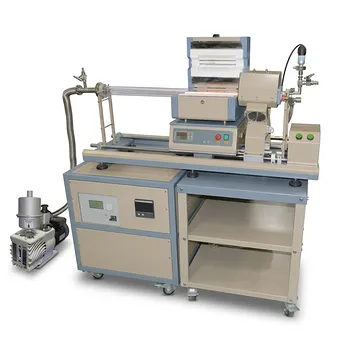
1200C Max Compact Auto-Sliding PECVD Furnace with 2 Inch Tube and Vacuum Pump
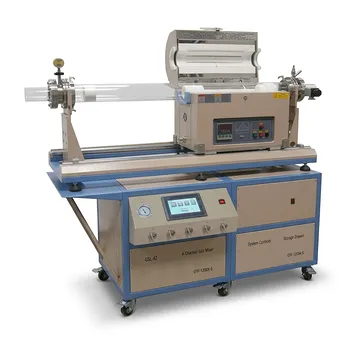
Dual Tube 100mm 80mm CVD Sliding Furnace with 4 Channel Gas Mixing and Vacuum System
Two Zone Rotary CVD Furnace with Automatic Feeding and Receiving System for Powder Processing
Three Temperature Zone High Temperature Vacuum Tube Furnace for CVD and Material Sintering