Why is a high-temperature electric furnace required for the heat treatment of oriented Aluminum Borate skeletons? Strength & Stability
Updated 3 months ago
High-temperature heat treatment is the critical phase that transforms a fragile "green body" into a robust, functional Aluminum Borate skeleton. This process utilizes a high-temperature electric furnace to thermally decompose organic binders and surfactants used during freeze-casting while simultaneously inducing micro-sintering at the contact points of the nano-whiskers. By creating these physical "necks" between whiskers, the furnace ensures the skeleton possesses the mechanical strength and structural stability necessary to withstand the pressures of subsequent resin impregnation.
The high-temperature furnace acts as a catalyst for structural transformation, purging organic impurities while fusing nano-whiskers through micro-sintering to ensure the skeleton’s mechanical integrity.
The Dual Role of Thermal Processing
Decomposition of Organic Additives
During the freeze-casting process, organic binders and surfactants are essential for stabilizing the ceramic slurry. The high-temperature furnace provides the controlled environment needed to oxidize and remove these volatiles completely.
Without this precise thermal purging, residual organics would create defects or prevent proper bonding between the ceramic skeleton and the polymer matrix.
Inducing Micro-Sintering Necks
At elevated temperatures, atomic diffusion occurs at the contact points where Aluminum Borate nano-whiskers touch. This creates sintering necks, which are physical bridges that fuse the independent whiskers into a singular, interconnected framework.
These connections are the primary source of the skeleton's mechanical rigidity. This framework must be strong enough to maintain its oriented architecture without collapsing during the high-pressure resin infiltration stage.
The Importance of Precise Thermal Control
Managing the Heating Rate
A high-temperature electric furnace allows for a precisely controlled heating rate, which is vital for the structural survival of the skeleton. If the temperature rises too quickly, the rapid outgassing of organic binders can create internal pressure, leading to micro-cracks or the total explosion of the oriented structure.
A slow, measured ramp-up ensures that gases escape through the porous network without damaging the delicate alignment of the whiskers.
Ensuring Thermal Uniformity
Similar to the processing of high-performance aluminum alloys, maintaining a constant and uniform temperature is essential for consistent results. Uniform heat distribution prevents regional variations in sintering density, ensuring the skeleton has predictable mechanical properties throughout its entire volume.
This stability allows for the "full dissolution" of necessary elements and promotes the desired phase transformations, much like the 550°C treatments used to control intermetallic morphology in aluminum-iron systems.
Understanding the Trade-offs
The Risk of Over-Sintering
While sintering is necessary for strength, excessive temperature or duration can lead to over-sintering. This results in the thickening of the whiskers and a reduction in the internal porosity of the skeleton.
If the pores become too small or closed off, the subsequent resin impregnation becomes difficult, ultimately compromising the performance of the final composite material.
Dimensional Shrinkage
High-temperature treatment inevitably leads to some degree of volumetric shrinkage as the material densifies. Engineers must account for this "shrinkage factor" during the initial molding process to ensure the final skeleton meets the required dimensional specifications.
How to Optimize the Heat Treatment Process
Choosing the Right Parameters for Your Goal
- If your primary focus is maximum mechanical strength: Prioritize a slightly higher sintering temperature to maximize the size and density of the micro-sintering necks between whiskers.
- If your primary focus is high porosity for resin flow: Use a lower-end sintering temperature and a longer "soak" time to ensure binder removal without excessive densification.
- If your primary focus is structural precision: Implement an extremely slow heating ramp (e.g., 1-2°C per minute) to prevent internal stresses and cracking during the organic burnout phase.
The high-temperature furnace is not merely a heater, but a precision tool that dictates the ultimate structural success of oriented ceramic-polymer composites.
Summary Table:
| Process Step | Key Mechanism | Benefit to Skeleton |
|---|---|---|
| Organic Burnout | Oxidation & Decomposition | Removes impurities; prevents matrix defects. |
| Micro-Sintering | Atomic Diffusion (Necks) | Fuses nano-whiskers for mechanical integrity. |
| Precise Ramp-up | Controlled Outgassing | Prevents micro-cracks and structural collapse. |
| Uniform Heating | Homogeneous Heat | Ensures predictable and consistent properties. |
Elevate Your Material Research with THERMUNITS
Precision thermal processing is the backbone of high-performance composite manufacturing. THERMUNITS is a leading manufacturer specializing in high-temperature laboratory equipment for material science and industrial R&D.
Our extensive range of equipment—including Muffle, Vacuum, Atmosphere, Tube, Rotary, and Hot Press furnaces, CVD/PECVD systems, and Dental Furnaces—is designed to provide the exact heating rates and thermal uniformity required for complex processes like micro-sintering Aluminum Borate skeletons.
From electric rotary kilns to vacuum induction melting furnaces (VIM) and thermal elements, we offer the comprehensive solutions you need to ensure your materials achieve peak structural success. Ready to optimize your heat treatment results? Contact our experts today to find the perfect furnace configuration for your laboratory!
References
- Hyunseung Song, Changui Ahn. Enhanced Epoxy Composites Reinforced by 3D-Aligned Aluminum Borate Nanowhiskers. DOI: 10.3390/ma17194727
Mentioned Products
- High Temperature Horizontal Electrical Assisted Sintering Furnace with 3KW Programmable Power Source for Advanced Ceramic Materials
- High Temperature 1500C Benchtop Muffle Furnace 3.6L Alumina Fiber Chamber Programmable Controller Sintering Annealing Carbonization Thermal Processing System
- High Temperature Vertical Hybrid Furnace with Alumina Tube and SiC Heating for SOFC Coin Cell Testing and Atmosphere Processing
- Vertical Hybrid High Temperature Furnace 1500C Alumina Tube SOFC Fuel Cell Testing Laboratory Heat Treatment Research Equipment
- High Temperature Vertical Crucible Furnace with 22L Heating Chamber and 1200C Maximum Temperature
People Also Ask
- How does the temperature control precision of a high-temperature sintering furnace affect Na1+xLa1-xZr2O6-δ ceramics?
- How does a high-temperature sintering furnace environment enhance NdFeB magnets? Achieve 98%+ density with precision.
- Why is a high-temperature sintering furnace required for the preparation of Li(Nb,Ta)O3 precursors? Essential Insights
- How does a high-temperature sintering furnace contribute to the interfacial strengthening of SS316L and zirconia?
- What role does a sintering furnace play with silver paste? Essential Thermal Management for Power Device Packaging

Tech Team · ThermUnits
Last updated on Jun 02, 2026
Related Products
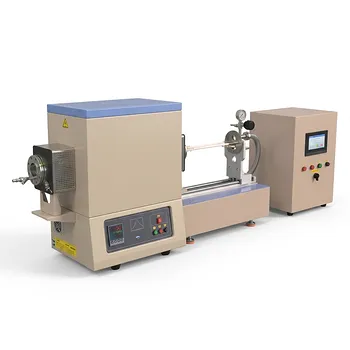
High Temperature Horizontal Electrical Assisted Sintering Furnace with 3KW Programmable Power Source for Advanced Ceramic Materials
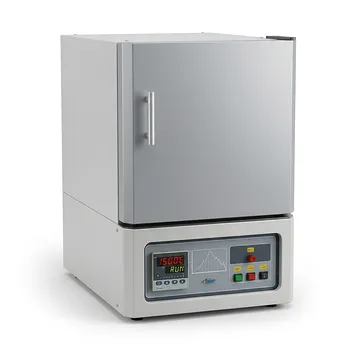
High Temperature 1500C Benchtop Muffle Furnace 3.6L Alumina Fiber Chamber Programmable Controller Sintering Annealing Carbonization Thermal Processing System
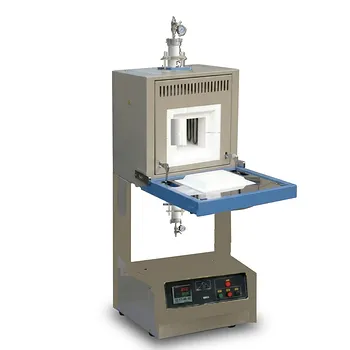
High Temperature Vertical Hybrid Furnace with Alumina Tube and SiC Heating for SOFC Coin Cell Testing and Atmosphere Processing
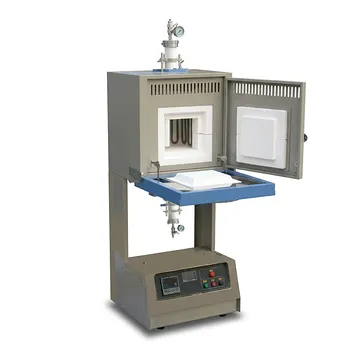
Vertical Hybrid High Temperature Furnace 1500C Alumina Tube SOFC Fuel Cell Testing Laboratory Heat Treatment Research Equipment
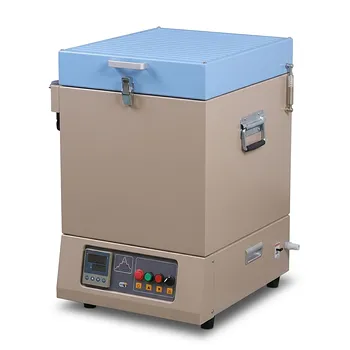
High Temperature Vertical Crucible Furnace with 22L Heating Chamber and 1200C Maximum Temperature
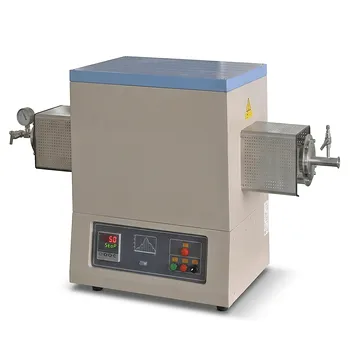
High Temperature 1700C Tube Furnace with 4 Inch OD Alumina Tube and Vacuum Sealing Flanges
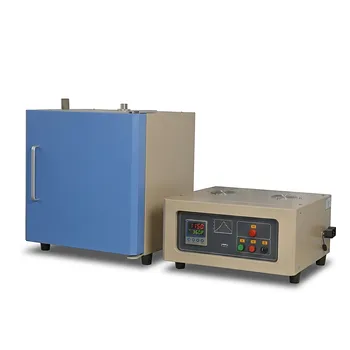
High Temperature Muffle Furnace with Alloy Chamber for Debinding and Sintering Applications
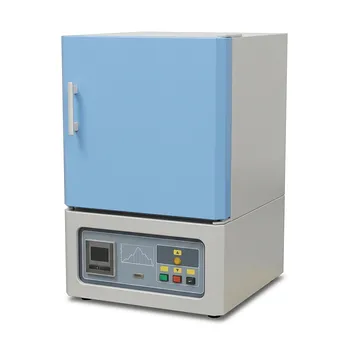
1800C Bench Top Muffle Furnace with Kanthal Super 1900 Heating Elements and 3.6L Alumina Fiber Chamber
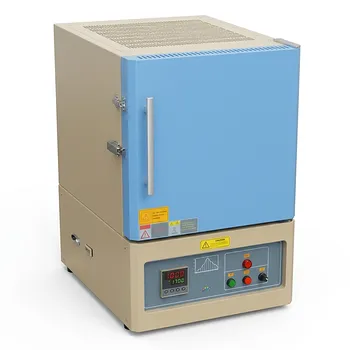
Large Bench Top 1700C High Temperature Muffle Furnace with 19L Chamber for Advanced Material Sintering and Annealing
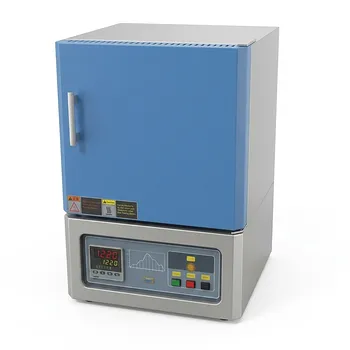
High Temperature Benchtop Muffle Furnace 1700C 10L Chamber Alumina Fiber Insulation MoSi2 Heating Elements
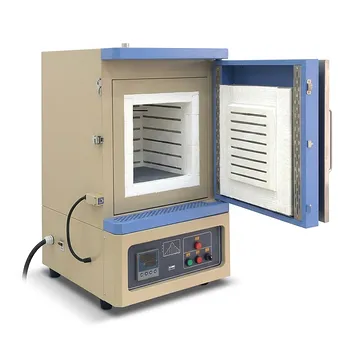
Five Side Heating Muffle Furnace High Purity Alumina Fiber 27L Chamber 1200C High Temperature Thermal Processing System for Sintering Annealing and Materials Research

1800C High Temperature Compact Vacuum Tube Furnace with 60mm OD Alumina Tube and Kanthal MoSi2 Heating Elements
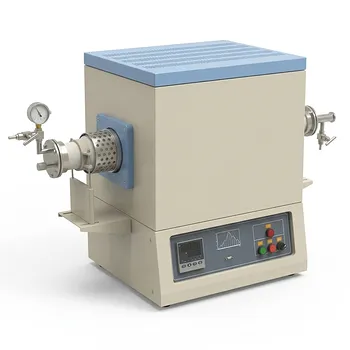
1750°C High Temperature Benchtop Vacuum Atmosphere Tube Furnace with Kanthal Super 1800 Heating Elements and 60mm Alumina Processing Tube
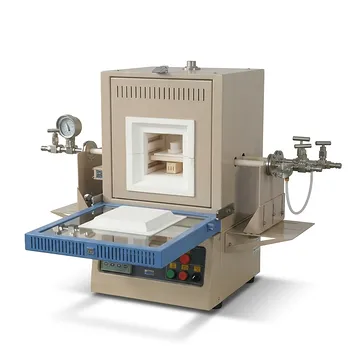
1700C Compact Hybrid Furnace with Dual Layer Box Sintering and Controlled Atmosphere Alumina Tubes
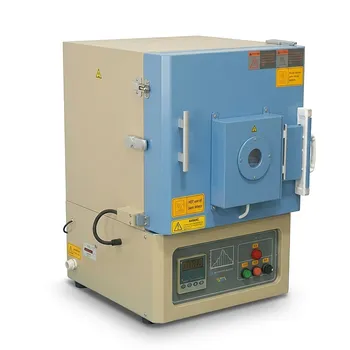
High Temperature Benchtop Muffle Furnace 1500C with 3.6L Chamber and Quartz Observation Window
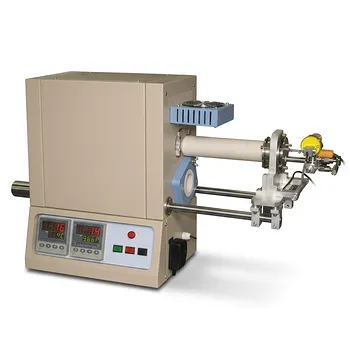
High Temperature Tube Furnace 1500C with Sliding Flanges and 50mm OD for Rapid Thermal Processing Fast Heating and Cooling
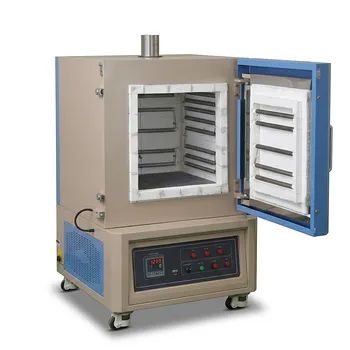
1200C High Temperature 125L Muffle Furnace 5 Side Heating for Large Batch Sintering with Optional Alloy Debinding Chamber
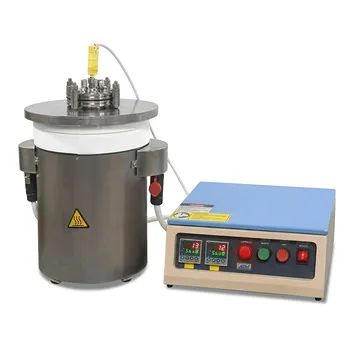
600°C Vertical Crucible Furnace with SS316 Alloy Reactor and 6 Port Vacuum Flange
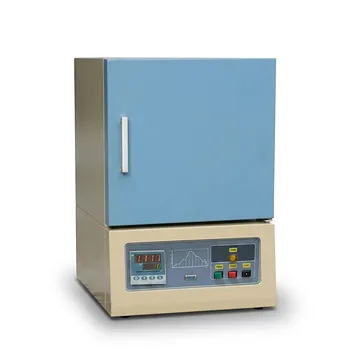
Ultra High Temperature Bench Top Muffle Furnace 1750C Sintering System with Kanthal Super Heating Elements and Precision Digital Control