Why is a high-temperature quartz boat used for TiN catalyst synthesis? Ensure Purity & Thermal Stability
Updated 3 months ago
High-temperature quartz boats are the industry standard for synthesizing titanium nitride (TiN) catalysts because they provide an inert, thermally stable environment. During the nitridation process, which often occurs at temperatures exceeding 700°C, these carriers support precursor powders while ensuring they remain free from metallic impurities and secondary chemical reactions.
Core Takeaway: A high-temperature quartz boat serves as a critical, non-reactive platform that protects the purity of the TiN catalyst while its flat geometry optimizes gas-solid contact for efficient synthesis.
Ensuring Chemical Purity and Stability
Prevention of Cross-Contamination
At temperatures above 700°C, many container materials begin to leach ions or react with the precursor powder. High-purity quartz is chemically inert, ensuring that no metal ions or impurities infiltrate the titanium precursor during the nitridation process.
Resistance to Aggressive Atmospheres
The synthesis of TiN typically involves ammonia ($NH_3$) or other nitrogen-rich gases that can be corrosive at high heat. Quartz boats do not react with these gases or the resulting decomposition products, maintaining the integrity of the catalytic active sites.
Maintaining Experimental Accuracy
By preventing secondary reactions between the container and the reactants, quartz ensures that the final titanium nitride powder is high-purity. This allows researchers to attribute catalytic performance solely to the synthesized material rather than unintended contaminants.
Thermal Resilience in Extreme Conditions
High-Temperature Structural Integrity
Titanium nitride synthesis often requires temperatures reaching 900°C to 1000°C. High-purity quartz maintains its physical shape and structural stability at these levels, resisting the deformation that would occur in less resilient materials.
Exceptional Thermal Shock Stability
Quartz has a remarkably low coefficient of thermal expansion. This property allows the boat to withstand the rapid heating and cooling cycles common in tube furnaces without cracking or shattering.
Consistent Heat Distribution
The material properties of quartz allow for uniform thermal conduction. This ensures that the precursor powder is heated evenly throughout the boat, leading to a more consistent nitridation reaction and a more homogeneous final product.
Optimizing Reaction Kinetics through Design
Maximizing Gas-Solid Contact
The flat, shallow design of a quartz boat allows the titanium precursor powder to be spread into a thin, even layer. This maximizes the surface area exposed to the ammonia or nitrogen gas stream flowing through the furnace.
Facilitating Gas Diffusion
A thin layer of powder reduces the diffusion path for gases entering and leaving the precursor bed. This ensures that the nitridation reaction occurs completely and uniformly, rather than leaving unreacted titanium oxides in the center of the sample.
Accurate Sample Positioning
The stable geometry of the boat allows for precise placement within the "sweet spot" of a furnace’s heating zone. This repeatability is essential for scaling synthesis processes and ensuring batch-to-batch consistency.
Understanding the Trade-offs
Limitations with Alkaline Materials
While quartz is generally inert, it can react with strong alkaline activators (such as KOH) at extremely high temperatures (700°C–900°C). If your synthesis involves high concentrations of strong bases, the quartz may eventually degrade or bond with the sample.
Physical Fragility
Despite its thermal strength, quartz is physically brittle. It requires careful handling to avoid fractures, and it is significantly more susceptible to mechanical damage than metallic or ceramic alternatives like alumina or nickel.
Making the Right Choice for Your Goal
- If your primary focus is catalyst purity: Always utilize high-purity quartz to eliminate the risk of metallic ion infiltration from the container.
- If your primary focus is reaction uniformity: Spread the precursor powder in the thinnest layer possible across the boat’s surface to ensure total gas penetration.
- If your primary focus is cost-efficiency over many cycles: Implement strict handling protocols and avoid using aggressive alkaline cleaners to extend the lifespan of your quartz boats.
Selecting a high-temperature quartz boat is a technical necessity for any synthesis requiring a pristine environment and efficient gas-solid interaction at elevated temperatures.
Summary Table:
| Feature | Benefit for TiN Synthesis |
|---|---|
| Chemical Inertness | Prevents metallic contamination and leaching at 700°C+ |
| High Thermal Limit | Maintains structural integrity up to 1000°C |
| Thermal Shock Resistance | Withstands rapid heating/cooling cycles without cracking |
| Flat Geometry | Maximizes gas-solid contact for uniform nitridation |
| Corrosion Resistance | Stable in aggressive ammonia (NH3) or nitrogen atmospheres |
Elevate Your Material Research with THERMUNITS
Precision in catalyst synthesis requires the right thermal environment. As a leading manufacturer of high-temperature laboratory equipment, THERMUNITS provides the advanced solutions you need for material science and industrial R&D. We specialize in helping researchers achieve high-purity results through superior thermal control.
Our Comprehensive Thermal Solutions include:
- Advanced Furnaces: Muffle, Vacuum, Atmosphere, Tube, Rotary, and Hot Press furnaces.
- Specialized Systems: CVD/PECVD systems, Dental Furnaces, and Vacuum Induction Melting (VIM) furnaces.
- R&D Essentials: Electric rotary kilns, high-purity Thermal Elements, and specialized quartz carriers.
Why Partner with THERMUNITS? We understand the critical nature of contamination-free heat treatment. Our equipment is engineered to provide uniform heat distribution and withstand the most aggressive synthesis conditions, ensuring your TiN catalysts and advanced materials meet the highest standards.
Ready to optimize your lab’s efficiency? Contact our technical experts today to find the perfect equipment for your research goals!
References
- Hansen Mou, Jingguang G. Chen. Trends in electrocatalytic activity and stability of transition-metal nitrides. DOI: 10.1016/j.checat.2023.100867
Mentioned Products
- Compact Vertical Split Quartz Tube Furnace with Stainless Steel Vacuum Flanges for Rapid Thermal Quenching and Controlled Atmosphere Material Processing
- 1200°C 5 Inch Vertical Quartz Tube Furnace with Stainless Steel Vacuum Flanges
- 1100°C High Temperature Quartz Chamber Furnace 8 Inch OD with 7.6 Liter Capacity and Vacuum Atmosphere Capability
- 1100°C Large Diameter Quartz Tube Furnace with 24 Inch Heating Zone and Water Cooled Flanges
- 1200C High Temperature Atmosphere Controlled Vertical Quenching Tube Furnace with 4 Inch Quartz Tube
People Also Ask
- Why integrate a vertical split tube furnace with hydraulic loading for HSECC? Essential for In-Situ Fire Simulation.
- What is the role of a split vertical tube furnace during flash sintering of 8YSZ and 20SDC? Master Ultra-Fast R&D
- What is the primary engineering purpose for using a customized ventilation hood when operating a split tube furnace? RCF Safety
- Why is a quartz tube furnace necessary for phosphorus-doped MoS2/GO preparation? Ensure Purity & Precise Synthesis
- What is the primary function of a Quartz Tube Furnace in ZnO VLS growth? Master High-Precision Nanowire Synthesis

Tech Team · ThermUnits
Last updated on Jun 02, 2026
Related Products
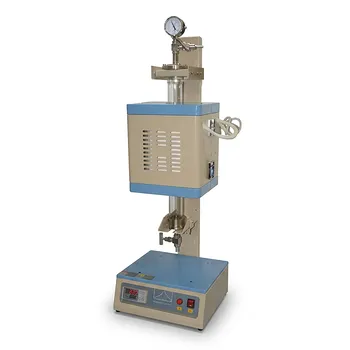
Compact Vertical Split Quartz Tube Furnace with Stainless Steel Vacuum Flanges for Rapid Thermal Quenching and Controlled Atmosphere Material Processing
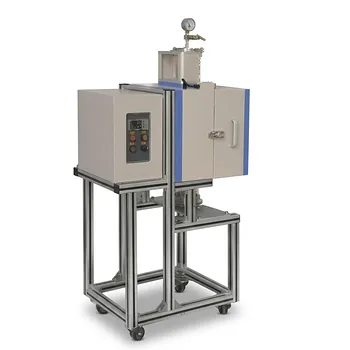
1200°C 5 Inch Vertical Quartz Tube Furnace with Stainless Steel Vacuum Flanges
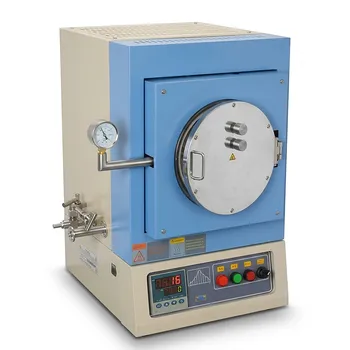
1100°C High Temperature Quartz Chamber Furnace 8 Inch OD with 7.6 Liter Capacity and Vacuum Atmosphere Capability
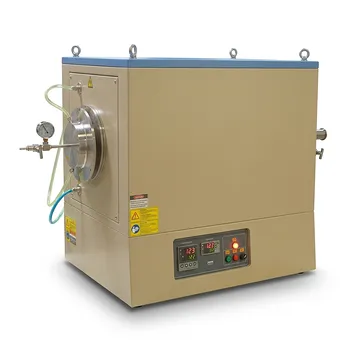
1100°C Large Diameter Quartz Tube Furnace with 24 Inch Heating Zone and Water Cooled Flanges
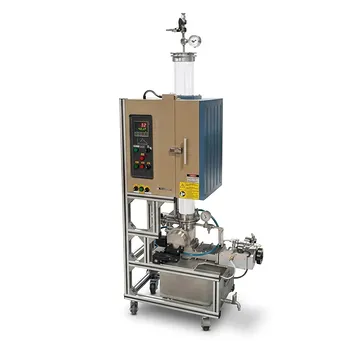
1200C High Temperature Atmosphere Controlled Vertical Quenching Tube Furnace with 4 Inch Quartz Tube
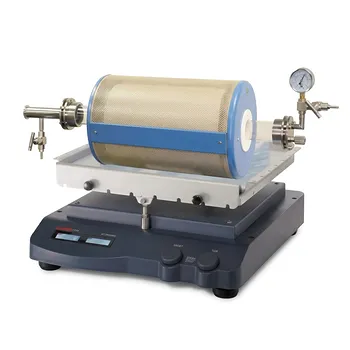
High Temperature Rocking Tube Furnace with Quartz Tube and Vacuum Flange for Materials Synthesis
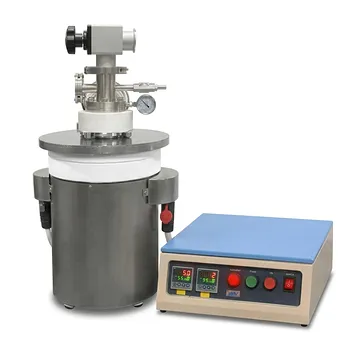
1100C High Temperature Vacuum Crucible Furnace with Quartz Chamber for Thermal Processing and Sintering
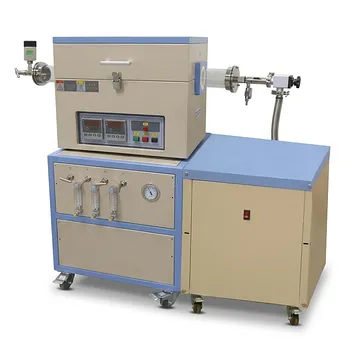
Dual Zone Quartz Tube Furnace with 80mm Diameter 1200C Max Temperature 3 Channel Gas Mixer and Vacuum Pump System