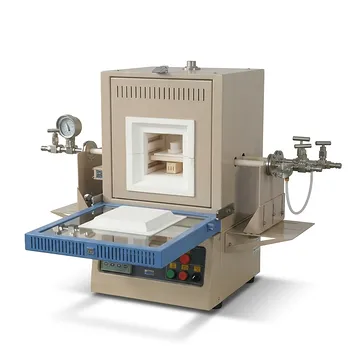
Why is a high-temperature sintering furnace essential for preparing fully dense YSZ electrolyte layers? Key to Gas-Tightness
Updated 3 months ago
A high-temperature sintering furnace is the critical component for YSZ electrolyte fabrication because it provides the extreme thermal energy—specifically temperatures exceeding 1450 °C—required to trigger intense atomic diffusion and grain boundary migration. This thermal energy is the catalyst that transforms a porous collection of ceramic particles into a fully dense, gas-tight membrane capable of preventing gas leakage while facilitating ion transport.
Core Takeaway: Achieving a fully dense YSZ layer requires overcoming high sintering activation energy to eliminate internal pores. Only a high-performance furnace can maintain the stable 1450 °C+ environment necessary to ensure the electrolyte is impermeable to gases and highly conductive for ions.
The Mechanics of Densification: From Particles to Solids
Driving Atomic Diffusion and Neck Growth
At temperatures above 1450 °C, Yttria-Stabilized Zirconia (YSZ) particles begin to form "necks" at their contact points. The furnace provides the thermal activation energy for atoms to migrate across these boundaries, causing the particles to fuse into a single, continuous structure.
Eliminating Internal Porosity for Gas-Tightness
The primary role of the sintering furnace is the total elimination of microscopic voids within the material. As grain boundaries migrate and grains grow, internal pores are "pushed" out or filled, resulting in a gas-tight electrolyte that effectively isolates fuel gases and prevents crosstalk between the anode and cathode.
Maintaining Phase Stability
High-temperature furnaces with precise control allow the material to reach its optimal bulk density (often up to 6.08 g/cm³) while promoting the stability of the tetragonal phase. This structural stability is essential for the long-term mechanical integrity of the electrolyte during the thermal cycling of a fuel cell or electrolysis cell.
Functional Requirements of the YSZ Electrolyte
Maximizing Ionic Conductivity
A fully dense YSZ layer is not just a physical barrier; it is a functional conductor. By eliminating pores and defects through high-temperature treatment, the furnace reduces the resistance to oxygen ion flow, thereby minimizing ohmic losses and increasing the overall efficiency of the cell.
Ensuring Uniform Coverage on 3D Structures
In advanced manufacturing, such as 3D-printed columnar structures, the furnace ensures that the YSZ layer shrinks and densifies uniformly over complex geometries. This creates a cohesive, pinhole-free film of uniform thickness that is vital for maintaining the electrochemical seal.
Facilitating Interfacial Bonding
While the electrolyte must be dense, the furnace also helps facilitate the physical bonding between the electrolyte and the electrode layers. By controlling the thermal curve, the furnace ensures a robust interface contact that can withstand the operational stresses of a Solid Oxide Fuel Cell (SOFC).
Understanding the Trade-offs
Temperature vs. Grain Size
While higher temperatures promote densification, excessive heat can lead to over-sintering and exaggerated grain growth. This can sometimes reduce the mechanical toughness of the ceramic or lead to micro-cracking if the cooling phase is not managed with a precise heating/cooling curve (e.g., 5 K/min).
Porosity Balance in Different Layers
A major challenge is that the electrolyte requires 100% density, whereas the adjacent electrodes require porosity for gas diffusion. The sintering furnace must be used at different temperature regimes (e.g., 1450 °C for the electrolyte vs. 1150 °C for electrodes) to achieve these conflicting material properties within the same device.
How to Apply This to Your Fabrication Process
Recommendations for Sintering Success
- If your primary focus is gas-tightness: Ensure your furnace can maintain a minimum of 1450 °C for at least 4 hours to guarantee total pore elimination.
- If your primary focus is ionic conductivity: Use a furnace with precise atmosphere and temperature control to promote the tetragonal phase and maximize bulk density.
- If your primary focus is mechanical durability: Utilize a programmable furnace to implement a slow cooling curve (5 K/min) to prevent thermal shock and micro-cracking after the densification hold.
By providing the requisite thermal energy for atomic migration, the high-temperature sintering furnace remains the indispensable tool for turning raw ceramic powders into high-performance, gas-tight electrolyte membranes.
Summary Table:
| Parameter | Requirement | Key Benefit |
|---|---|---|
| Sintering Temp | > 1450 °C | Triggers atomic diffusion and grain growth |
| Density Goal | ~6.08 g/cm³ | Ensures a gas-tight, leak-free membrane |
| Phase Target | Tetragonal | High ionic conductivity & structural stability |
| Cooling Rate | ~5 K/min | Prevents micro-cracking and thermal shock |
Elevate Your Material Science R&D with THERMUNITS
Achieving the precise 1450°C+ thermal environment required for gas-tight YSZ electrolytes demands reliable, high-performance equipment. THERMUNITS is a leading manufacturer of high-temperature laboratory equipment, providing the advanced solutions necessary for critical thermal processing in material science and industrial R&D.
Our comprehensive range of laboratory heat treatment equipment includes:
- Muffle, Vacuum, and Atmosphere Furnaces for controlled sintering.
- Tube, Rotary, and Hot Press Furnaces for diverse material formats.
- CVD/PECVD Systems and Dental Furnaces for specialized thin-film and ceramic work.
- Electric Rotary Kilns, Vacuum Induction Melting (VIM) Furnaces, and high-quality Thermal Elements.
Whether you are optimizing SOFC performance or developing new ceramic composites, our equipment ensures uniform densification and superior mechanical integrity.
Contact THERMUNITS Today to find the perfect thermal processing solution for your laboratory!
References
- Inyoung Jang, G. H. Kelsall. Structural Effects of 3D Inkjet‐Printed Ni(O)‐YSZ Pillared Electrodes on Performances of Solid Oxide Electrochemical Reactors. DOI: 10.1002/smll.202306653
Mentioned Products
- High Temperature 1700C Vertical Tube Furnace for Powder Spherification and Material Sintering
- High Temperature Horizontal Electrical Assisted Sintering Furnace with 3KW Programmable Power Source for Advanced Ceramic Materials
- Ultra High Temperature Bench Top Muffle Furnace 1750C Sintering System with Kanthal Super Heating Elements and Precision Digital Control
- High Temperature Muffle Furnace with Alloy Chamber for Debinding and Sintering Applications
- Large Bench Top 1700C High Temperature Muffle Furnace with 19L Chamber for Advanced Material Sintering and Annealing
People Also Ask
- What role does a high-temperature vertical tube furnace play in simulating high-carbon ferromanganese slag formation?
- What functions does a vertical high-temperature tube furnace perform? Master Industrial Sintering & R&D Simulation
- What is the primary function of a high-temperature tube furnace in Cu1-N-C synthesis? Precision Thermal Control.
- High-Temp Tube Furnace Role in Converting Microbial Proteins to Iron Single-Atom Sites: Expert Synthesis Guide
- What impact does the heating rate of a tube furnace have on biochar microstructure? Optimize Your Material R&D.

Tech Team · ThermUnits
Last updated on Jun 03, 2026
Related Products

High Temperature 1700C Vertical Tube Furnace for Powder Spherification and Material Sintering
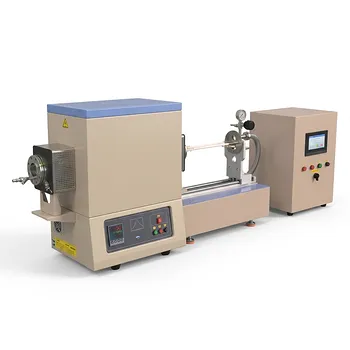
High Temperature Horizontal Electrical Assisted Sintering Furnace with 3KW Programmable Power Source for Advanced Ceramic Materials
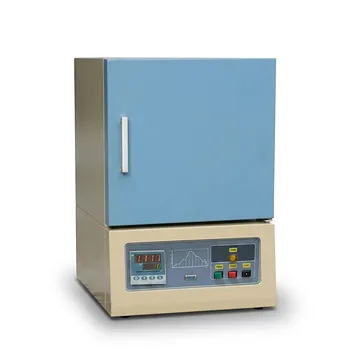
Ultra High Temperature Bench Top Muffle Furnace 1750C Sintering System with Kanthal Super Heating Elements and Precision Digital Control
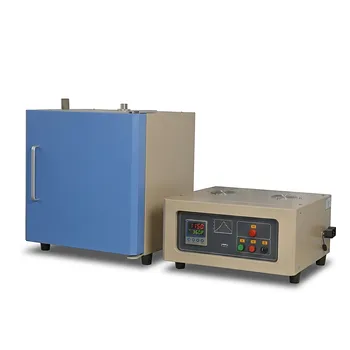
High Temperature Muffle Furnace with Alloy Chamber for Debinding and Sintering Applications
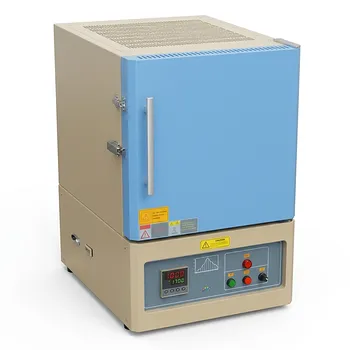
Large Bench Top 1700C High Temperature Muffle Furnace with 19L Chamber for Advanced Material Sintering and Annealing
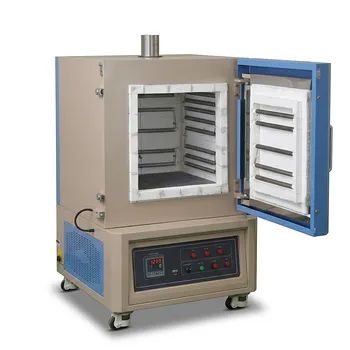
1200C High Temperature 125L Muffle Furnace 5 Side Heating for Large Batch Sintering with Optional Alloy Debinding Chamber
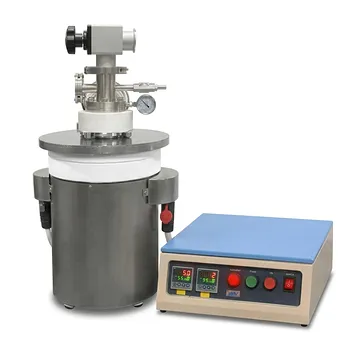
1100C High Temperature Vacuum Crucible Furnace with Quartz Chamber for Thermal Processing and Sintering
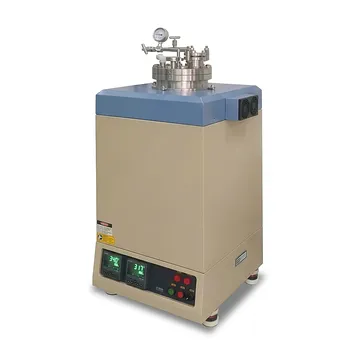
High Temperature 1000C Vacuum Furnace with 8 Inch ID Chamber for Material Sintering and Research Annealing
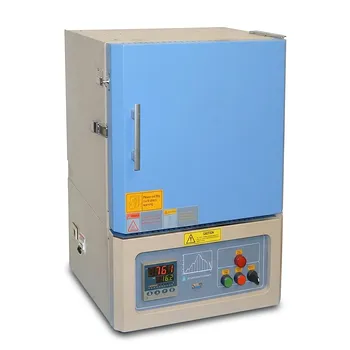
High Temperature 1700C Bench Top Muffle Furnace with Alumina Fiber Insulation and 3.6L Chamber Capacity for Precision Sintering and Heat Treatment
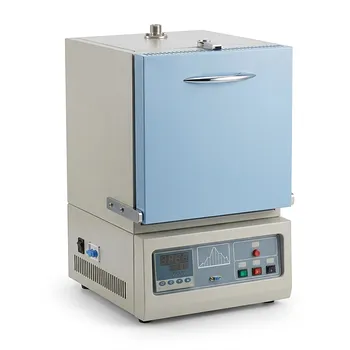
1750C Compact Muffle Furnace 1.7L Ultra High Temperature Laboratory Sintering System for Advanced Ceramics and Material Science Research

Compact High Temperature 1600C Tube Furnace with 50mm Alumina Tube and Vacuum Flanges for Material Sintering
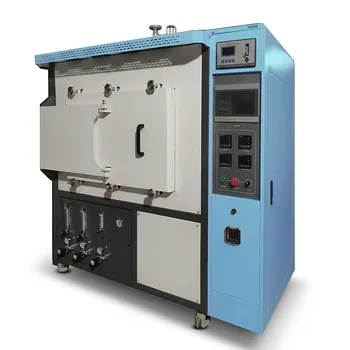
Roller Table Atmosphere Furnace 1500C High Temperature Battery Material Sintering System 112L Capacity
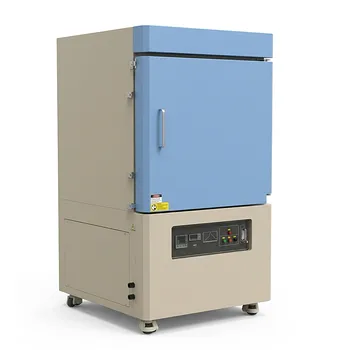
Industrial Large Box Furnace 1700C 216L High Temp Muffle Sintering System
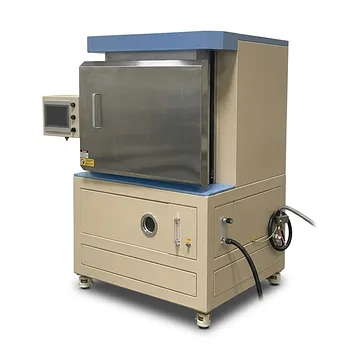
1650C High Temperature Atmosphere Controlled Box Furnace with 65L Chamber for Advanced Material Sintering and Industrial Heat Treatment
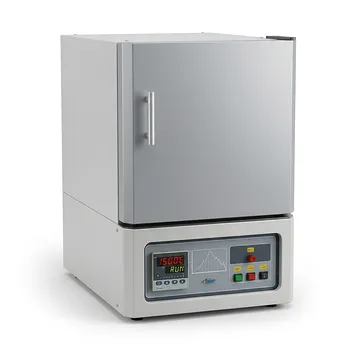
High Temperature 1500C Benchtop Muffle Furnace 3.6L Alumina Fiber Chamber Programmable Controller Sintering Annealing Carbonization Thermal Processing System
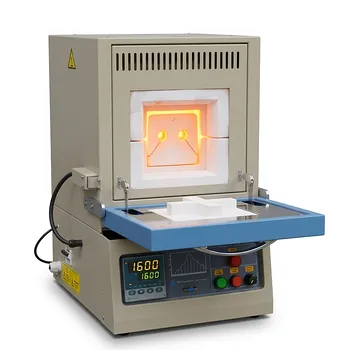
High Temperature Compact Muffle Furnace 1700 C with 30 Segment Programmable Controller and 1.7L Cubic Chamber
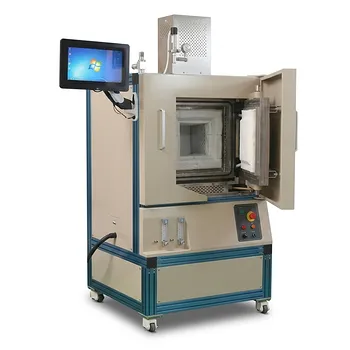
High Temperature Oxygen and Inert Atmosphere Controlled Furnace 8 Liter 1700C Sintering System for Advanced Materials RD
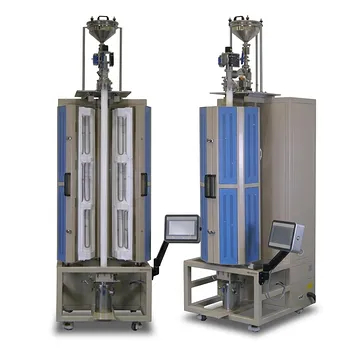
High Temperature Vertical Three Zone Powder Spheroidizing Furnace for Advanced Material Synthesis and Industrial Thermal Processing
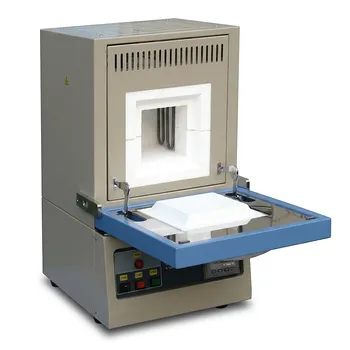
High Temperature 1800C Compact Muffle Furnace with Kanthal Super 1900 Heating Elements and 1.7L Alumina Chamber