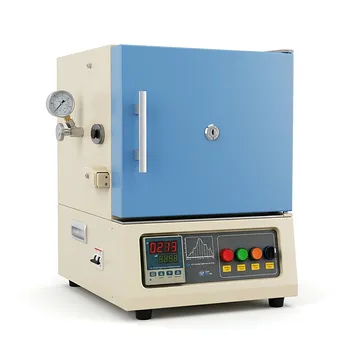
Why is a high-temperature tube furnace used for the calcination of Bismuth-based MOFs? Precise Bi2O3 Synthesis Guide
Updated 3 months ago
A high-temperature tube furnace is the essential tool for converting Bismuth-based Metal-Organic Frameworks (Bi-MOFs) into Bismuth Oxide ($Bi_2O_3$). It provides a uniform thermal environment at 450°C in an air atmosphere, which is necessary to oxidize the organic ligands, trigger the phase transformation into stable crystalline nanorods, and ensure the precise distribution of silver dopants across the material's surface.
The primary role of the tube furnace is to facilitate a controlled thermal decomposition that transitions organic-inorganic hybrids into pure, functional semiconductor nanostructures. By providing a stable thermal field, it ensures the resulting $Bi_2O_3$ maintains its specific morphology and catalytic properties.
Facilitating the Chemical Phase Transformation
Decomposition of Organic Ligands
The tube furnace provides the sustained thermal energy required to break the coordinate bonds within the Bi-MOF precursor. In an air atmosphere, this process facilitates the complete oxidation and removal of organic components, such as ligands and residual solvents.
Stable Conversion to $Bi_2O_3$
As the organic matrix is removed, the remaining bismuth atoms reorganize into a stable crystalline structure. The furnace maintains the specific temperature—typically 450°C—required to ensure the transition results in the $Bi_2O_3$ phase rather than an amorphous or mixed-oxide state.
Regulation of Silver-Dopant Distribution
For silver-doped derivatives, the furnace's precise temperature control prevents the silver particles from aggregating or leaching. This ensures that the dopants remain evenly distributed on the bismuth oxide carrier, which is critical for the material's performance in electronic or catalytic applications.
Precision Control of Material Morphology
Maintaining Nanorod Integrity
Bi-MOFs are often chosen for their unique shapes, such as nanorods, which must be preserved during calcination. The stable thermal field of a tube furnace prevents localized hot spots that could cause the delicate nanorod structures to melt or collapse into bulk particles.
Managing Heating Rates and Degassing
High-precision furnaces allow for programmable heating rates (e.g., 2°C/min), which are vital for gradual decomposition. Slow heating prevents the rapid release of gaseous molecules that could physically rupture the nanostructured carrier.
Promoting Recrystallization and Grain Growth
Beyond simple decomposition, the furnace environment allows for controlled recrystallization. This process improves the crystallinity of the $Bi_2O_3$, reducing lattice defects and optimizing the semiconductor properties of the final powder.
Understanding the Trade-offs and Pitfalls
The Risk of Active Site Sintering
Excessive temperatures or prolonged holding times can lead to sintering, where small particles fuse together. This significantly reduces the specific surface area of the $Bi_2O_3$, destroying the active sites necessary for high performance.
Atmospheric Sensitivity
While $Bi_2O_3$ production requires an air atmosphere for oxidation, silver-doped materials are sensitive to the chemical environment. Using an incorrect gas mixture in the tube furnace can lead to the unwanted oxidation of the silver itself or the formation of secondary, non-functional phases.
Structural Collapse from Rapid Heating
If the temperature rises too quickly, the sudden pyrolysis of the polymer matrix or ligands can create internal pressure. This often results in the structural failure of the nanostructure, turning highly engineered nanorods into a disorganized amorphous mass.
How to Apply This to Your Project
Recommendations Based on Material Goals
- If your primary focus is maximizing surface area: Utilize a slow heating rate (1-2°C/min) to ensure the organic ligands evolve slowly without damaging the $Bi_2O_3$ pores.
- If your primary focus is high crystallinity: Ensure a strictly maintained holding time at 450°C to allow sufficient time for grain growth and the elimination of lattice defects.
- If your primary focus is silver-doping stability: Use the tube furnace to maintain a uniform thermal field, preventing silver migration and sintering on the bismuth oxide carrier.
A high-temperature tube furnace transforms complex Bi-MOF precursors into high-performance bismuth oxide nanostructures through the precise balance of thermal energy, atmosphere, and time.
Summary Table:
| Parameter | Function in Bi-MOF Calcination | Impact on Bi2O3 Quality |
|---|---|---|
| Temperature Control | Sustained 450°C thermal energy | Ensures phase transformation & prevents sintering |
| Atmosphere Management | Controlled air flow | Facilitates organic ligand oxidation & removal |
| Heating Rate | Programmable slow ramp (e.g., 2°C/min) | Preserves nanorod morphology & prevents rupture |
| Thermal Uniformity | Stable heating field | Optimizes silver distribution & reduces lattice defects |
Optimize Your Material Synthesis with THERMUNITS
Are you looking to achieve superior precision in the synthesis of Bismuth Oxide or advanced silver-doped derivatives? THERMUNITS is a leading manufacturer of high-temperature laboratory equipment specifically designed for material science and industrial R&D. We provide the stability and control necessary to preserve delicate nanostructures and ensure uniform thermal processing.
Our comprehensive range of thermal solutions includes:
- Precision Tube & Rotary Furnaces for controlled calcination
- Muffle, Vacuum, and Atmosphere Furnaces
- CVD/PECVD Systems for advanced semiconductor research
- Hot Press Furnaces & Vacuum Induction Melting (VIM) units
- Dental Furnaces & specialized Thermal Elements
Enhance your lab's efficiency and ensure reproducible results in every experiment. Contact our expert team today to discuss your specific heat treatment requirements!
References
- Vy Anh Tran, Nguyen Duy Dat. Effect of pore structure in bismuth metal–organic framework nanorod derivatives on adsorption and organic pollutant degradation. DOI: 10.1039/d4ra05657d
Mentioned Products
- 900°C Max Rotary Tube Furnace with 8 Inch 310S Alloy Tube and Optional Multi Zone Heating for Industrial Material Calcination
- High Temperature Tube Furnace 1500C with Sliding Flanges and 50mm OD for Rapid Thermal Processing Fast Heating and Cooling
- Compact High Temperature 1600C Tube Furnace with 50mm Alumina Tube and Vacuum Flanges for Material Sintering
- High Temperature 1700C Tube Furnace with 4 Inch OD Alumina Tube and Vacuum Sealing Flanges
- High Temperature 1700C Tube Furnace with High Vacuum Turbomolecular Pump System and Multi Channel Mass Flow Controller Gas Mixer
People Also Ask
- How does a rotary tube furnace improve the processing of granular materials? Enhance Uniformity and Reaction Kinetics
- Why use a rotary tube furnace for FACS carbonization? Ensure uniform morphology and prevent sphere agglomeration.
- Why is the precise optimization of residence time essential in the catalyst calcination process? Maximize Your Yields.
- In what ways do rotary tube furnaces enhance chemical and specialty mineral processing? Drive Precision and Uniformity.
- What parameters must operators control to maintain product quality in a rotary furnace? Master Your Heat Treatment.

Tech Team · ThermUnits
Last updated on Jun 02, 2026
Related Products
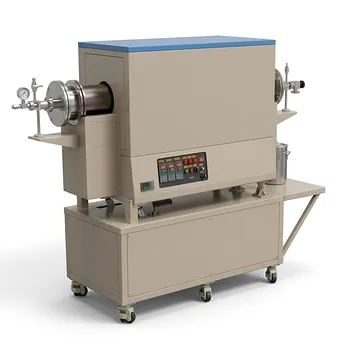
900°C Max Rotary Tube Furnace with 8 Inch 310S Alloy Tube and Optional Multi Zone Heating for Industrial Material Calcination
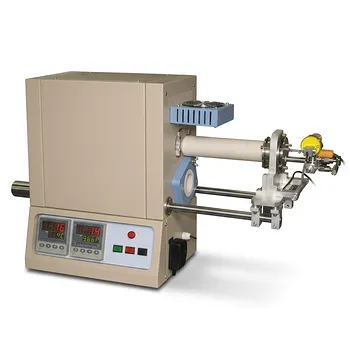
High Temperature Tube Furnace 1500C with Sliding Flanges and 50mm OD for Rapid Thermal Processing Fast Heating and Cooling

Compact High Temperature 1600C Tube Furnace with 50mm Alumina Tube and Vacuum Flanges for Material Sintering
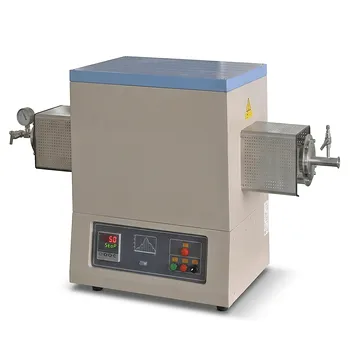
High Temperature 1700C Tube Furnace with 4 Inch OD Alumina Tube and Vacuum Sealing Flanges

High Temperature 1700C Tube Furnace with High Vacuum Turbomolecular Pump System and Multi Channel Mass Flow Controller Gas Mixer

1800C High Temperature Compact Vacuum Tube Furnace with 60mm OD Alumina Tube and Kanthal MoSi2 Heating Elements
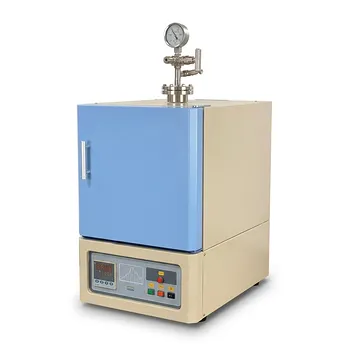
Hybrid High Temperature Muffle and Tube Furnace with 1500C Capability and Vacuum Flange Assembly
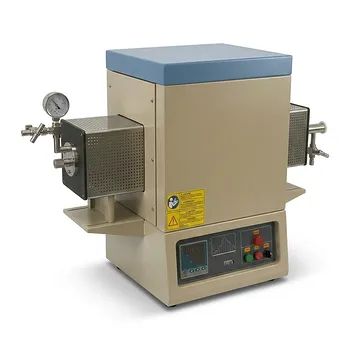
High Temperature 1700C Benchtop Tube Furnace with 5 Inch Heating Zone High Purity Alumina Tube and Vacuum Sealing Flanges
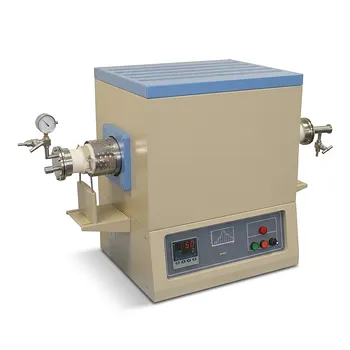
1700C High Temperature Alumina Tube Furnace with 18 Inch Heated Zone and Vacuum Sealing Flanges
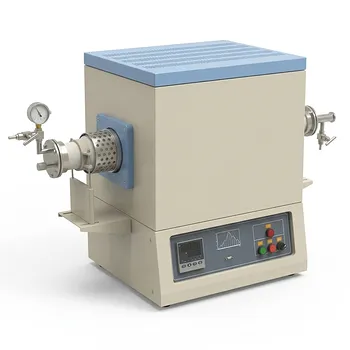
1750°C High Temperature Benchtop Vacuum Atmosphere Tube Furnace with Kanthal Super 1800 Heating Elements and 60mm Alumina Processing Tube

High Temperature Automated 5 Inch Tube Furnace for Autonomous Material Research and Advanced Laboratory R&D
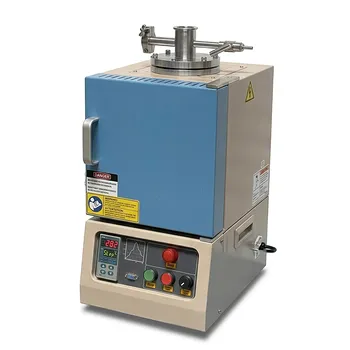
High Temperature Hybrid Muffle and Tube Furnace with Vacuum Capability and PID Control
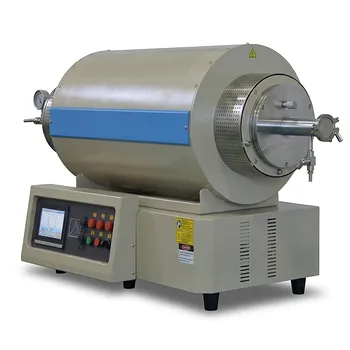
1200C Max Three Zone Tube Furnace 6 Inch OD Max with Tube and Flange
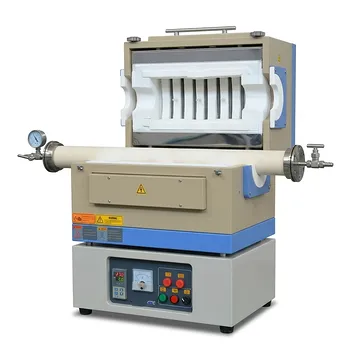
High Temperature 1600C Split Tube Furnace Vacuum Flanges Valves Optional 60mm 80mm Alumina Tube
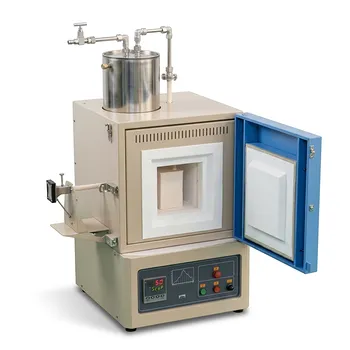
High Temperature Bench Top Muffle Furnace 1700C with Integrated Evaporating Particle Collection and 8x8x8 Alumina Fiber Chamber
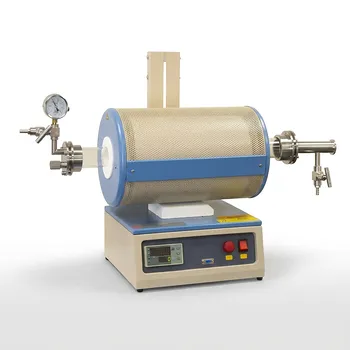
1100C Tube Furnace with Vacuum Flange and Programmable Temperature Controller for Material Science and Industrial Heat Treatment
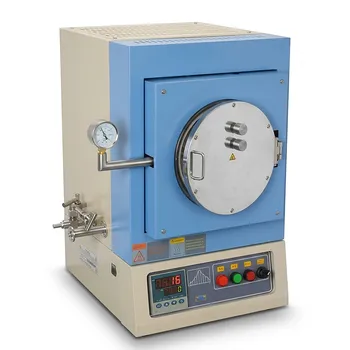
1100°C High Temperature Quartz Chamber Furnace 8 Inch OD with 7.6 Liter Capacity and Vacuum Atmosphere Capability
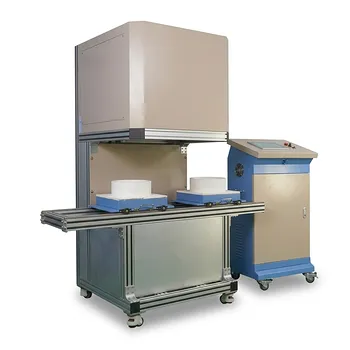
High Temperature Bottom Loading Vertical Furnace 1700C Dual Stage Sample Processing System 18L Large Capacity Thermal Treatment Equipment
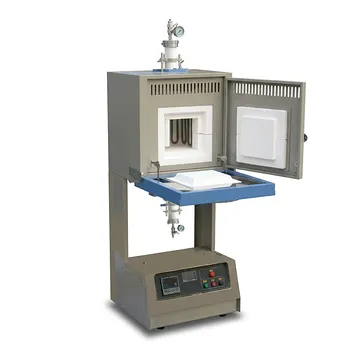
Vertical Hybrid High Temperature Furnace 1500C Alumina Tube SOFC Fuel Cell Testing Laboratory Heat Treatment Research Equipment