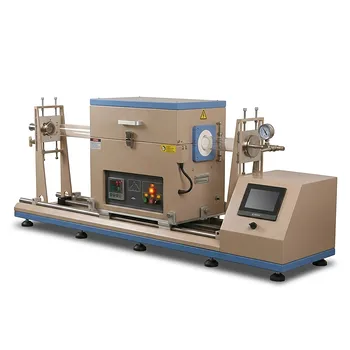
Why is a high-temperature Tube Furnace required for N-HC synthesis? Mastering Precise Thermal & Atmosphere Control
Updated 3 months ago
Synthesizing nitrogen-doped porous hard carbon (N-HC) requires a high-temperature Tube Furnace to provide a strictly controlled thermochemical environment. This equipment ensures uniform carbonization by maintaining precise heating rates and constant temperatures, typically between 600°C and 1000°C. Most importantly, it allows for the introduction of specific gases, such as NH3 or Ar, which are essential for the in-situ integration of nitrogen into the carbon skeleton while preventing the material from burning.
A high-temperature Tube Furnace acts as a precision reactor that manages the delicate transition from organic precursors to functionalized carbon. It is the only way to simultaneously achieve deep carbonization, prevent oxidative loss, and tune the microscopic pore structure through exact atmospheric and thermal regulation.
The Role of Precise Thermal Control
Maintaining Uniform Carbonization
A Tube Furnace allows researchers to set specific heating rates, such as 3°C/min or 10°C/min, which prevents internal stresses and ensures the precursor transforms evenly. This uniformity is critical for creating a consistent carbon skeleton throughout the entire sample batch. Without this control, local hotspots could lead to structural defects or inconsistent material properties.
Regulating Graphitization and Porosity
The degree of graphitization—how ordered the carbon atoms are—is directly determined by the furnace temperature. By holding a constant temperature (e.g., 800°C), the furnace facilitates dehydrogenation and aromatization, processes that define the final pore size distribution. This precision is necessary to optimize the interlayer spacing, which dictates how well ions can move within the carbon for electrochemical applications.
The Necessity of Atmospheric Control
Preventing Oxidative Loss and Combustion
At temperatures exceeding 500°C, carbon materials will undergo combustion if oxygen is present. The Tube Furnace maintains a continuous flow of high-purity inert gas (like Nitrogen or Argon) to displace oxygen entirely. This protective environment ensures the stability and high yield of the final product by preventing the "burning off" of the carbon precursor.
Facilitating In-Situ Nitrogen Doping
To create N-HC, nitrogen atoms must be successfully integrated into the carbon framework, often forming quaternary nitrogen (N-Q) groups. The furnace allows for the introduction of reactive gases like NH3 during the heating process. This "in-situ" doping optimizes the chemical activity of the carbon, enhancing its performance in batteries and supercapacitors.
Enabling Advanced Chemical Etching
Certain synthesis methods involve molten salt etching to induce the exfoliation of carbon into layered structures. The Tube Furnace provides the stable thermal zone required for these salts to react with the carbon skeleton. This process is essential for achieving a high specific surface area and specific porosity in the resulting hard carbon.
Understanding the Trade-offs and Pitfalls
Temperature vs. Surface Area
While higher temperatures (above 1000°C) increase electrical conductivity through higher graphitization, they can also cause pore shrinkage or collapse. If the temperature is too high, the specific surface area may decrease, reducing the number of active sites for energy storage. Conversely, temperatures that are too low may result in incomplete carbonization and poor stability.
Heating Rate vs. Structural Integrity
Using an excessively fast heating rate can lead to the rapid release of volatile gases, which may fracture the porous structure. While a slow heating rate (e.g., 3°C/min) produces more uniform materials, it significantly increases the energy consumption and time required for synthesis. Finding the balance is key to producing high-quality N-HC efficiently.
Atmosphere Purity and Doping Levels
The concentration of the doping gas (like NH3) must be precisely managed alongside the flow rate of the inert carrier gas. If the gas flow is inconsistent, the nitrogen doping will be non-uniform, leading to "dead zones" in the material that lack electrochemical activity. Furthermore, even trace amounts of oxygen leakage can lead to the formation of unwanted oxygen-functional groups instead of the desired nitrogen groups.
How to Apply This to Your Project
When configuring your Tube Furnace for N-HC synthesis, align your parameters with your specific performance goals:
- If your primary focus is High Surface Area: Use a moderate temperature range (600°C–800°C) and incorporate chemical etching agents to maximize pore formation.
- If your primary focus is Electrical Conductivity: Aim for higher temperatures (900°C–1000°C) to promote a higher degree of graphitization within the carbon skeleton.
- If your primary focus is High Doping Concentration: Use a precursor naturally rich in nitrogen and introduce a continuous flow of NH3 gas during the peak heating phase to ensure maximum N-atom integration.
By mastering the synergy between thermal precision and atmospheric purity, you can reliably engineer nitrogen-doped porous hard carbons with the exact microscopic structures required for advanced energy storage.
Summary Table:
| Feature | Function in N-HC Synthesis | Material Impact |
|---|---|---|
| Precise Heating Rate | Uniform carbonization | Prevents structural defects and internal stress |
| Temp Control (600-1000°C) | Regulates graphitization | Optimizes interlayer spacing and conductivity |
| Inert Atmosphere (Ar/N2) | Prevents combustion | Ensures high yield by excluding oxygen |
| Reactive Gas (NH3) | In-situ nitrogen doping | Enhances electrochemical activity and N-Q groups |
| Thermal Stability | Consistent etching environment | Facilitates high specific surface area |
Elevate Your Carbon Material Research with THERMUNITS
Achieving the perfect nitrogen-doped porous hard carbon requires more than just heat—it requires the absolute precision of a THERMUNITS thermal system. As a leading manufacturer of high-temperature laboratory equipment, we specialize in providing material science researchers and industrial R&D teams with the tools needed for complex thermochemical synthesis.
Our comprehensive range of solutions includes:
- Precision Tube & Atmosphere Furnaces: Ideal for N-HC synthesis and chemical etching.
- Advanced Systems: CVD/PECVD, Vacuum Induction Melting (VIM), and Hot Press furnaces.
- Specialized Equipment: Muffle, Rotary, Dental furnaces, and electric rotary kilns.
Whether you are focusing on high surface area or superior electrical conductivity, our team can help you configure the perfect furnace for your specific carbonization goals.
Contact THERMUNITS Today to discuss your project requirements and discover how our advanced heat treatment solutions can accelerate your breakthrough.
References
- Yi Chen, Aiwu Tang. Utilizing porous carbon composites based on biomass for lithium battery negative electrodes. DOI: 10.62617/mcb.v21.166
Mentioned Products
- Vertical 1700C Vacuum and Atmosphere Tube Furnace with 80mm Alumina Tube
- Compact High Temperature 1600C Tube Furnace with 50mm Alumina Tube and Vacuum Flanges for Material Sintering
- 900°C Max Rotary Tube Furnace with 8 Inch 310S Alloy Tube and Optional Multi Zone Heating for Industrial Material Calcination
- Split Vertical Tube Furnace with 1200C Quartz Tube and Stainless Steel Vacuum Flanges for Rapid Thermal Processing
- High Temperature 1700C Tube Furnace with High Vacuum Turbomolecular Pump System and Multi Channel Mass Flow Controller Gas Mixer
People Also Ask
- How is an industrial-grade vertical tube furnace utilized in smelting leaching residues? Enhance Metal Recovery Efficiency
- What is the function of a laboratory-grade vertical tube furnace in fast pyrolysis? Optimize Composite Research.
- How does a vertical tube furnace facilitate thermoelectric alloy melting? Precision synthesis for material homogeneity.
- Why is a thermocouple sensor indispensable for monitoring the vertical tube furnace during gallium oxide nanowire production? Optimize VLS Growth
- What are the advantages of using a vertical tube furnace for crucible experiments simulating steel-slag interactions?

Tech Team · ThermUnits
Last updated on Jun 02, 2026
Related Products

Vertical 1700C Vacuum and Atmosphere Tube Furnace with 80mm Alumina Tube

Compact High Temperature 1600C Tube Furnace with 50mm Alumina Tube and Vacuum Flanges for Material Sintering
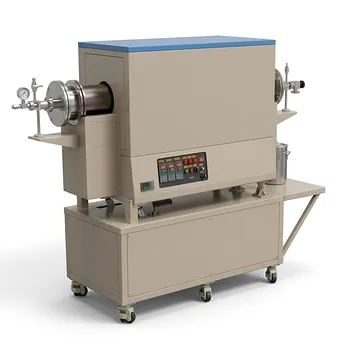
900°C Max Rotary Tube Furnace with 8 Inch 310S Alloy Tube and Optional Multi Zone Heating for Industrial Material Calcination
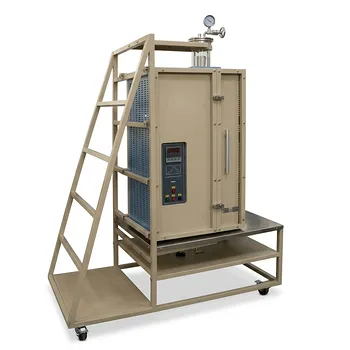
Split Vertical Tube Furnace with 1200C Quartz Tube and Stainless Steel Vacuum Flanges for Rapid Thermal Processing

High Temperature 1700C Tube Furnace with High Vacuum Turbomolecular Pump System and Multi Channel Mass Flow Controller Gas Mixer

1100C Tube Furnace with Vacuum Flange and Programmable Temperature Controller for Material Science and Industrial Heat Treatment

5 Inch Three Zone Rotary Tube Furnace with Integrated Gas Delivery System and 1200C Capability for Advanced Material CVD Processing

1700C Hydrogen Gas Tube Furnace with 60mm Alumina Process Tube and Integrated Hydrogen Safety Detector

1200°C 5 Inch Vertical Quartz Tube Furnace with Stainless Steel Vacuum Flanges

High Temperature 1700C Six Zone Split Tube Furnace with Alumina Tube and Water Cooled Flanges

Compact Vertical Split Quartz Tube Furnace with Stainless Steel Vacuum Flanges for Rapid Thermal Quenching and Controlled Atmosphere Material Processing

High Temperature 1700C Benchtop Tube Furnace with 5 Inch Heating Zone High Purity Alumina Tube and Vacuum Sealing Flanges
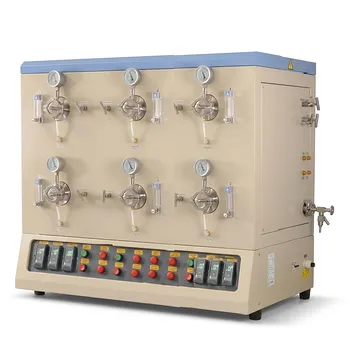
1200C High Throughput Multi Channel Tube Furnace with 50mm Quartz Tubes for Annealing and Material Phase Diagram Research

Three Zone Tube Furnace with 11 Inch or 15 Inch Quartz Tube and Hinged Flanges for Vacuum Atmosphere Heat Treatment

1800C High Temperature Compact Vacuum Tube Furnace with 60mm OD Alumina Tube and Kanthal MoSi2 Heating Elements

High Temperature 1700C Vertical Tube Furnace for Powder Spherification and Material Sintering
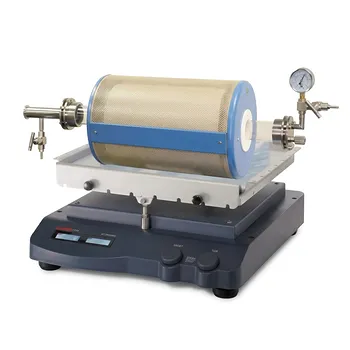
High Temperature Rocking Tube Furnace with Quartz Tube and Vacuum Flange for Materials Synthesis

High Temperature Automated 5 Inch Tube Furnace for Autonomous Material Research and Advanced Laboratory R&D
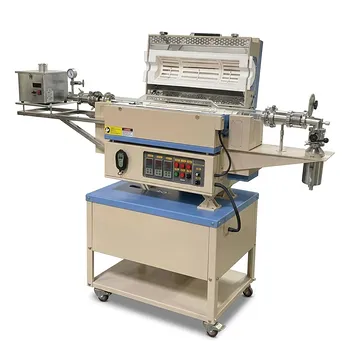
5 Inch Rotary Tube Furnace with Automatic Feeding and Receiving System 1200C Three Zone CVD Powder Processing