Why is a Horizontal Tube Furnace Required for CuPd AACVD? Master Precise Isothermal Thin Film Deposition
Updated 3 months ago
A horizontal tube furnace is required for the deposition of CuPd alloy thin films because it provides a precisely controlled isothermal zone that triggers the instantaneous transition from liquid aerosol to a solid-phase alloy. By maintaining a stable thermal field—typically around 475 °C—the furnace ensures that solvent evaporates immediately upon entry, allowing gaseous precursors to undergo uniform thermal decomposition and nucleation directly onto the substrate surface.
The horizontal tube furnace acts as the primary reactor for AACVD, facilitating a seamless phase transformation by combining precise temperature regulation with a controlled atmospheric environment to ensure the purity and uniformity of the resulting CuPd alloy.
Precision Thermal Management and Phase Transformation
Creating the Isothermal Reaction Zone
The primary role of the furnace is to establish a stable high-temperature thermal field. In the context of CuPd deposition, this environment is maintained at approximately 475 °C to provide the necessary energy for the chemical reaction.
Facilitating Instantaneous Solvent Evaporation
As aerosol droplets enter the heated tube, the solvent must evaporate instantaneously. This rapid phase change prevents "splashing" or non-uniform drying on the substrate, ensuring that only the gaseous precursors participate in the film-forming reaction.
Enabling Thermal Decomposition and Nucleation
Once the precursors are in a gaseous state, the furnace provides the thermal energy required for thermal decomposition. This allows the copper and palladium atoms to nucleate and grow into a cohesive solid-phase alloy thin film on the substrate.
Fluid Dynamics and Atmospheric Control
The Benefit of High Aspect Ratio Design
The slender, horizontal design of the furnace tube provides a high aspect ratio. This geometry is critical for establishing a stable stagnant layer of gas over the substrate, which facilitates uniform atomic-level deposition across the material surface.
Maintaining Chemical Purity
The sealed gas path design of the atmosphere tube furnace is essential for producing high-quality CuPd films. It prevents the introduction of oxygen or contaminants that could oxidize the metals, ensuring the purity of the reaction environment.
Regulating Flow and Pressure
A tube furnace allows for the precise regulation of carrier gas flows (such as nitrogen or argon). By managing the pressure and flow rates, the system ensures that the aerosol is transported at a consistent speed, preventing premature deposition or precursor depletion.
Understanding the Trade-offs
The Challenge of Axial Temperature Gradients
While a tube furnace is designed for stability, temperature gradients can exist near the ends of the tube. If the substrate is not positioned perfectly within the isothermal zone, the CuPd alloy may exhibit variations in thickness or stoichiometry due to uneven decomposition rates.
Precursor Depletion Effects
In a horizontal configuration, the concentration of the precursor gas can decrease as it travels down the length of the tube. This precursor depletion can lead to a gradient in film thickness, where the areas closest to the inlet receive a thicker deposition than those further downstream.
Thermal Lag and Stabilization Time
Tube furnaces require significant time to reach a steady state. Any fluctuations in temperature during the deposition process can disrupt the nucleation of the CuPd alloy, highlighting the need for high-quality PID (Proportional-Integral-Derivative) controllers.
How to Apply This to Your Project
Recommendations for Process Success
- If your primary focus is alloy uniformity: Ensure the substrate is centered in the furnace's calibrated isothermal zone and maintain a constant carrier gas flow to stabilize the stagnant layer.
- If your primary focus is film purity: Utilize a furnace with high sealing performance and perform multiple vacuum-purge cycles with inert gas before heating to 475 °C.
- If your primary focus is maximizing throughput: Monitor for precursor depletion and consider adjusting the substrate angle or flow velocity to compensate for concentration drops along the tube length.
By leveraging the horizontal tube furnace's ability to manage phase transitions and atmospheric integrity, researchers can achieve the atomic-level precision necessary for high-performance alloy thin films.
Summary Table:
| Feature | Role in AACVD Process | Impact on CuPd Alloy |
|---|---|---|
| Isothermal Zone | Maintains stable 475 °C thermal field | Ensures uniform thermal decomposition & nucleation |
| High Aspect Ratio | Creates a stable stagnant gas layer | Facilitates atomic-level deposition uniformity |
| Rapid Heat Transfer | Triggers instant solvent evaporation | Prevents splashing; ensures solid-phase film purity |
| Sealed Gas Path | Regulates inert carrier gas flow | Prevents oxidation and maintains chemical integrity |
| PID Control | Minimizes thermal lag and fluctuations | Ensures consistent stoichiometry and film thickness |
Elevate Your Material Research with THERMUNITS
Precision is the backbone of successful AACVD. As a leading manufacturer of high-temperature laboratory equipment, THERMUNITS provides the advanced thermal processing solutions required for complex material science and industrial R&D.
Whether you are depositing CuPd alloys or developing next-generation ceramics, our comprehensive range of equipment—including Tube, Muffle, Vacuum, Atmosphere, Rotary, and Hot Press furnaces, as well as CVD/PECVD systems—is designed to deliver the stable isothermal zones and atmospheric purity your project demands.
Ready to optimize your thin film deposition? Contact THERMUNITS Today to discuss your specific laboratory heat treatment requirements with our experts!
References
- Muhammad Ali Ehsan, Wasif Farooq. Facile fabrication of binary copper–palladium alloy thin film catalysts for exceptional hydrogen evolution performance. DOI: 10.1039/d4ma00410h
Mentioned Products
- Multi Position Tube Furnace 1100C for Laboratory Material Research and Advanced Industrial Thermal Processing
- 1200°C 10-Zone Split Tube Furnace with Horizontal and Vertical Mounting for Multi-Zone Thermal Gradients and Large Diameter Material Processing
- Ten Zone Multi Orientation Laboratory Tube Furnace for 1200C High Temperature Gradient Thermal Processing
- Split Vertical Tube Furnace with 1200C Quartz Tube and Stainless Steel Vacuum Flanges for Rapid Thermal Processing
- High Temperature 1700C Vertical Tube Furnace for Powder Spherification and Material Sintering
People Also Ask
- Why use a tube furnace for oxygen annealing LaCrO3/LaMnO3? Optimize Phase Transition & Magnetic Performance.
- What key role does a laboratory high-temperature tube furnace play in the production of carbon nanofibers? Guide
- How is a laboratory high-temperature tube furnace utilized to research the products of aluminothermic reduction? Advanced Metallurgical Solutions
- What is the role of a laboratory tube furnace in the carbonization process of porous carbon foam (PCF)? Master 3D Synthesis
- What role does a laboratory tube furnace play in the pyrolysis and carbonization of biomass? Optimize Thermal Research.

Tech Team · ThermUnits
Last updated on Jun 03, 2026
Related Products
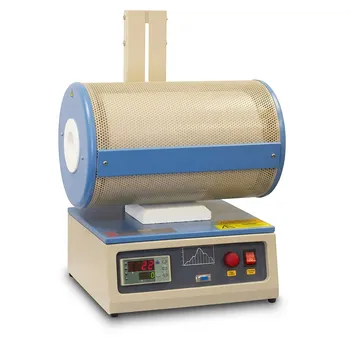
Multi Position Tube Furnace 1100C for Laboratory Material Research and Advanced Industrial Thermal Processing
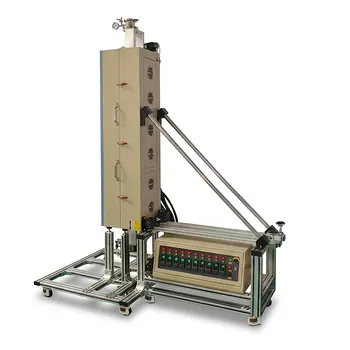
1200°C 10-Zone Split Tube Furnace with Horizontal and Vertical Mounting for Multi-Zone Thermal Gradients and Large Diameter Material Processing
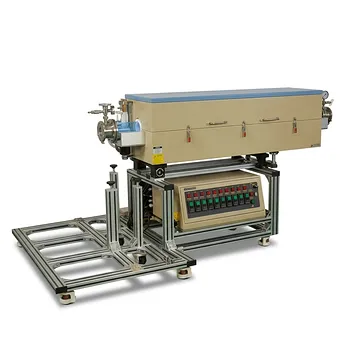
Ten Zone Multi Orientation Laboratory Tube Furnace for 1200C High Temperature Gradient Thermal Processing
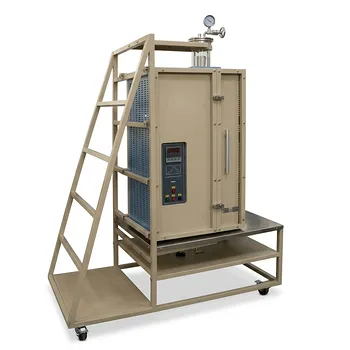
Split Vertical Tube Furnace with 1200C Quartz Tube and Stainless Steel Vacuum Flanges for Rapid Thermal Processing

High Temperature 1700C Vertical Tube Furnace for Powder Spherification and Material Sintering

Vertical 1700C Vacuum and Atmosphere Tube Furnace with 80mm Alumina Tube

1200°C 5 Inch Vertical Quartz Tube Furnace with Stainless Steel Vacuum Flanges
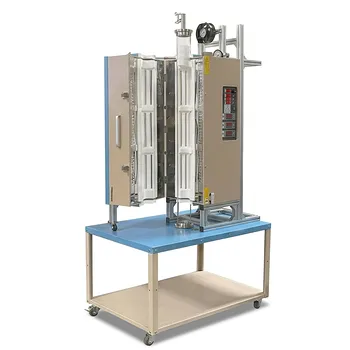
1200C Three Zone Split Vertical Tube Furnace 4 Inch Quartz Tube Stainless Steel Vacuum Flanges
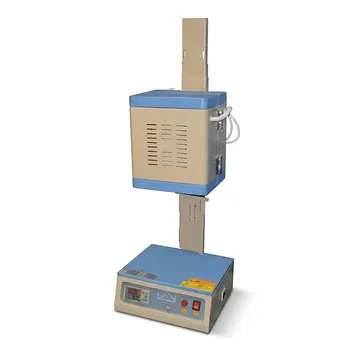
High Temperature Vertical Split Tube Furnace with PID Temperature Controller for 1 and 2 Inch Processing Tubes
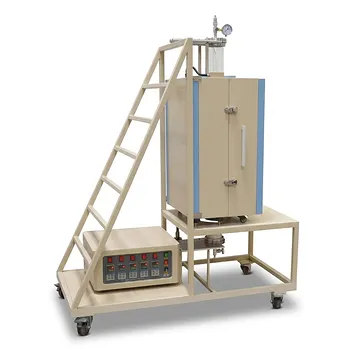
Five Zone Split Vertical Tube Furnace 1200C Max with 4 Inch Quartz Tube and Stainless Steel Vacuum Flanges
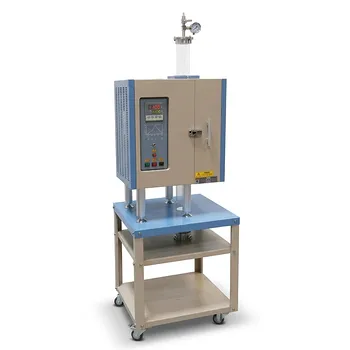
1100°C Split Vertical Tube Furnace with 80mm Quartz Tube and Stainless Steel Vacuum Flanges

Compact Vertical Split Quartz Tube Furnace with Stainless Steel Vacuum Flanges for Rapid Thermal Quenching and Controlled Atmosphere Material Processing

High Temperature 1700C Six Zone Split Tube Furnace with Alumina Tube and Water Cooled Flanges
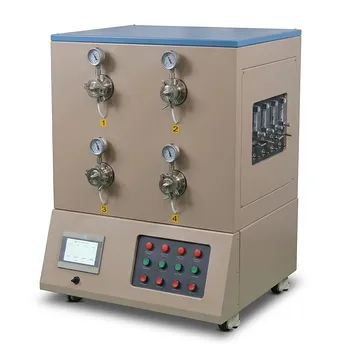
High Throughput 1200C Four Channel Tube Furnace with 3 Inch Quartz Tubes for Multi Zone Annealing and Material Research
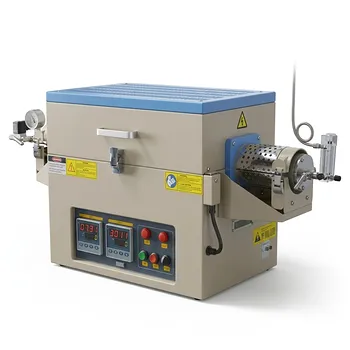
1100C Dual Zone Hydrogen Gas Tube Furnace with Quartz Tube and Integrated H2 Leak Detection System
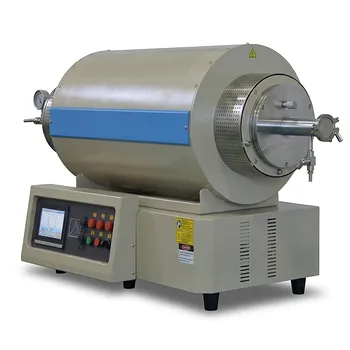
1200C Max Three Zone Tube Furnace 6 Inch OD Max with Tube and Flange

1200C High Throughput Multi Channel Tube Furnace with 50mm Quartz Tubes for Annealing and Material Phase Diagram Research
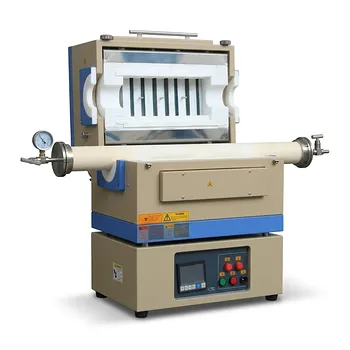
1500C Eight Zone Split Tube Furnace for Thermal Gradient Processing and Advanced Material Research

1100C Tube Furnace with Vacuum Flange and Programmable Temperature Controller for Material Science and Industrial Heat Treatment
