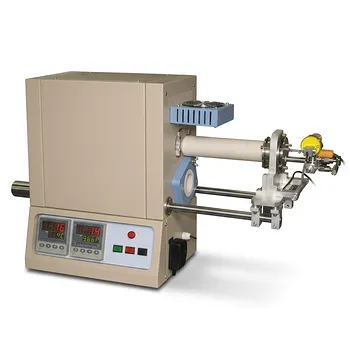
What is the role of a laboratory tube furnace in the carbonization process of porous carbon foam (PCF)? Master 3D Synthesis
Updated 3 months ago
The laboratory tube furnace is the critical thermal reactor used to convert organic precursors into stable, three-dimensional porous carbon frameworks. By providing a precisely controlled, high-temperature environment under an inert gas atmosphere, the furnace facilitates the polymer degradation and carbonization necessary to transform materials like melamine sponges or biomass into conductive, high-surface-area carbon foam.
The tube furnace serves as an atmospheric isolation chamber that allows for the thermal decomposition of precursors while preventing oxidative combustion. This dual control of chemistry and temperature is what enables the creation of a stable, interconnected carbon skeleton with specific electrical and structural properties.
The Role of Atmospheric Control in Carbonization
Preventing Oxidative Combustion
In a standard atmosphere, carbon-based precursors would simply catch fire and turn to ash when heated to the temperatures required for carbonization. The tube furnace provides a strictly oxygen-free environment, typically using high-purity nitrogen or argon to shield the material from oxygen.
Facilitating Chemical Reactions
Beyond simple protection, the furnace atmosphere can be tailored to influence the final product’s chemistry. For example, using an argon-hydrogen (Ar/H2) mix can aid in complete dehydrogenation, while other atmospheres allow for the thermal doping of atoms like boron into the carbon framework to adjust its electronic structure.
Removal of Volatile Components
As the precursor heats up, it undergoes pyrolysis, releasing non-carbon elements (hydrogen, oxygen, nitrogen) as volatile gases. The continuous flow of inert gas through the furnace tube carries these byproducts away, preventing them from reacting further with the developing carbon skeleton.
Thermal Precision and Structural Integrity
Managing the Carbonization Gradient
The synthesis of porous carbon foam (PCF) requires specific temperature ranges, often starting around 400 °C for melamine but reaching up to 1000 °C for other precursors like petroleum pitch. The tube furnace’s heating elements provide the uniform thermal energy required to trigger the aromatization reactions that form the carbon matrix.
The Importance of PID Control
Modern furnaces utilize PID (Proportional-Integral-Derivative) control systems to execute complex, multi-stage heating programs. This precision prevents thermal overshoot, which can cause the delicate 3D network of the foam to collapse or melt before it has fully carbonized into a stable structure.
Controlling Pore Development
By regulating the heating rate (e.g., 10 °C/min) and "soak" times, the furnace determines the final porosity of the foam. This controlled heating allows for the release of metallic vapors or gas bubbles that expand the micropores and mesopores, resulting in a hierarchical structure with a high specific surface area.
Understanding the Trade-offs and Pitfalls
Heating Rate vs. Structural Stability
A common pitfall is applying heat too rapidly; if volatile gases are generated faster than they can escape the foam's interior, the resulting internal pressure can rupture the pore walls. Slow, incremental heating is often necessary to preserve the mechanical integrity of the 3D network.
Temperature vs. Electrical Conductivity
While higher temperatures generally improve graphitization and electrical conductivity, they can also lead to excessive shrinkage or the loss of specific surface functionalities. Choosing the target temperature is a balance between the material's structural robustness and its intended electrochemical performance.
Atmosphere Purity and Contamination
Even trace amounts of oxygen due to poor tube sealing or low-purity gas can cause partial oxidation. This results in a "pitted" carbon surface or a significant loss of mass, which compromises the foam's final density and strength.
Making the Right Choice for Your Goal
When configuring a tube furnace for PCF synthesis, your parameters should align with your material's final application:
- If your primary focus is High Electrical Conductivity: Target higher carbonization temperatures (800°C+) and longer hold times to maximize the graphitization of the carbon framework.
- If your primary focus is High Specific Surface Area: Use a multi-stage heating program with specific activating agents (like KOH) to maximize the creation of micropores during the calcination phase.
- If your primary focus is Structural Preservation: Utilize a very slow ramp rate (1-5 °C/min) and a high-purity nitrogen purge to ensure the 3D skeleton remains intact during volatile outgassing.
The laboratory tube furnace is not merely a heater, but a sophisticated tool for the molecular architecture of carbon materials.
Summary Table:
| Key Role | Specific Function | Impact on PCF Structure |
|---|---|---|
| Atmospheric Control | Provides inert gas (N2/Ar) shield | Prevents oxidation; enables thermal doping |
| Thermal Precision | PID-controlled heating ramp | Prevents pore collapse; ensures uniform matrix |
| Volatile Management | Continuous gas flow/purging | Removes byproducts to keep pores open |
| Pore Engineering | Controlled soak & heating rates | Determines final porosity and surface area |
Elevate Your Material Research with THERMUNITS Precision
Achieving the perfect hierarchical structure in Porous Carbon Foam requires more than just heat—it requires total environmental control. As a leading manufacturer of high-temperature laboratory equipment, THERMUNITS provides the advanced thermal processing solutions your R&D demands.
Whether you need a specialized Tube Furnace for carbonization, CVD/PECVD systems for surface modification, or high-capacity Vacuum Induction Melting (VIM) and Hot Press furnaces, we have the expertise to help you master molecular architecture. Our range also includes Muffle, Atmosphere, Rotary, and Dental furnaces, alongside premium Thermal Elements.
Ready to optimize your carbonization results? Contact THERMUNITS today to discuss your specific heat treatment requirements with our experts!
References
- Balarabe El-yaqub, Wan Azlina Wan Ab Karim Ghani. Characterization of Graphene Oxide Functionalized Carbon Foam as a Potential Material for Different Applications. DOI: 10.17576/jsm-2024-5312-15
Mentioned Products
- Multi Position Tube Furnace 1100C for Laboratory Material Research and Advanced Industrial Thermal Processing
- Ten Zone Multi Orientation Laboratory Tube Furnace for 1200C High Temperature Gradient Thermal Processing
- High Temperature 1200C Split Tube Furnace with Hinged Vacuum Flanges and 4 Inch Quartz Tube for Laboratory Research
- High Temperature Automated 5 Inch Tube Furnace for Autonomous Material Research and Advanced Laboratory R&D
- 1800C High Temperature Compact Vacuum Tube Furnace with 60mm OD Alumina Tube and Kanthal MoSi2 Heating Elements
People Also Ask
- Why use a tube furnace for oxygen annealing LaCrO3/LaMnO3? Optimize Phase Transition & Magnetic Performance.
- What key role does a laboratory high-temperature tube furnace play in the production of carbon nanofibers? Guide
- How is a laboratory high-temperature tube furnace utilized to research the products of aluminothermic reduction? Advanced Metallurgical Solutions
- What role does a laboratory tube furnace play in the pyrolysis and carbonization of biomass? Optimize Thermal Research.
- What is the function of a laboratory tube furnace in the reduction of Y2O2SO4 to Y2O2S? Precision Synthesis Guide

Tech Team · ThermUnits
Last updated on Jun 03, 2026
Related Products
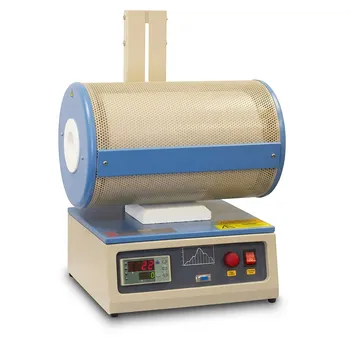
Multi Position Tube Furnace 1100C for Laboratory Material Research and Advanced Industrial Thermal Processing
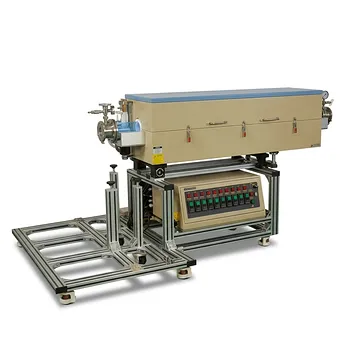
Ten Zone Multi Orientation Laboratory Tube Furnace for 1200C High Temperature Gradient Thermal Processing
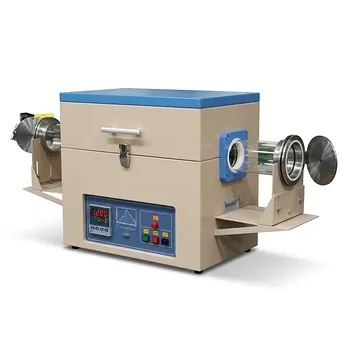
High Temperature 1200C Split Tube Furnace with Hinged Vacuum Flanges and 4 Inch Quartz Tube for Laboratory Research

High Temperature Automated 5 Inch Tube Furnace for Autonomous Material Research and Advanced Laboratory R&D

1800C High Temperature Compact Vacuum Tube Furnace with 60mm OD Alumina Tube and Kanthal MoSi2 Heating Elements
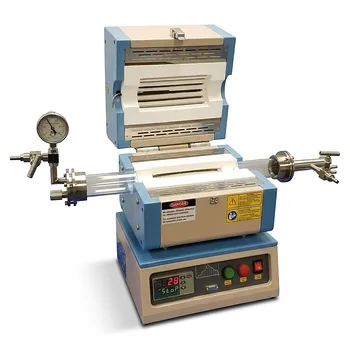
Compact Split Tube Furnace with Integrated Vacuum System and Precision Temperature Calibrator
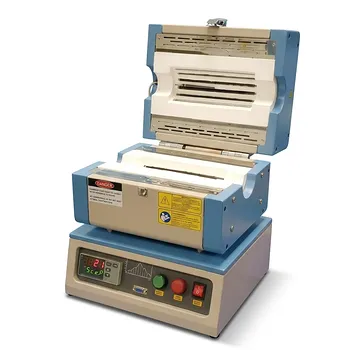
1250C Compact Split Tube Furnace with 8 Inch Heating Zone and Programmable Controller
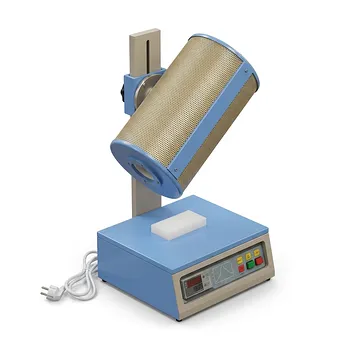
1100°C Vertical Laboratory Furnace for DIY Tubular Reactors with PID Temperature Controller
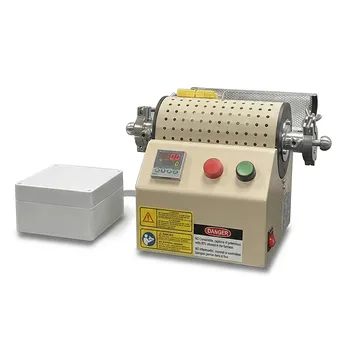
1000C Mini Tube Furnace with 20mm Quartz Tube and Vacuum Flanges for Material Science Research and Controlled Atmosphere Small Sample Processing
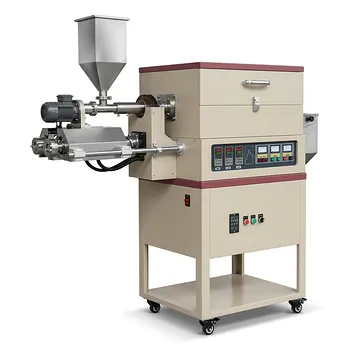
Laboratory Tilting Rotary Tubular Furnaces for Material Science and Industrial Heat Treatment
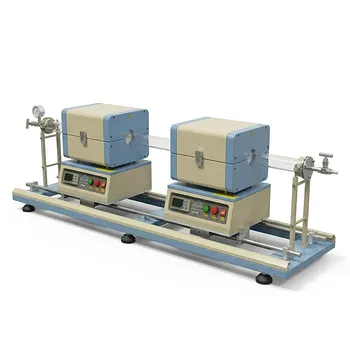
1200C Max Dual Sliding Tube Furnace with 50 mm Tube Flanges for CVD
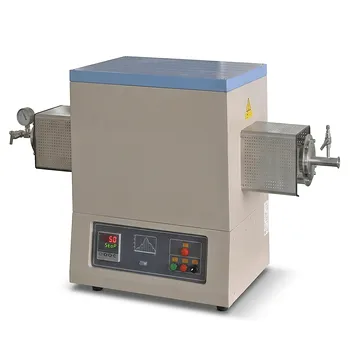
High Temperature 1700C Tube Furnace with 4 Inch OD Alumina Tube and Vacuum Sealing Flanges
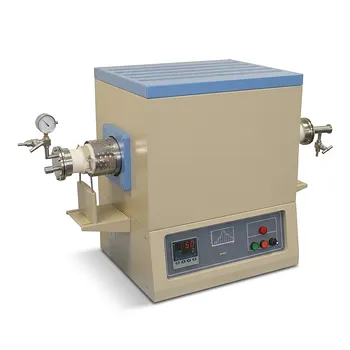
1700C High Temperature Alumina Tube Furnace with 18 Inch Heated Zone and Vacuum Sealing Flanges
Single Zone Tube Furnace 5 Inch Quartz Tube 36 Inch Heating Zone Vacuum Flanges
High Temperature Hybrid Muffle and Tube Furnace with Vacuum Capability and PID Control
Hybrid High Temperature Tube and Box Furnace 1700C with 2 Inch Alumina Tube for Material Research
1200°C High Temperature 4 Inch Tube Furnace with Sliding Flange for CVD Systems
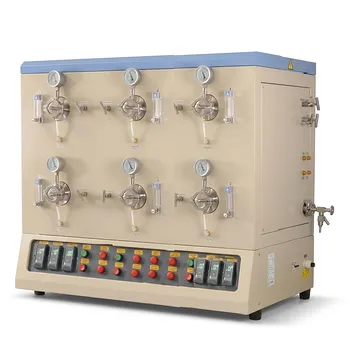
1200C High Throughput Multi Channel Tube Furnace with 50mm Quartz Tubes for Annealing and Material Phase Diagram Research

High Temperature 1700C Vertical Tube Furnace for Powder Spherification and Material Sintering