Why is a horizontal tube furnace required for the preparation of char in co-gasification research? Achieve Char Precision
Updated 3 months ago
A horizontal tube furnace is required because it functions as a high-precision, horizontal fixed-bed reactor that provides a strictly controlled, oxygen-free environment for pyrolysis. This equipment allows researchers to reach temperatures up to 1000°C while maintaining an inert atmosphere using high-purity nitrogen or argon. By precisely managing heating rates and residence times, the furnace efficiently removes volatile matter to produce stable char with consistent chemical and structural properties.
The horizontal tube furnace serves as the foundational tool for creating standardized char samples by isolating thermal and atmospheric variables. This precision is critical for understanding how the resulting char’s surface chemistry and mineral content will interact during complex co-gasification reactions.
Creating a Controlled Thermochemical Environment
Maintaining Atmospheric Integrity
The primary role of the horizontal tube furnace is to provide a strictly airtight environment that prevents aerobic combustion. By injecting high-purity nitrogen, the furnace creates an oxygen-deprived atmosphere essential for pyrolysis rather than simple burning.
This controlled environment is vital for the dealkylation and dehydrogenation reactions necessary to convert raw biomass or coal into carbon-rich solids. Without this atmospheric isolation, the feedstock would oxidize, destroying the volatile-rich precursors needed for gasification research.
Precision Temperature Programming
Research in co-gasification requires exact control over heating rates and soaking times, often maintaining specific temperatures like 600°C for several hours. The furnace's programmable logic allows for standardized heating (e.g., 10°C/min), which dictates the reorganization of carbon into stable graphitic or amorphous frameworks.
This level of control ensures that the thermal decomposition of raw materials is uniform across batches. Consistency in the heating profile is what allows for valid kinetic studies and reproducible results in downstream gasification experiments.
Optimizing Char Quality for Gasification Studies
Efficient Volatile Removal
At high temperatures, the furnace facilitates the thorough removal of volatile matter, which is essential for producing a stable char "skeleton." This process increases the fixed carbon content and establishes the solid skeletal structure required for subsequent chemical activation or gasification.
By effectively managing the exit of gases, the furnace prevents unwanted secondary reactions between the char and the released vapors. This results in a "clean" char sample where the researchers can focus on the solid-phase reactions.
Enabling Synergistic Research
A horizontal tube furnace allows researchers to study how alkali/alkaline earth metals (AAEMs) and organic matter on the char surface influence reactions. Because the furnace acts as a fixed bed, researchers can impregnate biomass with specific minerals and observe their catalytic effects in-situ.
This capability is crucial for co-gasification research, where the interaction between different feedstocks (like coal and biomass) often centers on how mineral migration affects the reaction rate. The furnace provides the stable platform needed to isolate these complex chemical variables.
Understanding the Trade-offs and Limitations
Mass Transfer Constraints
While the horizontal tube furnace offers excellent temperature control, it is a fixed-bed system, meaning it may suffer from mass transfer limitations. In a thick sample bed, the gases produced in the center must travel through the material, which can lead to slight variations in char quality between the surface and the core.
Temperature Gradients
Even in high-quality furnaces, a thermal gradient can exist along the length of the tube, with the most stable temperatures located in the "center zone." Researchers must be careful to place their samples precisely within this uniform heating zone to ensure that the actual temperature matches the programmed setpoint.
Throughput and Scale
Horizontal tube furnaces are typically designed for batch processing at a laboratory scale. This makes them ideal for high-precision fundamental research but less suitable for producing the large volumes of char required for pilot-scale gasification trials.
How to Apply This to Your Research
Selecting the Right Approach for Your Goal
- If your primary focus is kinetic modeling: Utilize a slow heating rate (5-10°C/min) and high-purity nitrogen to ensure a standardized, reproducible carbon framework for every sample.
- If your primary focus is catalytic interaction (AAEMs): Use the furnace to pre-treat biomass with mineral precursors, as the horizontal design allows for stable, in-situ observation of how these metals anchor to the carbon skeleton.
- If your primary focus is pore structure development: Precisely regulate the residence time and final pyrolysis temperature, as these variables directly dictate the surface area and porosity of the resulting biochar.
By mastering the controlled environment of the horizontal tube furnace, you ensure that the char used in your co-gasification studies is a scientifically rigorous and highly characterized starting material.
Summary Table:
| Feature | Function in Char Preparation | Key Benefit for Research |
|---|---|---|
| Atmosphere Control | Prevents oxidation via high-purity inert gas | Ensures pure pyrolysis without sample burning |
| Thermal Programming | Precise heating rates (e.g., 10°C/min) | Facilitates reproducible kinetic and structural studies |
| Fixed-Bed Design | Acts as a stable reactor for mineral loading | Enables in-situ observation of catalytic effects (AAEMs) |
| Volatile Management | Efficient removal of gas-phase precursors | Produces stable, high-fixed-carbon solid frameworks |
Elevate Your Materials Research with THERMUNITS Precision
In high-stakes co-gasification and material science research, the quality of your results depends on the precision of your thermal equipment. THERMUNITS is a leading manufacturer of high-temperature laboratory equipment designed for industrial R&D and advanced academics.
We offer a comprehensive range of thermal processing solutions tailored to your specific needs, including:
- Tube and Rotary Furnaces for precise char preparation and gasification studies.
- Vacuum, Atmosphere, and Muffle Furnaces for versatile heat treatment.
- CVD/PECVD Systems for advanced coating and material synthesis.
- Hot Press and Vacuum Induction Melting (VIM) Furnaces for high-performance metallurgy.
Whether you are studying mineral migration or optimizing pore structures, THERMUNITS provides the reliability and control necessary for scientific breakthroughs.
Ready to optimize your lab’s thermal capabilities?
Contact THERMUNITS Today to discuss your project requirements with our technical experts.
References
- Hongqiao Lu, Guangsuo Yu. Study of synergistic behavior during bituminous coal-cow manure co-gasification: The role of intrinsic AAEM and organic matter. DOI: 10.1007/s40789-024-00694-w
Mentioned Products
- Multi Position Tube Furnace 1100C for Laboratory Material Research and Advanced Industrial Thermal Processing
- 1200°C 10-Zone Split Tube Furnace with Horizontal and Vertical Mounting for Multi-Zone Thermal Gradients and Large Diameter Material Processing
- Ten Zone Multi Orientation Laboratory Tube Furnace for 1200C High Temperature Gradient Thermal Processing
- Split Vertical Tube Furnace with 1200C Quartz Tube and Stainless Steel Vacuum Flanges for Rapid Thermal Processing
- High Temperature 1700C Vertical Tube Furnace for Powder Spherification and Material Sintering
People Also Ask
- Why use a tube furnace for oxygen annealing LaCrO3/LaMnO3? Optimize Phase Transition & Magnetic Performance.
- What key role does a laboratory high-temperature tube furnace play in the production of carbon nanofibers? Guide
- How is a laboratory high-temperature tube furnace utilized to research the products of aluminothermic reduction? Advanced Metallurgical Solutions
- What is the role of a laboratory tube furnace in the carbonization process of porous carbon foam (PCF)? Master 3D Synthesis
- What role does a laboratory tube furnace play in the pyrolysis and carbonization of biomass? Optimize Thermal Research.

Tech Team · ThermUnits
Last updated on Jun 03, 2026
Related Products
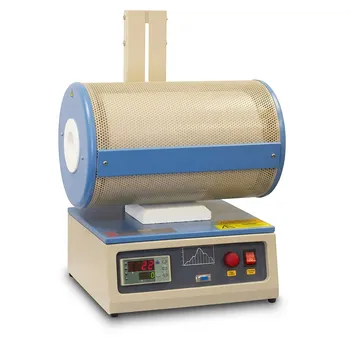
Multi Position Tube Furnace 1100C for Laboratory Material Research and Advanced Industrial Thermal Processing
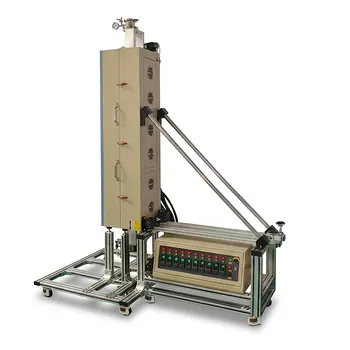
1200°C 10-Zone Split Tube Furnace with Horizontal and Vertical Mounting for Multi-Zone Thermal Gradients and Large Diameter Material Processing
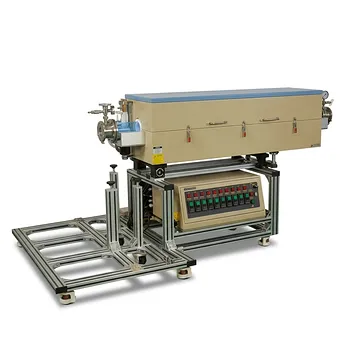
Ten Zone Multi Orientation Laboratory Tube Furnace for 1200C High Temperature Gradient Thermal Processing
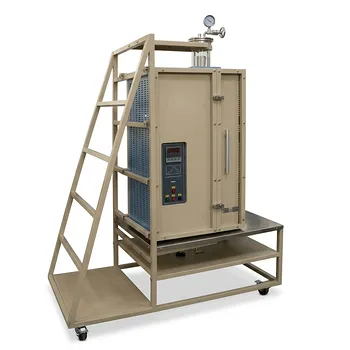
Split Vertical Tube Furnace with 1200C Quartz Tube and Stainless Steel Vacuum Flanges for Rapid Thermal Processing

High Temperature 1700C Vertical Tube Furnace for Powder Spherification and Material Sintering

Vertical 1700C Vacuum and Atmosphere Tube Furnace with 80mm Alumina Tube

1200°C 5 Inch Vertical Quartz Tube Furnace with Stainless Steel Vacuum Flanges
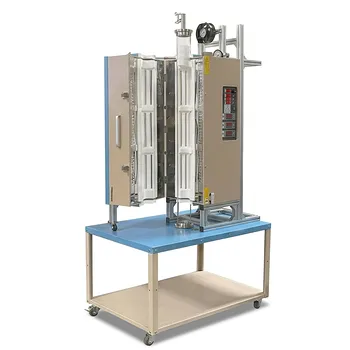
1200C Three Zone Split Vertical Tube Furnace 4 Inch Quartz Tube Stainless Steel Vacuum Flanges
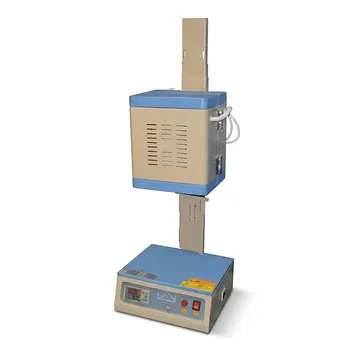
High Temperature Vertical Split Tube Furnace with PID Temperature Controller for 1 and 2 Inch Processing Tubes
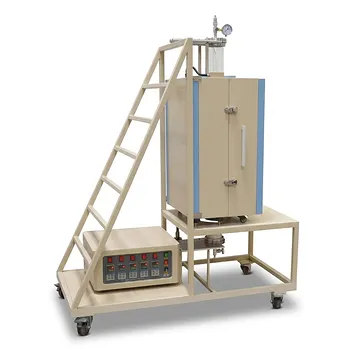
Five Zone Split Vertical Tube Furnace 1200C Max with 4 Inch Quartz Tube and Stainless Steel Vacuum Flanges
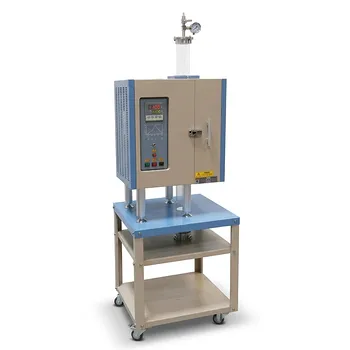
1100°C Split Vertical Tube Furnace with 80mm Quartz Tube and Stainless Steel Vacuum Flanges

Compact Vertical Split Quartz Tube Furnace with Stainless Steel Vacuum Flanges for Rapid Thermal Quenching and Controlled Atmosphere Material Processing

High Temperature 1700C Six Zone Split Tube Furnace with Alumina Tube and Water Cooled Flanges
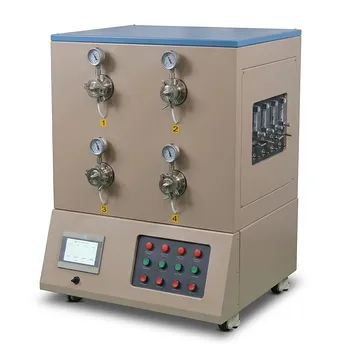
High Throughput 1200C Four Channel Tube Furnace with 3 Inch Quartz Tubes for Multi Zone Annealing and Material Research
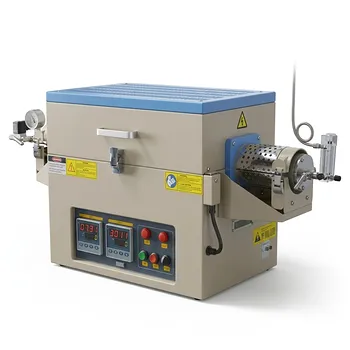
1100C Dual Zone Hydrogen Gas Tube Furnace with Quartz Tube and Integrated H2 Leak Detection System
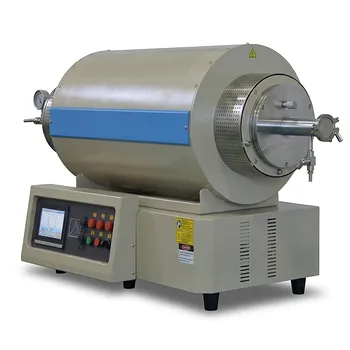
1200C Max Three Zone Tube Furnace 6 Inch OD Max with Tube and Flange

1200C High Throughput Multi Channel Tube Furnace with 50mm Quartz Tubes for Annealing and Material Phase Diagram Research
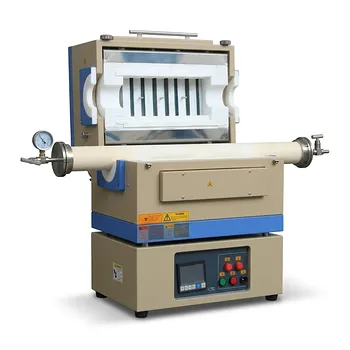
1500C Eight Zone Split Tube Furnace for Thermal Gradient Processing and Advanced Material Research

1100C Tube Furnace with Vacuum Flange and Programmable Temperature Controller for Material Science and Industrial Heat Treatment
