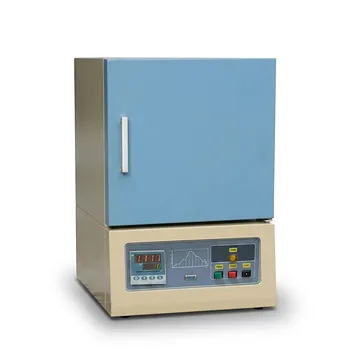
Why is a muffle furnace necessary for Garnet-type powder calcination? Ensure Phase Purity and Reaction Success
Updated 3 months ago
The laboratory high-temperature box furnace is the essential tool for Garnet-type powder synthesis because it provides the precise oxidative environment and thermal uniformity required to drive solid-state reactions. During initial calcination, the furnace maintains temperatures between 900°C and 1100°C, transforming raw materials into the primary crystal phase while preventing local overheating and phase impurities.
Core Takeaway: A muffle furnace is necessary to ensure phase purity and chemical consistency by providing a stable, uniform thermal field that facilitates the decomposition of precursors and the formation of the target crystal structure.
Facilitating Phase Transformation and Chemical Purity
Driving the Solid-State Reaction
The primary role of the furnace is to provide the thermal energy needed to trigger solid-state reactions between raw oxide and carbonate mixtures. At temperatures between 900°C and 1100°C, the furnace drives the chemical transition of these materials into the primary Garnet-type crystal phase.
Decomposition of Precursors and Impurities
A muffle furnace effectively manages the thermal decomposition of precursors like carbonates and nitrates. This process removes residual impurities and ensures the material reaches a stable chemical state before final sintering, reducing the risk of cracking or volume changes later in production.
Formation of Crystal Nuclei
By precisely controlling the heating rate and duration, the furnace facilitates the initial formation of crystal nuclei. This stage is critical for refining the powder and ensuring the high phase purity required for high-performance ceramic electrolytes.
The Importance of Thermal Field Uniformity
Preventing Localized Sintering
High-temperature box furnaces are designed to provide a uniform heating environment throughout the powder mass. This uniformity prevents "hot spots" that cause severe particle sintering, which occurs when local overheating fuses particles together prematurely.
Eliminating Residual Secondary Phases
Consistent temperature distribution ensures that all parts of the powder reach the required reaction threshold. If the temperature is insufficient in certain areas, residual secondary phases will remain, compromising the electrochemical properties of the final Garnet powder.
Limiting Initial Grain Growth
Precise temperature control allows researchers to strictly limit initial grain growth. By keeping grains small and reactive, the furnace produces raw material powders with high reactivity, which is a necessary foundation for achieving high-density sintering in subsequent steps.
Understanding the Trade-offs and Challenges
The Risk of Excessive Sintering
While high heat is necessary for phase formation, prolonged exposure or slight temperature overshoots can lead to unwanted densification during the calcination stage. This makes the resulting powder difficult to grind and reduces its surface area for future processing.
Energy and Time Constraints
Muffle furnaces often require significant time to reach and stabilize at target temperatures, such as 1100°C. Balancing the need for long-term calcination with energy efficiency and throughput is a common operational challenge in laboratory settings.
Atmospheric Limitations
Standard box furnaces typically operate in an oxidative (air) environment. While this is beneficial for many Garnet syntheses, it may not be suitable for materials sensitive to specific gas interactions unless the furnace is equipped with specialized atmosphere control.
How to Apply This to Your Synthesis Project
When selecting or operating a furnace for Garnet-type powder synthesis, your approach should change based on your specific material requirements.
- If your primary focus is Phase Purity: Prioritize a furnace with a high-stability thermal controller to maintain a strict temperature window between 900°C and 1100°C.
- If your primary focus is Powder Reactivity: Use a controlled heating rate (e.g., 5°C to 7°C/min) and shorter dwell times to prevent excessive grain growth and sintering.
- If your primary focus is Scalability: Ensure the furnace chamber size allows for a uniform thermal field even when processing larger batches of precursor powder.
By mastering the thermal environment of the muffle furnace, you ensure the structural and chemical integrity of the Garnet-type powders essential for next-generation technology.
Summary Table:
| Key Feature | Impact on Garnet-Type Powder Synthesis |
|---|---|
| Precise Temp (900-1100°C) | Drives solid-state reaction and phase transformation |
| Thermal Uniformity | Prevents localized sintering and secondary phase impurities |
| Decomposition Control | Removes carbonates/nitrates and stabilizes chemical state |
| Grain Growth Limitation | Maintains high powder reactivity for future sintering |
Master Your Garnet Powder Synthesis with THERMUNITS
Achieving superior phase purity in Garnet-type powders requires precise thermal control. THERMUNITS is a leading manufacturer of high-temperature laboratory equipment for material science and industrial R&D. We offer a comprehensive range of thermal processing solutions, including Muffle, Vacuum, Atmosphere, Tube, Rotary, and Hot Press furnaces, CVD/PECVD systems, Dental Furnaces, and more.
Our equipment ensures the stable, uniform thermal fields necessary for high-density sintering and high-purity reactive powder production. Elevate your research efficiency and material performance with our expert-engineered thermal solutions.
Ready to optimize your lab’s heat treatment workflow? Contact THERMUNITS today for a professional consultation!
References
- Chengshuang Ling, Xiaoli Xiong. NiCo‐LDH coupled with 2D ZIF‐derived Co nitrogen doped carbon nanosheet arrays as a self‐supporting electrocatalyst for detection of formaldehyde. DOI: 10.1002/chem.202304024
Mentioned Products
- High Temperature 1700C Vertical Tube Furnace for Powder Spherification and Material Sintering
- High Temperature 1600°C Three Zone Heated Bottom Loading Box Furnace with Rapid Thermal Processing Chamber 72L Volume
- 1650C High Temperature Atmosphere Controlled Box Furnace with 65L Chamber for Advanced Material Sintering and Industrial Heat Treatment
- Automated 1700C High Temperature Bottom Loading Box Furnace with PC Software Control and Robotic Integration Capability
- Industrial Large Box Furnace 1700C 216L High Temp Muffle Sintering System
People Also Ask
- What role does a high-temperature vertical tube furnace play in simulating high-carbon ferromanganese slag formation?
- What functions does a vertical high-temperature tube furnace perform? Master Industrial Sintering & R&D Simulation
- What is the primary function of a high-temperature tube furnace in Cu1-N-C synthesis? Precision Thermal Control.
- High-Temp Tube Furnace Role in Converting Microbial Proteins to Iron Single-Atom Sites: Expert Synthesis Guide
- What impact does the heating rate of a tube furnace have on biochar microstructure? Optimize Your Material R&D.

Tech Team · ThermUnits
Last updated on Jun 02, 2026
Related Products

High Temperature 1700C Vertical Tube Furnace for Powder Spherification and Material Sintering
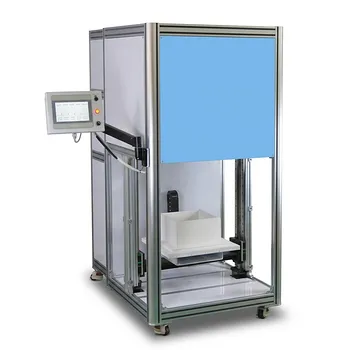
High Temperature 1600°C Three Zone Heated Bottom Loading Box Furnace with Rapid Thermal Processing Chamber 72L Volume
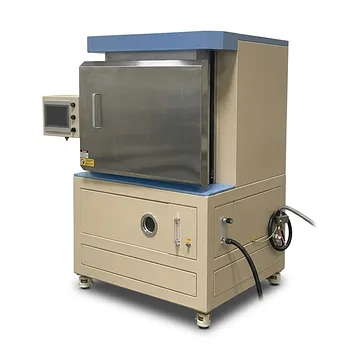
1650C High Temperature Atmosphere Controlled Box Furnace with 65L Chamber for Advanced Material Sintering and Industrial Heat Treatment
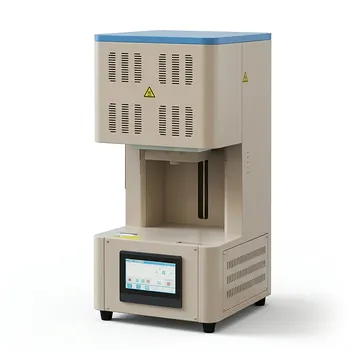
Automated 1700C High Temperature Bottom Loading Box Furnace with PC Software Control and Robotic Integration Capability
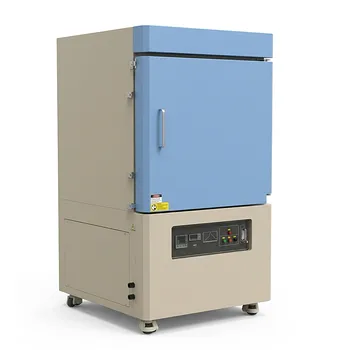
Industrial Large Box Furnace 1700C 216L High Temp Muffle Sintering System
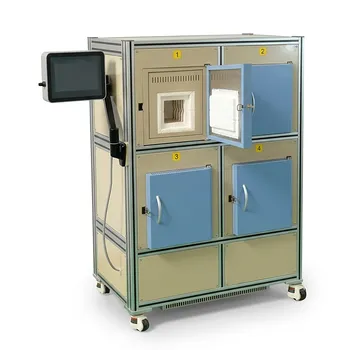
High Temperature Four Chamber Box Furnace for High Throughput Materials Research and Space Saving Thermal Processing
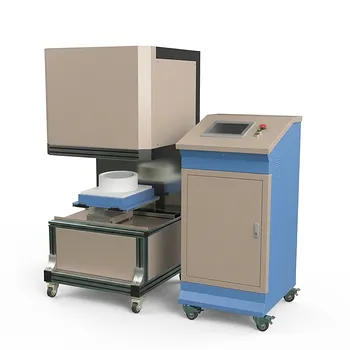
High Temperature Bottom Loading Box Furnace for Rapid Thermal Processing 1700C 40L Capacity
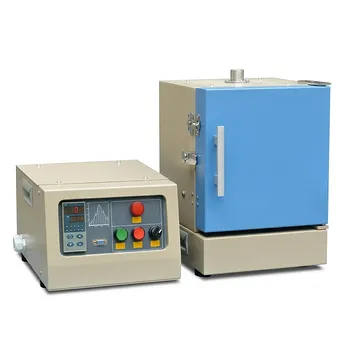
1200C Small Box Muffle Furnace with Separated Programmable Controller and 4.2L Alumina Fiber Chamber
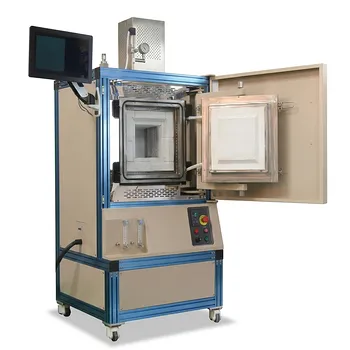
High Temperature Hydrogen Atmosphere Box Furnace 1650C Max Reducing Environment Material Synthesis System 8x8x8 Chamber
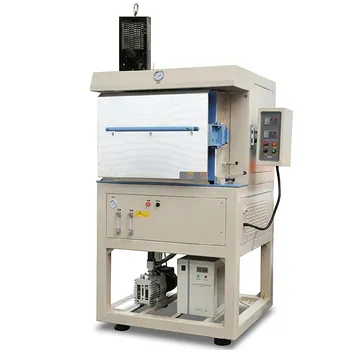
1200C Hydrogen Atmosphere Box Furnace with 5 Heated Sides and 64L Chamber

High Temperature Tube Furnace 1500C with Sliding Flanges and 50mm OD for Rapid Thermal Processing Fast Heating and Cooling
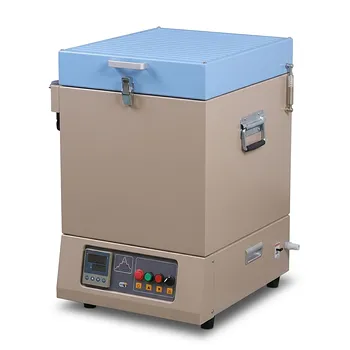
High Temperature Vertical Crucible Furnace with 22L Heating Chamber and 1200C Maximum Temperature
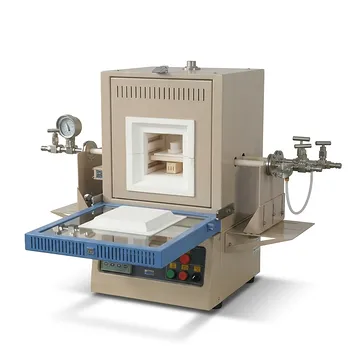
1700C Compact Hybrid Furnace with Dual Layer Box Sintering and Controlled Atmosphere Alumina Tubes
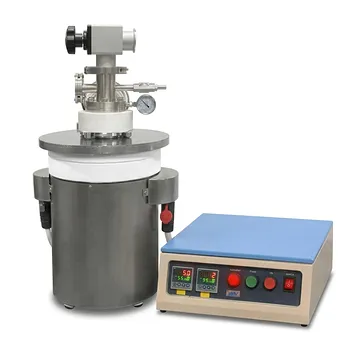
1100C High Temperature Vacuum Crucible Furnace with Quartz Chamber for Thermal Processing and Sintering
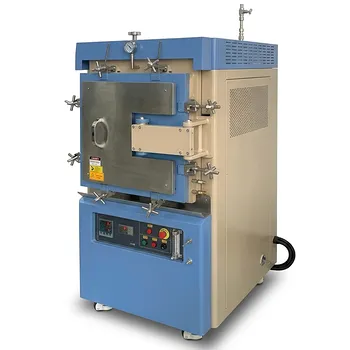
Atmosphere Controlled Muffle Furnace 1700C Maximum Temperature 80L High Capacity Vacuum Inert Gas Box Furnace
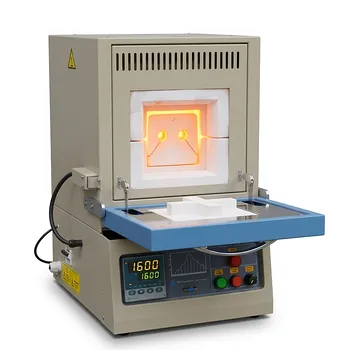
High Temperature Compact Muffle Furnace 1700 C with 30 Segment Programmable Controller and 1.7L Cubic Chamber
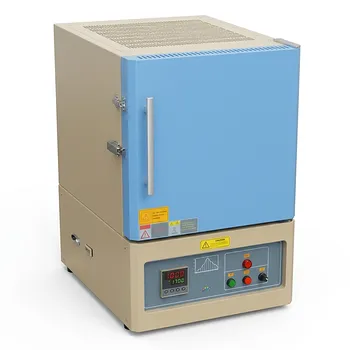
Large Bench Top 1700C High Temperature Muffle Furnace with 19L Chamber for Advanced Material Sintering and Annealing
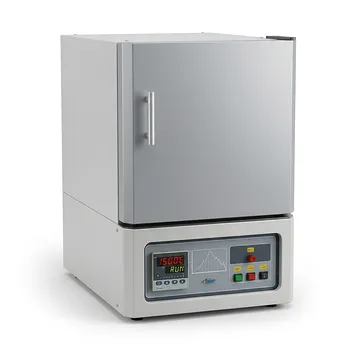
High Temperature 1500C Benchtop Muffle Furnace 3.6L Alumina Fiber Chamber Programmable Controller Sintering Annealing Carbonization Thermal Processing System
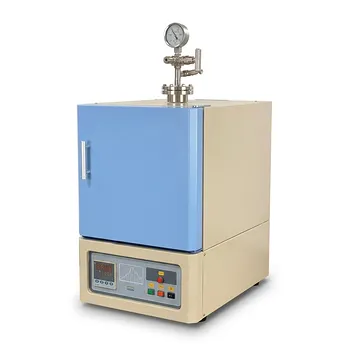
Hybrid High Temperature Muffle and Tube Furnace with 1500C Capability and Vacuum Flange Assembly