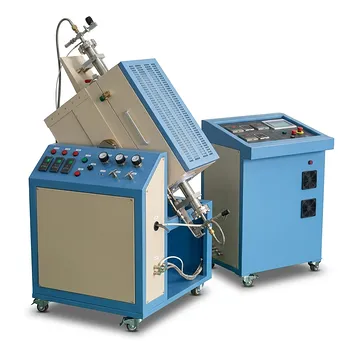
What is the primary purpose of using a tube furnace for Ag2Se thin films? Optimize Texture & Thermoelectric Efficiency
Updated 3 months ago
The primary purpose of using a high-temperature tube furnace for inkjet-printed $\text{Ag}_2\text{Se}$ thin films is to facilitate the sintering of nanoparticles and induce a specific crystalline orientation. This precise thermal treatment transforms the raw printed film into a highly textured material with a (00l) preferred orientation, which is essential for reducing grain boundary scattering. Ultimately, this process maximizes carrier mobility and substantially elevates the power factor of the thermoelectric material.
Core Takeaway: A high-temperature tube furnace provides the controlled environment necessary to evolve $\text{Ag}_2\text{Se}$ nanoparticles into a high-quality, textured thin film, optimizing the electronic transport properties required for efficient thermoelectric energy conversion.
Enhancing Microstructural Development
Facilitating Sintering and Grain Growth
Inkjet-printed films initially consist of discrete $\text{Ag}_2\text{Se}$ nanoparticles that lack strong mechanical and electrical connections. The tube furnace provides the thermal energy required for sintering, allowing these individual particles to fuse into a continuous, cohesive film.
As the temperature rises, grain growth occurs, reducing the total number of grain boundaries within the film. Larger grains are vital for electronic performance because they provide a clearer path for charge carriers to move.
Inducing Preferred Crystalline Orientation
A critical function of the furnace is promoting a specific (00l) preferred orientation, also known as "texture." Annealing at specific temperatures, such as 723 K, provides the energy needed for atoms to rearrange into this specific lattice alignment.
This textured growth is not accidental; it is a deliberate result of the precise temperature control offered by the tube furnace. When the film is oriented correctly, the anisotropy of the material can be leveraged to maximize performance.
Optimizing Thermoelectric Performance
Reducing Grain Boundary Scattering
Grain boundaries act as obstacles to charge carriers, scattering them and increasing electrical resistance. By promoting grain growth and preferred orientation, the annealing process significantly reduces grain boundary scattering.
When scattering is minimized, the material can transport charge more efficiently. This is a foundational step in transforming a printed precursor into a functional semiconductor.
Maximizing Carrier Mobility and Power Factor
The ultimate goal of using the furnace is the enhancement of the power factor, a key metric for thermoelectric efficiency. By increasing carrier mobility through improved crystallinity, the furnace ensures the $\text{Ag}_2\text{Se}$ film can generate more power from a temperature gradient.
Without this high-temperature treatment, the printed film would remain a poor conductor with low efficiency. The furnace essentially "activates" the material's potential for energy harvesting.
Understanding the Trade-offs
Temperature Sensitivity and Material Degradation
While high temperatures are necessary for grain growth, excessive heat can lead to elemental loss or decomposition. For instance, selenium has a relatively high vapor pressure, and over-annealing can result in a non-stoichiometric film that lacks the desired electronic properties.
Atmosphere Control Challenges
The environment inside the furnace must be strictly managed to prevent oxidative degradation. If oxygen is present during high-temperature steps, the $\text{Ag}_2\text{Se}$ may react to form oxides, which drastically increases resistance and destroys the thermoelectric effect.
How to Apply This to Your Project
Selecting the Right Annealing Strategy
- If your primary focus is maximizing electrical conductivity: Prioritize a precise 723 K setpoint to induce the (00l) orientation and minimize scattering.
- If your primary focus is preventing material loss: Utilize a controlled atmosphere (such as argon) within the tube furnace to suppress the evaporation of volatile elements like selenium.
- If your primary focus is film stability: Ensure a slow cooling rate after the annealing peak to minimize internal stresses and prevent cracking in the $\text{Ag}_2\text{Se}$ lattice.
The high-temperature tube furnace is the definitive tool for converting raw printed nanoparticles into a high-performance, textured thermoelectric thin film.
Summary Table:
| Process Feature | Functional Benefit | Impact on Ag2Se Film |
|---|---|---|
| Sintering | Fuses nanoparticles into a cohesive layer | Eliminates discrete particles; creates continuous film |
| (00l) Orientation | Induces specific crystalline texture | Minimizes grain boundary scattering of carriers |
| Thermal Activation | Increases carrier mobility | Substantially elevates the thermoelectric Power Factor |
| Atmosphere Control | Prevents oxidation/elemental loss | Maintains stoichiometric stability and semiconductor purity |
Elevate Your Material Research with THERMUNITS Precision
As a global leader in high-temperature laboratory equipment, THERMUNITS provides the advanced thermal processing solutions required for cutting-edge material science and industrial R&D. Whether you are annealing inkjet-printed $\text{Ag}_2\text{Se}$ thin films or developing next-generation semiconductors, our high-performance Tube, Vacuum, and Atmosphere Furnaces deliver the precise temperature stability and environmental control needed to achieve superior crystallinity and electronic properties.
Our Comprehensive Thermal Solutions Include:
- Tube & Muffle Furnaces: Optimized for sintering, grain growth, and texture development.
- Vacuum & CVD/PECVD Systems: Essential for preventing oxidation and managing volatile elements.
- Specialized Equipment: Rotary kilns, Hot Press furnaces, and Dental furnaces for diverse R&D needs.
Don't let inconsistent heat treatment limit your material's potential. Contact THERMUNITS today to discuss how our expertise in laboratory heat treatment can optimize your thin-film performance and accelerate your research breakthroughs.
References
- Yan Liu, Wan Jiang. Fully inkjet-printed Ag2Se flexible thermoelectric devices for sustainable power generation. DOI: 10.1038/s41467-024-46183-1
Mentioned Products
- High Temperature Tube Furnace 1500C with Sliding Flanges and 50mm OD for Rapid Thermal Processing Fast Heating and Cooling
- High Temperature 1700C Tube Furnace with High Vacuum Turbomolecular Pump System and Multi Channel Mass Flow Controller Gas Mixer
- 1750°C High Temperature Benchtop Vacuum Atmosphere Tube Furnace with Kanthal Super 1800 Heating Elements and 60mm Alumina Processing Tube
- High Temperature 1700C Benchtop Tube Furnace with 5 Inch Heating Zone High Purity Alumina Tube and Vacuum Sealing Flanges
- 1700C High Temperature Alumina Tube Furnace with 18 Inch Heated Zone and Vacuum Sealing Flanges
People Also Ask
- How are high-temperature tube furnaces utilized to repair etching damage? Precision Lattice Restoration Solutions
- What role does a high-temperature tube furnace play in CVD synthesis of silicon nanowires? Master VLS Growth Precision.
- What core conditions does a high-temperature tube furnace provide for rGO aerogels? Mastering Precision Synthesis.
- What role does a high-temperature tube furnace play in the sulfidation heat treatment of CoS@C/MXene nanocomposites? Guide
- How does precision tube furnace control influence CoFe nanoparticle formation? Master Your Bimetallic Synthesis.

Tech Team · ThermUnits
Last updated on Jun 03, 2026
Related Products

High Temperature Tube Furnace 1500C with Sliding Flanges and 50mm OD for Rapid Thermal Processing Fast Heating and Cooling

High Temperature 1700C Tube Furnace with High Vacuum Turbomolecular Pump System and Multi Channel Mass Flow Controller Gas Mixer
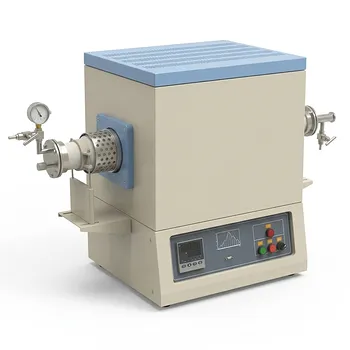
1750°C High Temperature Benchtop Vacuum Atmosphere Tube Furnace with Kanthal Super 1800 Heating Elements and 60mm Alumina Processing Tube

High Temperature 1700C Benchtop Tube Furnace with 5 Inch Heating Zone High Purity Alumina Tube and Vacuum Sealing Flanges
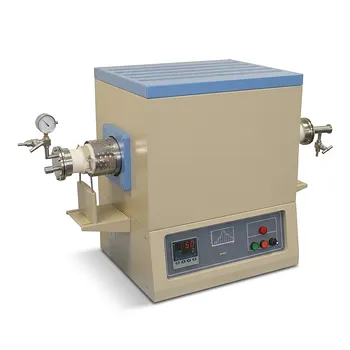
1700C High Temperature Alumina Tube Furnace with 18 Inch Heated Zone and Vacuum Sealing Flanges
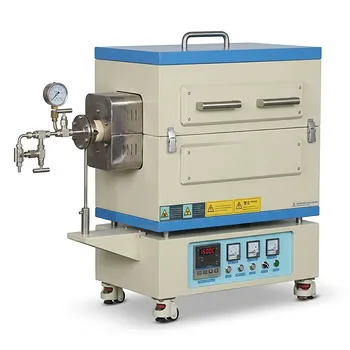
High Temperature Split Tube Furnace 1500C for Material Research Vacuum and Atmosphere Thermal Processing

Compact High Temperature 1600C Tube Furnace with 50mm Alumina Tube and Vacuum Flanges for Material Sintering

1800C High Temperature Compact Vacuum Tube Furnace with 60mm OD Alumina Tube and Kanthal MoSi2 Heating Elements
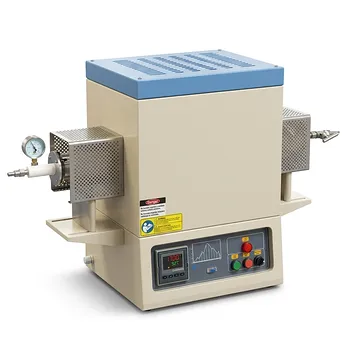
High Temperature Three Zone Tube Furnace 1700C with Alumina Tube and Water Cooled Flanges
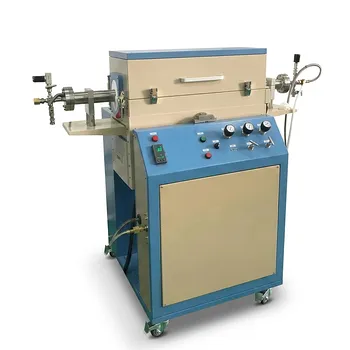
High Temperature Rocking Tube Furnace 1700°C Alumina Processing Tube with Precision Oscillation for Material Synthesis
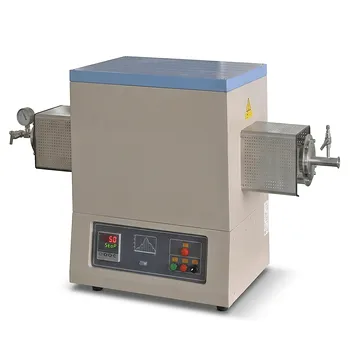
High Temperature 1700C Tube Furnace with 4 Inch OD Alumina Tube and Vacuum Sealing Flanges

High Temperature 1700C Vertical Tube Furnace for Powder Spherification and Material Sintering
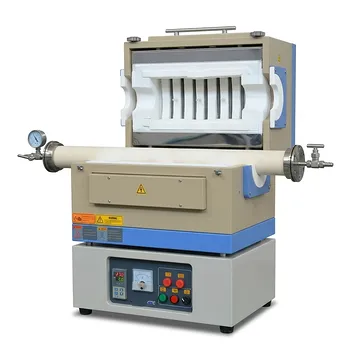
High Temperature 1600C Split Tube Furnace Vacuum Flanges Valves Optional 60mm 80mm Alumina Tube

High Temperature Automated 5 Inch Tube Furnace for Autonomous Material Research and Advanced Laboratory R&D

High Temperature 1700C Six Zone Split Tube Furnace with Alumina Tube and Water Cooled Flanges
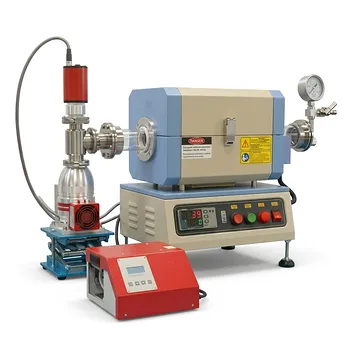
High Vacuum Compact Tube Furnace 1200C with Integrated Turbo Pump System and 8 Inch Heating Zone
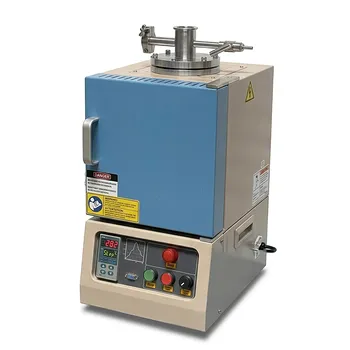
High Temperature Hybrid Muffle and Tube Furnace with Vacuum Capability and PID Control
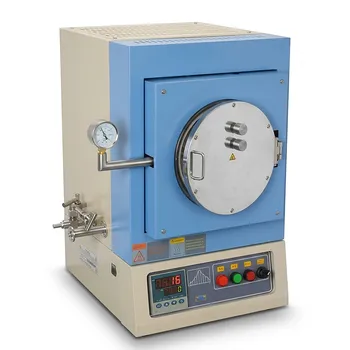
1100°C High Temperature Quartz Chamber Furnace 8 Inch OD with 7.6 Liter Capacity and Vacuum Atmosphere Capability

1100C Tube Furnace with Vacuum Flange and Programmable Temperature Controller for Material Science and Industrial Heat Treatment