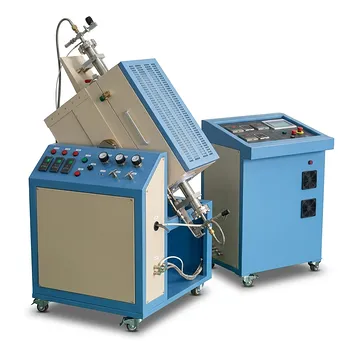
How is a high-temperature tube furnace utilized to convert a nickel/carbon coating into a porous nickel Microporous Layer?
Updated 3 months ago
The high-temperature tube furnace transforms a nickel/carbon coating into a porous nickel layer through a dual-stage thermochemical process of oxidative etching and reductive restoration. This process utilizes a 700°C air atmosphere to oxidize and remove graphite carbon pore-formers, followed by a switch to a reductive atmosphere, such as ammonia, to return the material to its conductive metallic state.
This two-step thermal treatment leverages precise atmospheric control to engineer a bimodal pore structure. By selectively removing carbon and then chemically "repairing" the nickel skeleton, the furnace creates a highly conductive and permeable Microporous Layer (MPL).
The Two-Stage Thermochemical Process
A high-temperature tube furnace is essential because it allows for the sequential introduction of reactive gases at specific thermal thresholds. This transition is what dictates the final morphology of the nickel skeleton.
Stage 1: Oxidative Pore Formation
During the first phase, the furnace maintains an air atmosphere at 700°C. At this temperature, the graphite carbon powder embedded in the coating reacts with oxygen to form carbon dioxide gas.
As the carbon escapes, it leaves behind a network of voids within the nickel matrix. This step effectively "etches" the pore structure into the material, though it simultaneously oxidizes the nickel into nickel oxide (NiO), which is non-conductive.
Stage 2: Reductive Restoration
To restore the electrical properties required for an MPL, the furnace atmosphere is switched to a reductive gas like ammonia (NH3). This environment strips the oxygen away from the nickel oxide.
The reduction process converts the NiO back into a pure metallic nickel skeleton. This stage is critical for ensuring the final layer has the high electrical conductivity necessary for electrochemical applications.
Engineering the Bimodal Pore Structure
The tube furnace does more than just heat the sample; it acts as a precision reactor that defines the physical characteristics of the Microporous Layer.
Precision Atmospheric Control
The ability to switch from an oxidizing to a reducing environment without removing the sample is the primary advantage of the tube furnace. This prevents contamination and ensures the structural integrity of the delicate nickel skeleton.
As noted in related carbonization processes, the furnace provides a stable environment that prevents the unintended combustion of the metal while allowing for the controlled "etching" of the pore-forming agents.
Thermal Uniformity and Gradient Management
Consistent heating across the tube is vital for creating a uniform bimodal pore structure. A bimodal structure contains both large and small pores, which optimizes the balance between gas permeability and mechanical strength.
Precise temperature control, often managed at specific ramp rates (e.g., 3–5°C per minute), ensures that the carbon is removed completely before the nickel begins to sinter excessively.
Understanding the Trade-offs
While the tube furnace is the gold standard for this process, there are technical challenges and trade-offs that must be managed to ensure a successful outcome.
Sintering vs. Porosity
If the temperature exceeds the optimal 700°C or if the dwell time is too long, nickel sintering may occur. This is where the nickel particles begin to fuse together too densely, collapsing the fine pores created by the carbon removal and reducing the surface area.
Atmospheric Transition Hazards
The transition from an air (oxygen-rich) atmosphere to a reductive (hydrogen-rich or ammonia) atmosphere requires thorough purging with an inert gas like nitrogen or argon. Failing to purge the furnace properly can result in an explosive mixture inside the tube.
Material Compatibility
The choice of the furnace tube material (e.g., quartz vs. alumina) is critical. While quartz is excellent for many high-temperature applications, specific reductive gases at high temperatures can eventually degrade the tube, leading to potential leaks or contamination of the nickel layer.
How to Apply This to Your Project
When utilizing a tube furnace for MPL fabrication, your settings should be dictated by the specific requirements of your final application.
- If your primary focus is Maximum Conductivity: Ensure the reductive phase (Stage 2) is maintained long enough to achieve a complete conversion of nickel oxide back to metallic nickel, as even trace oxides will increase resistance.
- If your primary focus is High Permeability: Carefully select the particle size of your graphite pore-former and ensure the oxidative phase (Stage 1) is long enough to remove 100% of the carbon.
- If your primary focus is Structural Durability: Use a slower heating ramp rate to prevent thermal shock to the coating, which can cause the nickel skeleton to crack or delaminate from the substrate.
The high-temperature tube furnace remains the definitive tool for this conversion, providing the precise atmospheric and thermal control necessary to bridge the gap between a solid coating and a high-performance porous electrode.
Summary Table:
| Stage | Atmosphere | Process Temperature | Primary Function | Final Material State |
|---|---|---|---|---|
| Oxidative Etching | Air | 700°C | Removes graphite carbon pore-formers | Non-conductive NiO skeleton |
| Reductive Restoration | Ammonia (NH3) | 700°C | Strips oxygen and restores conductivity | Pure metallic nickel MPL |
| Purging Phase | Inert Gas (N2/Ar) | Ambient to 700°C | Ensures safety during gas transitions | Contamination-free environment |
Elevate Your Material Research with THERMUNITS Precision
Achieving the perfect bimodal pore structure in nickel Microporous Layers requires the uncompromising atmospheric and thermal precision that only a THERMUNITS high-temperature furnace can provide. As a leading manufacturer for material science and industrial R&D, we offer high-performance Tube, Muffle, Vacuum, and CVD/PECVD systems designed to handle complex thermochemical processes with ease.
Whether you are scaling up industrial production or conducting delicate laboratory heat treatments, our equipment ensures uniform heating and safe atmospheric transitions for superior results. Contact our technical experts today to find the ideal thermal processing solution for your specific research needs!
References
- Vincent Wilke, K. Andreas Friedrich. Novel Atmospherically Plasma Sprayed Micro Porous Layer for Anion Exchange Membrane Water Electrolysis Operating With Supporting Electrolyte. DOI: 10.1002/elsa.202400036
Mentioned Products
- High Temperature Tube Furnace 1500C with Sliding Flanges and 50mm OD for Rapid Thermal Processing Fast Heating and Cooling
- High Temperature 1700C Tube Furnace with High Vacuum Turbomolecular Pump System and Multi Channel Mass Flow Controller Gas Mixer
- 1750°C High Temperature Benchtop Vacuum Atmosphere Tube Furnace with Kanthal Super 1800 Heating Elements and 60mm Alumina Processing Tube
- High Temperature 1700C Benchtop Tube Furnace with 5 Inch Heating Zone High Purity Alumina Tube and Vacuum Sealing Flanges
- High Temperature Split Tube Furnace 1500C for Material Research Vacuum and Atmosphere Thermal Processing
People Also Ask
- How are high-temperature tube furnaces utilized to repair etching damage? Precision Lattice Restoration Solutions
- What role does a high-temperature tube furnace play in CVD synthesis of silicon nanowires? Master VLS Growth Precision.
- What core conditions does a high-temperature tube furnace provide for rGO aerogels? Mastering Precision Synthesis.
- What role does a high-temperature tube furnace play in the sulfidation heat treatment of CoS@C/MXene nanocomposites? Guide
- How does precision tube furnace control influence CoFe nanoparticle formation? Master Your Bimetallic Synthesis.

Tech Team · ThermUnits
Last updated on Jun 03, 2026
Related Products
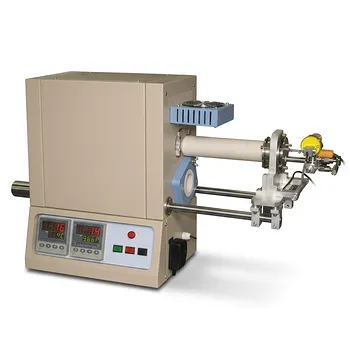
High Temperature Tube Furnace 1500C with Sliding Flanges and 50mm OD for Rapid Thermal Processing Fast Heating and Cooling

High Temperature 1700C Tube Furnace with High Vacuum Turbomolecular Pump System and Multi Channel Mass Flow Controller Gas Mixer
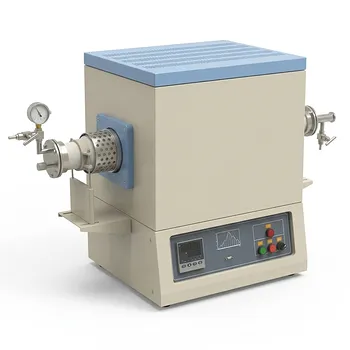
1750°C High Temperature Benchtop Vacuum Atmosphere Tube Furnace with Kanthal Super 1800 Heating Elements and 60mm Alumina Processing Tube
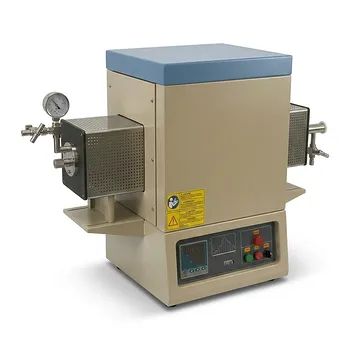
High Temperature 1700C Benchtop Tube Furnace with 5 Inch Heating Zone High Purity Alumina Tube and Vacuum Sealing Flanges
High Temperature Split Tube Furnace 1500C for Material Research Vacuum and Atmosphere Thermal Processing
1700C High Temperature Alumina Tube Furnace with 18 Inch Heated Zone and Vacuum Sealing Flanges

1800C High Temperature Compact Vacuum Tube Furnace with 60mm OD Alumina Tube and Kanthal MoSi2 Heating Elements

Compact High Temperature 1600C Tube Furnace with 50mm Alumina Tube and Vacuum Flanges for Material Sintering
High Temperature Three Zone Tube Furnace 1700C with Alumina Tube and Water Cooled Flanges
High Temperature Rocking Tube Furnace 1700°C Alumina Processing Tube with Precision Oscillation for Material Synthesis
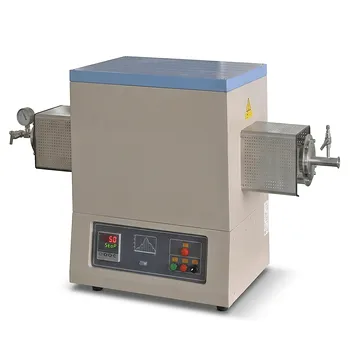
High Temperature 1700C Tube Furnace with 4 Inch OD Alumina Tube and Vacuum Sealing Flanges

High Temperature 1700C Vertical Tube Furnace for Powder Spherification and Material Sintering
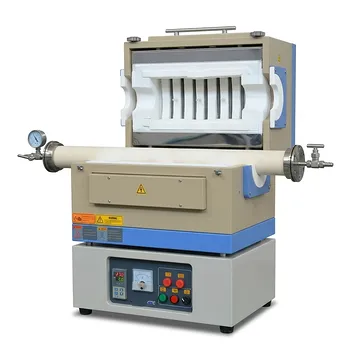
High Temperature 1600C Split Tube Furnace Vacuum Flanges Valves Optional 60mm 80mm Alumina Tube

High Temperature Automated 5 Inch Tube Furnace for Autonomous Material Research and Advanced Laboratory R&D
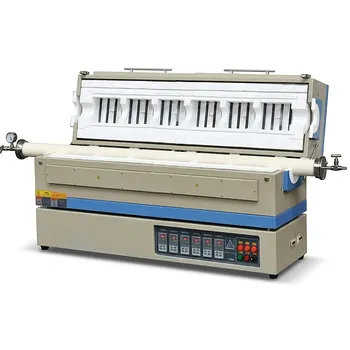
High Temperature 1700C Six Zone Split Tube Furnace with Alumina Tube and Water Cooled Flanges
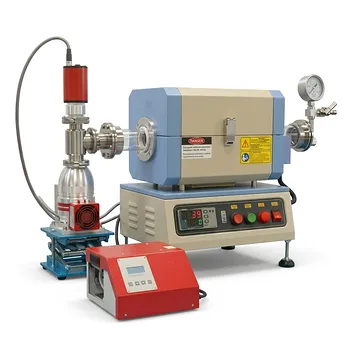
High Vacuum Compact Tube Furnace 1200C with Integrated Turbo Pump System and 8 Inch Heating Zone
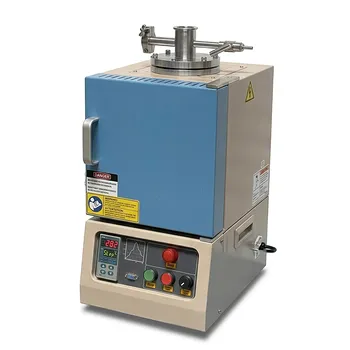
High Temperature Hybrid Muffle and Tube Furnace with Vacuum Capability and PID Control
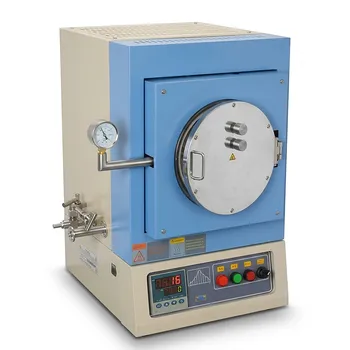
1100°C High Temperature Quartz Chamber Furnace 8 Inch OD with 7.6 Liter Capacity and Vacuum Atmosphere Capability
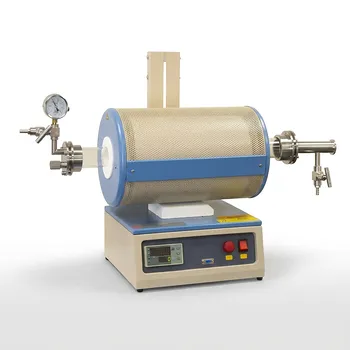
1100C Tube Furnace with Vacuum Flange and Programmable Temperature Controller for Material Science and Industrial Heat Treatment