Why is a horizontal tube furnace preferred for APHT growth of hBN? Master Precision Thermal Control & Crystal Synthesis
Updated 3 months ago
The laboratory horizontal tube furnace is the industry standard for APHT growth because it provides an unmatched combination of precise temperature gradient regulation and advanced atmosphere control. It allows for ultra-slow cooling rates—specifically between 1 to 4°C per hour—which are essential for the stable precipitation of hexagonal boron nitride (hBN) on solvent surfaces. Furthermore, the constant gas flow within the furnace tube effectively purges volatile impurities, ensuring the production of high-purity, defect-free crystals.
The horizontal tube furnace serves as a controlled thermodynamic micro-environment that synchronizes thermal stability with chemical purity. This dual capability is critical for transition-metal solvent methods where slow nucleation and the removal of solvent vapors determine the final crystallinity of the hBN.
Mastering Thermodynamic Stability for Crystal Growth
Precise Temperature Gradient Regulation
The horizontal design of the furnace allows for the creation of a highly uniform thermal field or a specific gradient across the reaction zone. This precision is vital because the growth of hBN depends on maintaining the "tipping point" of precursor solubility within a solvent.
Ultra-Low Cooling Rates for Nucleation
By enabling cooling rates as slow as 1 to 4°C per hour, the furnace prevents rapid, uncontrolled precipitation. This slow transition allows boron and nitrogen atoms to arrange themselves into the desired hexagonal lattice with minimal structural defects.
High-Temperature Capability and Pyrolysis
These furnaces typically operate between 600°C and 1350°C, providing the energy required for the thermal decomposition of precursors like ammonia borane. At these elevated temperatures, the furnace facilitates the molecular structural reorganization necessary for high crystallinity.
Ensuring Chemical Purity and Surface Integrity
Continuous Gas Flow and Impurity Removal
The "flow-through" nature of the tube furnace ensures that a constant stream of carrier gas (such as Argon or Nitrogen) moves through the system. This process carries away volatile impurities and solvent vapors that could otherwise settle on and contaminate the crystal surface.
Protection via Inert and Reducing Atmospheres
The furnace acts as a sealed environment that can be flooded with specific gas ratios, such as argon and hydrogen. This excludes oxygen, preventing the oxidative loss of carbon elements during doping or the formation of unwanted boron oxides.
The Role of High-Purity Quartz Tubes
Most horizontal furnaces utilize high-purity quartz tubes, which are selected for their thermal stability and chemical inertness. These tubes withstand temperatures exceeding 1100°C without outgassing impurities, ensuring the reaction remains isolated from the external environment.
Understanding the Trade-offs and Limitations
Thermal Constraints of Materials
While quartz tubes offer high purity, they have a mechanical limit and can lose structural integrity if pushed significantly beyond 1100°C–1200°C for extended periods. For processes requiring the full 1350°C range, researchers must often switch to more expensive alumina or ceramic tubes.
Scaling and Throughput Challenges
Horizontal tube furnaces are primarily designed for research and small-batch production. Their geometry limits the size of the substrate (like copper foil) or the volume of solvent that can be processed at once compared to vertical or industrial-scale kilns.
Maintenance and Contamination Risks
The very volatile impurities that the gas flow removes can condense at the cooler ends of the furnace tube. If the tube is not cleaned rigorously between runs, these residues can re-vaporize and contaminate subsequent growth cycles.
How to Apply This to Your Project
Making the Right Choice for Your Goal
To achieve the best results with a horizontal tube furnace, your operational strategy should align with your specific material requirements.
- If your primary focus is High Crystallinity: Prioritize a furnace with a high-end programmable controller capable of maintaining a strict 1°C per hour cooling ramp.
- If your primary focus is Monolayer Surface Cleanliness: Emphasize the use of a high-purity quartz tube and maintain a high flow rate of carrier gas to prevent vapor re-deposition.
- If your primary focus is Fiber Morphology (BNF): Utilize a multi-stage heating profile that includes a 300°C pyrolysis step followed by a 950°C calcination phase to ensure structural reorganization.
- If your primary focus is Carbon Doping (B-N-C): Ensure the furnace is equipped for high-vacuum reduction to prevent oxygen interference and preserve catalytic active sites.
By leveraging the precise thermal and atmospheric controls of a horizontal tube furnace, researchers can consistently produce hexagonal boron nitride with the exact structural and chemical properties required for advanced applications.
Summary Table:
| Key Feature | Benefit for hBN Growth | Technical Detail |
|---|---|---|
| Ultra-Slow Cooling | Minimizes structural defects | 1 to 4°C per hour ramp rates |
| Gas Flow Control | Ensures high purity & surface integrity | Continuous Ar/N2/H2 purge of impurities |
| Thermal Gradient | Precise nucleation control | Uniform thermal fields from 600°C to 1350°C |
| High-Purity Tubes | Prevents chemical contamination | Options for Quartz or Alumina materials |
Elevate Your Material Research with THERMUNITS
As a leading manufacturer of high-temperature laboratory equipment for material science and industrial R&D, THERMUNITS provides the precision tools required for successful APHT growth and advanced synthesis.
Our comprehensive range of thermal processing solutions—including Tube, Vacuum, Atmosphere, Muffle, and Rotary furnaces, as well as CVD/PECVD systems—is engineered to deliver the exact temperature gradients and atmosphere stability your project demands.
Ready to optimize your lab’s heat treatment capabilities? Contact our technical experts today to find the perfect furnace solution for your research goals!
References
- Cong Su, Igor Aharonovich. Fundamentals and emerging optical applications of hexagonal boron nitride: a tutorial. DOI: 10.1364/aop.502922
Mentioned Products
- Multi Position Tube Furnace 1100C for Laboratory Material Research and Advanced Industrial Thermal Processing
- Ten Zone Multi Orientation Laboratory Tube Furnace for 1200C High Temperature Gradient Thermal Processing
- High Temperature Automated 5 Inch Tube Furnace for Autonomous Material Research and Advanced Laboratory R&D
- Automated 1200 C Tube Furnace for AI Material Research with 6 Inch OD and Sliding Flange
- High Temperature 1200C Split Tube Furnace with Hinged Vacuum Flanges and 4 Inch Quartz Tube for Laboratory Research
People Also Ask
- Why use a tube furnace for oxygen annealing LaCrO3/LaMnO3? Optimize Phase Transition & Magnetic Performance.
- What key role does a laboratory high-temperature tube furnace play in the production of carbon nanofibers? Guide
- How is a laboratory high-temperature tube furnace utilized to research the products of aluminothermic reduction? Advanced Metallurgical Solutions
- What is the role of a laboratory tube furnace in the carbonization process of porous carbon foam (PCF)? Master 3D Synthesis
- What role does a laboratory tube furnace play in the pyrolysis and carbonization of biomass? Optimize Thermal Research.

Tech Team · ThermUnits
Last updated on Jun 02, 2026
Related Products
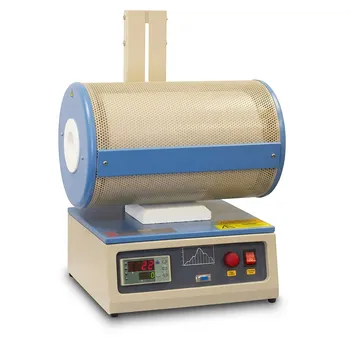
Multi Position Tube Furnace 1100C for Laboratory Material Research and Advanced Industrial Thermal Processing
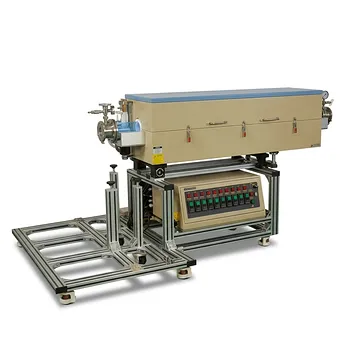
Ten Zone Multi Orientation Laboratory Tube Furnace for 1200C High Temperature Gradient Thermal Processing

High Temperature Automated 5 Inch Tube Furnace for Autonomous Material Research and Advanced Laboratory R&D
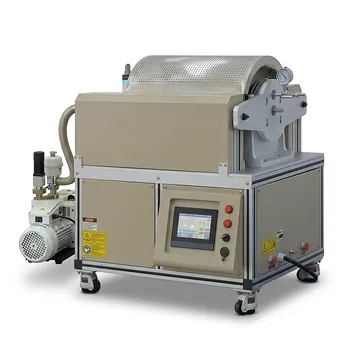
Automated 1200 C Tube Furnace for AI Material Research with 6 Inch OD and Sliding Flange
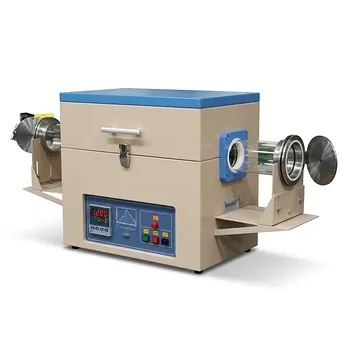
High Temperature 1200C Split Tube Furnace with Hinged Vacuum Flanges and 4 Inch Quartz Tube for Laboratory Research

High Temperature 1700C Vertical Tube Furnace for Powder Spherification and Material Sintering
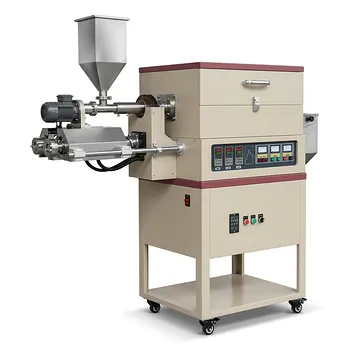
Laboratory Tilting Rotary Tubular Furnaces for Material Science and Industrial Heat Treatment

Compact Vertical Split Quartz Tube Furnace with Stainless Steel Vacuum Flanges for Rapid Thermal Quenching and Controlled Atmosphere Material Processing
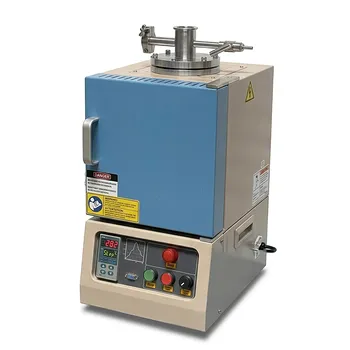
High Temperature Hybrid Muffle and Tube Furnace with Vacuum Capability and PID Control
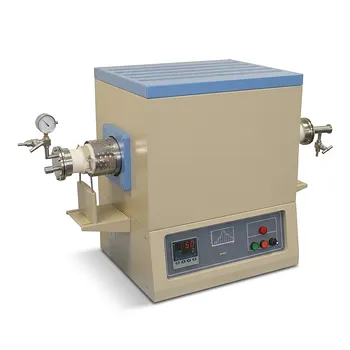
1700C High Temperature Alumina Tube Furnace with 18 Inch Heated Zone and Vacuum Sealing Flanges

1800C High Temperature Compact Vacuum Tube Furnace with 60mm OD Alumina Tube and Kanthal MoSi2 Heating Elements
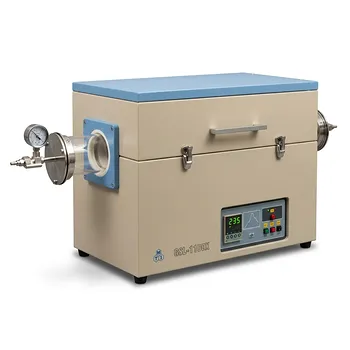
Single Zone Tube Furnace 5 Inch Quartz Tube 36 Inch Heating Zone Vacuum Flanges
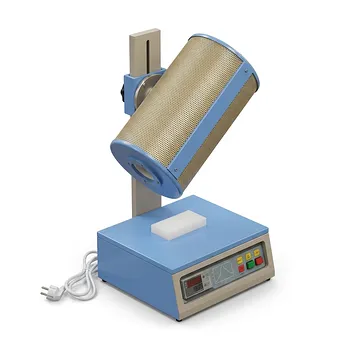
1100°C Vertical Laboratory Furnace for DIY Tubular Reactors with PID Temperature Controller
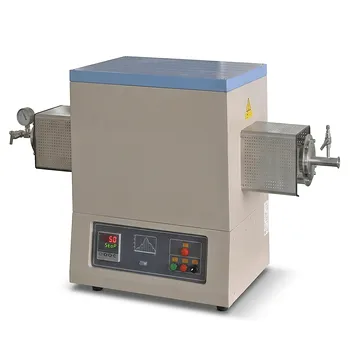
High Temperature 1700C Tube Furnace with 4 Inch OD Alumina Tube and Vacuum Sealing Flanges
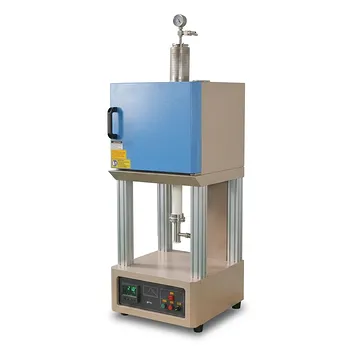
Hybrid High Temperature Tube and Box Furnace 1700C with 2 Inch Alumina Tube for Material Research
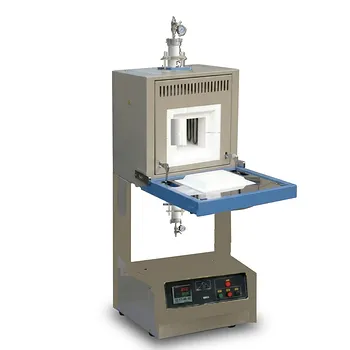
High Temperature Vertical Hybrid Furnace with Alumina Tube and SiC Heating for SOFC Coin Cell Testing and Atmosphere Processing
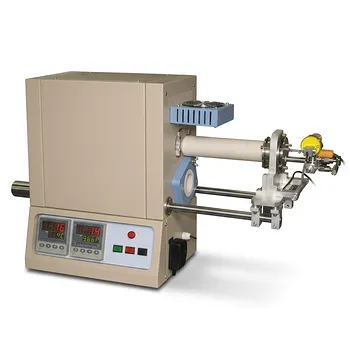
High Temperature Tube Furnace 1500C with Sliding Flanges and 50mm OD for Rapid Thermal Processing Fast Heating and Cooling
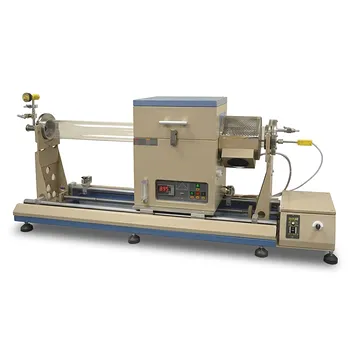
900 ºC Max Sliding RTP Tube Furnace with Rapid IR Heating and 4 Inch OD Quartz Tube
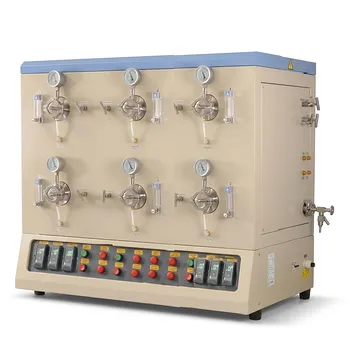
1200C High Throughput Multi Channel Tube Furnace with 50mm Quartz Tubes for Annealing and Material Phase Diagram Research
