Why is a mineral oil gas washing bottle or bubbler typically configured at the end of a tube furnace? Essential Safety.
Updated 3 months ago
The mineral oil gas washing bottle serves as a critical atmospheric seal and safety interface. In tube furnace reduction processes, it functions as a non-mechanical one-way valve that allows exhaust gases to exit while physically blocking outside air from entering the system. This setup is essential for maintaining the chemical integrity of the reaction and preventing explosive mixtures from forming.
The gas washing bottle acts as a hydraulic seal that maintains a positive pressure environment, safeguarding the reduction reaction from oxygen contamination and mitigating the risk of hydrogen combustion.
Preventing Atmospheric Contamination
The Role of the One-Way Valve
The mineral oil creates a physical barrier that only permits gas to flow in one direction: out of the furnace. By forcing exhaust gases to bubble through the liquid, the system ensures that ambient oxygen cannot drift back into the reaction tube.
Ensuring Complete Chemical Reduction
Maintaining a pure, oxygen-free environment is vital for the complete conversion of the sample. Even trace amounts of oxygen can cause re-oxidation or side reactions, compromising the quality and yield of the reduction process.
Mitigating Significant Safety Risks
Managing Hydrogen Volatility
Reduction processes often utilize hydrogen gas, which is highly flammable when mixed with oxygen. The bubbler prevents the formation of an explosive hydrogen-air mixture inside the hot furnace tube by isolating the internal atmosphere.
Visualizing Gas Flow Rates
The bubbler provides an immediate, low-tech way to monitor the flow rate of the gas. By observing the frequency of the bubbles, a technician can verify that the system is pressurized and that gas is moving through the furnace as intended.
Understanding Technical Risks and Trade-offs
The Danger of Back-Suction
A common pitfall occurs during the cooling phase when the gas inside the furnace contracts, creating a partial vacuum. If the system is not monitored, this vacuum can suck the mineral oil backward into the hot reaction tube, causing contamination or equipment damage.
Mineral Oil Selection and Maintenance
While mineral oil is preferred because it is non-reactive and has a low vapor pressure, it can become saturated or discolored over time. Using the wrong fluid, such as water, could introduce unwanted moisture into a sensitive reduction environment.
Optimizing Your Exhaust Configuration
How to Apply This to Your Project
- If your primary focus is Maximum Purity: Ensure the oil level is sufficient to maintain a seal even during slight pressure fluctuations, but not so high that it increases back-pressure unnecessarily.
- If your primary focus is Operational Safety: Always install a "knock-out" pot or a safety trap between the furnace and the bubbler to prevent oil from being sucked back into the furnace during cooling.
- If your primary focus is Process Monitoring: Use a graduated bubbler or a flow meter in conjunction with the oil bottle to precisely quantify gas consumption throughout the reduction cycle.
Properly configuring your gas washing bottle transforms a simple container of oil into a vital safeguard for both your chemical results and your laboratory environment.
Summary Table:
| Function | Key Benefit | Safety/Process Role |
|---|---|---|
| Atmospheric Seal | Prevents oxygen ingress | Ensures complete material reduction and purity |
| One-Way Valve | Exhausts gas, blocks air | Prevents back-diffusion of ambient contaminants |
| Flow Monitoring | Visualizes gas movement | Verifies active gas flow and system pressure |
| Safety Interface | Isolates hydrogen gas | Mitigates risk of explosive hydrogen-air mixtures |
| Vacuum Guard | Visualizes contraction | Alerts technicians to back-suction risks during cooling |
Optimize Your Thermal Processing with THERMUNITS
Precision and safety are the foundations of successful material research. THERMUNITS is a leading manufacturer of high-temperature laboratory equipment specifically designed for material science and industrial R&D.
Whether you are conducting complex reduction processes or advanced thin-film deposition, our comprehensive range of equipment ensures reliable results:
- Furnace Solutions: Muffle, Vacuum, Atmosphere, Tube, Rotary, and Hot Press furnaces.
- Advanced Systems: CVD/PECVD systems and Vacuum Induction Melting (VIM) furnaces.
- Specialized Equipment: Dental Furnaces, Electric Rotary Kilns, and high-quality Thermal Elements.
How we add value to your lab: Our team provides not just hardware, but complete thermal solutions tailored to your specific atmosphere and safety requirements. From preventing oxygen contamination to managing volatile gas flows, we help you achieve superior material integrity.
Ready to upgrade your laboratory capabilities? Contact our expert engineering team today to discuss your project requirements!
References
- Guanzhi Wang, Michael C. Tucker. Simple processing via thermal treatment and catalyst infiltration to enhance nickel electrode performance for liquid alkaline water electrolyzers. DOI: 10.1016/j.ijhydene.2024.06.246
Mentioned Products
- Vertical 1700C Vacuum and Atmosphere Tube Furnace with 80mm Alumina Tube
- Compact High Temperature 1600C Tube Furnace with 50mm Alumina Tube and Vacuum Flanges for Material Sintering
- 900°C Max Rotary Tube Furnace with 8 Inch 310S Alloy Tube and Optional Multi Zone Heating for Industrial Material Calcination
- Split Vertical Tube Furnace with 1200C Quartz Tube and Stainless Steel Vacuum Flanges for Rapid Thermal Processing
- High Temperature 1700C Tube Furnace with High Vacuum Turbomolecular Pump System and Multi Channel Mass Flow Controller Gas Mixer
People Also Ask
- How is an industrial-grade vertical tube furnace utilized in smelting leaching residues? Enhance Metal Recovery Efficiency
- What is the function of a laboratory-grade vertical tube furnace in fast pyrolysis? Optimize Composite Research.
- How does a vertical tube furnace facilitate thermoelectric alloy melting? Precision synthesis for material homogeneity.
- Why is a thermocouple sensor indispensable for monitoring the vertical tube furnace during gallium oxide nanowire production? Optimize VLS Growth
- What are the advantages of using a vertical tube furnace for crucible experiments simulating steel-slag interactions?

Tech Team · ThermUnits
Last updated on Jun 03, 2026
Related Products

Vertical 1700C Vacuum and Atmosphere Tube Furnace with 80mm Alumina Tube

Compact High Temperature 1600C Tube Furnace with 50mm Alumina Tube and Vacuum Flanges for Material Sintering
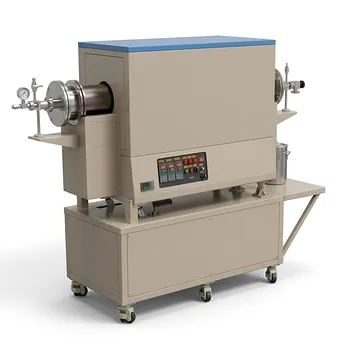
900°C Max Rotary Tube Furnace with 8 Inch 310S Alloy Tube and Optional Multi Zone Heating for Industrial Material Calcination
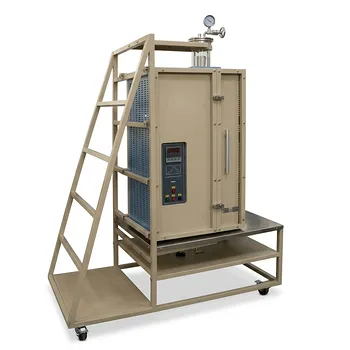
Split Vertical Tube Furnace with 1200C Quartz Tube and Stainless Steel Vacuum Flanges for Rapid Thermal Processing

High Temperature 1700C Tube Furnace with High Vacuum Turbomolecular Pump System and Multi Channel Mass Flow Controller Gas Mixer

1100C Tube Furnace with Vacuum Flange and Programmable Temperature Controller for Material Science and Industrial Heat Treatment
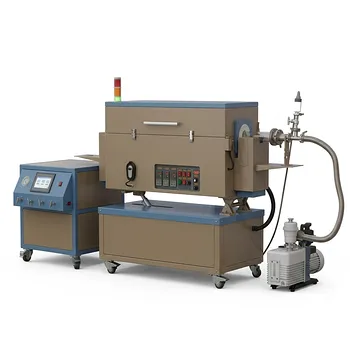
5 Inch Three Zone Rotary Tube Furnace with Integrated Gas Delivery System and 1200C Capability for Advanced Material CVD Processing

1700C Hydrogen Gas Tube Furnace with 60mm Alumina Process Tube and Integrated Hydrogen Safety Detector

1200°C 5 Inch Vertical Quartz Tube Furnace with Stainless Steel Vacuum Flanges

High Temperature 1700C Six Zone Split Tube Furnace with Alumina Tube and Water Cooled Flanges

Compact Vertical Split Quartz Tube Furnace with Stainless Steel Vacuum Flanges for Rapid Thermal Quenching and Controlled Atmosphere Material Processing

High Temperature 1700C Benchtop Tube Furnace with 5 Inch Heating Zone High Purity Alumina Tube and Vacuum Sealing Flanges

1200C High Throughput Multi Channel Tube Furnace with 50mm Quartz Tubes for Annealing and Material Phase Diagram Research
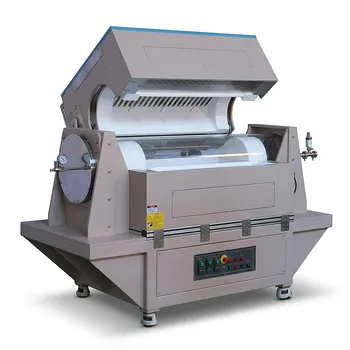
Three Zone Tube Furnace with 11 Inch or 15 Inch Quartz Tube and Hinged Flanges for Vacuum Atmosphere Heat Treatment

1800C High Temperature Compact Vacuum Tube Furnace with 60mm OD Alumina Tube and Kanthal MoSi2 Heating Elements

High Temperature 1700C Vertical Tube Furnace for Powder Spherification and Material Sintering
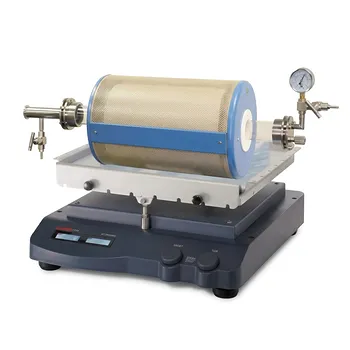
High Temperature Rocking Tube Furnace with Quartz Tube and Vacuum Flange for Materials Synthesis

High Temperature Automated 5 Inch Tube Furnace for Autonomous Material Research and Advanced Laboratory R&D
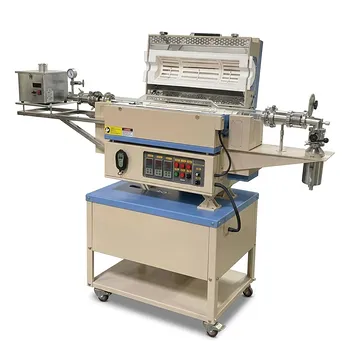
5 Inch Rotary Tube Furnace with Automatic Feeding and Receiving System 1200C Three Zone CVD Powder Processing