Why is a mixed gas of 5% H2 and 95% N2 necessary for PPS/C catalyst heat treatment? Maximize Catalyst Performance.
Updated 3 months ago
The specific use of a 5% H2 and 95% N2 gas mixture provides a dual-function environment essential for the chemical transformation and structural integrity of the catalyst. Hydrogen acts as a potent reducing agent to decompose metal complexes and facilitate sulfur doping, while nitrogen serves as an inert shield to prevent the carbon substrate from burning at high temperatures.
This controlled reducing atmosphere is the technical foundation required to synthesize Pt/PtS heterostructures and ensure the carbon support remains stable during thermal activation.
The Dual Role of the Gas Mixture
Hydrogen as a Chemical Catalyst
Hydrogen serves as the active reducing agent in the furnace, which is necessary to induce the decomposition of the Pt-DDT complex. This process facilitates the reduction of platinum or its specific conversion into platinum sulfide (PtS).
Without this reducing force, the desired Pt/PtS heterostructures would not form. This transformation is critical for achieving the specific electronic properties required for high-performance catalysts.
Nitrogen as a Protective Shield
Nitrogen constitutes the bulk of the gas mixture to provide a stable, inert atmosphere. Its primary mission is to displace oxygen, preventing the carbon substrate and metallic components from undergoing unwanted oxidation.
At the high temperatures required for heat treatment (often 300°C to 1000°C), carbon will spontaneously combust if even trace amounts of oxygen are present. Nitrogen ensures the structural integrity of the carbon support is maintained throughout the process.
Optimizing Catalyst Structure and Performance
Facilitating Sulfur Doping
The mixed gas environment is a prerequisite for successful sulfur doping within carbon materials. The interaction between the hydrogen-rich environment and the sulfur precursors allows for the uniform incorporation of sulfur into the carbon lattice.
This doping process, combined with the formation of the platinum phase, significantly enhances the electrochemical activity of the resulting PPS/C catalyst.
Promoting Crystal Transition
The precise control of the tube furnace atmosphere allows the material to reach its ideal crystal transition temperature. This promotes the structural optimization of platinum nanoparticles on their carbon supports.
When the atmosphere is correctly maintained, the resulting catalyst exhibits superior long-term durability, particularly when operating in harsh, acidic electrochemical environments.
Understanding the Trade-offs
Concentration Limits and Safety
The 5% H2 concentration is specifically chosen to provide sufficient reducing power while remaining near the safety threshold for flammability. Increasing hydrogen levels beyond this could heighten the risk of explosion without necessarily providing better chemical results.
Conversely, a concentration lower than 5% might result in incomplete reduction of the platinum precursors. This would lead to a catalyst with lower active surface area and poor conductivity.
Managing Gas Flow and Uniformity
A stable flow of nitrogen is required to act as a carrier gas for sublimated vapors, such as sulfur. If the flow rate is inconsistent, it can lead to non-homogeneous chemical vapor reactions across the sample surface.
Inconsistent atmosphere control often results in a "patchy" catalyst morphology. This inconsistency negatively impacts the electrical conductivity and porosity of the final electrode material.
How to Apply This to Your Project
Recommendations for Heat Treatment Success
The success of your catalyst synthesis depends on the precise calibration of your furnace environment relative to your specific material goals.
- If your primary focus is Platinum Sulfide formation: Ensure the H2 concentration remains steady at 5% to provide the necessary reducing environment for the Pt-DDT decomposition.
- If your primary focus is Carbon Support Integrity: Prioritize a high-purity N2 flow to completely exclude oxygen, preventing any loss of carbon mass or surface area during high-temperature cycles.
- If your primary focus is Uniform Doping: Maintain a consistent gas flow rate to ensure sulfur vapors are distributed evenly across the entire catalyst bed.
By strictly controlling the balance of reduction and protection provided by this N2-H2 mixture, you can reliably produce high-performance catalysts with optimized heterostructures.
Summary Table:
| Gas Component | Percentage | Primary Function | Technical Benefit |
|---|---|---|---|
| Hydrogen (H2) | 5% | Reducing Agent | Decomposes metal complexes & facilitates sulfur doping |
| Nitrogen (N2) | 95% | Inert Shield | Displaces oxygen to prevent carbon support combustion |
| Mixed Gas | 100% | Controlled Atmosphere | Promotes Pt/PtS heterostructure & crystal transition |
Elevate Your Material Research with THERMUNITS Precision Solutions
Precise atmosphere control is the cornerstone of successful catalyst synthesis and advanced material science. As a leading manufacturer of high-temperature laboratory equipment, THERMUNITS provides the specialized thermal processing tools needed to achieve the perfect balance of reduction and protection for your R&D projects.
Our comprehensive range of equipment includes:
- Tube & Rotary Furnaces for precise gas flow and atmosphere management.
- CVD/PECVD Systems for advanced chemical vapor deposition and doping.
- Muffle, Vacuum, and Atmosphere Furnaces for versatile heat treatment applications.
- Hot Press & Vacuum Induction Melting (VIM) Furnaces for industrial-grade metallurgy.
Whether you are focusing on PPS/C catalysts, dental materials, or industrial heat treatments, our equipment ensures uniform heating and structural integrity for every sample. Contact us today to find the ideal furnace for your laboratory!
References
- Mou Zhang, Qingyi Lu. Platinum/Platinum Sulfide on Sulfur-Doped Carbon Nanosheets with Multiple Interfaces toward High Hydrogen Evolution Activity. DOI: 10.3390/molecules29194570
Mentioned Products
- High Temperature 1700C Vertical Tube Furnace for Powder Spherification and Material Sintering
- Continuous Feeding Rotary Tube Furnace for Industrial Powder Heat Treatment and Material Research
- 1800C High Temperature Compact Vacuum Tube Furnace with 60mm OD Alumina Tube and Kanthal MoSi2 Heating Elements
- 1100C High Pressure Rocking Tube Furnace with 2 Inch Super Alloy Processing Tube for Material Synthesis
- 5 Inch Two Zone Rotary Tube Furnace 1100C for Powder CVD and Material Synthesis
People Also Ask
- What role does a high-temperature vertical tube furnace play in simulating high-carbon ferromanganese slag formation?
- What functions does a vertical high-temperature tube furnace perform? Master Industrial Sintering & R&D Simulation
- What is the primary function of a high-temperature tube furnace in Cu1-N-C synthesis? Precision Thermal Control.
- High-Temp Tube Furnace Role in Converting Microbial Proteins to Iron Single-Atom Sites: Expert Synthesis Guide
- What impact does the heating rate of a tube furnace have on biochar microstructure? Optimize Your Material R&D.

Tech Team · ThermUnits
Last updated on Jun 02, 2026
Related Products

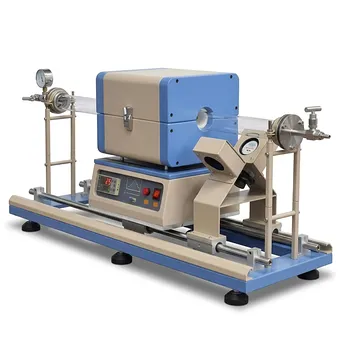
High Temperature 1700C Vertical Tube Furnace for Powder Spherification and Material Sintering
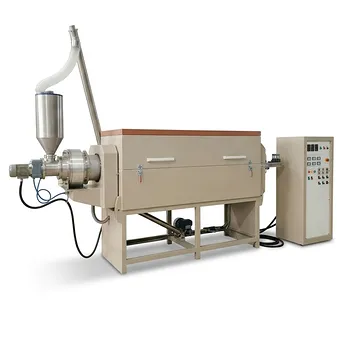
Continuous Feeding Rotary Tube Furnace for Industrial Powder Heat Treatment and Material Research

1800C High Temperature Compact Vacuum Tube Furnace with 60mm OD Alumina Tube and Kanthal MoSi2 Heating Elements
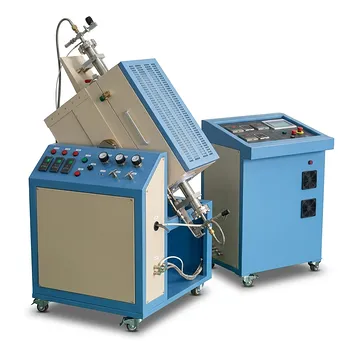
1100C High Pressure Rocking Tube Furnace with 2 Inch Super Alloy Processing Tube for Material Synthesis
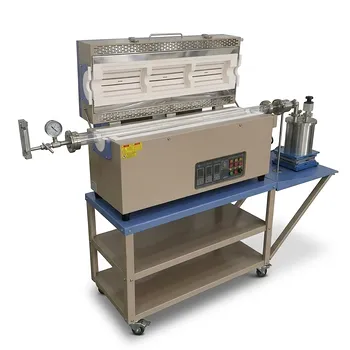
5 Inch Two Zone Rotary Tube Furnace 1100C for Powder CVD and Material Synthesis

1200C High Throughput Multi Channel Tube Furnace with 50mm Quartz Tubes for Annealing and Material Phase Diagram Research
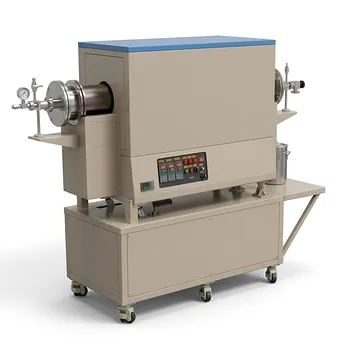
900°C Max Rotary Tube Furnace with 8 Inch 310S Alloy Tube and Optional Multi Zone Heating for Industrial Material Calcination

Compact High Temperature 1600C Tube Furnace with 50mm Alumina Tube and Vacuum Flanges for Material Sintering
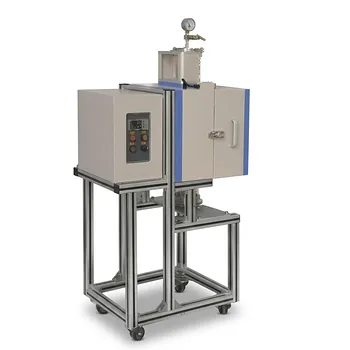
1200°C 5 Inch Vertical Quartz Tube Furnace with Stainless Steel Vacuum Flanges
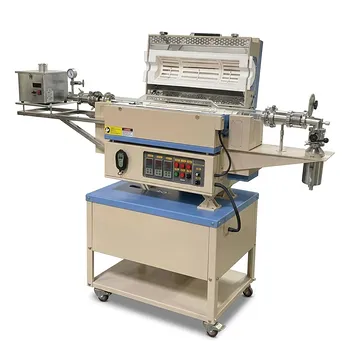
5 Inch Rotary Tube Furnace with Automatic Feeding and Receiving System 1200C Three Zone CVD Powder Processing

Vertical 1700C Vacuum and Atmosphere Tube Furnace with 80mm Alumina Tube

1700C Hydrogen Gas Tube Furnace with 60mm Alumina Process Tube and Integrated Hydrogen Safety Detector
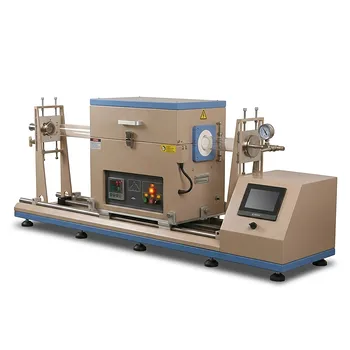
1200C Sliding Tube Furnace for Rapid Thermal Processing and CVD Graphene Growth with 100mm OD Capacity
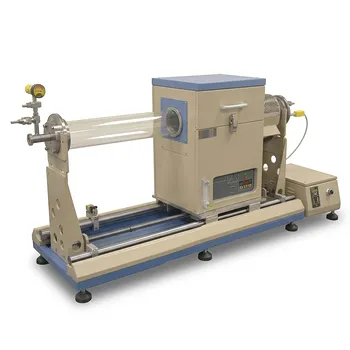
Rapid Thermal Processing Sliding Tube Furnace with 4 Inch OD Quartz Tube and 900C IR Heating

1100C Tube Furnace with Vacuum Flange and Programmable Temperature Controller for Material Science and Industrial Heat Treatment

5 Inch Three Zone Rotary Tube Furnace with Integrated Gas Delivery System and 1200C Capability for Advanced Material CVD Processing

High Temperature 1700C Benchtop Tube Furnace with 5 Inch Heating Zone High Purity Alumina Tube and Vacuum Sealing Flanges
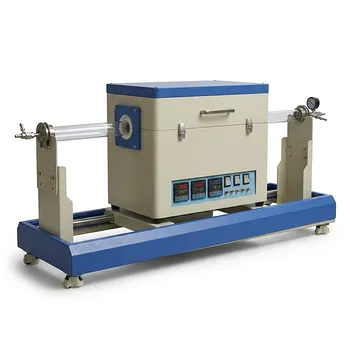
Double Temperature Zone Double Cover Tube Furnace for High Temperature CVD and Vacuum Annealing
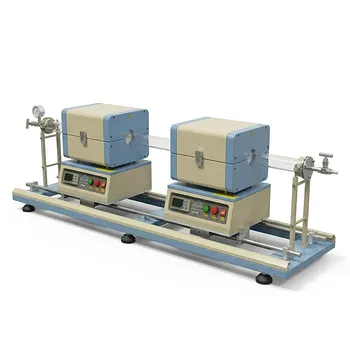
1200C Max Dual Sliding Tube Furnace with 50 mm Tube Flanges for CVD