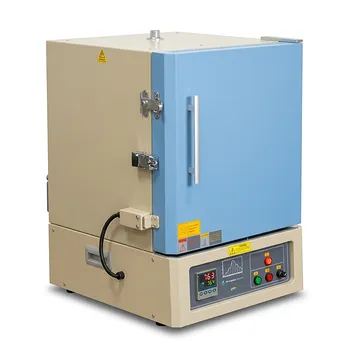
Why is a porcelain boat used for N-C@Bi annealing? Ensure Purity & Thermal Stability for Your Nanocomposites
Updated 3 months ago
The choice of a porcelain boat is dictated by its dual-role as a chemically inert platform and a thermally stable refractory container. At the 700 °C annealing temperature required for N-C@Bi nanocomposites, porcelain maintains structural integrity while resisting chemical corrosion from the reducing atmosphere. This ensures that the Bi-MOF precursor transforms into the desired nanocomposite without introducing metallic or structural impurities from the carrier material.
Porcelain boats provide a high-purity, non-reactive environment that withstands the thermal and chemical stresses of 700 °C annealing. This ensures the resulting N-C@Bi nanocomposite remains free of external contamination while protecting the laboratory equipment.
Thermal Integrity at High Temperatures
Maintaining Structural Stability at 700 °C
During the synthesis of N-C@Bi nanocomposites, the material must withstand a sustained temperature of 700 °C. Porcelain is a refractory material designed to maintain its shape and mechanical strength at these levels without deforming or melting.
Resistance to Thermal Shock
Annealing often involves heating and cooling cycles that can cause inferior materials to crack. Porcelain boats possess excellent thermal shock stability, allowing them to survive the expansion and contraction associated with high-temperature furnace operations.
Low Vapor Pressure
High-quality ceramics maintain an extremely low vapor pressure even at elevated temperatures. This prevents the boat itself from outgassing or evaporating, which would otherwise deposit container components onto the surface of the nanocomposite and alter its morphology.
Chemical Inertness and Purity Control
Preventing Reaction with Bi-MOF Precursors
The primary goal of using a porcelain boat is to serve as a non-reactive platform for the Bismuth-based Metal-Organic Framework (Bi-MOF). Because porcelain is chemically inert, it does not bond with or alter the chemical transition of the Bi-MOF into the N-C@Bi structure.
Corrosion Resistance in Reducing Atmospheres
The annealing process often occurs in a reducing atmosphere, which can be chemically aggressive toward metal carriers. Porcelain is specifically chosen for its ability to resist chemical corrosion under these specific gaseous conditions, ensuring the purity of the final carbon-coated bismuth product.
Shielding Against Metallic Impurities
Using a high-purity porcelain carrier prevents the introduction of external metal ions into the sample. This is critical for N-C@Bi nanocomposites, where the precise ratio of nitrogen-doped carbon to bismuth determines the material's electrochemical or catalytic properties.
Protecting the Synthesis Environment
Shielding the Furnace Tube
The porcelain boat acts as a physical barrier that protects the expensive quartz or ceramic furnace tube from direct contact. It prevents powders, decomposition products, or molten precursors from etching or bonding to the tube’s interior, which significantly extends the service life of the equipment.
Managing Vapor and Gas Flow
The geometry of the porcelain boat helps control how carrier gases (like Nitrogen or Argon) flow over the sample. This ensures a stable environment for the removal of byproduct gases and the uniform deposition of vapors during the carbonization process.
Understanding the Trade-offs
Temperature Limitations
While porcelain is excellent for 700 °C, it has a lower maximum operating temperature compared to alumina or zirconia. If the annealing process were to exceed 1100 °C–1200 °C, porcelain might begin to soften, necessitating a transition to more robust refractory ceramics.
Chemical Sensitivity to Strong Bases
Although porcelain resists many acids and reducing agents, it can be susceptible to strong alkaline activators (like KOH) at extreme temperatures. In such specialized cases, high-purity nickel or specific alumina crucibles might be required to avoid etching the container.
Fragility and Handling
Porcelain is inherently brittle and prone to mechanical failure if handled roughly. Despite its thermal resilience, it cannot withstand significant physical impact, requiring careful placement within the tube furnace to avoid breakage.
How to Apply This to Your Project
Making the Right Choice for Your Goal
- If your primary focus is synthesizing N-C@Bi at 700 °C: Porcelain is the optimal choice due to its balance of chemical inertness and cost-effectiveness.
- If your primary focus is avoiding all trace metal contamination: Ensure you use a high-purity or glazed porcelain boat to minimize the surface area available for minor chemical interactions.
- If your primary focus is extreme temperature synthesis (>1200 °C): Shift your material choice to alumina (Al2O3) boats, which offer higher thermal ceilings than standard porcelain.
- If your primary focus is protecting your furnace hardware: Always use a boat (porcelain or quartz) that is significantly longer than your sample spread to catch any potential runoff or splattering during decomposition.
By selecting a porcelain boat for your high-temperature annealing, you ensure a clean, stable, and controlled environment that preserves the integrity of your N-C@Bi nanocomposites.
Summary Table:
| Key Feature | Benefit for N-C@Bi Synthesis |
|---|---|
| 700°C Thermal Stability | Maintains structural integrity without melting or deforming. |
| Chemical Inertness | Prevents reactions between Bi-MOF precursors and the boat. |
| Thermal Shock Resistance | Survives rapid heating and cooling cycles without cracking. |
| Purity Control | Low vapor pressure prevents contamination of the nanocomposite. |
| Hardware Protection | Shields quartz furnace tubes from corrosive decomposition products. |
Elevate Your Material Research with THERMUNITS
Achieving precise results in high-temperature synthesis requires more than just high-quality consumables; it requires the right thermal environment. As a leading manufacturer of high-temperature laboratory equipment, THERMUNITS provides the advanced solutions needed for material science and industrial R&D.
Whether you are performing annealing, carbonization, or complex CVD processes, our comprehensive range of equipment—including Tube Furnaces, Muffle Furnaces, Vacuum & Atmosphere Furnaces, and CVD/PECVD systems—is designed for precision and durability. We also offer specialized solutions like Dental Furnaces, Electric Rotary Kilns, and Vacuum Induction Melting (VIM) furnaces to meet the most demanding heat treatment requirements.
Ready to optimize your lab's thermal processing? Contact our technical experts today to find the perfect furnace or thermal elements for your research. Let THERMUNITS help you achieve superior purity and performance in every batch.
References
- Tianyi Zhang, Guicun Li. KF-Containing Interphase Formation Enables Better Potassium Ion Storage Capability. DOI: 10.3390/molecules29132996
Mentioned Products
- Vacuum Dental Porcelain Sintering Furnace for High Precision Ceramic Restorations
- Compact 1000C Muffle Furnace with Programmable Controller and 2 Inch Top Port for Vacuum and Atmosphere Material Research
- Dental Porcelain Zirconia Sintering Ceramic Vacuum Press Furnace
- 1800C Bench Top Muffle Furnace 18 Liters with Kanthal Super 1900 Heating Elements for High Purity Ceramic Sintering and Material Research
- 1200C Max Compact Auto-Sliding PECVD Furnace with 2 Inch Tube and Vacuum Pump
People Also Ask
- What Role Does a Vacuum Sintering Furnace Play in Ni-Mn-Ga Alloy Fabrication? Optimizing Porous Structures
- How does a vacuum or atmosphere sintering furnace contribute to the congener-welding process of carbon nitride membranes?
- What technical features ensure temperature precision and material integrity in dental furnaces? Quality Sintering Guide
- What is the primary function and application of a dental furnace in laboratory settings? Optimize Your Restorations
- How does a dental furnace prevent material cracking during rapid thermal cycles? Master Precision Thermal Control

Tech Team · ThermUnits
Last updated on Jun 03, 2026
Related Products
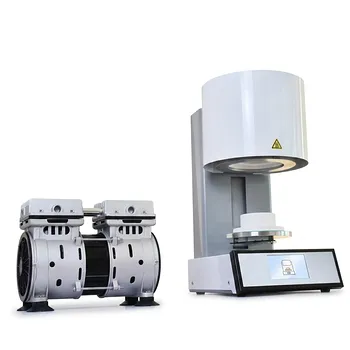
Vacuum Dental Porcelain Sintering Furnace for High Precision Ceramic Restorations
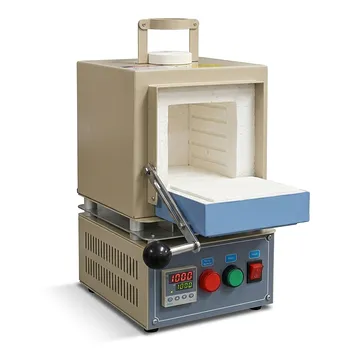
Compact 1000C Muffle Furnace with Programmable Controller and 2 Inch Top Port for Vacuum and Atmosphere Material Research
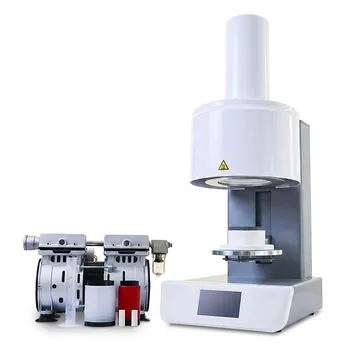
Dental Porcelain Zirconia Sintering Ceramic Vacuum Press Furnace
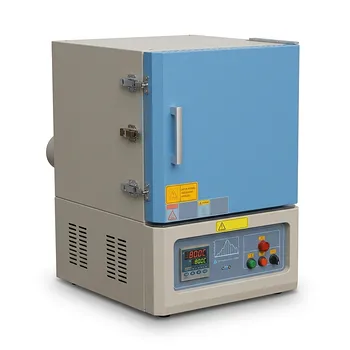
1800C Bench Top Muffle Furnace 18 Liters with Kanthal Super 1900 Heating Elements for High Purity Ceramic Sintering and Material Research
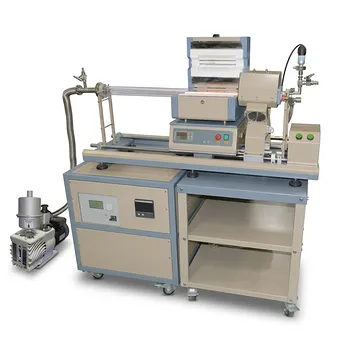
1200C Max Compact Auto-Sliding PECVD Furnace with 2 Inch Tube and Vacuum Pump
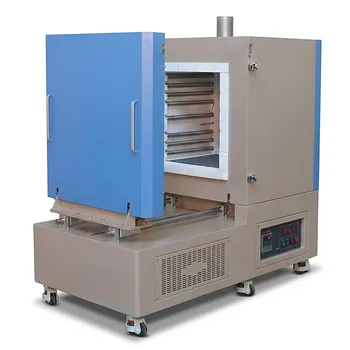
1200C Five Side Heating Muffle Furnace with Sliding Door 125L Volume High Temperature Heat Treatment System for Large Scale Sintering and Annealing
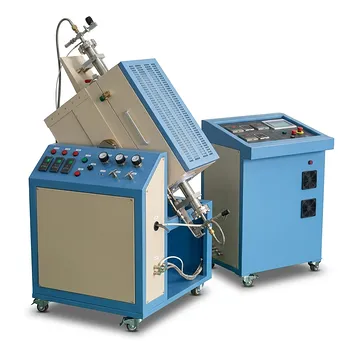
1100C High Pressure Rocking Tube Furnace with 2 Inch Super Alloy Processing Tube for Material Synthesis
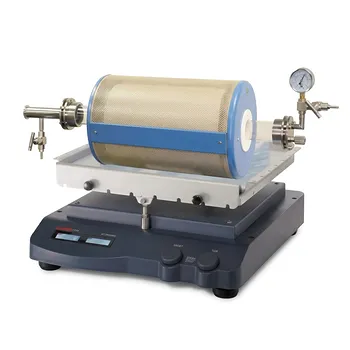
High Temperature Rocking Tube Furnace with Quartz Tube and Vacuum Flange for Materials Synthesis

1100°C High Temperature Quartz Chamber Furnace 8 Inch OD with 7.6 Liter Capacity and Vacuum Atmosphere Capability
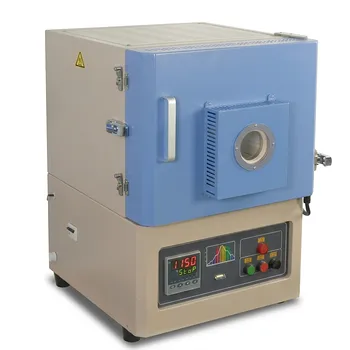
High Temperature Benchtop Muffle Furnace with Quartz Observation Window for Thermal Imaging and Material Analysis
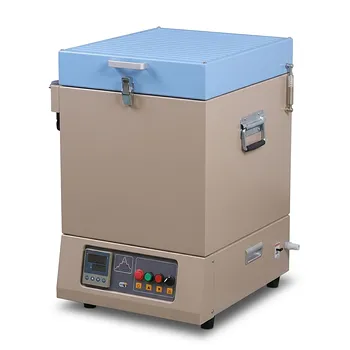
High Temperature Vertical Crucible Furnace with 22L Heating Chamber and 1200C Maximum Temperature
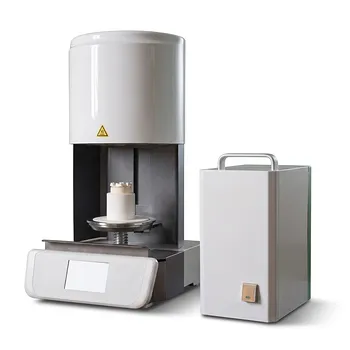
Dental Porcelain Zirconia Sintering Ceramic Furnace Chairside with Transformer
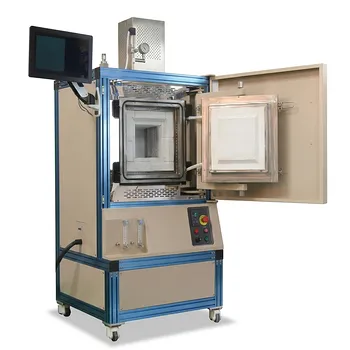
High Temperature Hydrogen Atmosphere Box Furnace 1650C Max Reducing Environment Material Synthesis System 8x8x8 Chamber
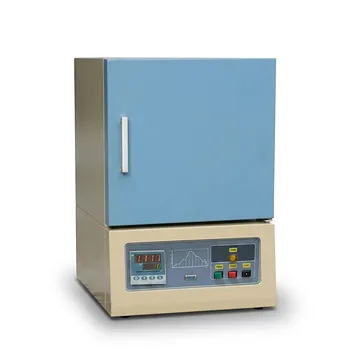
Ultra High Temperature Bench Top Muffle Furnace 1750C Sintering System with Kanthal Super Heating Elements and Precision Digital Control
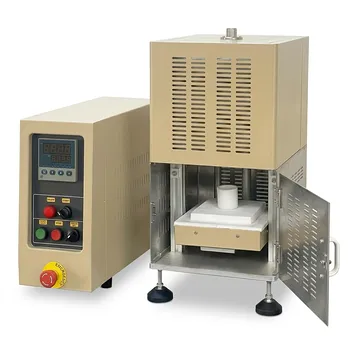
1200C Compact Automatic Bottom Loading Furnace with Precision Controller and Rapid Cooling Capability
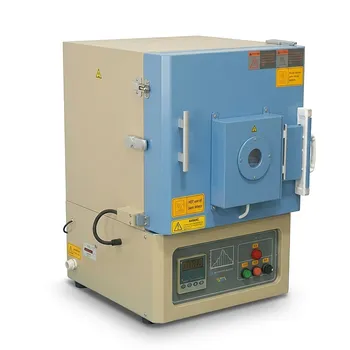
High Temperature Benchtop Muffle Furnace 1500C with 3.6L Chamber and Quartz Observation Window
Electric Rotary Kiln Continuous Working Small Rotary Furnace Heating Pyrolysis Plant
Industrial Large Box Furnace 1700C 216L High Temp Muffle Sintering System
1100C High Temperature Vacuum Crucible Furnace with Quartz Chamber for Thermal Processing and Sintering