Why use a precision tube furnace for CAM crystal growth? Optimize SVD for high-crystallinity hexagonal plates.
Updated 5 months ago
The preference for a precision tube furnace in growing hexagonal Cyanuric Acid-Melamine (CAM) single crystals stems from its ability to facilitate Substrate-confined Vapor Deposition (SVD). Unlike a standard muffle furnace, a precision tube furnace provides the controllable atmosphere flow, precise air pressure regulation, and stable temperature gradients necessary to manage the transport rate and deposition location of reactants. This level of environmental control prevents the excessive growth rates common in wet chemical synthesis, ensuring the production of high-crystallinity hexagonal plates rather than irregular structures.
Core Takeaway: A precision tube furnace is essential because it transforms the growth environment into a controlled laboratory for vapor kinetics, allowing researchers to dictate crystal morphology through precise atmospheric and thermal management that a muffle furnace cannot provide.
The Mechanics of Substrate-confined Vapor Deposition (SVD)
Regulating Reactant Transport
The precision tube furnace allows for the fine-tuning of vapor transport rates, which is the primary bottleneck in achieving high-quality CAM crystals. By adjusting the flow of an inert carrier gas, the furnace ensures that reactants reach the growth zone at a consistent, predictable speed. This prevents the "over-saturation" of the environment, which typically leads to disordered or excessive crystal growth.
Managing Nucleation Sites
Within the tube furnace, a glass substrate is used to limit the area available for crystallization. This confinement reduces the number of initial nucleation sites, forcing the molecules to grow in a flat, oriented manner on the solid surface. This specific orientation is what results in the transparent, regular hexagonal flakes desired for advanced material applications.
Stabilizing Thermal Gradients
Stable temperature gradients are critical for maintaining a steady state during the deposition process. The tube furnace design allows for a distinct "hot zone" for vaporization and a "cool zone" for deposition. This spatial separation of temperatures is much harder to maintain in the uniform heat environment of a standard muffle furnace.
The Critical Role of Atmospheric Control
Exclusion of Oxygen and Contaminants
A precision tube furnace offers a highly sealed environment that can be purged of oxygen or filled with specific inert gases. This is vital for maintaining the chemical purity of CAM crystals, as it prevents oxidative degradation or unwanted side reactions during the high-temperature growth phase. In contrast, a muffle furnace is typically open to the ambient atmosphere, increasing the risk of contamination.
Precision Pressure Regulation
The ability to regulate internal air pressure allows researchers to manipulate the mean free path of the vapor molecules. By controlling the pressure, the furnace dictates how the CAM molecules interact with the substrate. This level of kinetic control is the difference between a high-crystallinity single plate and a polycrystalline mass.
Understanding the Trade-offs
Limitations of the Muffle Furnace
While a muffle furnace is excellent for bulk calcination or dehydrating samples at constant cooling rates, it lacks the specialized infrastructure for vapor transport. It is designed for uniform heating in an air environment, making it unsuitable for processes requiring vacuum or specific gas flows. Using a muffle furnace for CAM growth often results in poor morphological control and lower crystallinity.
Precision vs. Throughput
Precision tube furnaces are specialized tools that prioritize quality and environmental control over high-volume throughput. While they are the gold standard for growing high-quality single crystal plates, they are often more complex to set up and operate than a simple muffle furnace. For researchers, the trade-off is higher complexity for significantly superior material properties.
How to Apply This to Your Project
When choosing your thermal processing equipment, consider the specific requirements of your crystal growth phase versus your post-processing needs.
- If your primary focus is Growing High-Crystallinity CAM Plates: Utilize a precision tube furnace to leverage Substrate-confined Vapor Deposition and atmospheric control.
- If your primary focus is Post-Growth Calcination or Dehydration: A standard muffle furnace is sufficient, provided you can control the cooling rate to manage structural defects.
- If your primary focus is Preventing Material Oxidation: Prioritize the sealed environment and vacuum capabilities of a tube atmosphere furnace.
Choosing the right furnace ensures that the fundamental kinetics of your material are mastered rather than left to chance.
Summary Table:
| Feature | Precision Tube Furnace | Standard Muffle Furnace |
|---|---|---|
| Primary Method | Substrate-confined Vapor Deposition (SVD) | Bulk Calcination / Dehydration |
| Atmospheric Control | Sealed, Inert Gas, & Vacuum capabilities | Typically open to ambient air |
| Thermal Profile | Distinct zones for stable gradients | Uniform internal heat environment |
| Nucleation Control | High (Regulated transport rates) | Low (High risk of over-saturation) |
| Crystal Morphology | Regular hexagonal single crystal plates | Polycrystalline or irregular masses |
Master Your Material Synthesis with THERMUNITS
Precise environmental control is the difference between a failed experiment and a high-crystallinity breakthrough. THERMUNITS is a leading manufacturer of high-temperature laboratory equipment specifically designed for material science and industrial R&D.
We offer a comprehensive range of thermal processing solutions tailored to your specific needs, including:
- Precision Tube & Atmosphere Furnaces for advanced vapor deposition.
- Vacuum, Muffle, & Rotary Furnaces for diverse heat treatment applications.
- CVD/PECVD Systems & Hot Press Furnaces for cutting-edge material research.
Whether you are growing CAM single crystals or performing industrial-scale calcination, our equipment provides the stability and accuracy your project demands.
Ready to elevate your research quality?
Contact our experts at THERMUNITS today to find the ideal thermal solution for your laboratory.
References
- Yuting Wang, Jingsan Xu. Sublimation‐Induced Vapor Deposition of Cyanuric Acid‐Melamine Supramolecular Single Crystals on Surfaces. DOI: 10.1002/adfm.202403868
Mentioned Products
- High Temperature 1700C Vertical Split Tube Furnace for Material Quenching and Single Crystal Growth
- High Temperature 1200C Automatic Sliding Dual Zone Tube Furnace for 2D Transition Metal Dichalcogenides Growth and Material Sublimation Research
- Dual Tube 100mm 80mm CVD Sliding Furnace with 4 Channel Gas Mixing and Vacuum System
- High Temperature 1700C Vertical Tube Furnace for Powder Spherification and Material Sintering
- Automated 1200 C Tube Furnace for AI Material Research with 6 Inch OD and Sliding Flange
People Also Ask
- What is the primary function of a high-temperature split tube furnace in nitrogen metastable particle research? Expert Guide
- What role does a high-temperature vertical tube furnace play in simulating high-carbon ferromanganese slag formation?
- Why integrate a vertical split tube furnace with hydraulic loading for HSECC? Essential for In-Situ Fire Simulation.
- What functions does a vertical high-temperature tube furnace perform? Master Industrial Sintering & R&D Simulation
- What is the role of a split vertical tube furnace during flash sintering of 8YSZ and 20SDC? Master Ultra-Fast R&D

Tech Team · ThermUnits
Last updated on Apr 14, 2026
Related Products
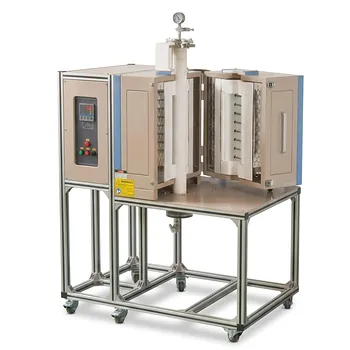
High Temperature 1700C Vertical Split Tube Furnace for Material Quenching and Single Crystal Growth
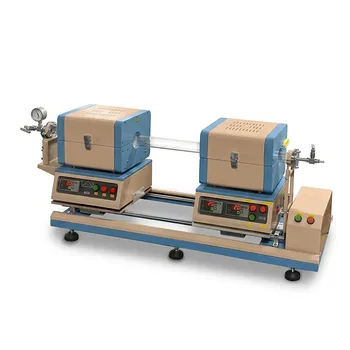
High Temperature 1200C Automatic Sliding Dual Zone Tube Furnace for 2D Transition Metal Dichalcogenides Growth and Material Sublimation Research
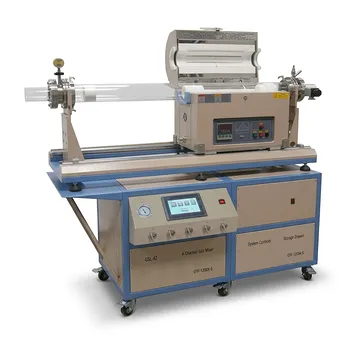
Dual Tube 100mm 80mm CVD Sliding Furnace with 4 Channel Gas Mixing and Vacuum System

High Temperature 1700C Vertical Tube Furnace for Powder Spherification and Material Sintering
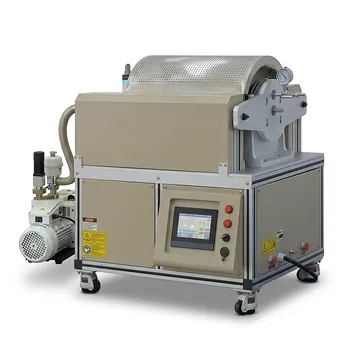
Automated 1200 C Tube Furnace for AI Material Research with 6 Inch OD and Sliding Flange
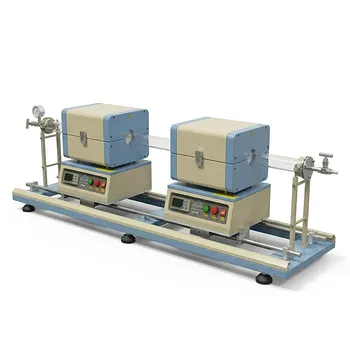
1200C Max Dual Sliding Tube Furnace with 50 mm Tube Flanges for CVD
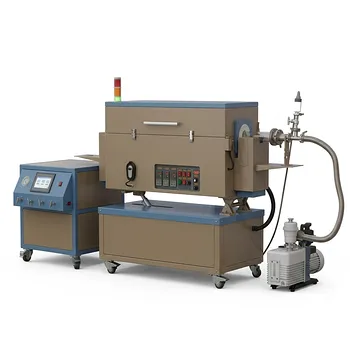
5 Inch Three Zone Rotary Tube Furnace with Integrated Gas Delivery System and 1200C Capability for Advanced Material CVD Processing

High Temperature Tube Furnace 1500C with Sliding Flanges and 50mm OD for Rapid Thermal Processing Fast Heating and Cooling
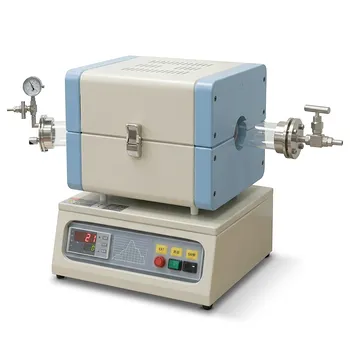
1200C Tube Furnace with Internal Magnetic Sample Sliding for Direct Vaporizing Deposition and Rapid Thermal Processing

Compact High Temperature 1600C Tube Furnace with 50mm Alumina Tube and Vacuum Flanges for Material Sintering
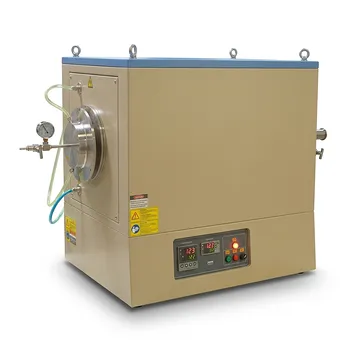
1100°C Large Diameter Quartz Tube Furnace with 24 Inch Heating Zone and Water Cooled Flanges

High Temperature Automated 5 Inch Tube Furnace for Autonomous Material Research and Advanced Laboratory R&D
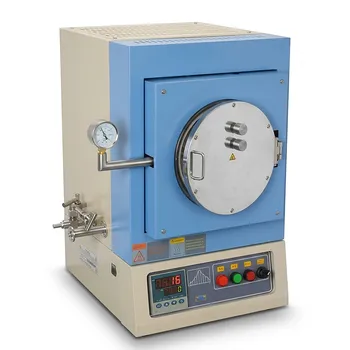
1100°C High Temperature Quartz Chamber Furnace 8 Inch OD with 7.6 Liter Capacity and Vacuum Atmosphere Capability
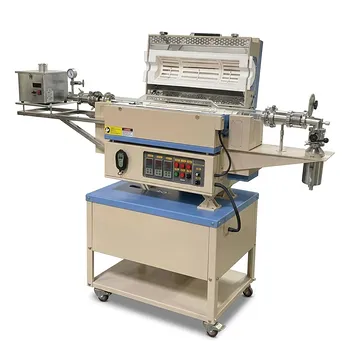
5 Inch Rotary Tube Furnace with Automatic Feeding and Receiving System 1200C Three Zone CVD Powder Processing

Compact Vertical Split Quartz Tube Furnace with Stainless Steel Vacuum Flanges for Rapid Thermal Quenching and Controlled Atmosphere Material Processing
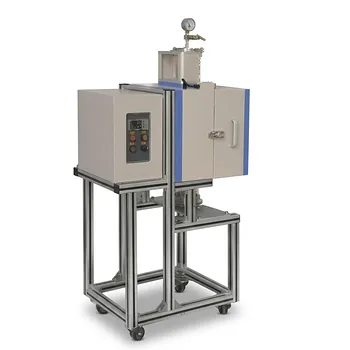
1200°C 5 Inch Vertical Quartz Tube Furnace with Stainless Steel Vacuum Flanges

Vertical 1700C Vacuum and Atmosphere Tube Furnace with 80mm Alumina Tube
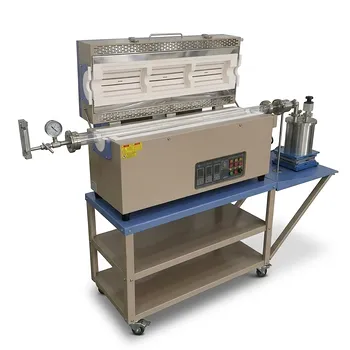
5 Inch Two Zone Rotary Tube Furnace 1100C for Powder CVD and Material Synthesis
High Temperature Dual Zone Rotating Tube Furnace 1500C Silicon Carbide Heating for Advanced Material Synthesis
