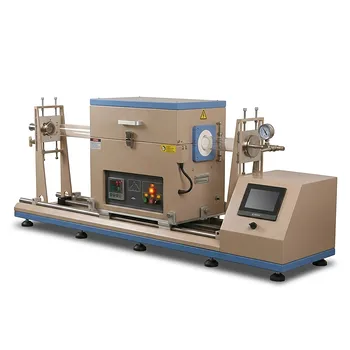
Why is a 300°C Tube Furnace treatment needed for Ni/NiO@GF electrodes? Optimize Core-Shell Structure for Batteries
Updated 3 months ago
The secondary heat treatment at 300°C in an air atmosphere is the critical step required to transform metallic nickel into a functional core-shell Ni/NiO structure. This specific process facilitates controlled, in-situ surface oxidation, growing a thin nickel oxide (NiO) shell around the nickel core to create the catalytic sites necessary for high-performance battery electrodes.
Core Takeaway: This heat treatment precisely engineers the electrode's surface by introducing a NiO shell rich in oxygen vacancies. These vacancies act as catalytic active sites that enhance bromine adsorption and reduce cathodic polarization in zinc-bromine flow batteries.
The Mechanism of In-Situ Shell Formation
Controlled Surface Oxidation
By utilizing a Tube Furnace at a relatively low temperature of 300°C, the process ensures that only the surface of the metallic nickel reacts with oxygen. This prevents the entire nickel particle from turning into oxide, preserving a highly conductive metallic nickel core.
Precision of the 300°C Threshold
The 300°C temperature is high enough to initiate the chemical reaction between nickel and atmospheric oxygen but low enough to maintain fine control over the shell thickness. A short-duration soak at this temperature ensures the resulting NiO layer remains thin and manageable.
Integration with the Graphite Felt (GF)
The "in-situ" nature of this growth means the NiO shell forms directly on the nickel already present on the Graphite Felt substrate. This creates a robust mechanical and electrical interface between the catalytic shell and the conductive network.
The Role of Oxygen Vacancies in Performance
Creating Redox Catalytic Sites
The NiO shell formed under these specific conditions is naturally "defective," containing abundant oxygen vacancies. These vacancies are not flaws; they are the primary active sites where the redox chemistry of the battery occurs.
Enhancing Bromine Adsorption
In zinc-bromine flow batteries, the efficiency of the cathode depends on how well it can interact with bromine. The oxygen vacancies in the NiO shell provide an excellent bromine adsorption capacity, keeping the reactants in close contact with the electrode surface.
Reducing Cathodic Polarization
By providing more efficient pathways for electron transfer and reaction, the core-shell structure significantly lowers cathodic polarization. This result translates directly into higher voltage efficiency and better overall energy density for the battery system.
Understanding the Trade-offs and Pitfalls
The Risk of Over-Oxidation
If the temperature exceeds 300°C or the duration is too long, the metallic nickel core may oxidize completely. This would drastically increase the internal resistance of the electrode, as NiO is significantly less conductive than metallic nickel.
Atmosphere Sensitivity
Performing this treatment in an inert atmosphere (like Argon) would fail to form the shell, while a reducing atmosphere (like Hydrogen) would reverse any existing oxidation. The presence of air (oxygen) is mandatory for the shell-forming chemical reaction to occur.
Structural Integrity
Rapid heating or cooling in the Tube Furnace can sometimes lead to delamination between the shell and the core. Maintaining a steady, programmed heating rate is essential to ensure the NiO shell remains adhered to the nickel core during thermal expansion.
How to Apply This to Your Project
When implementing this heat treatment for electrode fabrication, your specific goals will dictate the precise parameters of the furnace program.
- If your primary focus is Maximum Conductivity: Keep the oxidation duration at the minimum required time to ensure the metallic nickel core remains as large as possible.
- If your primary focus is Catalytic Activity: Prioritize the formation of the NiO shell by ensuring uniform air flow within the Tube Furnace to maximize the density of oxygen vacancies.
- If your primary focus is Long-Term Stability: Use a slower cooling ramp-rate to prevent micro-cracking in the NiO shell, which ensures the core-shell interface remains intact over many charge-discharge cycles.
By mastering the balance of temperature and atmosphere, you can transform simple nickel-coated substrates into high-performance, catalytically active electrodes.
Summary Table:
| Parameter | Targeted Condition | Critical Function in Electrode Formation |
|---|---|---|
| Temperature | 300°C | Initiates surface oxidation without compromising the conductive nickel core. |
| Atmosphere | Air (Oxygen-rich) | Provides the necessary reactant to grow the NiO shell and create oxygen vacancies. |
| Equipment | Tube Furnace | Ensures precise temperature control and uniform gas distribution for consistent shell growth. |
| Structure | Core-Shell (Ni/NiO) | Enhances bromine adsorption and reduces cathodic polarization in flow batteries. |
| Cooling Rate | Controlled/Steady | Prevents delamination and micro-cracking between the shell and the core interface. |
Elevate Your Material Research with THERMUNITS
Precise thermal processing is the difference between a failed experiment and a high-performance breakthrough. THERMUNITS is a leading manufacturer of high-temperature laboratory equipment specifically designed for material science and industrial R&D.
Whether you are engineering core-shell electrodes or developing next-generation catalysts, our comprehensive range of thermal solutions—including Tube Furnaces, Muffle, Vacuum, Atmosphere, Rotary, and Hot Press furnaces, as well as CVD/PECVD systems and Vacuum Induction Melting (VIM) furnaces—provides the accuracy and reliability you need.
We empower researchers with uniform heating and atmosphere control to master complex chemical transformations. Contact us today to find the perfect furnace for your lab and take the next step in your R&D journey.
References
- Longwei Li, Xiong Pu. Core‐shell Ni/NiO heterostructures as catalytic cathodes enabling high‐performance zinc bromine flow batteries. DOI: 10.1002/cnl2.119
Mentioned Products
- Vertical 1700C Vacuum and Atmosphere Tube Furnace with 80mm Alumina Tube
- Compact High Temperature 1600C Tube Furnace with 50mm Alumina Tube and Vacuum Flanges for Material Sintering
- 900°C Max Rotary Tube Furnace with 8 Inch 310S Alloy Tube and Optional Multi Zone Heating for Industrial Material Calcination
- Split Vertical Tube Furnace with 1200C Quartz Tube and Stainless Steel Vacuum Flanges for Rapid Thermal Processing
- High Temperature 1700C Tube Furnace with High Vacuum Turbomolecular Pump System and Multi Channel Mass Flow Controller Gas Mixer
People Also Ask
- How is an industrial-grade vertical tube furnace utilized in smelting leaching residues? Enhance Metal Recovery Efficiency
- What is the function of a laboratory-grade vertical tube furnace in fast pyrolysis? Optimize Composite Research.
- How does a vertical tube furnace facilitate thermoelectric alloy melting? Precision synthesis for material homogeneity.
- Why is a thermocouple sensor indispensable for monitoring the vertical tube furnace during gallium oxide nanowire production? Optimize VLS Growth
- What are the advantages of a Vertical Tube Furnace for iron coke testing? | Achieve High-Precision CRI Analysis

Tech Team · ThermUnits
Last updated on Jun 03, 2026
Related Products

Vertical 1700C Vacuum and Atmosphere Tube Furnace with 80mm Alumina Tube

Compact High Temperature 1600C Tube Furnace with 50mm Alumina Tube and Vacuum Flanges for Material Sintering
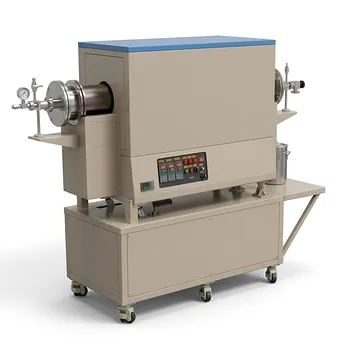
900°C Max Rotary Tube Furnace with 8 Inch 310S Alloy Tube and Optional Multi Zone Heating for Industrial Material Calcination
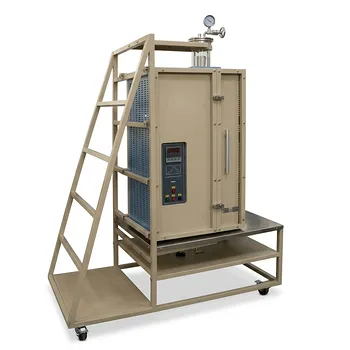
Split Vertical Tube Furnace with 1200C Quartz Tube and Stainless Steel Vacuum Flanges for Rapid Thermal Processing

High Temperature 1700C Tube Furnace with High Vacuum Turbomolecular Pump System and Multi Channel Mass Flow Controller Gas Mixer

1100C Tube Furnace with Vacuum Flange and Programmable Temperature Controller for Material Science and Industrial Heat Treatment
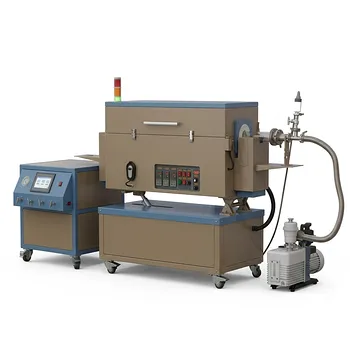
5 Inch Three Zone Rotary Tube Furnace with Integrated Gas Delivery System and 1200C Capability for Advanced Material CVD Processing
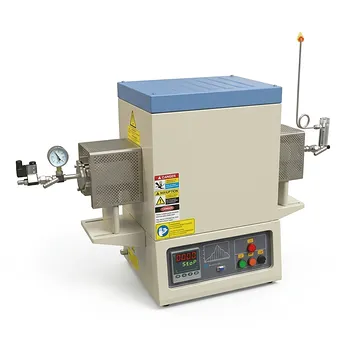
1700C Hydrogen Gas Tube Furnace with 60mm Alumina Process Tube and Integrated Hydrogen Safety Detector

1200°C 5 Inch Vertical Quartz Tube Furnace with Stainless Steel Vacuum Flanges

High Temperature 1700C Six Zone Split Tube Furnace with Alumina Tube and Water Cooled Flanges

Compact Vertical Split Quartz Tube Furnace with Stainless Steel Vacuum Flanges for Rapid Thermal Quenching and Controlled Atmosphere Material Processing

High Temperature 1700C Benchtop Tube Furnace with 5 Inch Heating Zone High Purity Alumina Tube and Vacuum Sealing Flanges
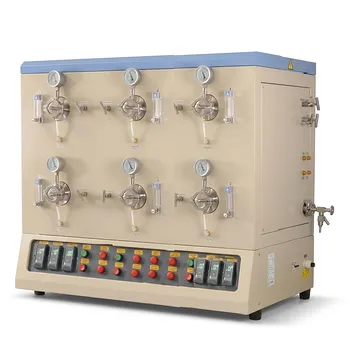
1200C High Throughput Multi Channel Tube Furnace with 50mm Quartz Tubes for Annealing and Material Phase Diagram Research
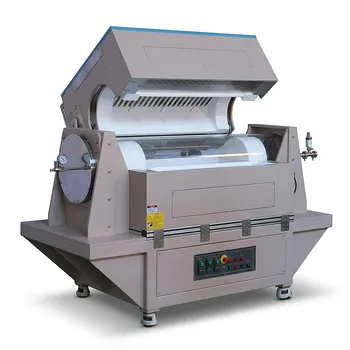
Three Zone Tube Furnace with 11 Inch or 15 Inch Quartz Tube and Hinged Flanges for Vacuum Atmosphere Heat Treatment

1800C High Temperature Compact Vacuum Tube Furnace with 60mm OD Alumina Tube and Kanthal MoSi2 Heating Elements

High Temperature 1700C Vertical Tube Furnace for Powder Spherification and Material Sintering

High Temperature Rocking Tube Furnace with Quartz Tube and Vacuum Flange for Materials Synthesis

High Temperature Automated 5 Inch Tube Furnace for Autonomous Material Research and Advanced Laboratory R&D
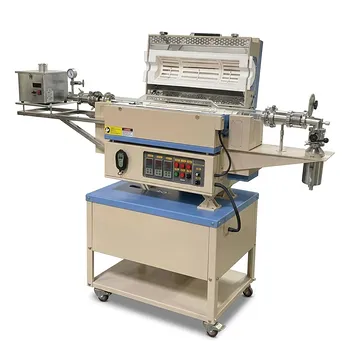
5 Inch Rotary Tube Furnace with Automatic Feeding and Receiving System 1200C Three Zone CVD Powder Processing