Why is a stable nitrogen (N2) atmosphere maintained within the tube furnace during the annealing of CuGaS2 thin films?
Updated 3 months ago
A stable nitrogen ($N_2$) atmosphere is essential for preserving the chemical integrity of $CuGaS_2$ thin films during thermal processing. The nitrogen acts as an inert shield that prevents atmospheric oxygen from reacting with the film and stops volatile sulfur from escaping the lattice at high temperatures. This ensures the film retains its stoichiometric balance and transitions into a high-quality chalcopyrite crystalline structure rather than degrading into oxides.
The primary purpose of a nitrogen atmosphere during $CuGaS_2$ annealing is to provide a chemically non-reactive environment that prevents oxidation and sulfur volatilization. By controlling the atmosphere, the process ensures the material achieves its intended semiconductor properties and crystalline phase without the interference of environmental impurities.
The Role of Inertness in Phase Stability
Preventing Oxidative Degradation
At the annealing temperature of 350°C, $CuGaS_2$ is highly susceptible to reacting with ambient oxygen. The introduction of nitrogen isolates the film from the atmosphere, preventing the formation of unwanted oxides like copper oxide or gallium oxide.
In copper-based thin films, maintaining an inert environment is critical to protect the specific oxidation states of the metal ions. Without this protection, monovalent copper ($Cu^+$) can easily over-oxidize to divalent copper ($Cu^{2+}$), which would fundamentally alter the material's electrical and optical characteristics.
Suppressing Sulfur Volatilization
Sulfur is a highly volatile component that tends to escape from the film surface when heat is applied. The stable nitrogen atmosphere creates a controlled environment that helps minimize this unintended volatilization, ensuring the film maintains its precise stoichiometric ratio.
If sulfur loss is not controlled, the film will develop sulfur vacancies. These defects can degrade the semiconductor performance and prevent the formation of a stable chalcopyrite structure, which is required for efficient optoelectronic applications.
Enhancing Microstructure and Crystallinity
Promoting Atomic Rearrangement
Annealing provides the thermal energy necessary for atoms to move into their ideal positions within the crystal lattice. A stable atmosphere ensures this solid-state reaction occurs in a pure environment, leading to significantly enhanced material crystallinity.
The nitrogen environment allows for the effective elimination of internal stresses generated during the initial deposition process (such as magnetron sputtering). This results in a more uniform and stable thin film structure.
Facilitating Dopant Incorporation
When dealing with doped versions of these films, such as Sn-doped $CuGaS_2$, the controlled thermal field is vital for driving dopant ions into the correct lattice sites. The nitrogen atmosphere ensures this process happens without the competitive adsorption of environmental impurities.
By managing the formation of intrinsic defects and vacancies, the atmosphere-protected furnace ensures the film maintains its p-type conductivity. This precision is what allows for the optimization of carrier mobility and overall semiconductor efficiency.
Understanding the Trade-offs and Risks
Limitations of Passive Inert Atmospheres
While nitrogen is effective at preventing oxidation, it is a passive shield rather than an active reactant. In some cases, if the sulfur vapor pressure is not specifically managed (such as through sulfurization), nitrogen alone may not completely stop sulfur loss at extreme temperatures.
Impact of Nitrogen Purity
The success of the annealing process is heavily dependent on the purity of the nitrogen gas. Even trace amounts of moisture or oxygen within the nitrogen flow can lead to the formation of oxygen vacancies or surface contamination, which undermines the purpose of the controlled atmosphere.
How to Apply This to Your Project
If your primary focus is preserving Stoichiometry: Ensure a continuous, stable flow of high-purity nitrogen to maximize the partial pressure within the tube and minimize the escape of sulfur atoms.
If your primary focus is improving Crystallinity: Use the nitrogen atmosphere in conjunction with precise temperature ramp rates to allow for gradual atomic rearrangement and stress relief.
If your primary focus is Electrical Performance: Monitor the atmosphere strictly to prevent the over-oxidation of copper ions, which is vital for maintaining the p-type semiconductor characteristics.
Maintaining a stable nitrogen environment is the definitive method for transforming an amorphous or stressed film into a high-performance, crystalline semiconductor.
Summary Table:
| Role of N2 Atmosphere | Primary Benefit | Material Impact |
|---|---|---|
| Inert Shielding | Prevents Oxidation | Stops formation of copper/gallium oxides; preserves Cu+ states. |
| Pressure Control | Suppresses Sulfur Loss | Maintains stoichiometric balance and prevents lattice vacancies. |
| Thermal Stability | Improves Crystallinity | Promotes chalcopyrite structure formation and stress relief. |
| Impurity Barrier | Optimizes Performance | Protects p-type conductivity and enhances carrier mobility. |
Precision Atmosphere Control for Your Material Research
Achieving the perfect chalcopyrite structure in $CuGaS_2$ thin films requires more than just heat; it demands absolute atmospheric stability. THERMUNITS is a leading manufacturer of high-temperature laboratory equipment, specializing in high-purity Tube Furnaces, Vacuum, and Atmosphere systems tailored for material science and industrial R&D.
Our advanced thermal processing solutions ensure:
- Ultra-stable gas flow for precise nitrogen or inert environments.
- Strict temperature uniformity to facilitate optimal atomic rearrangement.
- High-purity seals to prevent oxidative degradation and sulfur volatilization.
From CVD/PECVD systems to Dental Furnaces and Vacuum Induction Melting (VIM), THERMUNITS delivers the reliability your research deserves. Contact our technical experts today to find the ideal furnace solution for your semiconductor thin-film projects!
References
- Sreelakshmi Krishna, V. Vasu. Preparation and characterization of pristine and Sn doped copper gallium sulphide (CGS) thin films using spray pyrolysis technique. DOI: 10.1016/j.heliyon.2024.e25425
Mentioned Products
- Vertical 1700C Vacuum and Atmosphere Tube Furnace with 80mm Alumina Tube
- Compact High Temperature 1600C Tube Furnace with 50mm Alumina Tube and Vacuum Flanges for Material Sintering
- 900°C Max Rotary Tube Furnace with 8 Inch 310S Alloy Tube and Optional Multi Zone Heating for Industrial Material Calcination
- Split Vertical Tube Furnace with 1200C Quartz Tube and Stainless Steel Vacuum Flanges for Rapid Thermal Processing
- High Temperature 1700C Tube Furnace with High Vacuum Turbomolecular Pump System and Multi Channel Mass Flow Controller Gas Mixer
People Also Ask
- How is an industrial-grade vertical tube furnace utilized in smelting leaching residues? Enhance Metal Recovery Efficiency
- What is the function of a laboratory-grade vertical tube furnace in fast pyrolysis? Optimize Composite Research.
- How does a vertical tube furnace facilitate thermoelectric alloy melting? Precision synthesis for material homogeneity.
- Why is a thermocouple sensor indispensable for monitoring the vertical tube furnace during gallium oxide nanowire production? Optimize VLS Growth
- What are the advantages of using a vertical tube furnace for crucible experiments simulating steel-slag interactions?

Tech Team · ThermUnits
Last updated on Jun 03, 2026
Related Products

Vertical 1700C Vacuum and Atmosphere Tube Furnace with 80mm Alumina Tube

Compact High Temperature 1600C Tube Furnace with 50mm Alumina Tube and Vacuum Flanges for Material Sintering
900°C Max Rotary Tube Furnace with 8 Inch 310S Alloy Tube and Optional Multi Zone Heating for Industrial Material Calcination
Split Vertical Tube Furnace with 1200C Quartz Tube and Stainless Steel Vacuum Flanges for Rapid Thermal Processing

High Temperature 1700C Tube Furnace with High Vacuum Turbomolecular Pump System and Multi Channel Mass Flow Controller Gas Mixer
1100C Tube Furnace with Vacuum Flange and Programmable Temperature Controller for Material Science and Industrial Heat Treatment
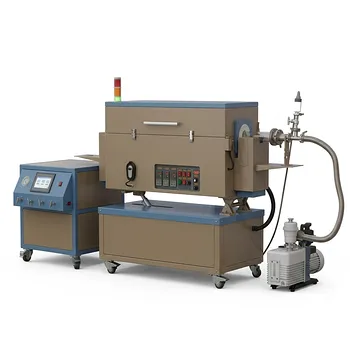
5 Inch Three Zone Rotary Tube Furnace with Integrated Gas Delivery System and 1200C Capability for Advanced Material CVD Processing
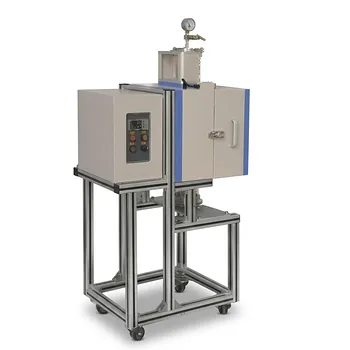
1200°C 5 Inch Vertical Quartz Tube Furnace with Stainless Steel Vacuum Flanges
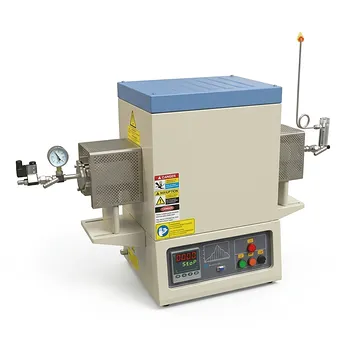
1700C Hydrogen Gas Tube Furnace with 60mm Alumina Process Tube and Integrated Hydrogen Safety Detector

High Temperature 1700C Six Zone Split Tube Furnace with Alumina Tube and Water Cooled Flanges

Compact Vertical Split Quartz Tube Furnace with Stainless Steel Vacuum Flanges for Rapid Thermal Quenching and Controlled Atmosphere Material Processing

High Temperature 1700C Benchtop Tube Furnace with 5 Inch Heating Zone High Purity Alumina Tube and Vacuum Sealing Flanges
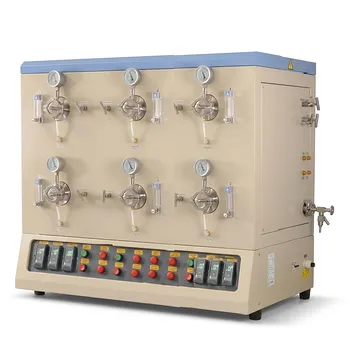
1200C High Throughput Multi Channel Tube Furnace with 50mm Quartz Tubes for Annealing and Material Phase Diagram Research
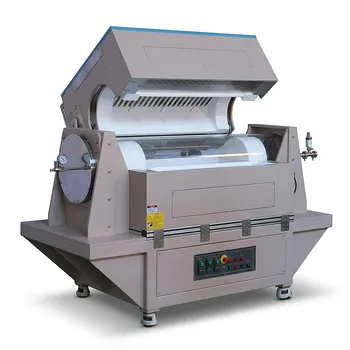
Three Zone Tube Furnace with 11 Inch or 15 Inch Quartz Tube and Hinged Flanges for Vacuum Atmosphere Heat Treatment

1800C High Temperature Compact Vacuum Tube Furnace with 60mm OD Alumina Tube and Kanthal MoSi2 Heating Elements

High Temperature 1700C Vertical Tube Furnace for Powder Spherification and Material Sintering
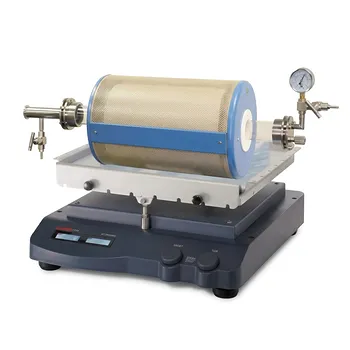
High Temperature Rocking Tube Furnace with Quartz Tube and Vacuum Flange for Materials Synthesis

High Temperature Automated 5 Inch Tube Furnace for Autonomous Material Research and Advanced Laboratory R&D
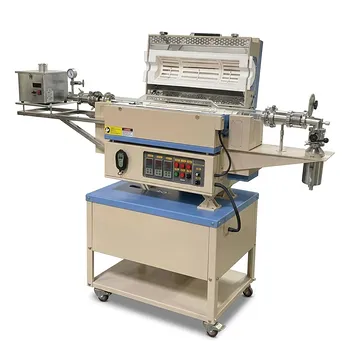
5 Inch Rotary Tube Furnace with Automatic Feeding and Receiving System 1200C Three Zone CVD Powder Processing