Why is a tube furnace employed for the in-situ regeneration of zeolite catalysts? Restore Activity & Save Time
Updated 3 months ago
A tube furnace is the preferred tool for in-situ zeolite regeneration because it allows for the precise thermal removal of carbonaceous deposits without disrupting the industrial assembly. By providing a controlled flow of high-temperature air—typically around 550 °C—the furnace oxidizes and burns off "coke" that accumulates on the catalyst surface. This process restores the catalyst's active sites and operational efficiency while the reaction tube remains in place.
Core Takeaway: Tube furnaces enable in-situ regeneration by creating a stable, high-temperature environment that removes inhibitory carbon deposits (coke). This method preserves the catalyst's lifespan and ensures industrial continuity by avoiding the need for reactor disassembly.
The Mechanics of Catalyst Restoration
Carbonaceous deposits, or coke, are the primary byproduct of zeolite-catalyzed reactions that block the material’s internal pores. Using a tube furnace allows these deposits to be stripped away through oxidative regeneration, returning the zeolite to its peak performance levels.
Removing Carbonaceous Coke Deposits
During industrial use, reactants often leave behind heavy carbon residues that "poison" the catalyst by covering its active surfaces. The tube furnace supplies the energy needed to facilitate a combustion reaction, converting these solids into gaseous CO2 and water. This clears the micropore channels and re-exposes the framework cations, such as protons (H+), which are essential for catalytic activity.
Preserving the Zeolite Framework
Zeolites are sensitive to sudden temperature shifts and chemical environments. The tube furnace provides a stable temperature zone that prevents localized overheating, ensuring the structural integrity of the zeolite lattice remains intact during the burn-off. This controlled heating is also critical for removing leftover structure-directing agents (like TPABr) during the initial activation or deep cleaning phases.
The Advantages of In-Situ Processing
"In-situ" refers to performing the regeneration while the catalyst is still positioned within the reactor. A tube furnace is uniquely suited for this because it can wrap around the reaction vessel, providing external heat without introducing contaminants.
System Continuity and Economic Efficiency
By regenerating the catalyst in-place, operators eliminate the time-consuming and risky task of disassembling the reaction tube. This reduces the risk of mechanical damage to the catalyst particles and prevents atmospheric contamination of the reaction environment. Ultimately, this leads to higher economic efficiency by reducing downtime and extending the cycles between catalyst replacements.
Precise Atmosphere and Temperature Control
Regeneration often requires switching from a reactant flow to a specific gas mix, such as air, nitrogen, or a hydrogen-argon mixture. Tube furnaces allow for strict regulation of these atmospheres, ensuring that the oxidation process is thorough but not aggressive enough to cause damage. Precise temperature compensation ensures that every part of the catalyst bed is treated equally, preventing "cold spots" where coke might remain.
Understanding the Trade-offs
While in-situ regeneration is highly effective, it is not without risks that require careful management.
Risk of Sintering and Pore Collapse
If the temperature is not strictly regulated, the heat from the exothermic coke-burning reaction can exceed the zeolite's thermal limits. This leads to sintering, where the catalyst particles agglomerate, reducing the total surface area and permanently destroying active centers. In extreme cases, the internal micropores of the zeolite can collapse, rendering the material useless.
Heat Transport Limitations
In large-scale tubes, ensuring uniform heat distribution can be challenging. If the furnace does not provide a long, stable temperature zone, the outer edges of the catalyst bed may be regenerated while the center remains fouled with carbon. This requires a furnace with advanced zonal heating control to ensure a consistent result throughout the entire catalyst volume.
Making the Right Choice for Your Goal
The parameters for your tube furnace regeneration should be dictated by your specific catalyst type and the nature of the fouling.
- If your primary focus is restoring acidic activity: Use an oxidative atmosphere at 550 °C to specifically target organic residues within the H-ZSM-5 pores.
- If your primary focus is preventing metal agglomeration: Strictly regulate the heating profile and time to prevent high-temperature sintering of any supported metal particles.
- If your primary focus is removing complex poisons: Utilize a high-temperature nitrogen flow at up to 900 °C to thermally decompose adsorbed organic residues without excessive oxidation.
By mastering the thermal environment of the tube furnace, you can transform catalyst regeneration from a maintenance hurdle into a strategic advantage for process longevity.
Summary Table:
| Feature | Details | Key Benefit |
|---|---|---|
| Core Process | Oxidative Regeneration | Removes coke (carbon) deposits |
| Temperature Range | Typically ~550 °C | Restores active sites (H+ protons) |
| Heating Method | In-Situ (In-place) | Eliminates reactor disassembly |
| Control Focus | Precise Atmosphere | Prevents sintering and pore collapse |
Maximize Your Research Efficiency with THERMUNITS
As a leading manufacturer of high-temperature laboratory equipment for material science and industrial R&D, THERMUNITS provides the precision heating solutions necessary for critical processes like catalyst regeneration.
Our comprehensive range of thermal processing solutions includes:
- Tube Furnaces (Ideal for in-situ and atmosphere-controlled processing)
- Muffle, Vacuum, and Atmosphere Furnaces
- CVD/PECVD Systems and Rotary Kilns
- Hot Press and Vacuum Induction Melting (VIM) Furnaces
- Dental Furnaces and various Thermal Elements
Whether you are refining zeolite performance or developing advanced materials, our equipment delivers the temperature uniformity and atmospheric stability your project demands.
Ready to optimize your thermal workflow? Contact THERMUNITS today to get an expert consultation and a tailored quote!
References
- Zhaoxing Wang, Dionisios G. Vlachos. Cycloaddition–dehydration continuous flow chemistry for renewable <i>para</i>-xylene production from 2,5-dimethylfuran and ethylene over phosphorous-decorated zeolite beta. DOI: 10.1039/d4gc01904k
Mentioned Products
- Vertical 1700C Vacuum and Atmosphere Tube Furnace with 80mm Alumina Tube
- Compact High Temperature 1600C Tube Furnace with 50mm Alumina Tube and Vacuum Flanges for Material Sintering
- 900°C Max Rotary Tube Furnace with 8 Inch 310S Alloy Tube and Optional Multi Zone Heating for Industrial Material Calcination
- Split Vertical Tube Furnace with 1200C Quartz Tube and Stainless Steel Vacuum Flanges for Rapid Thermal Processing
- High Temperature 1700C Tube Furnace with High Vacuum Turbomolecular Pump System and Multi Channel Mass Flow Controller Gas Mixer
People Also Ask
- How is an industrial-grade vertical tube furnace utilized in smelting leaching residues? Enhance Metal Recovery Efficiency
- What is the function of a laboratory-grade vertical tube furnace in fast pyrolysis? Optimize Composite Research.
- How does a vertical tube furnace facilitate thermoelectric alloy melting? Precision synthesis for material homogeneity.
- Why is a thermocouple sensor indispensable for monitoring the vertical tube furnace during gallium oxide nanowire production? Optimize VLS Growth
- What are the advantages of using a vertical tube furnace for crucible experiments simulating steel-slag interactions?

Tech Team · ThermUnits
Last updated on Jun 02, 2026
Related Products

Vertical 1700C Vacuum and Atmosphere Tube Furnace with 80mm Alumina Tube

Compact High Temperature 1600C Tube Furnace with 50mm Alumina Tube and Vacuum Flanges for Material Sintering
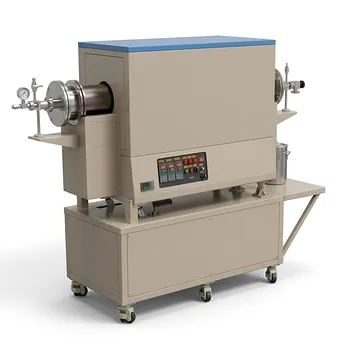
900°C Max Rotary Tube Furnace with 8 Inch 310S Alloy Tube and Optional Multi Zone Heating for Industrial Material Calcination
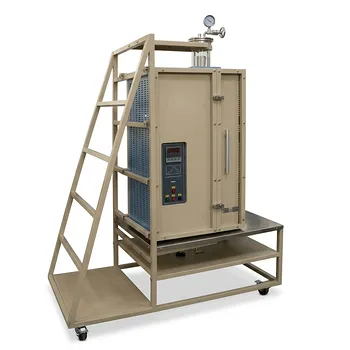
Split Vertical Tube Furnace with 1200C Quartz Tube and Stainless Steel Vacuum Flanges for Rapid Thermal Processing

High Temperature 1700C Tube Furnace with High Vacuum Turbomolecular Pump System and Multi Channel Mass Flow Controller Gas Mixer

1100C Tube Furnace with Vacuum Flange and Programmable Temperature Controller for Material Science and Industrial Heat Treatment
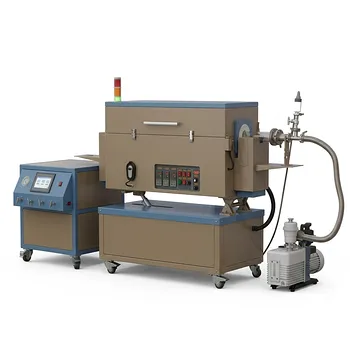
5 Inch Three Zone Rotary Tube Furnace with Integrated Gas Delivery System and 1200C Capability for Advanced Material CVD Processing
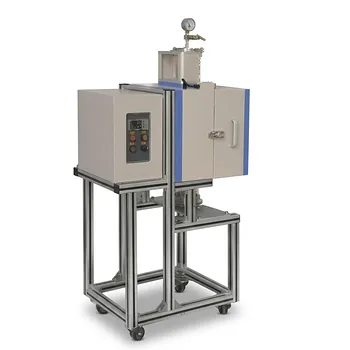
1200°C 5 Inch Vertical Quartz Tube Furnace with Stainless Steel Vacuum Flanges
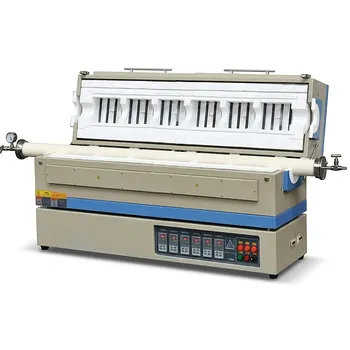
High Temperature 1700C Six Zone Split Tube Furnace with Alumina Tube and Water Cooled Flanges
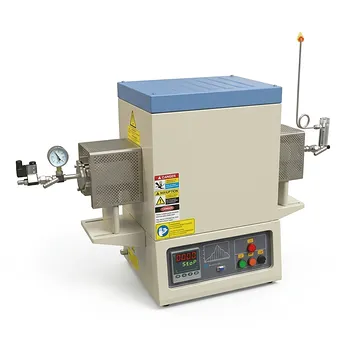
1700C Hydrogen Gas Tube Furnace with 60mm Alumina Process Tube and Integrated Hydrogen Safety Detector

Compact Vertical Split Quartz Tube Furnace with Stainless Steel Vacuum Flanges for Rapid Thermal Quenching and Controlled Atmosphere Material Processing

High Temperature 1700C Benchtop Tube Furnace with 5 Inch Heating Zone High Purity Alumina Tube and Vacuum Sealing Flanges
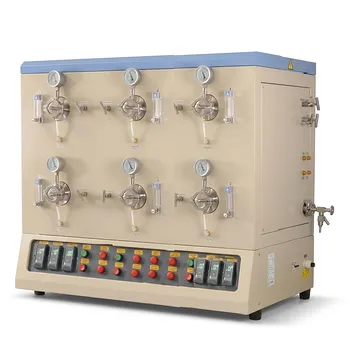
1200C High Throughput Multi Channel Tube Furnace with 50mm Quartz Tubes for Annealing and Material Phase Diagram Research
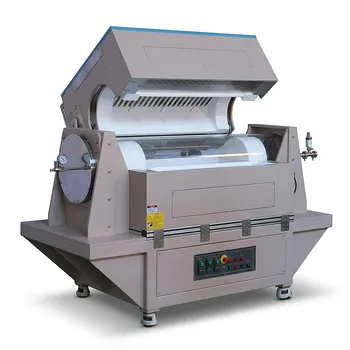
Three Zone Tube Furnace with 11 Inch or 15 Inch Quartz Tube and Hinged Flanges for Vacuum Atmosphere Heat Treatment

1800C High Temperature Compact Vacuum Tube Furnace with 60mm OD Alumina Tube and Kanthal MoSi2 Heating Elements

High Temperature 1700C Vertical Tube Furnace for Powder Spherification and Material Sintering
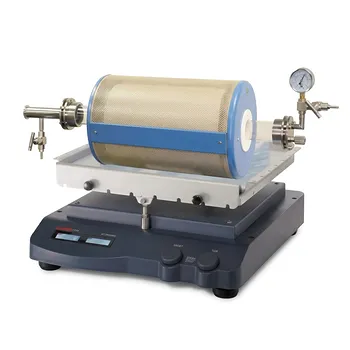
High Temperature Rocking Tube Furnace with Quartz Tube and Vacuum Flange for Materials Synthesis

High Temperature Automated 5 Inch Tube Furnace for Autonomous Material Research and Advanced Laboratory R&D
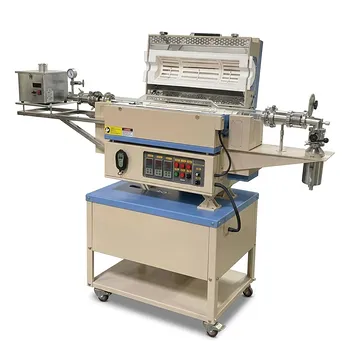
5 Inch Rotary Tube Furnace with Automatic Feeding and Receiving System 1200C Three Zone CVD Powder Processing