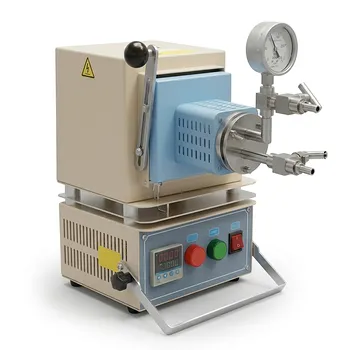
Why is a tube furnace equipped with an argon protection system necessary? Unlock High-Entropy Ceramic Conductivity
Updated 3 months ago
The use of a tube furnace with an argon protection system is the definitive requirement for engineering the electrical properties of high-entropy ceramic composites. This specialized equipment creates a strictly anaerobic environment that prevents the destructive combustion of organic precursors at high temperatures. By excluding oxygen, the system forces a chemical transition where organic carbon transforms into a conductive graphitic network while simultaneously inducing oxygen vacancies within the ceramic lattice to achieve metallic-level conductivity.
Core Takeaway: An argon-protected tube furnace acts as a chemical reactor that prevents material loss through oxidation while driving the in-situ formation of conductive carbon phases and oxygen vacancies, effectively "flipping the switch" from an insulating ceramic to a high-performance conductor.
Preventing Destructive Chemical Reactions
Eliminating Oxidative Combustion
In a standard atmosphere, organic components within a composite would undergo oxidative combustion when heated, turning into gas and leaving the structure. An argon atmosphere displaces oxygen, ensuring that these carbon-rich materials remain within the composite to undergo thermal transformation rather than burning away.
Protecting Metallic Nanostructures
If the composite includes metal phases, such as silver or copper, oxygen exposure at high temperatures causes rapid oxidation. This oxidation creates a resistive oxide layer that destroys the material's electrical and thermal conductivity; the argon shield preserves the metallic purity of these particles.
Maintaining Structural Integrity
For advanced materials like carbon nanotubes or high-entropy nanofibers, even trace amounts of oxygen can cause structural "burn-off." The inert environment ensures that any mass loss is the result of planned intrinsic thermal instability rather than external chemical erosion, preserving the delicate microscopic morphology.
Engineering Conductivity Through Phase Transformation
Driving In-Situ Graphitization
The argon-protected environment is the primary driver for in-situ graphitization, where organic polymers are pyrolyzed into a conductive carbon shell. This carbon network acts as a "highway" for electrons, wrapping around the ceramic particles to create a continuous path for current.
Inducing Oxygen Vacancies
By sintering in an oxygen-deficient state, the furnace forces the transformation of lattice oxygen into vacancies. These vacancies fundamentally alter the electronic structure of the ceramic, often lowering the bandgap (e.g., from 2.93 eV to 2.42 eV) and significantly increasing charge carrier mobility.
Transitioning from Insulator to Conductor
Precise control of the furnace atmosphere is what allows a material to move through the stages of insulator, semiconductor, and finally conductor. Without the argon system, the ceramic would remain an insulator due to the lack of conductive carbon phases and the absence of lattice defects.
Understanding the Trade-offs
Cost and Complexity of Gas Management
Operating an argon-protected system introduces significant operational costs due to the continuous consumption of high-purity inert gas. Furthermore, maintaining a perfectly sealed environment in a tube furnace requires specialized flanges and monitoring equipment, increasing the complexity of the setup compared to air-sintering.
Gas Flow Dynamics and Uniformity
The flow rate of argon can impact the temperature uniformity inside the tube. If the flow is too high, it can create thermal gradients that lead to uneven sintering; if it is too low, it may fail to fully purge the "dead zones" of oxygen, leading to localized oxidation spots.
Managing Trace Impurities
Standard-grade argon may still contain parts-per-million (ppm) levels of oxygen or moisture. For highly sensitive high-entropy ceramics, even these trace impurities can interfere with the formation of oxygen vacancies, potentially requiring the addition of gas purification systems or "getters" inside the furnace.
How to Apply This to Your Project
Making the Right Choice for Your Goal
- If your primary focus is maximizing electrical conductivity: Prioritize the use of high-purity (99.999%) argon and a slow heating rate to ensure complete in-situ graphitization and maximum oxygen vacancy formation.
- If your primary focus is preserving delicate nanostructures: Ensure the tube furnace is fully purged with at least three vacuum-argon cycles before heating to prevent any "burn-off" of nanofibers or nanotubes.
- If your primary focus is scaling production cost-effectively: Evaluate if a nitrogen atmosphere can be used as a cheaper alternative, though be aware that nitrogen may react with certain metals (like Titanium) to form nitrides, unlike argon.
The argon-protected tube furnace is not merely a heater, but a critical tool for the precision atomic engineering required to create the next generation of conductive ceramics.
Summary Table:
| Feature/Function | Impact on Materials | Resulting Benefit |
|---|---|---|
| Oxygen Exclusion | Prevents oxidative combustion of organic precursors | Facilitates in-situ graphitization |
| Inert Atmosphere | Protects metallic phases (Ag, Cu) from oxidation | Preserves electrical & thermal purity |
| Structural Shielding | Prevents "burn-off" of nanotubes and nanofibers | Maintains microscopic morphology |
| Vacancy Induction | Forces transformation of lattice oxygen into vacancies | Increases charge carrier mobility |
| Atmosphere Control | Enables transition from insulator to conductor | Engineered metallic-level conductivity |
Elevate Your Material Research with THERMUNITS
Precision heat treatment is the cornerstone of advanced material science. At THERMUNITS, we specialize in manufacturing high-performance high-temperature laboratory equipment designed for the rigors of industrial R&D. Whether you are engineering conductive high-entropy ceramics or exploring new nanostructures, our specialized thermal solutions provide the strictly controlled environments you need.
Our Expert Solutions Include:
- Tube & Atmosphere Furnaces: Optimized for argon-protected graphitization and sintering.
- Vacuum & CVD/PECVD Systems: For high-purity coating and thin-film development.
- Specialized Equipment: Muffle, Rotary, Hot Press, Dental Furnaces, and Vacuum Induction Melting (VIM).
- Precision Elements: High-quality thermal elements and custom heat treatment accessories.
Don't let oxidation compromise your results. Partner with a leader in thermal processing to achieve superior conductivity and structural integrity.
Contact our technical experts today to find your perfect furnace solution!
References
- Chong Wang, Yang Yang Li. Electroconductive high-entropy metallic oxide ceramic composites with outstanding water evaporation ability and biocompatibility. DOI: 10.1007/s42114-024-00916-4
Mentioned Products
- High Temperature 1700C Vertical Tube Furnace for Powder Spherification and Material Sintering
- Compact High Temperature 1600C Tube Furnace with 50mm Alumina Tube and Vacuum Flanges for Material Sintering
- High Throughput 1200C Four Channel Tube Furnace with 3 Inch Quartz Tubes for Multi Zone Annealing and Material Research
- Vertical 1700C Vacuum and Atmosphere Tube Furnace with 80mm Alumina Tube
- 1200C High Throughput Multi Channel Tube Furnace with 50mm Quartz Tubes for Annealing and Material Phase Diagram Research
People Also Ask
- What role does a high-temperature vertical tube furnace play in simulating high-carbon ferromanganese slag formation?
- What functions does a vertical high-temperature tube furnace perform? Master Industrial Sintering & R&D Simulation
- What is the primary function of a high-temperature tube furnace in Cu1-N-C synthesis? Precision Thermal Control.
- High-Temp Tube Furnace Role in Converting Microbial Proteins to Iron Single-Atom Sites: Expert Synthesis Guide
- What impact does the heating rate of a tube furnace have on biochar microstructure? Optimize Your Material R&D.

Tech Team · ThermUnits
Last updated on Jun 03, 2026
Related Products

High Temperature 1700C Vertical Tube Furnace for Powder Spherification and Material Sintering

Compact High Temperature 1600C Tube Furnace with 50mm Alumina Tube and Vacuum Flanges for Material Sintering
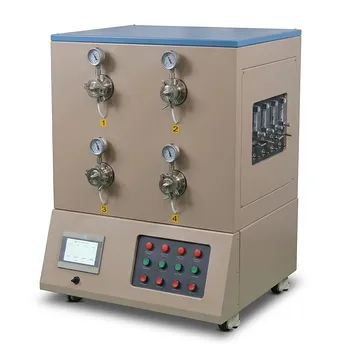
High Throughput 1200C Four Channel Tube Furnace with 3 Inch Quartz Tubes for Multi Zone Annealing and Material Research

Vertical 1700C Vacuum and Atmosphere Tube Furnace with 80mm Alumina Tube
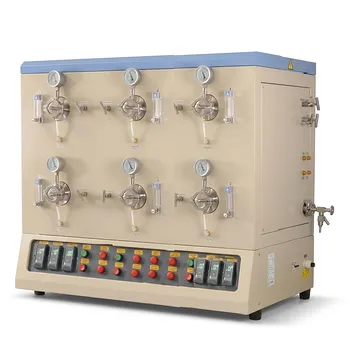
1200C High Throughput Multi Channel Tube Furnace with 50mm Quartz Tubes for Annealing and Material Phase Diagram Research

High Temperature 1700C Benchtop Tube Furnace with 5 Inch Heating Zone High Purity Alumina Tube and Vacuum Sealing Flanges
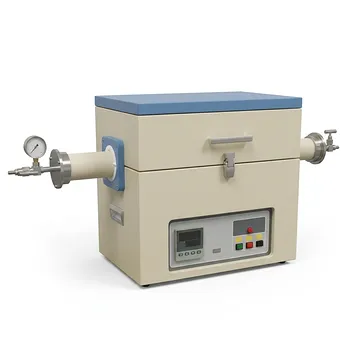
1250C Split Tube Furnace with 3 Inch Mullite Tube and Vacuum Sealing Flanges for Precision Thermal Processing
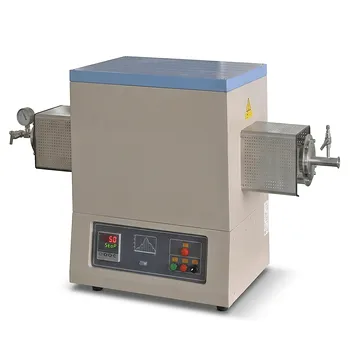
High Temperature 1700C Tube Furnace with 4 Inch OD Alumina Tube and Vacuum Sealing Flanges
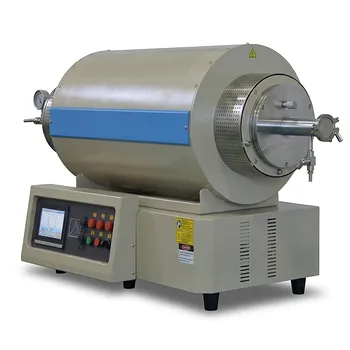
1200C Max Three Zone Tube Furnace 6 Inch OD Max with Tube and Flange

High Temperature Automated 5 Inch Tube Furnace for Autonomous Material Research and Advanced Laboratory R&D
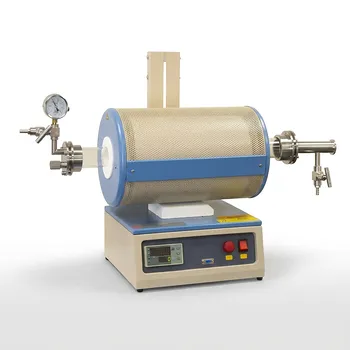
1100C Tube Furnace with Vacuum Flange and Programmable Temperature Controller for Material Science and Industrial Heat Treatment
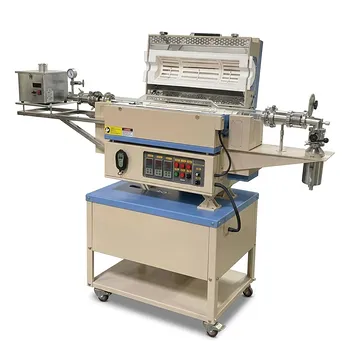
5 Inch Rotary Tube Furnace with Automatic Feeding and Receiving System 1200C Three Zone CVD Powder Processing

1800C High Temperature Compact Vacuum Tube Furnace with 60mm OD Alumina Tube and Kanthal MoSi2 Heating Elements
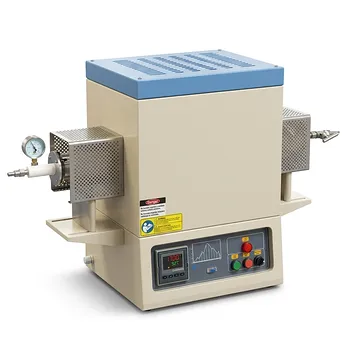
High Temperature Three Zone Tube Furnace 1700C with Alumina Tube and Water Cooled Flanges
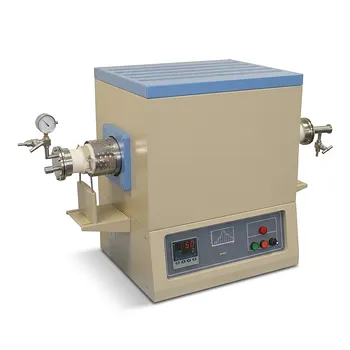
1700C High Temperature Alumina Tube Furnace with 18 Inch Heated Zone and Vacuum Sealing Flanges
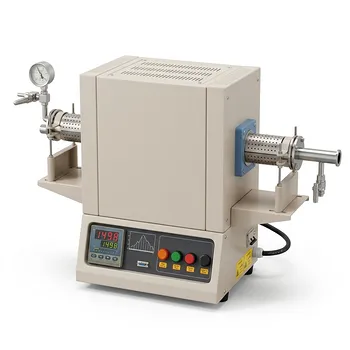
1500C High Temperature Compact Tube Furnace 2 Inch OD with Vacuum Flanges and Complete Accessories

High Temperature 1700C Tube Furnace with High Vacuum Turbomolecular Pump System and Multi Channel Mass Flow Controller Gas Mixer

1200°C 5 Inch Vertical Quartz Tube Furnace with Stainless Steel Vacuum Flanges
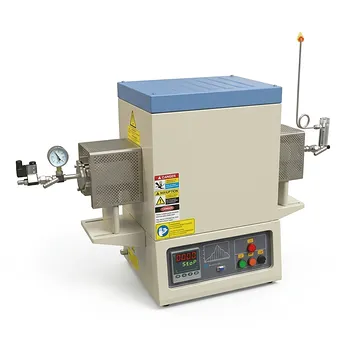
1700C Hydrogen Gas Tube Furnace with 60mm Alumina Process Tube and Integrated Hydrogen Safety Detector