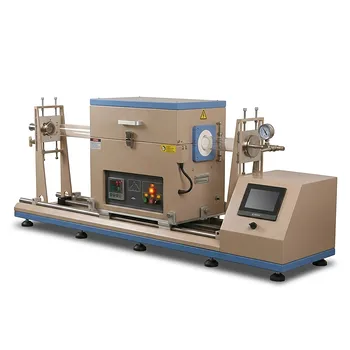
Why is a tube furnace preferred for subsolidus phase relationship studies within the Bi2O3–Mn2O3–M2O3 system? Key Benefits
Updated 3 months ago
Precision and stability are the fundamental requirements for subsolidus phase studies. A tube furnace is preferred because it provides a highly stable high-temperature isothermal zone and a uniform oxidizing atmosphere, both of which are critical for establishing complex pseudo-ternary phase equilibria. This controlled environment allows researchers to accurately identify solubility limits and polycrystalline transitions within the Bi2O3–Mn2O3–M2O3 system.
Core Takeaway: The use of a tube furnace ensures the thermal and chemical consistency necessary to map delicate phase boundaries and transitions, such as those occurring at 770°C, with high reproducibility.
The Role of Thermal Stability in Phase Equilibria
Maintaining a Stable Isothermal Zone
Subsolidus reactions occur entirely in the solid state, requiring prolonged exposure to specific temperatures to reach equilibrium. A tube furnace excels at maintaining a highly stable isothermal zone, ensuring that the entire sample experiences the exact same thermal conditions.
Precision at Critical Transition Points
In systems like Bi2O3–Mn2O3–M2O3, transitions often occur at specific temperatures, such as 770°C. The precise temperature control of a tube furnace allows researchers to isolate these transitions and accurately determine the solubility limits of the components.
Ensuring Experimental Reproducibility
Consistency is vital for validating phase diagrams. By minimizing temperature fluctuations, tube furnaces provide the reproducibility needed to confirm that observed polycrystalline transitions are a result of the chemistry rather than thermal variance.
Atmosphere Control and Chemical Uniformity
The Necessity of a Uniform Oxidizing Environment
The Bi2O3–Mn2O3–M2O3 system requires a uniform oxidizing air environment to maintain the correct oxidation states of the metal ions. A tube furnace allows for a steady, controlled flow of air or oxygen across the sample.
Preventing Chemical Gradient Interference
Because the furnace design is enclosed, it prevents localized atmospheric changes that could skew results. This ensures that the pseudo-ternary phase equilibria are established under consistent chemical pressure throughout the duration of the experiment.
Mitigating Contamination Risks
The isolated nature of the furnace tube protects the high-purity oxide samples from external contaminants. This is essential when trying to define the exact boundaries of a complex phase system where even minor impurities could alter the results.
Understanding the Trade-offs
Sample Volume and Geometry Constraints
While tube furnaces offer superior stability, they are often limited by the physical dimensions of the tube. Large-scale synthesis is difficult, as the isothermal zone—the area of perfectly uniform temperature—is typically narrow.
Thermal Lag and Gradient Issues
If the sample is too large or the heating rate is too fast, a thermal lag can occur between the furnace controller and the core of the sample. This can lead to inaccurate data regarding the exact temperature at which a phase transition begins.
Atmospheric Flow Dynamics
In some configurations, the flow of gas can create a slight temperature gradient across the sample boat. Researchers must carefully calibrate the gas flow rate to ensure it does not compromise the stability of the isothermal zone.
Applying These Principles to Your Research
Successful phase relationship studies depend on matching your equipment to the specific sensitivity of your material system.
- If your primary focus is determining exact solubility limits: Use a tube furnace to ensure the isothermal zone is large enough to encompass your entire sample boat to prevent gradient-induced errors.
- If your primary focus is identifying transition temperatures: Calibrate your thermocouples specifically for the 700°C–800°C range to capture the Bi2O3 transitions with maximum precision.
- If your primary focus is maintaining oxidation states: Ensure a constant, regulated flow of air through the tube to prevent the reduction of manganese or bismuth oxides during long-term heating.
The precise control afforded by a tube furnace is the single most important factor in transforming complex chemical data into a definitive phase diagram.
Summary Table:
| Feature | Benefit for Phase Studies | Specific Research Application |
|---|---|---|
| Stable Isothermal Zone | Ensures uniform thermal exposure | Achieving solid-state equilibrium |
| Precision Control | Captures delicate transition points | Mapping boundaries at 770°C |
| Atmosphere Control | Maintains consistent oxidation states | Regulated oxidizing air environments |
| Enclosed Design | Prevents chemical contamination | Protecting high-purity oxide samples |
Elevate Your Material Research with THERMUNITS Precision
At THERMUNITS, we understand that breakthrough research in material science requires absolute thermal accuracy. As a leading manufacturer of high-temperature laboratory equipment, we provide the specialized solutions needed to map complex phase equilibria with confidence.
Whether you are conducting subsolidus studies or advanced industrial R&D, our comprehensive range of equipment—including Tube, Muffle, Vacuum, Atmosphere, Rotary, and Hot Press furnaces, as well as CVD/PECVD systems and Vacuum Induction Melting (VIM) furnaces—is engineered for stability and reproducibility.
Ready to enhance your lab's capabilities? Contact our expert team today to discuss how our high-performance furnaces and thermal elements can streamline your heat treatment processes.
References
- Srečo D. Škapin, Danilo Suvorov. Phase relations in the Bi <sub>2</sub> O <sub>3</sub> –Mn <sub>2</sub> O <sub>3</sub> –M <sub>2</sub> O <sub>3</sub> (MFe, Al, and Ga) pseudoternary systems. DOI: 10.1111/jace.20323
Mentioned Products
- Vertical 1700C Vacuum and Atmosphere Tube Furnace with 80mm Alumina Tube
- Compact High Temperature 1600C Tube Furnace with 50mm Alumina Tube and Vacuum Flanges for Material Sintering
- 900°C Max Rotary Tube Furnace with 8 Inch 310S Alloy Tube and Optional Multi Zone Heating for Industrial Material Calcination
- Split Vertical Tube Furnace with 1200C Quartz Tube and Stainless Steel Vacuum Flanges for Rapid Thermal Processing
- High Temperature 1700C Tube Furnace with High Vacuum Turbomolecular Pump System and Multi Channel Mass Flow Controller Gas Mixer
People Also Ask
- How is an industrial-grade vertical tube furnace utilized in smelting leaching residues? Enhance Metal Recovery Efficiency
- What is the function of a laboratory-grade vertical tube furnace in fast pyrolysis? Optimize Composite Research.
- How does a vertical tube furnace facilitate thermoelectric alloy melting? Precision synthesis for material homogeneity.
- Why is a thermocouple sensor indispensable for monitoring the vertical tube furnace during gallium oxide nanowire production? Optimize VLS Growth
- What are the advantages of using a vertical tube furnace for crucible experiments simulating steel-slag interactions?

Tech Team · ThermUnits
Last updated on Jun 03, 2026
Related Products

Vertical 1700C Vacuum and Atmosphere Tube Furnace with 80mm Alumina Tube

Compact High Temperature 1600C Tube Furnace with 50mm Alumina Tube and Vacuum Flanges for Material Sintering
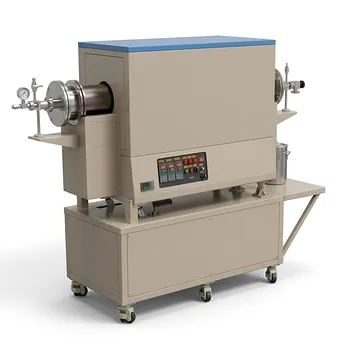
900°C Max Rotary Tube Furnace with 8 Inch 310S Alloy Tube and Optional Multi Zone Heating for Industrial Material Calcination
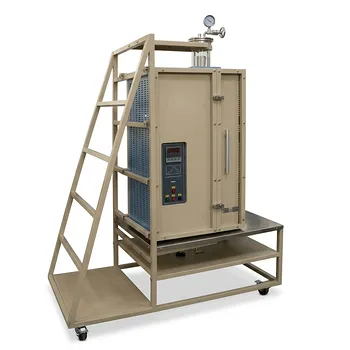
Split Vertical Tube Furnace with 1200C Quartz Tube and Stainless Steel Vacuum Flanges for Rapid Thermal Processing

High Temperature 1700C Tube Furnace with High Vacuum Turbomolecular Pump System and Multi Channel Mass Flow Controller Gas Mixer

1100C Tube Furnace with Vacuum Flange and Programmable Temperature Controller for Material Science and Industrial Heat Treatment
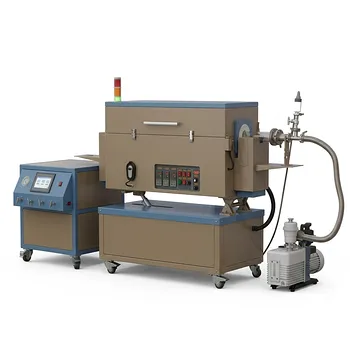
5 Inch Three Zone Rotary Tube Furnace with Integrated Gas Delivery System and 1200C Capability for Advanced Material CVD Processing

1700C Hydrogen Gas Tube Furnace with 60mm Alumina Process Tube and Integrated Hydrogen Safety Detector

1200°C 5 Inch Vertical Quartz Tube Furnace with Stainless Steel Vacuum Flanges

High Temperature 1700C Six Zone Split Tube Furnace with Alumina Tube and Water Cooled Flanges

Compact Vertical Split Quartz Tube Furnace with Stainless Steel Vacuum Flanges for Rapid Thermal Quenching and Controlled Atmosphere Material Processing

High Temperature 1700C Benchtop Tube Furnace with 5 Inch Heating Zone High Purity Alumina Tube and Vacuum Sealing Flanges

1200C High Throughput Multi Channel Tube Furnace with 50mm Quartz Tubes for Annealing and Material Phase Diagram Research

Three Zone Tube Furnace with 11 Inch or 15 Inch Quartz Tube and Hinged Flanges for Vacuum Atmosphere Heat Treatment

1800C High Temperature Compact Vacuum Tube Furnace with 60mm OD Alumina Tube and Kanthal MoSi2 Heating Elements

High Temperature 1700C Vertical Tube Furnace for Powder Spherification and Material Sintering
High Temperature Rocking Tube Furnace with Quartz Tube and Vacuum Flange for Materials Synthesis

High Temperature Automated 5 Inch Tube Furnace for Autonomous Material Research and Advanced Laboratory R&D
5 Inch Rotary Tube Furnace with Automatic Feeding and Receiving System 1200C Three Zone CVD Powder Processing